






National Kidney Foundation (2024). Acute Kidney Injury (AKI).
National Organization for Rare Disorders. (2024). Multiple endocrine neoplasia type 2.
Trulicity. (n.d.). Using your Trulicity pen.
You and Your Hormones. (2021). Insulin.
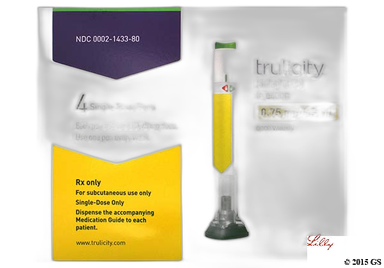
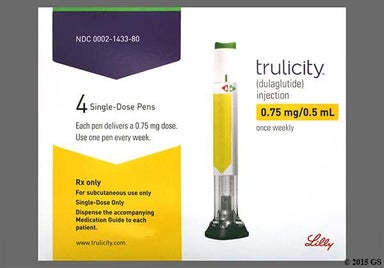
Trulicity (dulaglutide) is a glucagon-like peptide-1 (GLP-1) agonist that helps improve blood sugar levels for adults and children with Type 2 diabetes when used along with diet and exercise. It's also approved to lower the risk of heart problems like heart attack, stroke, and heart-related death in certain adults with Type 2 diabetes. The medication comes as a pen that's injected under the skin once a week. Common side effects include nausea, vomiting, diarrhea, and stomach pain.

Trulicity (dulaglutide) is a glucagon-like peptide-1 (GLP-1) receptor agonist. It acts like the natural GLP-1 hormone in the body. This hormone lowers blood sugar by helping your pancreas release more insulin, stopping your liver from releasing more sugar, and slowing digestion.
| Common Brands | Trulicity |
|---|---|
| Drug Class | GLP-1 agonist |
| Controlled Substance Classification | Not a controlled medication |
| Generic Status | No lower-cost generic available |
| Availability | Prescription only |

The following side effects may get better over time as your body gets used to the medication. Let your healthcare provider know immediately if you continue to experience these symptoms or if they worsen over time.
Contact your healthcare provider immediately if you experience any of the following.
Side effects that you should report to your care team as soon as possible:
Side effects that usually do not require medical attention (report these to your care team if they continue or are bothersome):



How to use Trulicity (dulaglutide):

Trulicity (dulaglutide) can cause some serious health issues. This risk may be even higher for certain groups. If this worries you, talk to your doctor or pharmacist about other options.
 Animal studies show that Trulicity (dulaglutide) causes thyroid tumors in rats and mice, but it's unclear if it has the same effect in humans. To be safe, don't use Trulicity (dulaglutide) if you or a family member has had medullary thyroid cancer (MTC) or Multiple Endocrine Neoplasia syndrome type 2 (MEN 2).
Let your prescriber know if you notice a lump on your neck, trouble breathing or swallowing, or hoarseness that won't go away, as these might be signs of thyroid cancer. If you’re worried about this risk, talk to your prescriber.
In some rare cases, people taking Trulicity (dulaglutide) have had pancreatitis, a serious condition that causes inflammation of the pancreas. Watch for signs of pancreatitis, including severe stomach pain that can spread to your back, with or without vomiting. If you have these symptoms, stop using Trulicity (dulaglutide) right away and contact your prescriber.
If you take Trulicity (dulaglutide) with insulin, a sulfonylurea (e.g. glipizide), or a glinides (e,g., repaglinide), you have a higher risk of low blood sugar (hypoglycemia), including severe cases.
Your prescriber might need to lower the dose of insulin, the sulfonylurea, or the repaglinide to help reduce this risk. Learn to recognize the signs of low blood sugar, such as shakiness, sweating, dizziness, confusion, hunger, or weakness. If you're concerned about your blood sugar levels or need help monitoring them, talk to your prescriber.
Some people taking Trulicity (dulaglutide) have had severe allergic reactions, including anaphylaxis and angioedema (swelling under the skin). If you develop swelling of the face, lips, throat, or trouble breathing, stop using Trulicity (dulaglutide) immediately and get emergency medical help.
Some people taking Trulicity (dulaglutide) developed new or worsening kidney problems, known as acute kidney injury. In some cases, treatment required dialysis, even in people who had no previous kidney problems. Most of the time, this happened in people who had nausea, vomiting, diarrhea, or dehydration after taking the medication.
If you have kidney problems or develop severe stomach-related side effects while using Trulicity (dulaglutide), your prescriber might check your kidney labs. To prevent kidney damage, drink plenty of fluids during treatment to stay hydrated. Tell your prescriber if you have trouble urinating or if you're not urinating as much as usual while taking this medication.
Using Trulicity (dulaglutide) can cause stomach-related side effects like nausea, vomiting, and diarrhea, and in some cases, they can be severe. Because Trulicity (dulaglutide) hasn't been studied in people with severe stomach conditions, it's not recommended if you have gastroparesis (slow stomach emptying). If you have a history of stomach problems, talk to your prescriber before using this medication.
Some people using Trulicity (dulaglutide) have reported diabetic retinopathy complications during treatment. If you already have diabetic retinopathy, your prescriber will check your eyes to make sure it doesn't get worse. Get medical attention if you notice changes in your vision or eye pain.
Some people using Trulicity (dulaglutide) have developed gallbladder problems like gallstones. Contact your prescriber right away if you have severe stomach pain, nausea, vomiting, or yellowing of the skin or eyes. They might need to run blood tests to check your gallbladder.
Trulicity (dulaglutide) slows down digestion, which can make food stay in your stomach longer. Rare cases have been reported where people taking GLP-1 medications like Trulicity (dulaglutide) breathed fluid into the lungs during general anesthesia or deep sedation. Tell your prescriber before any surgery or procedure if you're taking this medication.

 Carton
| Dosage | Quantity | Price as low as | Price per unit |
|---|---|---|---|
| 4 pens of 0.75mg/0.5ml | 1 carton | $988.62 | $988.62 |
| 4 pens of 1.5mg/0.5ml | 1 carton | $988.67 | $988.67 |
| 4 pens of 3mg/0.5 ml | 1 carton | $988.42 | $988.42 |
| 4 pens of 4.5mg/0.5 ml | 1 carton | $988.24 | $988.24 |
Trulicity (dulaglutide) is injected under the skin in the stomach or thigh. If someone else is giving you the injection, they can also use the back of your upper arm.
You'll typically start with a low dose, and after at least 4 weeks, your prescriber might raise it if you need better blood sugar control. If you have stomach-related side effects, your prescriber might lower your dose.


Contraindications are specific health conditions or situations in which a person should not take a medication due to safety concerns. If you have any of the following conditions or if any of the following apply to you, let your healthcare provider know because Trulicity (dulaglutide) will not be safe for you to take.













Prescription savings
Stop paying too much for your prescriptions. Compare prices, get pharmacy coupons, and save up to 80%. Find expert answers to your health questions so you can make the best decisions for yourself and your family.
Health conditions
Medications & treatment
Access & affordability
Medication discounts


No, Trulicity isn't an insulin. Both are injectable medications that help manage blood sugar in people with Type 2 diabetes, but they work differently. Insulin moves sugar from your blood into your cells, where it can be used as energy. Trulicity is a GLP-1 agonist that helps your pancreas release insulin. When you use Trulicity along with insulin, the risk of low blood sugar (hypoglycemia) becomes higher.
It depends on the side effect. Stomach-related side effects like nausea and vomiting usually improve over time as you keep using the medication. But rare and serious side effects, like kidney, pancreas, or gallbladder problems, might last for a long time until you get medical treatment. Be sure to check in with your prescriber regularly and report any side effects with Trulicity.
Yes, constipation can be a side effect of Trulicity, but it's not very common. In clinical studies, up to 4% of people reported constipation. You can help prevent it by eating a high-fiber diet and staying hydrated. And if you do experience constipation, there are several over-the-counter treatments that might help. Talk to your prescriber if your constipation becomes a problem for you.
Yes, though Trulicity is a diabetes medication that can lead to weight loss, it isn't FDA approved for weight loss. In a study, people with Type 2 diabetes lost an average of about 6 to 10 pounds after taking Trulicity weekly for 7 to 12 months, with higher doses leading to more weight loss than lower doses. Speak to your prescriber if you have questions about weight loss and this medication.
No, Trulicity and Ozempic (semaglutide) aren't the same medication. Both are GLP-1 agonists and are injected once a week for Type 2 diabetes. They have similar side effects, like nausea, vomiting, diarrhea, and reduced appetite. But studies suggest that Ozempic (semaglutide) might work better at lowering A1C and could lead to more weight loss compared to Trulicity. Talk to your prescriber if you have more questions about how these two medications compare.
No, [Trulicity and Mounjaro (tirzepatide) should not be taken together because they work in the body similarly to each other. Taking them together will only raise the risk of side effects. Talk to your prescriber if you have questions about the differences between both medications.
It's best to store Trulicity in the refrigerator, where it stays good until the expiration date on the pen. But, if needed, you can keep it at room temperature (up to 86°F) for up to 14 days. Once Trulicity has reached room temperature, don't put it back in the refrigerator. Also, never freeze this medication.
