







6 Mounjaro Drug Interactions to Know About: Insulin, Birth Control Pills, and More
Understand six notable Mounjaro interactions with GoodRx so you can stay informed and safe during treatment.
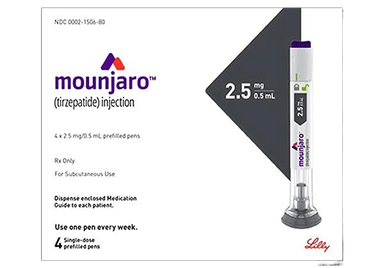
Mounjaro (tirzepatide) is a prescription injection used to improve blood sugar control in people 10 years and older with Type 2 diabetes. It works best when you also follow a nutritious diet and exercise regularly. Mounjaro (tirzepatide) belongs to the drug class called GIP and GLP-1 agonists. The dosage is convenient because it's injected under the skin once a week. Some common side effects of Mounjaro (tirzepatide) include nausea and diarrhea. It can also lower your appetite, which might lead to some weight loss.

Mounjaro (tirzepatide) is a glucose-dependent insulinotropic polypeptide and glucagon-like peptide-1 receptor agonist. For short, it's called a GIP and GLP-1 agonist.
This medication works by acting like GLP-1 and GIP, two hormones that your gut releases into the body. These hormones raise your insulin levels after you eat. They also help lower the amount of glucose (sugar) that's released in the body. And they help slow down digestion. All of these actions help lower blood sugar levels.
| Common Brands | Mounjaro |
|---|---|
| Drug Class | GIP and GLP-1 agonist |
| Controlled Substance Classification | Not a controlled medication |
| Generic Status | No lower-cost generic available |
| Availability | Prescription only |

The following side effects may get better over time as your body gets used to the medication. Let your healthcare provider know immediately if you continue to experience these symptoms or if they worsen over time.
Note: Side effect percentages are for adults. They might be slightly different for children.
Contact your healthcare provider immediately if you experience any of the following.
Side effects that you should report to your care team as soon as possible:
Side effects that usually do not require medical attention (report these to your care team if they continue or are bothersome):



How to use Mounjaro (tirzepatide):

Mounjaro (tirzepatide) can cause some serious health issues. This risk may be even higher for certain groups. If this worries you, talk to your doctor or pharmacist about other options.
 It's not known if Mounjaro (tirzepatide) can cause certain thyroid cancers in people. But in studies on rats, those that were given the medication had a higher risk of thyroid cancer. It was more likely to happen when higher doses were used or when the medication was given for a long time.
To be safe, don't take Mounjaro (tirzepatide) if you or someone in your family has medullary thyroid cancer (MTC). Also don't take this medication if you have multiple endocrine neoplasia syndrome type 2 (MEN 2). Talk to your prescriber so they can find a different way to help with your high blood sugar.
If you notice a lump on your neck while taking Mounjaro (tirzepatide), call your care team right away. Also get help right away if you have trouble breathing, trouble swallowing, or hoarseness that won't go away. These could be signs of thyroid cancer. Your care team can check what's going on.
Some people taking Mounjaro (tirzepatide) had swelling or inflammation in their pancreas. This problem is called pancreatitis. It can sometimes cause serious damage to the pancreas or bleeding.
Call your care team right away if you have symptoms of pancreatitis. This can include severe stomach pain that can go to your back, nausea, vomiting, and fever. You might need to stop taking Mounjaro (tirzepatide).
Your blood sugar can get too low if you take Mounjaro (tirzepatide) with medications that raise the amount of insulin in your body. Examples include insulins or sulfonylureas like glipizide. If you're taking one of these medications, tell your prescriber. They might need to make changes to them to prevent low blood sugar.
Very low blood sugar (hypoglycemia) can be dangerous. Make sure you know how to tell and what to do when you have low blood sugar. Keep glucose tablets or hard candy with you at all times so you can get your blood sugar back up quickly. Get medical help right away if you still feel shaky, nervous, dizzy, weak, or confused, even after you've treated yourself for low blood sugar.
Although rare, Mounjaro (tirzepatide) can cause a serious allergic reaction. If you've had a severe reaction to a GLP-1 agonist like Ozempic (semaglutide), you might have a higher risk of an allergic reaction to Mounjaro (tirzepatide).
If you have an allergic reaction to Mounjaro (tirzepatide), get emergency medical help. Signs of an allergic reaction can be trouble breathing; swelling of your lips, tongue, throat, or face; rash; or hives.
Mounjaro (tirzepatide) can cause side effects like stomach upset. This includes stomach pain, nausea, vomiting, and diarrhea. Sometimes, these problems can be severe. Because of this, Mounjaro (tirzepatide) isn't the best choice for people with severe stomach issues, like gastroparesis (slowed emptying of your stomach).
Some people who took Mounjaro (tirzepatide) had gotten kidney problems. Most times, this happened in people who had nausea, vomiting, or diarrhea as side effects. These side effects can lead to dehydration. And if dehydration is severe enough, it could cause kidney damage.
Be sure to drink plenty of fluids and stay hydrated if you have nausea, vomiting, or diarrhea while taking Mounjaro (tirzepatide). Let your care team know if you have these side effects. And tell them if you don't urinate or if you're not urinating normally. You might need to get blood work to make sure your kidneys are okay.
If you have an eye problem called diabetic retinopathy, Mounjaro (tirzepatide) might make it worse for a short time. This might happen when you first start the medication or when your prescriber raises your dose.
Tell your prescriber if you have diabetic retinopathy. Remember to get your vision checked regularly while you're taking Mounjaro (tirzepatide). This helps check if your eye problem gets worse during treatment. Let your prescriber and eye specialist know if you notice any changes in your vision.
It's rare, but some people who took Mounjaro (tirzepatide) have had gallbladder problems. This can include gallstones. Call your prescriber right away if you have severe pain in the upper stomach, nausea, vomiting, or fever. These can be signs of gallbladder issues.
Some people taking GLP-1 medications like Mounjaro (tirzepatide) who are put under deep sleep for surgery have had a serious lung problem. This happens when food or liquid from the stomach gets into the lungs by mistake.
This lung problem is rare. But it can happen with Mounjaro (tirzepatide) because the medication slows down digestion. This means that even if you didn't eat before your surgery like you're told, some food could still be in your stomach.
Tell your prescriber if you have any surgery or procedure requiring anesthesia planned. And make sure you tell the surgery team that you're taking Mounjaro (tirzepatide). It helps the medical team watch out for this lung problem and keep you safe.
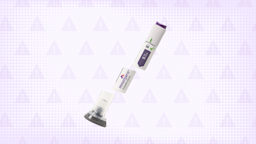
Don't share your Mounjaro (tirzepatide) KwikPen with anyone, even if you use a new pen needle. Sharing the KwikPen can spread germs and cause infection.

 Carton
| Dosage | Quantity | Price as low as | Price per unit |
|---|---|---|---|
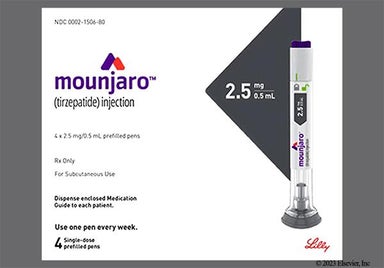
| 4 pens of 2.5mg/0.5ml | 1 carton | $1,083.84 | $1,083.84 |
| 4 pens of 5mg/0.5ml | 1 carton | $1,083.74 | $1,083.74 |
| 4 pens of 7.5mg/0.5ml | 1 carton | $1,083.73 | $1,083.73 |
| 4 pens of 10mg/0.5ml | 1 carton | $1,083.67 | $1,083.67 |
| 4 pens of 12.5mg/0.5ml | 1 carton | $1,083.40 | $1,083.40 |
| 4 pens of 15mg/0.5ml | 1 carton | $1,083.53 | $1,083.53 |
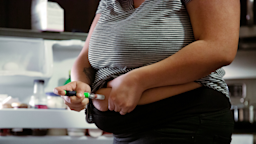
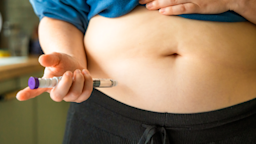
The typical starting dose is 2.5 mg injected under the skin once weekly. Inject into the stomach, thigh, or back of the upper arm.
After 4 weeks, your prescriber will raise your dose to 5 mg injected under the skin once weekly.
Depending on how well the medication works, your prescriber might keep raising your dose every 4 weeks or so until you're at a dose that works best for you.
For adults, the maximum recommended dose is 15 mg injected once weekly. For children, the maximum dose is 10 mg injected once weekly.


Contraindications are specific health conditions or situations in which a person should not take a medication due to safety concerns. If you have any of the following conditions or if any of the following apply to you, let your healthcare provider know because Mounjaro (tirzepatide) will not be safe for you to take.








Prescription savings
Stop paying too much for your prescriptions. Compare prices, get pharmacy coupons, and save up to 80%. Find expert answers to your health questions so you can make the best decisions for yourself and your family.
Health conditions
Medications & treatment
Access & affordability
 Our monthly healthcare membership can help you save thousands on your prescription costs.
Resources

