Key takeaways:
Mounjaro (tirzepatide) is a once-weekly injectable medication that can help lower blood glucose (blood sugar) for people ages 10 and older living with Type 2 diabetes. Mounjaro is available as single-use pens and vials, but both forms have the same recommended dosages.
People usually start with a Mounjaro dosage of 2.5 mg once a week for 4 weeks. At week 5, the dosage is typically raised to 5 mg once a week for another 4 weeks. After week 9, the dosage can be raised to 7.5 mg a week, if needed to manage your blood sugar better.
Mounjaro doses shouldn’t be raised by more than 2.5 mg every 4 weeks. The maximum recommended Mounjaro dosage for adults is 15 mg once a week. The maximum recommended Mounjaro dosage for children is 10 mg once a week.
There are many ways to save on Mounjaro. If you’re eligible, a manufacturer savings card could help you get Mounjaro for as little as $25 per prescription.
Save on related medications
When it comes to medications that treat Type 2 diabetes, taking the right dose is essential. A dose that’s too low won’t provide the right blood glucose (blood sugar) balance. And one that’s too high raises the risk of side effects. But finding the right dose often takes some time.
And that’s definitely true in the case of Mounjaro (tirzepatide). Dosages of this once-weekly injectable medication are increased over several weeks, until a person reaches their maintenance (steady) dosage. This can help limit unwanted side effects, such as nausea and diarrhea.
But just how long will it take to get to your maintenance Mounjaro dosage? Let’s discuss.
Search and compare options
Good to know: Mounjaro’s manufacturer has a barcode scanning tool online to help you verify that the medication you’re taking is legitimate. Using your phone’s or computer’s camera, scan the barcode on your product. The tool will tell you if it’s authentic Mounjaro.
What’s the typical Mounjaro dosage for adults?
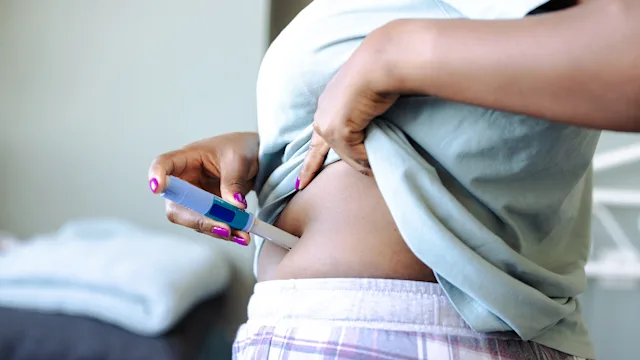
Mounjaro is a once-weekly injection that you give to yourself at home. You can inject it just under the skin of your stomach, thigh, or upper arm. But you should try to rotate injection sites to avoid irritation. Mounjaro can be injected at any time of day, with or without food.
Mounjaro comes as a single-use, prefilled injection pen. This means the device is already assembled and ready to use, and it should be discarded in a sharps container after you inject yourself.
Mounjaro also comes as single-use vials. If you’ve been prescribed this form, you’ll need to use a syringe to draw up each dose right before injecting it. Mounjaro vials contain no preservatives and should only be used once. You shouldn’t try to split doses or save leftover liquid for future injections.
Mounjaro comes in the following doses:
2.5 mg/0.5 mL
5 mg/0.5 mL
7.5 mg/0.5 mL
10 mg/0.5 mL
12.5 mg/0.5 mL
15 mg/0.5 mL
Each dose comes in an injection pen or vial of a different color to help you tell the difference between them. With the vials, the safety cap’s color is also different between doses. This cap should be the same color as what’s on the vial’s labeling.
Mounjaro dosing chart
The typical starting Mounjaro dosage is 2.5 mg once a week. This dosage doesn’t usually have a significant effect on your blood sugar, but it helps your body get used to the medication.
After that, the dosage slowly goes up over a period of several weeks. The chart below shows the standard Mounjaro dosing schedule.
Weeks since starting Mounjaro | Recommended dosage for adults |
|---|---|
Weeks 1-4 | Inject 2.5 mg beneath the skin once a week, on the same day each week. |
Weeks 5-8 | Inject 5 mg beneath the skin once a week, on the same day each week. This may be the maintenance dosage for some people. |
Weeks 9 and on | Increase to 7.5 mg once a week if needed for additional blood sugar management. Additional dosage increases can be made if needed. But the increases should be by no more than 2.5 mg at a time. And there should be at least 4 weeks in between each one. |
What is the maximum dosage of Mounjaro?
The maximum recommended Mounjaro dosage for adults is 15 mg once a week. But keep in mind that not everyone will need to use this dose. Many people are able to manage their blood sugar levels with a lower weekly dose (5 mg, 7.5 mg, 10 mg, or 12.5 mg).
What is the recommended Mounjaro dosing for weight loss?
Mounjaro is not FDA approved for weight loss. But its active ingredient, tirzepatide, is approved for weight loss under a different brand name: Zepbound. It’s recommended to start with 2.5 mg of Zepbound, injected once a week. Over a period of several weeks, you’ll slowly raise your dose to a maintenance dosage that works for you. Most people inject 5 mg, 10 mg, or 15 mg of Zepbound once a week for weight loss.
What’s the typical Mounjaro dosage for children?
Mounjaro is also approved to manage Type 2 diabetes for children ages 10 and older. The starting dose and dosage schedule are the same as for adults. But the recommended maximum dosage is lower.
The table below highlights the recommended Mounjaro dosages for children.
Weeks since starting Mounjaro | Recommended dosage for children ages 10-17 |
|---|---|
Weeks 1-4 | Inject 2.5 mg beneath the skin once a week, on the same day each week. |
Weeks 5-8 | Inject 5 mg beneath the skin once a week, on the same day each week. This may be the maintenance dosage for some children. |
Weeks 9 and on | Increase to 7.5 mg once a week if needed for additional blood sugar management. Additional dosage increases can be made if needed. But the increases should be by no more than 2.5 mg at a time. And there should be at least 4 weeks in between each one. |
Maximum dosage | The recommended maximum dosage for children is 10 mg once a week. |
Are there any dosage adjustments for medical conditions or interactions?
Mounjaro dosages don’t need to be adjusted for any health conditions, such as kidney or liver problems. However, Mounjaro does have the potential to interact with certain medications. If you take one of these medications, your prescriber may recommend adjusting your Mounjaro dosage or the dosage of the other medication.
On its own, Mounjaro carries a very low risk of hypoglycemia (low blood sugar). But when it’s combined with other diabetes medications — especially insulin, sulfonylureas, and meglitinides — that risk goes up. If you take one of these medications, your prescriber may recommend keeping your Mounjaro dosage lower to avoid hypoglycemia. They may also decrease the dosage of the other medication.
Mounjaro may also affect how well your body can absorb oral medications, which can change how they work in your body.
As a result, you may need to make changes to how you take other medications, especially when you first start treatment with Mounjaro. But you should discuss how best to manage this interaction with your prescriber and pharmacist.
Mounjaro and birth control
Mounjaro may change how your body absorbs oral birth control pills. This can make birth control pills less effective, potentially leading to unplanned pregnancies. Mounjaro doesn’t interact with non-oral forms of hormonal birth control, such as the patch or vaginal ring.
This interaction is most concerning shortly after starting Mounjaro or raising your dosage. It’s recommended to switch to a non-oral birth control method for 4 weeks after starting Mounjaro or raising your dosage.
Does Mounjaro dosing differ across specific populations?
No, Mounjaro dosing doesn’t usually differ across certain populations. People with liver or kidney problems, as well as older adults, follow the standard instructions.
The only exception to this is children’s Mounjaro dosages. Children ages 10 to 17 shouldn’t use more than 10 mg once a week. This is lower than the maximum recommended adult dosage of 15 mg weekly. This Mounjaro dosing difference exists because children in clinical trials didn’t receive more than 10 mg per week.
Is 2.5 mg of Mounjaro too much for a beginner?
No, Mounjaro 2.5 mg is the recommended starting dose for everyone. Researchers have not studied doses lower than this well enough yet. You shouldn’t try to inject partial doses as a way to avoid side effects. Even doses under 2.5 mg can still cause side effects and may not provide much (or any) benefit.
What happens if you miss a dose of Mounjaro?
If you miss a dose of Mounjaro and it’s within 4 days of when you were supposed to inject, administer your dose as soon as you remember. Continue injecting Mounjaro on your regularly scheduled day after that. If it’s been more than 4 days since your missed dose, wait to inject your dose on your regular day. Avoid injecting two doses within a span of 3 days.
If you’ve missed more than one Mounjaro dose in a row, contact your prescriber. You may have to lower your dosage for a bit before returning to your maintenance dosage.
Remembering once-weekly medications can be tough, especially when you first start taking them. A medication reminder app can be a helpful tool if you find yourself forgetting doses.
Can you change your Mounjaro injection day?
Yes, it’s possible to change your Mounjaro injection day. But it has to be done in a specific way to lower the risk of excessive side effects.
As discussed above, doses need to be taken at least 3 days apart. So you can change your injection day as long as it’s been 3 days or more since your last dose. For instance, if you’ve been injecting Mounjaro on Sundays, you can change to Wednesdays or a day later in the week.
If you’re unsure how to transition to your preferred day of the week, talk to your prescriber or pharmacist. They can help you figure out how to make your Mounjaro dosage schedule more convenient.
What should you do if you use too much Mounjaro?
Taking more Mounjaro than recommended can raise the risk of side effects. Most commonly, people experience nausea and diarrhea when they use a dosage that’s too high. But stomach pain, vomiting, and heartburn are also possible.
Mounjaro pens and vials only contain enough medication for one dose. So it’s unlikely that you would inject too much at one time by accident. But injecting it too often (especially twice within a 3-day period) can cause more side effects.
If you’re using compounded tirzepatide, you may receive vials with multiple doses of medication. In this case, always double check how much you’re injecting before administering it. This can help prevent you from accidentally injecting too much medication.
If you or a loved one has used too much Mounjaro, it’s best to reach out to your prescriber for next steps — even if you’re not having any side effects. You can also contact Poison Control at 1-800-222-1222 for guidance.
Can Mounjaro cause hypoglycemia?
Yes, hypoglycemia is also a possible side effect of using too much Mounjaro. Be sure to check your blood sugar level if you experience symptoms of hypoglycemia, such as shaking, sweating, or dizziness. If your sugar level is lower than 55 mg/dL, you should seek medical care, and you may need someone’s help doing so. This is considered severe hypoglycemia and can be life-threatening.
How to save on Mounjaro
There are ways to save on Mounjaro, which is available as a brand-name medication. If you have commercial insurance, you may be eligible to pay as little as $25 for up to a 3-month supply of Mounjaro through the manufacturer’s copay savings program. If your insurance doesn’t cover Mounjaro, you may pay as low as $499 per month with the copay savings card. You can also access self-pay pricing starting at $499 through LillyDirect.
Frequently asked questions
You can inject Mounjaro at any time of day that works for you. Just be sure to inject it on the same day each week. This helps provide consistent effects.
It’s possible to switch from Ozempic (semaglutide) to Mounjaro. But you’ll likely need to start with the lowest dosage of Mounjaro. And you’ll probably need to follow the usual dosage schedule when it comes to raising doses. Ozempic and Mounjaro aren’t interchangeable.
There is no dose of Mounjaro that’s equivalent to 1 mg of Ozempic. In clinical trials, all studied doses of Mounjaro (5 mg, 10 mg, and 15 mg) provided better blood sugar management than 1 mg of Ozempic. Those doses also led to greater weight loss.
You can inject Mounjaro at any time of day that works for you. Just be sure to inject it on the same day each week. This helps provide consistent effects.
It’s possible to switch from Ozempic (semaglutide) to Mounjaro. But you’ll likely need to start with the lowest dosage of Mounjaro. And you’ll probably need to follow the usual dosage schedule when it comes to raising doses. Ozempic and Mounjaro aren’t interchangeable.
There is no dose of Mounjaro that’s equivalent to 1 mg of Ozempic. In clinical trials, all studied doses of Mounjaro (5 mg, 10 mg, and 15 mg) provided better blood sugar management than 1 mg of Ozempic. Those doses also led to greater weight loss.
The bottom line
The starting dosage of Mounjaro (tirzepatide) is usually 2.5 mg injected beneath the skin once a week, with or without meals. After 4 weeks, your dosage will likely be raised to 5 mg once a week for another 4 weeks. And then it can be slowly raised, up to a maximum dosage of 15 mg a week for adults or 10 mg a week for children ages 10 to 17, if your blood glucose (blood sugar) levels still aren’t where you want them to be.
Mounjaro dosages shouldn’t be raised by more than 2.5 mg at a time, with 4 weeks in between each increase. These gradual changes can help prevent digestive side effects such as nausea and diarrhea.

Why trust our experts?



References
Eli Lilly and Company. (2026). Mounjaro- tirzepatide injection, solution [package insert]. DailyMed.
Farzam, K., et al. (2024). Tirzepatide. StatPearls.
Frías, J. P., et al. (2021). Tirzepatide versus semaglutide once weekly in patients with Type 2 diabetes. The New England Journal of Medicine.
Hannon, T. S., et al. (2025). Efficacy and safety of tirzepatide in children and adolescents with Type 2 diabetes (SURPASS-PEDS): A randomised, double-blind, placebo-controlled, phase 3 trial. The Lancet.
MedlinePlus. (2026). Tirzepatide injection.
Skelley, J. W., et al. (2024). The impact of tirzepatide and glucagon-like peptide 1 receptor agonists on oral hormonal contraception. Journal of the American Pharmacists Association.