



Januvia Dosages for Adults: Your GoodRx Guide
The recommended Januvia dosage is 100 mg daily, but this may be adjusted for people with kidney problems. Get info on the max dosage and varying strengths.
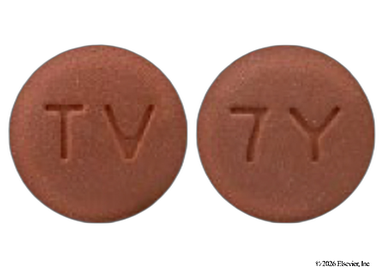
Januvia (sitagliptin) is a prescription medication that helps lower blood sugar in adults with Type 2 diabetes. It works best when you also follow a balanced diet and exercise regularly. It belongs to the drug class called dipeptidyl peptidase-4 (DPP-4) inhibitors, or gliptins. Januvia (sitagliptin) comes as a tablet you take by mouth once a day. Side effects include stuffy or runny nose and headache. Januvia (sitagliptin) is a brand-name medication only; the generic version isn't available yet.

Januvia (sitagliptin) is a dipeptidyl peptidase-4 (DPP-4) inhibitor. It blocks a protein in the body called DPP-4 from working. This helps insulin stick around in your body longer. It also stops your body from making glucagon, a hormone that raises blood sugar. Together, this helps control your blood sugar levels.
| Common Brands | Januvia |
|---|---|
| Drug Class | DDP-4 inhibitor |
| Controlled Substance Classification | Not a controlled medication |
| Generic Status | Lower-cost generic available |
| Availability | Prescription only |

The following side effects may get better over time as your body gets used to the medication. Let your healthcare provider know immediately if you continue to experience these symptoms or if they worsen over time.
Contact your healthcare provider immediately if you experience any of the following.
Along with its needed effects, a medicine may cause some unwanted effects. Although not all of these side effects may occur, if they do occur they may need medical attention.
Check with your doctor immediately if any of the following side effects occur:
Less common
blurred vision
chills
cold sweats
confusion
cool, pale skin
dizziness
fast heartbeat
headache
increased hunger
loss of consciousness
nightmares
seizures
shakiness
slurred speech
unusual tiredness or weakness
Incidence not known
Blistering, peeling, loosening of the skin
hives or welts, itching, or skin rash
large, hive-like swelling on the face, eyelids, lips, tongue, throat, hands, legs, feet, or sex organs
loss of appetite
pains in the stomach, side, or abdomen, possibly radiating to the back
puffiness or swelling of the eyelids or around the eyes, face, lips, or tongue
red skin lesions, often with a purple center
redness of the skin
severe joint pain
sores, ulcers, or white spots in the mouth or on the lips
vomiting
Some side effects may occur that usually do not need medical attention. These side effects may go away during treatment as your body adjusts to the medicine. Also, your health care professional may be able to tell you about ways to prevent or reduce some of these side effects. Check with your health care professional if any of the following side effects continue or are bothersome or if you have any questions about them:
More common
Body aches or pain
difficulty with breathing
ear congestion
loss of voice
muscle aches
stuffy or runny nose
Other side effects not listed may also occur in some patients. If you notice any other effects, check with your healthcare professional.
Call your doctor for medical advice about side effects. You may report side effects to the FDA at 1-800-FDA-1088.




Januvia (sitagliptin) can cause some serious health issues. This risk may be even higher for certain groups. If this worries you, talk to your doctor or pharmacist about other options.
Although rare, a few people who took Januvia (sitagliptin) have had pancreatitis, which means the pancreas gets inflamed. It's not clear if people who've had pancreatitis before are more likely to get it again with this medication. Be sure to let your prescriber know if you've had it in the past.
Stop taking Januvia (sitagliptin) and call your prescriber right away if you have signs of pancreatitis. Watch for upper stomach pain that spreads to your back and doesn't go away. You also might have a fever, nausea, or vomiting.
In a study, some people with Type 2 diabetes and heart disease who took a medication like Januvia (sitagliptin) developed heart failure. It's not clear if Januvia (sitagliptin) has the same risk.
Before starting Januvia (sitagliptin), tell your prescriber about your full medical history, especially if you have heart or kidney problems. They can check your risk of heart failure.
Get medical help right away if you have signs of heart failure while taking Januvia (sitagliptin). This includes trouble breathing, feeling very tired, swelling in your body, or sudden weight gain.
Few people who took Januvia (sitagliptin) had sudden kidney injury. Sometimes, they needed dialysis.
Before starting Januvia (sitagliptin), your prescriber might order blood work to check your kidneys. They'll also check your kidneys from time to time during treatment. If you get any kidney problems, your prescriber might lower your dose or ask you to stop taking it.
Talk to your care team if you're urinating less than usual while taking Januvia (sitagliptin). This can be a sign of a kidney problem.
There's a higher chance of having low blood sugar (hypoglycemia) if you take Januvia (sitagliptin) with certain other diabetes medications. This is mainly if you also use insulin or take sulfonylureas like glipizide. Very low blood sugar can be life-threatening.
Symptoms of low blood sugar include feeling shaky, very hungry, confused, or weak. You also might be nervous or anxious, have a fast heartbeat, or sweat. Be sure you know how to spot and treat low blood sugar. Talk to your care team if you're worried about low blood sugar while taking Januvia (sitagliptin).
Some people can have a serious allergic reaction to Januvia (sitagliptin). It can look like a rash, peeling or blistering skin, swelling of the face or lips, or trouble breathing. There could also be other signs of anaphylaxis. Reactions can happen within the first 3 months of starting the medication. If this happens, stop taking Januvia (sitagliptin) and get medical care right away.
Tell your prescriber if you've had an allergic reaction to other DPP-4 inhibitors like Tradjenta (linagliptin) or alogliptin (Nesina). You might be more likely to react to Januvia (sitagliptin).
Some people who take DPP-4 inhibitors like Januvia (sitagliptin) have had severe joint pain. This can happen anytime from a day to many years after starting the medication. For most people, the pain goes away after they stop the medication. If you have any discomfort in your joints, speak to your care team right away.
Some people taking Januvia (sitagliptin) have had a skin problem called bullous pemphigoid. It can cause itchy skin, blistering rash, or sores. These usually go away once you stop taking the medication and get treated.
If you notice a rash with blisters or itchy skin, talk to a healthcare professional. You might need to stop taking Januvia (sitagliptin) and see a dermatologist.

 Tablet
| Dosage | Quantity | Price as low as | Price per unit |
|---|---|---|---|
| 25mg | 30 tablets | $43.67 | $1.46 |
| 50mg | 30 tablets | $43.67 | $1.46 |
| 100mg | 30 tablets | $43.67 | $1.46 |
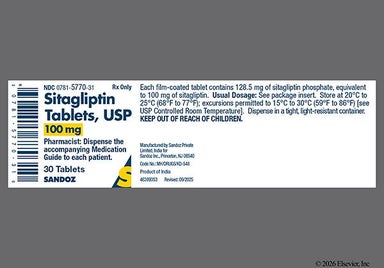
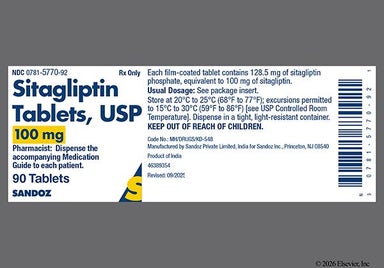
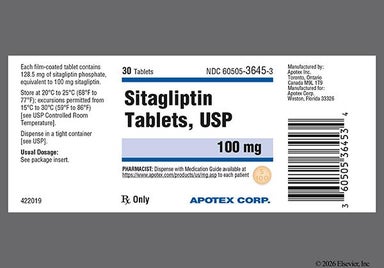
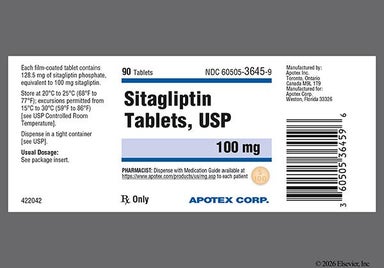
The typical dose is 100 mg by mouth once daily.
Your dose might differ if you have kidney problems.

Although certain medicines should not be used together at all, in other cases two different medicines may be used together even if an interaction might occur. In these cases, your doctor may want to change the dose, or other precautions may be necessary. When you are taking this medicine, it is especially important that your healthcare professional know if you are taking any of the medicines listed below. The following interactions have been selected on the basis of their potential significance and are not necessarily all-inclusive.
Using this medicine with any of the following medicines is usually not recommended, but may be required in some cases. If both medicines are prescribed together, your doctor may change the dose or how often you use one or both of the medicines.
Using this medicine with any of the following medicines may cause an increased risk of certain side effects, but using both drugs may be the best treatment for you. If both medicines are prescribed together, your doctor may change the dose or how often you use one or both of the medicines.












Prescription savings
Stop paying too much for your prescriptions. Compare prices, get pharmacy coupons, and save up to 80%.Resources
About GoodRx
 Find expert answers to your health questions so you can make the best decisions for yourself and your family.
Health conditions
Medications & treatment
Access & affordability
Well-being
Medication discounts

Januvia isn't an insulin. But it lowers blood sugar by raising the level of insulin in your body. Sometimes, your provider might prescribe both Januvia and insulin together to help control your blood sugar levels. Keep in mind that if you're taking both medications at the same time, you're at higher risk for low blood sugar levels. Symptoms of low blood sugar include feeling shaky, confused, or very hungry. If you're taking Januvia with insulin (or with any other medication that raises insulin levels), you might need to check your blood sugar levels more often to make sure it doesn't drop too low (less than 70 mg/dL). Make sure you know how to treat low blood sugar and when you need to call 911.
Yes. Sometimes, your provider might prescribe both Januvia and metformin for you to better control your blood sugar levels. If you have diabetes, your provider will most likely prescribe metformin as the first medication for you to try. If metformin alone isn't enough to control your blood sugar levels, your provider might consider adding on Januvia. It's because the two medications work in different ways to lower blood sugar levels. Studies show that taking both Januvia and metformin together can better control your blood sugar levels than taking Januvia alone. In fact, the two medications exist as a combination medication called Janumet (sitagliptin / metformin). Ask your provider if you have more questions about taking Januvia and metformin together.
Januvia on its own isn't known to cause changes in body weight. However, other diabetes medication can cause changes in weight. And because your provider might prescribe more than one medication to help control your blood sugar, it's possible for you to experience weight changes from other medications. For example, medications such as insulin, glipizide, and pioglitazone (Actos) can cause weight gain. But other medications, such as Jardiance (empagliflozin) and metformin, can cause weight loss. If you've more questions about how blood sugar medications might affect your body weight, talk with your provider.
In general, most people can take Januvia without experiencing any kidney problems. However, if you already have kidney problems, you should let your provider know. Depending on how serious it is, your provider might lower your dose of Januvia. There have been rare reports of a few people who developed sudden kidney injury while taking Januvia. Some of the people who experienced this already had kidney problems or were taking more Januvia than prescribed. To be safe, your provider might order labs to check your kidney health before you start Januvia and regularly during treatment. Talk with your provider if you're urinating less than usual while taking Januvia. This can be a symptom of kidney problems.
Januvia can be taken at any time of the day with or without food. However, it's important to take Januvia at the same time every day so you're more likely to remember to take your medication regularly. This will help to lower the risk of side effects and help your medication to work better. Make sure to pick a time that works well with your schedule so you can be consistent.
