


How Much Is Januvia Without Insurance, and How Can You Save?
A 1-month supply of Januvia can cost hundreds of dollars without insurance. Save with alternatives, coupons, discount cards, and more.
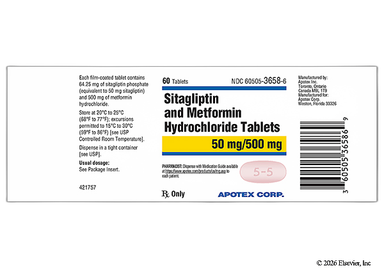
Janumet (sitagliptin / metformin) is a medication for adults with Type 2 diabetes. It contains two different diabetes medications that work together to help control blood sugar. One is sitagliptin, a DPP-4 inhibitor, and the other is metformin, a biguanide. The Janumet immediate-release tablets are taken by mouth twice a day. It works best when used with a balanced meal plan and exercise routine. Some side effects are diarrhea, upper respiratory tract infection, and headache. There's only a brand-name version of Janumet; there's no generic version yet.

Janumet (sitagliptin / metformin) is a combination of two diabetes medications. It works to help lower blood sugar.
| Common Brands | Janumet |
|---|---|
| Drug Class | DPP-4 inhibitor / Biguanide |
| Controlled Substance Classification | Not a controlled medication |
| Generic Status | Lower-cost generic available |
| Availability | Prescription only |

The following side effects may get better over time as your body gets used to the medication. Let your healthcare provider know immediately if you continue to experience these symptoms or if they worsen over time.
Contact your healthcare provider immediately if you experience any of the following.
Side effects that you should report to your care team as soon as possible:
Side effects that usually do not require medical attention (report these to your care team if they continue or are bothersome):




Janumet (sitagliptin / metformin) can cause some serious health issues. This risk may be even higher for certain groups. If this worries you, talk to your doctor or pharmacist about other options.
Janumet contains metformin. Although rare, metformin can cause a serious condition called lactic acidosis (too much lactic acid in the blood). This condition can lead to other health problems that can be life-threatening. Tell your prescriber about your medical history and your other medications before you start treatment. They can check if you're at risk of lactic acidosis.
Call your care team right away if you notice fast breathing, trouble breathing, an unusual heartbeat, a very upset stomach, or muscle pain. Also reach out if you feel very sleepy, tired, weak, dizzy, or cold. These can be signs that you have too much lactic acid in your blood. Your care team can work to help treat this condition.
Although rare, some people taking Janumet (sitagliptin / metformin) had an inflamed pancreas (pancreatitis). It's not clear if people who've had pancreatitis before are more likely to get it again with treatment. To be safe, tell your prescriber if you've had pancreatitis before.
Stop taking Janumet (sitagliptin / metformin) and get medical help right away if you feel belly pain that won't go away or that spreads to your back. This can happen with or without nausea and vomiting. These can be signs of pancreatitis that a healthcare professional should check out.
Some clinical studies found that there might be a link between DPP-4 inhibitor (like sitagliptin) and heart failure. People in these studies had or were at risk of heart disease.
It's not clear if Janumet (sitagliptin / metformin) raises the risk of heart failure. To be safe, tell your prescriber about your full medical history before starting this medication. This is especially important if you have a history of or are at risk of heart failure. They can help you understand the risks and benefits of treatment.
Get medical help right away if you notice any symptoms related to heart failure. This includes shortness of breath, fast or irregular heartbeat, swelling in the ankles or feet, rapid weight gain, and chest pain.
Some people had worsening kidney function while taking Janumet (sitagliptin / metformin). In some cases, acute (sudden) kidney failure happened and people needed dialysis to manage it.
Tell your prescriber about all your health problems before starting Janumet (sitagliptin / metformin). This medication isn't a good choice for people with severe kidney issues. During treatment, your prescriber will check your blood regularly. This helps them make sure your kidneys are okay. If your kidneys get worse, you might need to stop taking the medication.
The metformin in Janumet can lower how much vitamin B12 your body absorbs. This can make your vitamin 12 levels drop, which could lead to anemia (a low red blood cell count). To be safe, your prescriber might check for low vitamin B12 and anemia with a blood test every 1 to 3 years.
Tell your care team if you feel tired or dizzy, have weak muscles, or feel tingling or numbness. These could be signs of low vitamin B12. If blood tests show your levels are low, your prescriber might recommend a vitamin B12 supplement to get your levels back up.
When you take Janumet (sitagliptin / metformin) with certain other diabetes medications, you have a higher chance of low blood sugar (hypoglycemia). These diabetes medications are insulin and sulfonylureas like glipizide. Very low blood sugar can be dangerous.
Be sure you know how to recognize and treat low blood sugar. Look for symptoms like feeling shaky, very hungry, confused, or weak. You also might be nervous or anxious, have a fast heartbeat, or sweat. Talk to your healthcare team if you're worried about having low blood sugar while taking Janumet (sitagliptin / metformin).
Some people who've taken a DPP-4 inhibitor like the sitagliptin in Janumet have had severe and disabling joint pain. This has happened within one day to years after starting this medication. For most people, the pain goes away after they stop taking it. Talk to your prescriber right away if you feel any discomfort in your joints.
Some people who've taken a DPP-4 inhibitor, like the sitagliptin in Janumet, have had a skin reaction called bullous pemphigoid. It looks like an itchy, blistering rash. Usually, the blisters or sores go away once you stop taking the medication and get treated.
Talk to your care team if you have itchy skin, a rash with blisters, or sores while taking Janumet (sitagliptin / metformin). You might need to stop taking the medication and see a dermatologist.
Although it's rare, some people can have a serious allergic reaction to Janumet (sitagliptin / metformin). This can include life-threatening reactions like peeling, blistering skin and anaphylaxis. Allergic reactions most often happen within the first 3 months of treatment. But they can also happen at any time.
Be sure to tell your prescriber if you've had an allergic reaction to other DPP-4 inhibitors or "gliptins." Examples are Januvia (sitagliptin) and saxagliptin (Onglyza). It's not clear if you might have an allergic reaction if you take Janumet (sitagliptin / metformin).
Stop taking Janumet (sitagliptin / metformin) and get medical help right away if you have an allergic reaction. Look out for a widespread rash, hives, blisters, peeling skin, trouble breathing, or swelling in your face or throat.

 Tablet
| Dosage | Quantity | Price as low as | Price per unit |
|---|---|---|---|
| 50mg/500mg | 60 tablets | $53.13 | $0.89 |
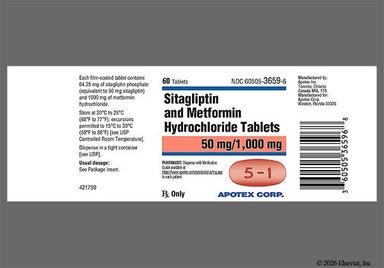
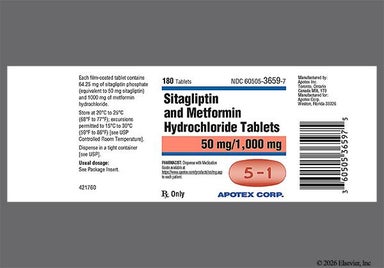
| 50mg/1000mg | 60 tablets | $53.13 | $0.89 |
The typical starting dose is 50 mg/500 mg (sitagliptin/metformin) by mouth twice daily with meals.
Your dose might differ if you were taking metformin by itself before you started Janumet.
The maximum daily dose for Janumet is 100 mg/2,000 mg (sitagliptin/metformin).


Contraindications are specific health conditions or situations in which a person should not take a medication due to safety concerns. If you have any of the following conditions or if any of the following apply to you, let your healthcare provider know because Janumet (sitagliptin / metformin) will not be safe for you to take.









Prescription savings
Stop paying too much for your prescriptions. Compare prices, get pharmacy coupons, and save up to 80%. Find expert answers to your health questions so you can make the best decisions for yourself and your family.
Health conditions
Medications & treatment
Access & affordability
Medication discounts

You can take Janumet at any time of day, but it's important to be consistent. Also keep in mind that you need to take the medication twice a day, each time with a meal. So, it could be a good idea to take Janumet with breakfast and with dinner each day. If you're not sure when to take your medication, talk to your prescriber or pharmacist.
Some people might lose a little weight while taking Janumet. The metformin in Janumet can have beneficial effects on weight for some people. Studies show that the amount of weight loss with Janumet is about the same as with metformin alone. Keep in mind that making healthy changes to diet and staying active are key parts of managing diabetes. They can also play a role in managing your weight. If you have questions about how this medication could affect your weight, talk to your prescriber.
No, Janumet isn't a GLP-1 medication. Instead, it's a combination medication with two different types of diabetes medications in it. One is sitagliptin, which is a DPP-4 inhibitor, and the other is metformin, a biguanide. GLP-1 agonists and Janumet both help lower blood sugar, but they work in different ways. Talk with your prescriber to see which type of diabetes medication is right for you.
No. Don't crush the Janumet tablets or cut them in half. The tablets don't have a score line (an indented line down the middle of the tablet). This means that it's not a good, or safe, idea to try to split it. It could result in halves with uneven amounts of medication, and you could get hurt. If you have trouble swallowing the tablets whole, speak with your prescriber.
You should avoid drinking alcohol while taking Janumet. Drinking alcohol can make some side effects, like an upset stomach and headaches, feel worse. It can also make your blood sugar drop too much, particularly if you haven't eaten or have just exercised. This can be dangerous. What's more, drinking a lot of alcohol during treatment can raise your risk of a very serious problem called lactic acidosis. Because of this, it's best to talk to your prescriber about your drinking habits while you're taking this medication.
Janumet can start to help lower your blood sugar within the first week of treatment. But it can take 3 to 6 months of taking the medication regularly to see its full effect on your A1C. Your A1C is a way to measure what your average blood sugar has been over 3 months. Keep in mind that everyone can have a different experience with medications. So, it's a good idea to talk to your prescriber to learn more about how fast Janumet might work for you.
Zituvimet and Janumet are brand-name medications for adults with Type 2 diabetes. They have the same active ingredients. They both combine the same two diabetes medications into one pill — sitagliptin and metformin. The main difference is which pharmaceutical company makes each one. Zituvimet is made by Zydus Lifesciences, and Janumet is made by Merck. Talk to your prescriber to learn more about other similarities and differences.
No, Janumet isn't the same as Januvia. Januvia has one active ingredient in it — sitagliptin. But Janumet has two — sitagliptin and metformin. For people who need to take Januvia and metformin for better blood sugar control, Janumet can be a convenient option. This is because you don't have to take two different pills. Talk to your prescriber to compare Janumet to Januvia and see which is right for you.
