Evotaz
Evotaz (atazanavir / cobicistat) is a combination medication that's taken as part of an antiretroviral (ARV) regimen to treat HIV (human immunodeficiency virus). It's approved for people with HIV who weigh at least 77 pounds. Evotaz (atazanavir / cobicistat) is a tablet that's taken once a day with food. It must be taken along with other HIV ARV medications. Evotaz (atazanavir / cobicistat) can cause side effects, including rash and jaundice (yellowing of the skin or eyes).


What is Evotaz (atazanavir / cobicistat)?
What is Evotaz (atazanavir / cobicistat) used for?
- Treatment of HIV
How Evotaz (atazanavir / cobicistat) works
Evotaz (atazanavir / cobicistat) is a combination of two medications: atazanavir and cobicistat.
- Atazanavir is a protease inhibitor (PI). It prevents HIV from infecting your cells.
- Cobicistat is a "booster" medication. It slows down your body's metabolism (breakdown) of atazanavir so the atazanavir levels in your blood can remain high.
Drug facts
| Common Brands | Evotaz |
|---|---|
| Drug Class | Antiretroviral |
| Controlled Substance Classification | Not a controlled medication |
| Generic Status | No lower-cost generic available |
| Availability | Prescription only |

Side effects of Evotaz (atazanavir / cobicistat)
The following side effects may get better over time as your body gets used to the medication. Let your healthcare provider know immediately if you continue to experience these symptoms or if they worsen over time.
Common Side Effects
- Jaundice (yellowing of the skin or eyes; up to 6%)
- Rash (5%)
Less Common Side Effects
- Nausea
- Diarrhea
- Headache
Evotaz (atazanavir / cobicistat) serious side effects
Contact your healthcare provider immediately if you experience any of the following.
- Severe skin reaction: red, raised skin areas, rash, blistering, peeling skin
- Heart rhythm problems: feeling dizzy or lightheaded, feeling that your heart skips beats or is pounding
- Kidney stone or gallstone: severe pain in the stomach or sides with nausea or vomiting, difficulty urinating, fever, bloody urine
The following Evotaz (atazanavir / cobicistat) side effects have also been reported
Side effects that you should report to your care team as soon as possible:
- Allergic reactions—skin rash, itching, hives, swelling of the face, lips, tongue, or throat
- Gallbladder problems—severe stomach pain, nausea, vomiting, fever
- Heart rhythm changes—fast or irregular heartbeat, dizziness, feeling faint or lightheaded, chest pain, trouble breathing
- High blood sugar (hyperglycemia)—increased thirst or amount of urine, unusual weakness or fatigue, blurry vision
- Infection—fever, chills, cough, or sore throat
- Kidney injury—decrease in the amount of urine, swelling of the ankles, hands, or feet
- Kidney stones—blood in the urine, pain or trouble passing urine, pain in the lower back or sides
- Lipodystrophy—increased fat in the upper back or midsection, decreased fat in the face, arms, or legs
- Liver injury—right upper belly pain, loss of appetite, nausea, light-colored stool, dark yellow or brown urine, yellowing skin or eyes, unusual weakness or fatigue
- Rash, fever, and swollen lymph nodes
- Redness, blistering, peeling, or loosening of the skin, including inside the mouth
Side effects that usually do not require medical attention (report these to your care team if they continue or are bothersome):

Get your GoodRx coupon

Pros and cons of Evotaz (atazanavir / cobicistat)
Pros
- Taken once a day
- Combination tablet, so there are fewer pills to take
- Same dose for adults and children who weigh at least 77 pounds
- Can take if you have a sulfa allergy
Cons
- Need to take with food
- Might cause jaundice (yellowing of skin or eyes)
- Interacts with a lot of medications, such as certain other HIV medications, statins, and certain blood thinners
- Must be separated from medications that treat heartburn and indigestion by a certain amount of time

Pharmacist tips for Evotaz (atazanavir / cobicistat)

- You can take Evotaz (atazanavir / cobicistat) anytime during the day. Just make sure it's around the same time every day and with food.
- Always take Evotaz (atazanavir / cobicistat) with food. Tell your healthcare provider if access to food is a concern for you. There might be options and resources that your provider can help you with. Your provider might also consider switching you to an HIV medication that doesn't need to be taken with food.
- Tell your providers and pharmacists about all the medications you're taking or planning to take. Evotaz (atazanavir / cobicistat) can interfere with how well your body gets rid of many medications. This can cause medications to build up in your body and raise your risk for side effects. There are some that you can't take with this HIV medication and others that need dose adjustments. Your providers can check for interactions and recommend how you can safely take your medications.
- Talk to a provider or pharmacist before purchasing any over-the-counter medications for heartburn or indigestion. You can take these medications if you need to, but you'll need to follow specific instructions to separate them from when you take your Evotaz (atazanavir / cobicistat) dose. These medications can lower the amount of Evotaz (atazanavir / cobicistat) in your body and make the HIV medication work less well. Ask your provider or pharmacist for instructions on timing and dosing for heartburn medications.
- Evotaz (atazanavir / cobicistat) isn't recommended during pregnancy because the blood levels of the HIV medication can drop and cause the medication to work less well. Talk to your provider about your plans for becoming pregnant or options for birth control. If you become pregnant while you're taking Evotaz (atazanavir / cobicistat), continue to take the medication, but schedule an appointment with your provider as soon as possible. Don't stop taking it on your own.

Risks and warnings for Evotaz (atazanavir / cobicistat)
Evotaz (atazanavir / cobicistat) can cause some serious health issues. This risk may be even higher for certain groups. If this worries you, talk to your doctor or pharmacist about other options.
Heart rhythm problems
- Risk factors: History of heartbeat problems | Taking medications that can affect heart rhythm
Evotaz (atazanavir / cobicistat) can affect your heart rhythm, which can sometimes be serious. Your risk might be higher if you have heart rhythm problems (e.g., heart block) or if you take other medications that cause changes in heart rhythm. Make sure your HIV provider and cardiologist know about the medical conditions you have and the medications you're taking. Your cardiologist might choose to monitor your heartbeat more often if you're at risk for changes in heart rhythm. Get medical attention right away if you feel your chest pounding, have trouble breathing, have chest pain, or feel faint or lightheaded while you're taking Evotaz (atazanavir / cobicistat).
Rash and other severe skin reactions
Tell your provider about any new rashes that you have after you start Evotaz (atazanavir / cobicistat). Some people who took this medication had rash and other severe skin reactions. In studies, mild-to-moderate rashes happened within the first 7 weeks of treatment and often went away after a week or so. But stop the medication and get medical attention right away if you get a severe rash, high fever, muscle or joint pain, mouth sores, blisters, or peeling skin. These can be signs of a severe skin reaction.
Kidney problems
- Risk factors: History of kidney damage | Also taking tenofovir disoproxil fumarate | Taking other medications that can cause kidney problems
Evotaz (atazanavir / cobicistat) can cause changes to your blood test results that tell your provider about your kidney health. In some cases, these changes can suggest kidney damage. In addition, some people who took Evotaz (atazanavir / cobicistat) reported developing kidney problems.
The risk for kidney damage might be higher for people with a history of kidney problems and for people taking other medications that can harm the kidneys, including tenofovir disoproxil fumarate (Viread) and NSAIDs like ibuprofen (Advil). Tell your provider about your medical conditions and the medications you take (including over-the-counter pain or cold medications). Also, get routine blood work done so your provider can check your kidney function.
Kidney stones or gallstones
Some people taking Evotaz (atazanavir / cobicistat) have kidney stones or gallstones. Talk to your provider if you notice any signs of kidney stones or gallstones, such as unusual pain in your stomach or sides with nausea or vomiting, difficulty urinating, fever, or blood in your urine.
Liver problems
- Risk factors: History of liver problems | Hepatitis B or C infection
Some people have had elevated liver enzyme levels after they start Evotaz (atazanavir / cobicistat). These changes might suggest liver damage. Some people with liver conditions, like hepatitis B or hepatitis C infection, are at risk for worsening liver problems. Make sure your healthcare providers know about the medical conditions you have. Your provider might order blood tests to check your liver before you start Evotaz (atazanavir / cobicistat) and periodically during treatment.
High bilirubin levels
Evotaz (atazanavir / cobicistat) can raise your blood levels of bilirubin, which can lead to jaundice (yellowing of the skin or the white part of your eyes). Let your provider know if you develop jaundice. Discuss with your provider whether you can switch to a different HIV medication if you're concerned about your skin or eye color. This yellowing will go away once Evotaz (atazanavir / cobicistat) is stopped, but don't stop the medication until your provider tells you to so your HIV treatment isn't interrupted.
Interactions with other medications (including certain HIV ARVs)
Evotaz (atazanavir / cobicistat) interacts with a lot of medications. Many times, Evotaz (atazanavir / cobicistat) causes the levels of other medications to build up in your body, which can lead to serious or deadly side effects. Other times, medications can lower Evotaz (atazanavir / cobicistat) levels in the body and interfere with how the HIV medication works.
It isn't recommended to use Evotaz (atazanavir / cobicistat) with other HIV medications that need boosting, like other protease inhibitors or medications containing elvitegravir (e.g., Genvoya, Stribild). Doing so might make the medications work less well and raise the risk for drug resistance. It also isn't recommended to use Evotaz (atazanavir / cobicistat) with other medications containing ritonavir (Norvir) because cobicistat and ritonavir work similarly.
Because of the risk for drug interactions, it's important to talk to your healthcare providers and pharmacists before you start or stop any medications. Your providers can check that your medications are safe for you.
Overactive immune system
Taking combination ARV therapy can cause changes to your immune system called immune reconstitution syndrome. This condition happens when your immune system becomes overly active after you start combination therapy. Your immune system begins to fight off different infections that it was too weak to fight off before you started treatment. In rare cases, your immune response might improve so much with treatment that it starts to attack normal cells in your body. You can develop these autoimmune conditions at any time (during the first few weeks of treatment or many months later). Tell your provider right away if you have any new symptoms, such as fever, pain, trouble breathing, hair loss, bulging eyes, sweating, or other sudden changes to your health, after you start Evotaz (atazanavir / cobicistat).
High blood sugar
Some people taking protease inhibitors like Evotaz (atazanavir / cobicistat) had high blood sugar levels. Sometimes, this led to diabetes or worsened diabetes. If this happens, your provider might need to adjust your diabetes medications to make sure your blood sugar is under control. Tell your provider before you start Evotaz (atazanavir / cobicistat) if you have a history of diabetes. Your provider might recommend that you check your blood sugar at home to make sure this medication is safe for you.
Changes in body fat
Some people taking HIV medications, such as Evotaz (atazanavir / cobicistat), have noticed changes in body fat. These changes might look like fat buildup in the upper back, breast, or stomach area. Other people have also lost fat from the legs, arm, and face. It's not clear whether Evotaz (atazanavir / cobicistat) causes these changes to body fat, why this happens, and whether it will affect your health in the future. Tell your provider if you notice these changes while you're taking Evotaz (atazanavir / cobicistat).
Risk of bleeding in people with hemophilia
Some people who have a genetic bleeding condition called hemophilia have had more bleeding after starting protease inhibitors like Evotaz (atazanavir / cobicistat). Some people might need treatment with blood products like factor VIII. In most cases, treatment with Evotaz (atazanavir / cobicistat) continued or was restarted after the bleeding stopped. It's not clear whether the medication is related to more bleeding. Tell your provider if you have hemophilia before you start Evotaz (atazanavir / cobicistat).

Evotaz (atazanavir / cobicistat) dosage
 Tablet
| Dosage | Quantity | Price as low as | Price per unit |
|---|---|---|---|
| 300mg/150mg | 30 tablets | $1,547.50 | $51.58 |
Typical dosage for Evotaz (atazanavir / cobicistat)
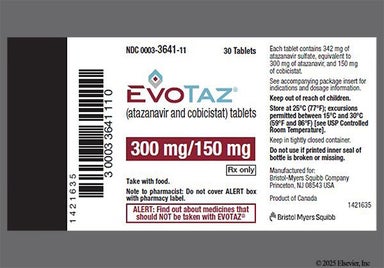
Each tablet contains 300 mg of atazanavir and 150 mg of cobicistat.
The typical dose is 1 tablet by mouth once a day with food.

How much does Evotaz (atazanavir / cobicistat) cost?
$1,547.50

Evotaz (atazanavir / cobicistat) contraindications
Contraindications are specific health conditions or situations in which a person should not take a medication due to safety concerns. If you have any of the following conditions or if any of the following apply to you, let your healthcare provider know because Evotaz (atazanavir / cobicistat) will not be safe for you to take.
- Previous allergic reaction to atazanavir or cobicistat
- Taking with medications that interact with Evotaz (atazanavir / cobicistat)

What are alternatives to Evotaz (atazanavir / cobicistat)?

Evotaz (atazanavir / cobicistat) images