Key takeaways:
Mounjaro (tirzepatide) and Trulicity (dulaglutide) are both once-weekly injections for Type 2 diabetes. But they belong to different medication classes and work slightly differently in your body.
Mounjaro and Trulicity are both FDA approved to treat Type 2 diabetes in adults and children ages 10 and older. Trulicity is also approved to help lower the risk of cardiovascular problems in certain adults with Type 2 diabetes.
Research shows Mounjaro provides better blood glucose (sugar) management than Trulicity. Mounjaro can also help you lose more weight, though neither medication is approved for weight loss.
There are ways to save on Mounjaro and Trulicity. If you’re eligible, a manufacturer savings card could help you get either for as little as $25 per prescription. A patient assistance program for Trulicity is also available.
Save on related medications
If you’re living with Type 2 diabetes, you’re likely taking medication to help lower your blood glucose (sugar). Oral medications are a common starting point for many people. But it’s also common to use diabetes injections. This is especially true if your treatment goals include weight loss or heart protection.
Mounjaro (tirzepatide) and Trulicity (dulaglutide) are two popular non-insulin injections. They’re both safe and work well for Type 2 diabetes. But they have some notable differences, including how they work.
Mounjaro vs. Trulicity at a glance
The table below lists notable differences between Mounjaro and Trulicity.
| Mounjaro | Trulicity | |
|---|---|---|
| Active ingredient | Tirzepatide | Dulaglutide |
| Medication class | Dual glucose-dependent insulinotropic polypeptide (GIP) / glucagon-like peptide-1 (GLP-1) receptor agonist | GLP-1 receptor agonist |
| FDA-approved uses | Type 2 diabetes in people ages 10 and older |
|
| Dosage form(s) |
|
Single-dose pen |
| Average A1C reduction | 2.4%-2.8% | 1.3% |
| Potential weight loss on average* | 12-24 lbs | 10 lbs |
*Mounjaro and Trulicity are not approved for weight management but can cause weight loss as a side effect.
Below are six things to keep in mind when comparing Mounjaro versus Trulicity.
1. Mounjaro and Trulicity work slightly differently in the body
Mounjaro and Trulicity both act like natural gut hormones that help balance blood sugar levels and regulate appetite. But they target slightly different ones.
Mounjaro mimics two hormones:
Glucose-dependent insulinotropic polypeptide (GIP)
Glucagon-like peptide-1 (GLP-1)
Trulicity only acts like GLP-1. So that means they’re in different medication classes. Mounjaro is a dual GIP/GLP-1 receptor agonist. And Trulicity is a GLP-1 receptor agonist.
Both medications have similar actions in the body. These include:
Signaling the pancreas to release insulin when you eat
Reducing how much sugar your liver makes
Slowing the passage out food out of your stomach
Targeting areas of your brain that regulate appetite and food cravings
Because Mounjaro targets two gut hormones, it tends to have a greater effect on blood sugar and weight loss than Trulicity.
2. Mounjaro and Trulicity have different FDA-approved uses
Mounjaro and Trulicity are once-weekly injections that are FDA-approved to treat adults and children ages 10 and older living with Type 2 diabetes. But Trulicity is also approved to lower the risk of serious cardiovascular problems among adults living with Type 2 diabetes and heart disease, as well as those at risk for developing heart disease. Researchers have studied Mounjaro and cardiovascular risk reduction, but the medication isn’t approved for this use yet.
3. Mounjaro comes in more dosage forms than Trulicity
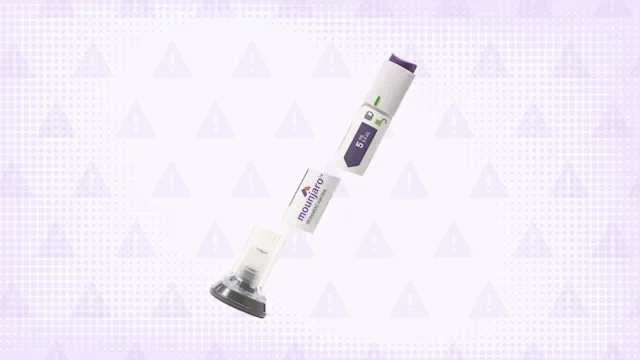
Both Mounjaro and Trulicity are available as single-dose prefilled pens. But Mounjaro also comes as single-dose and multi-dose vials, as well as multi-dose pens (Mounjaro KwikPens). This can offer more flexibility for people using Mounjaro.
Multi-dose vials and pens may also be easier to transport compared to single-use options. These options last longer compared to single-dose options when stored at room temperature. If you’re traveling for a while, you may find it convenient to have fewer items to pack. For example, you may only need to take one Mounjaro KwikPen (and pen needles) with you. But you may need to carry two or more Trulicity pens, depending on how long you’ll be away.
Keep in mind that Trulicity and single-dose Mounjaro pens come ready to use. You’ll need to purchase pen needles separately if you’re using Mounjaro KwikPens. And you’ll need to buy separate syringes and needles if you’re using single-dose or multi-dose Mounjaro vials.
4. Mounjaro may provide greater A1C reduction than Trulicity
In studies, Mounjaro provided greater reduction of hemoglobin A1C (HbA1c or A1C) than Trulicity. Your A1C is an average of your blood sugar levels over the past 2 to 3 months.
A head-to-head clinical trial compared Mounjaro to Trulicity for Type 2 diabetes. After 1 year, those using Mounjaro had between a 2.4% and 2.8% A1C reduction, depending on the dose. Those using Trulicity had a 1.3% reduction.
Keep in mind that this study only compared the 0.75 mg dose of Trulicity to Mounjaro. Higher doses (up to 4.5 mg) weren’t included. But individual studies of Trulicity found that higher doses led to an A1C reduction of up to 1.8% at 8 months. These A1C results were maintained for another 4 months until the study ended. So it’s likely that Mounjaro would still provide greater blood sugar management than Trulicity, regardless of the dose.
5. Mounjaro may provide greater weight loss than Trulicity
Mounjaro and Trulicity aren’t approved for weight loss. But people using these medications tend to lose weight. And you may lose more with Mounjaro than with Trulicity.
The same clinical trial mentioned above also looked at changes in body weight. Those using Mounjaro lost an average of 12 lbs to 24 lbs during the study. Higher doses led to greater weight loss. Participants who used Trulicity lost minimal weight (about 1 lb).
Again, this study only looked at the 0.75 mg dose of Trulicity. But individual studies found that the highest Trulicity dose helped people lose an average of 10 lbs. So it can still provide a significant amount of weight loss for some people.
Good to know: The active ingredient in Mounjaro (tirzepatide) is approved for weight loss under the brand name Zepbound. The active ingredient in Trulicity (dulaglutide) isn’t approved for weight loss under any brand name.
6. Mounjaro may be more likely than Trulicity to cause digestive side effects
Mounjaro and Trulicity both commonly cause gastrointestinal (GI) side effects. These include nausea, diarrhea, and constipation. But studies comparing the two found people using higher doses of Mounjaro (10 mg or 15 mg) experienced these issues more often.
Keep in mind that many people can use Mounjaro or Trulicity without major problems. GI side effects are usually most bothersome when you first start one of them. They can also be more noticeable after raising your dose. But they typically get better or go away after your body adjusts to the medication. Starting with the lowest dose and slowly raising it helps limit GI side effects.
If you’re having trouble with Mounjaro or Trulicity side effects, let your prescriber know. They may suggest a dose change. They can also provide tips to help manage these side effects until your body adjusts.
Can you switch from Trulicity to Mounjaro?
Yes. it’s possible to switch from Trulicity to Mounjaro. In fact, studies suggest making the switch can be helpful if you’re not meeting your diabetes treatment goals with Trulicity. You’ll likely experience additional A1C or body weight reduction.
Keep in mind that there are no standard directions for how to switch between Trulicity and Mounjaro. So be sure to follow your prescriber’s instructions when it comes to what Mounjaro dosage you should start with.
How to save on Mounjaro and Trulicity
There are ways to save on Mounjaro and Trulicity, which are available as brand-name medications. GoodRx can help you navigate between copay savings cards and patient assistance programs to save money on your prescription.
Save with a copay savings card. If you have commercial insurance, you may be eligible to pay as little as $25 per prescription for Mounjaro or Trulicity using a savings card from the manufacturer.
Save with patient assistance programs. If you’re uninsured or underinsured, you may be eligible for Trulicity’s patient assistance program, which offers the medication free of cost.
Frequently asked questions
Yes, tirzepatide is the active ingredient of Zepbound, an FDA-approved medication for weight loss. But it’s also the active ingredient of Mounjaro, which is used to treat Type 2 diabetes. So you might hear “tirzepatide” when discussing one or both of these medications. But while Zepbound and Mounjaro are very similar, they’re not interchangeable.
Keep in mind that compounded tirzepatide is not the same as Zepbound. Compounded tirzepatide isn’t FDA approved, and it may come in different doses and dosage forms. It may also have different ingredients compared to Zepbound.
Trulicity might have positive effects on memory, but more research is required in order to say for sure. One study found that dulaglutide (Trulicity’s active ingredient) reduced cognitive impairment in people with Type 2 diabetes and cardiovascular risk factors. Cognitive impairment means people have trouble with various mental tasks, such as memory, decision making, and attention.
The results of this study are encouraging. But scientists need more studies in broader populations to know if Trulicity affects memory, and who may benefit the most.
Participants did not report increased energy levels as a side effect during Mounjaro’s clinical trials. But some people have noticed having more energy while using the medication. This could be due to Mounjaro improving your diabetes symptoms. It could also be due to lifestyle changes made along with treatment, such as eating nutrient-dense foods or exercising more.
Yes, tirzepatide is the active ingredient of Zepbound, an FDA-approved medication for weight loss. But it’s also the active ingredient of Mounjaro, which is used to treat Type 2 diabetes. So you might hear “tirzepatide” when discussing one or both of these medications. But while Zepbound and Mounjaro are very similar, they’re not interchangeable.
Keep in mind that compounded tirzepatide is not the same as Zepbound. Compounded tirzepatide isn’t FDA approved, and it may come in different doses and dosage forms. It may also have different ingredients compared to Zepbound.
Trulicity might have positive effects on memory, but more research is required in order to say for sure. One study found that dulaglutide (Trulicity’s active ingredient) reduced cognitive impairment in people with Type 2 diabetes and cardiovascular risk factors. Cognitive impairment means people have trouble with various mental tasks, such as memory, decision making, and attention.
The results of this study are encouraging. But scientists need more studies in broader populations to know if Trulicity affects memory, and who may benefit the most.
Participants did not report increased energy levels as a side effect during Mounjaro’s clinical trials. But some people have noticed having more energy while using the medication. This could be due to Mounjaro improving your diabetes symptoms. It could also be due to lifestyle changes made along with treatment, such as eating nutrient-dense foods or exercising more.
The bottom line
Mounjaro (tirzepatide) and Trulicity (dulaglutide) are two popular injections for Type 2 diabetes. While they both work well, they have some notable differences to keep in mind.
Mounjaro and Trulicity are both FDA approved to treat Type 2 diabetes in adults and children ages 10 and older. But Trulicity is also approved to lower the risk of cardiovascular problems in certain adults with diabetes.
Mounjaro and Trulicity work in slightly different ways. Because of this, Mounjaro typically helps lower blood glucose (sugar) levels more than Trulicity. You’re also likely to lose more weight with Mounjaro.
Talk with your healthcare team about whether Mounjaro or Trulicity might be right for you.

Why trust our experts?




References
American Diabetes Association. (n.d.). Use of glucose-lowering medications in the management of Type 2 diabetes.
Cukierman-Yaffe, T., et al. (2020). Effect of dulaglutide on cognitive impairment in Type 2 diabetes: An exploratory analysis of the REWIND trial. The Lancet Neurology.
Eli Lilly and Company. (2026). Mounjaro- tirzepatide injection, solution [package insert]. DailyMed.
Eli Lilly and Company. (2026). Trulicity- dulaglutide injection, solution [package insert]. DailyMed.
Frias, J. P., et al. (2021). Efficacy and safety of dulaglutide 3.0 mg and 4.5 mg versus dulaglutide 1.5 mg in metformin-treated patients with Type 2 diabetes in a randomized controlled trial (AWARD-11). Diabetes Care.
Inagaki, P. N., et al. (2022). Efficacy and safety of tirzepatide monotherapy compared with dulaglutide in Japanese patients with Type 2 diabetes (SURPASS J-mono): A double-blind, multicentre, randomised, phase 3 trial. The Lancet Diabetes and Endocrinology.
Min, T., et al. (2020). The role of tirzepatide, dual GIP and GLP-1 receptor agonist, in the management of Type 2 diabetes: The SURPASS clinical trials. Diabetes Therapy.
Sawamura, T., et al. (2024). Effects of the switch from dulaglutide to tirzepatide on glycemic control, body weight, and fatty liver: A retrospective study. Journal of Diabetes and Metabolic Disorders.