Key takeaways:
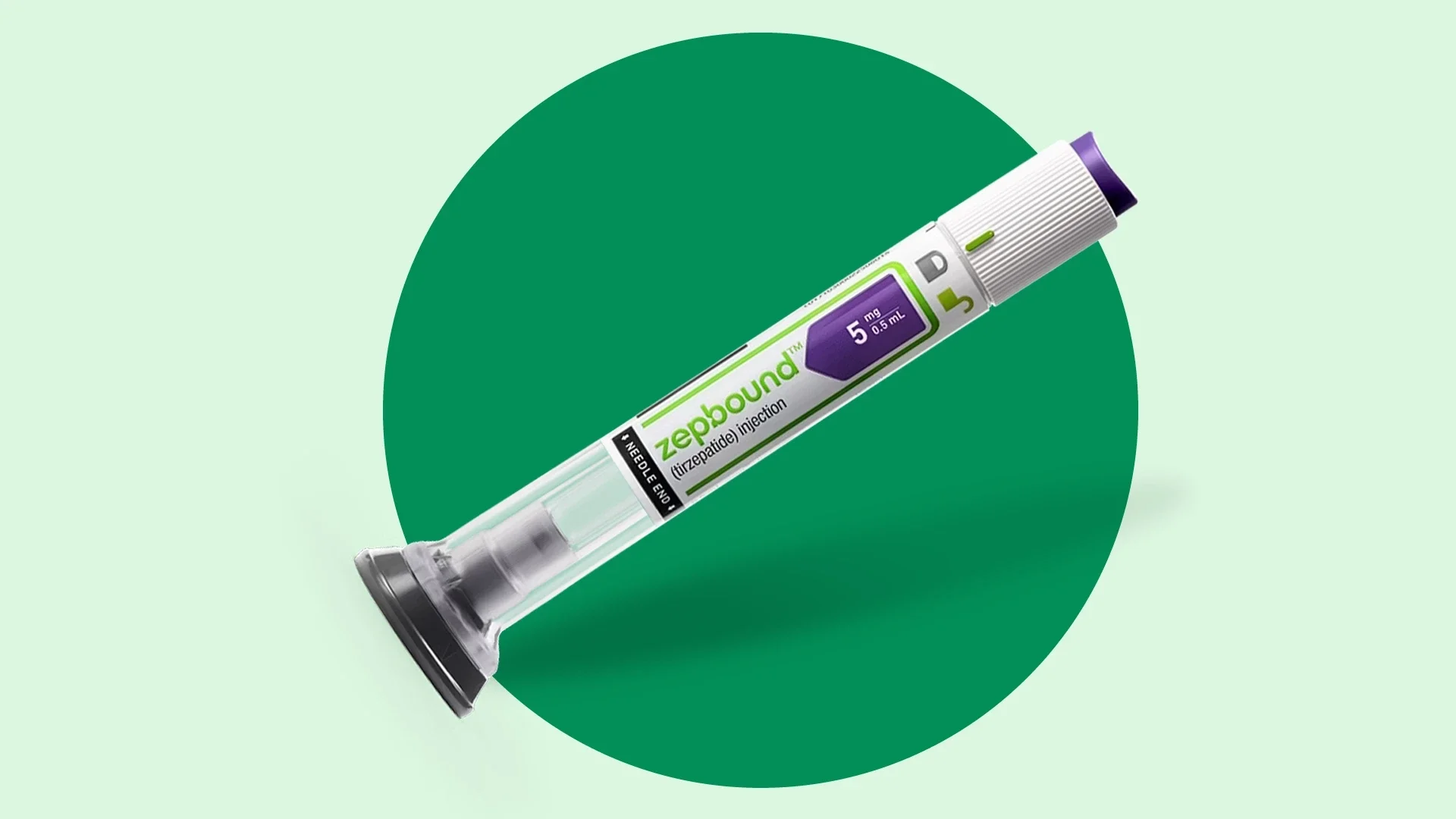
Zepbound (tirzepatide) is an injectable medication that’s FDA approved for weight loss and obstructive sleep apnea. Its active ingredient is tirzepatide.
Zepbound also contains several inactive ingredients. These help the medication stay stable, be less painful to inject, and have a longer shelf life.
Single-dose versions of Zepbound don’t contain preservatives. Multi-dose Zepbound KwikPens contain perservatives to help prevent germs from growing in them once they're opened.
There are ways to save on Zepbound. If you’re eligible, a manufacturer savings card could help you get Zepbound for as little as $25 per prescription. Subscribers to GoodRx for Weight Loss can also access FDA-approved, brand-name GLP-1 medications like Zepbound.
Save on related medications
Tirzepatide is the primary ingredient in Zepbound, an injectable medication for weight loss and obstructive sleep apnea. But tirzepatide isn’t its only ingredient. Several others help keep Zepbound stable and working the way it’s supposed to.
What are Zepbound’s ingredients? And how is it made?
What is the active ingredient in Zepbound?
Tirzepatide is the active ingredient in Zepbound. Once injected, it acts like two natural gut hormones:
Glucose-dependent insulinotropic polypeptide (GIP)
Glucagon-like peptide-1 (GLP-1)
Tirzepatide works in certain areas of your brain that help regulate appetite and food cravings. It also slows the movement of food through your digestive tract, helping you feel full faster and for longer. And it might counteract certain hunger hormones that play a role in weight gain.
Beyond this, tirzepatide also tells your pancreas to release more insulin after you eat. And it signals your liver to make less new glucose (sugar). This is why tirzepatide is also approved to treat Type 2 diabetes under the brand name Mounjaro.
What other ingredients make up Zepbound?
Zepbound has only one active ingredient (tirzepatide). But it has several inactive ingredients. These substances don’t affect how tirzepatide works in the body. They generally help maintain Zepbound’s shelf life and stability. They also help reduce pain during injection.
Zepbound comes as single-dose pens and vials, as well as multi-dose pens (Zepbound KwikPens). The inactive ingredients are slightly different, depending on if you're using a single-dose or multi-dose version of Zepbound.
Single-dose versions of Zepbound contain the following inactive ingredients:
Sodium chloride (makes injections less painful)
Sodium phosphate dibasic heptahydrate (buffer to keep Zepbound stable)
Water for injection (carries tirzepatide into your body)
Hydrochloric acid (adjusts acidity)
Sodium hydroxide (adjusts acidity)
Zepbound KwikPens contain the following inactive ingredients:
Benzyl alcohol (preservative to prevent germs from growing)
Glycerin (makes injections less painful)
Phenol (preservative to prevent germs from growing)
Sodum chloride
Sodium phosphate dibasic heptahydrate
Water for injection
Hydrochloric acid
Sodium hydroxide
Do Zepbound vials have different ingredients from Zepbound pens?
Zepbound vials and Zepbound single-use pens have the same active and inactive ingredients. But these two forms contain different inactive ingredients than Zepbound KwikPens.
Keep in mind, Zepbound and compounded tirzepatide are not the same. Compounded versions may vary in the amount of tirzepatide and the type of inactive ingredients they contain. So it’s likely that there are differences between compounded tirzepatide vials and Zepbound vials or pens.
Does Zepbound contain preservatives?
Single-dose forms of Zepbound don’t contain preservatives. Don’t try to split Zepbound doses or save leftover liquid inside vials for later.
Zepbound KwikPens contain two preservatives: benzyl alcohol and phenol. These help prevent germs from growing after you start using a pen.
Do Zepbound and Mounjaro have the same ingredients?
Yes. Zepbound and Mounjaro both contain tirzepatide as their active ingredient. What’s more, they contain the same inactive ingredients. And they offer the same range of doses in both a pen and vial.
Zepbound and Mounjaro vary in their approved uses. They also have different recommended maintenance doses for each condition they treat.
Can any ingredients in Zepbound cause an allergic reaction?
Yes. It’s possible to have an allergic reaction to any of Zepbound’s active or inactive ingredients. This is very rare. But allergic reactions can be serious or even life-threatening. If you have allergies, make sure to review these with your prescriber and pharmacist before starting Zepbound.
If you experience allergic reactions, such as hives or a rash, contact your prescriber right away. If you have any symptoms that seem severe, such as trouble breathing, call 911 or go to the ER.
How is Zepbound made?
Zepbound is made using a process called hybrid solid-phase peptide synthesis/liquid-phase peptide synthesis (SPPS/LPPS). This process takes amino acids (protein building blocks) and puts them in a certain order to form tirzepatide. Once formed, scientists purify and freeze dry tirzepatide to create the final version that’s placed into Zepbound pens and vials.
Natural GIP and GLP-1 hormones only last for a few minutes in your body before it’s broken down. But the SPPS/LPPS process produces tirzepatide, a molecule that’s designed to resist rapid breakdown, keeping it active for much longer. This is why you have to inject Zepbound only once a week.
How to save on Zepbound
There are ways to save on Zepbound, which is available as a brand-name medication. If you have commercial insurance, you may be eligible to pay as little as $25 for a 1- or 3-month supply of Zepbound pens through the manufacturer’s copay savings program.
If your plan doesn’t cover Zepbound, you may still be able to save. Lower-cost single-dose vials and KwikPens are available through LillyDirect for $299 (2.5 mg), $399 (5 mg), and $449 (7.5 mg, 10 mg, 12.5 mg, and 15 mg) per month. You can also access Zepbound KwikPen through GoodRx starting at $299 per month.
What's more, subscribers to GoodRx for Weight Loss can access FDA-approved, brand-name GLP-1 medications like Zepbound.
The bottom line
Tirzepatide is the active ingredient in Zepbound, an injectable medication for weight loss and obstructive sleep apnea. Zepbound also contains several inactive ingredients to help keep it stable, have a longer shelf life, and feel less painful during injection. Single-dose versions of Zepbound don’t contain preservatives. Zepbound KwikPens contain preservatives to help prevent germs from growing in them after they're opened.
Allergic reactions are rare, but it’s possible to have one to any of Zepbound’s ingredients. Be sure to review your medical history and allergies with your prescriber and pharmacist.

Why trust our experts?



References
Chavda, V. P., et al. (2022). Tirzepatide, a new era of dual-targeted treatment for diabetes and obesity: A mini-review. Molecules.
Eli Lilly and Company. (n.d.). Zepbound.
Eli Lilly and Company. (2026). Zepbound- tirzepatide injection, solution [package insert].
Min, T., et al. (2020). The role of tirzepatide, dual GIP and GLP-1 receptor agonist, in the management of type 2 diabetes: The SURPASS clinical trials. Diabetes Therapy.
Samuelsen, L., et al. (2019). Buffer solutions in drug formulation and processing: How pKa values depend on temperature, pressure and ionic strength. International Journal of Pharmaceutics.
United States Patent. (2024). Patent no.: US 11,918,623 B2.