Zeposia
Zeposia (ozanimod) treats adults with relapsing forms of multiple sclerosis (MS). This medication can also treat adults with ulcerative colitis (UC). It works as a sphingosine 1-phosphate (S1P) receptor modulator to relieve inflammation in the body. It's a capsule you take by mouth, usually once per day (or as directed by your prescriber if you have liver problems). You use a starter pack for the first week. It helps you slowly raise your dosage to a maintenance level. Side effects include upper respiratory infections and higher liver enzymes. Zeposia (ozanimod) is only available as a brand-name medication.


What is Zeposia (ozanimod)?
What is Zeposia (ozanimod) used for?
- Relapsing forms of multiple sclerosis (MS) in adults
- Moderate-to-severe ulcerative colitis (UC) in adults
How Zeposia (ozanimod) works
Zeposia (ozanimod) belongs to the drug class called sphingosine 1-phosphate (S1P) receptor modulators. It attaches to the S1P receptor protein on your white blood cells. This blocks white blood cells from leaving your lymph nodes and getting into the body.
For MS, the medication is thought to lower the number of white blood cells that get to your brain and spinal cord. This could lessen inflammation there and relieve symptoms of MS.
Similarly for UC, it might lower how much white blood cells get to your gut. This might help reduce gut inflammation and relieve UC.
Drug facts

Side effects of Zeposia (ozanimod)
The following side effects may get better over time as your body gets used to the medication. Let your healthcare provider know immediately if you continue to experience these symptoms or if they worsen over time.
Common Side Effects
- Upper respiratory infection (26%)
- High liver enzyme levels (10%)
Less Common Side Effects
- Stomach pain
- Back pain
- Sudden low blood pressure when standing
- High blood pressure
- Urinary tract infection (UTI)
Note: Side effects were reported by adults with MS. Side effects might differ for adults with UC.
Zeposia (ozanimod) serious side effects
Contact your healthcare provider immediately if you experience any of the following.
- Infection: fever, chills, sweating, weakness, sore throat, trouble breathing, cough, diarrhea, stomach pain, painful urination
- Serious brain infection (PML): weakness on one side of the body, clumsiness, confusion, changes in personality, changes in vision, changes in thinking or memory
- Dangerously slow heart rate: tiredness, dizziness, lightheadedness, trouble breathing, chest pain, fainting
- Dangerously high blood pressure: severe headaches, nosebleeds, trouble breathing, vision changes, irregular heartbeat, chest pain
- Liver problems: nausea, vomiting, stomach pain, low appetite, yellowing of your skin or the whites of your eyes, dark urine
- Vision problems: blurry vision, wavy vision, dull color vision
- Posterior reversible encephalopathy syndrome (PRES): sudden and severe headache, changes in vision, changes in behavior, problems thinking or remembering
The following Zeposia (ozanimod) side effects have also been reported
Side effects that you should report to your care team as soon as possible:
- Allergic reactions—skin rash, itching, hives, swelling of the face, lips, tongue, or throat
- Change in vision
- Dizziness, loss of balance or coordination, confusion or trouble speaking
- Fever, neck pain or stiffness, sensitivity to light, headache, nausea, vomiting, confusion, which may be signs of meningitis
- Heart rhythm changes—fast or irregular heartbeat, dizziness, feeling faint or lightheaded, chest pain, trouble breathing
- Increase in blood pressure
- Infection—fever, chills, cough, sore throat, wounds that don't heal, pain or trouble when passing urine, general feeling of discomfort or being unwell
- Liver injury—right upper belly pain, loss of appetite, nausea, light-colored stool, dark yellow or brown urine, yellowing skin or eyes, unusual weakness or fatigue
- Shortness of breath
- Slow heartbeat—dizziness, feeling faint or lightheaded, confusion, trouble breathing, unusual weakness or fatigue
- Sudden and severe headache, confusion, change in vision, seizures, which may be signs of posterior reversible encephalopathy syndrome (PRES)
Side effects that usually do not require medical attention (report these to your care team if they continue or are bothersome):

Pros and cons of Zeposia (ozanimod)
Pros
- Taken by mouth, with or without food
- Taken once a day
- Starter pack available to help guide dosing at the beginning of treatment
Cons
- Might raise your risk of infections
- Not safe for people with certain heart problems or severe liver problems
- Not approved for children

Pharmacist tips for Zeposia (ozanimod)

- When you first start Zeposia (ozanimod), you'll get a 7-day starter pack with different colored capsules. There are light grey, half grey-half orange, and orange capsules. This starter pack helps you slowly raise your dose to reach the maintenance dose. The pack shows you which dose to take each day for the first week. After the first week, you'll take the same dose each time you need to take the medication.
- Take Zeposia (ozanimod) at the same time every day, with or without food. Swallow the capsules whole with water.
- If you miss a dose of Zeposia (ozanimod), ask your prescriber or pharmacist what to do. If it's during your first 2 weeks of treatment, you'll have to start the medication all over from the beginning with a new starter pack. If you miss a dose after the first 2 weeks, skip the missed dose and take your usual dose the next day.
- Get medical care if you think you're sick. Look out for signs like a fever, chills, sore throat, cough, painful sores, and pain while urinating. Zeposia (ozanimod) can raise your risk of getting an infection. If you have an infection, get it treated as soon as possible.
- Before you get any vaccines, tell the healthcare professional you're taking Zeposia (ozanimod). They can make sure you can get the vaccine you need. It's generally safe to get most vaccines, including the regular flu shot. But you should avoid live vaccines like FluMist (live nasal spray flu vaccine). Live vaccines might not be safe or work well with Zeposia (ozanimod). It's best to get any live vaccines at least 1 month before you start or 3 months after you stop the medication.
- Tell your healthcare team about all your medications. They can check for any drug interactions with Zeposia (ozanimod). For example, taking it with medications that affect your immune system could raise your risk of serious infections. And taking Zeposia (ozanimod) with beta blockers can make your heart rate very low. Your care team can make sure your medications are safe to take together.
- It's a good idea to protect your skin while taking Zeposia (ozanimod). This medication can raise the risk of skin cancer. Try not to be in direct sunlight for too long. Wear protective clothing and use sunscreen when you're outside. Tell your care team if you see a new spot on your skin or any unusual changes in your skin.
- Don't stop taking Zeposia (ozanimod) without talking to your prescriber first. Stopping the medication can cause your MS symptoms to come back and be worse than they were before. If you have MS symptoms that get worse after stopping this medication, tell your prescriber right away. They can help manage your symptoms.

Common questions about Zeposia (ozanimod)
Zeposia (ozanimod) doesn't seem to cause weight gain. In studies, people who took this medication didn't say they gained weight. If you notice an unusual change in weight while you're taking Zeposia (ozanimod), talk to your primary care provider. They can help figure out what might be going on.
No, Zeposia (ozanimod) isn't a biologic. Biologics are medications that are made from living sources, like cells. Instead, Zeposia (ozanimod) is a medication that's made from chemicals. Because it's made from chemicals, it's called a type of "small molecule drug."
Some people might say that Zeposia (ozanimod) is an immunosuppressant. This medication can lower the number of white blood cells in your blood. This can weaken your immune system and make you more likely to get infections. Watch for signs of an infection while you're taking Zeposia (ozanimod) and for 3 months after you stop. Signs can include a fever, chills, sore throat, cough, or pain when urinating. Let your care team know if you think you have an infection so you can get it treated if needed.
In studies, some people with ulcerative colitis who took Zeposia (ozanimod) had improved symptoms as early as 2 weeks of treatment. This included less rectal bleeding and going to the bathroom less often. For others, it could take a few more weeks of treatment to see improvement. For multiple sclerosis, how long the medication takes to start working isn't as clear. But many people with MS who took Zeposia (ozanimod) were relapse-free after a year of treatment. If you have questions about how long it takes for the medication to work, ask your prescriber.
It's probably a good idea to avoid drinking alcohol while taking Zeposia (ozanimod). The manufacturer of the medication doesn't have clear recommendations about this. But drinking alcohol during treatment can be risky. Zeposia (ozanimod) can harm your liver and make you more likely to get infections. Drinking a lot of alcohol can raise your risk of liver damage even more. It can also can weaken your immune system, putting you at even higher risk of infection. Talk to your prescriber about your drinking habits. If you need help cutting down on alcohol, they can give you resources to help.
Velsipity (etrasimod) and Zeposia (ozanimod) are medications that work in the same way. They can both treat ulcerative colitis. But Zeposia can also help treat relapsing forms of multiple sclerosis. The medications also differ in the way they're taken. The Zeposia dose typically starts low and gets slowly raised over a week. The dose gets adjusted for people with liver problems to keep them safe. But the Velsipity dose is much more straightforward. You take the same amount of medication from the start of treatment to the end. And it's the same for everyone. Talk to your prescriber to compare the two and ask them which might be best for you.
To be safe, it's recommended that you don't take Zeposia (ozanimod) while pregnant. The American Gastroenterological Association also recommends avoiding the medication at least 6 months before trying to get pregnant. This is because animal studies show that it might harm an unborn baby. If you're pregnant or planning to get pregnant, talk to your prescriber. If you're pregnant and you take Zeposia (ozanimod), your prescriber can talk to you about signing up for the Zeposia Pregnancy Registry. This program helps researchers learn more about how safe the medication is for you and your baby. Your care team can help you understand the risks of taking Zeposia (ozanimod) while pregnant.
Some experts might recommend you to avoid breastfeeding while you're taking Zeposia (ozanimod). This is because the medication could be potentially toxic to your baby. It's best to speak with your prescriber if you're breastfeeding. They can explain the risks and benefits of taking Zeposia (ozanimod) and breastfeeding. They can also talk to you about safe options.

How to save using GoodRx



Risks and warnings for Zeposia (ozanimod)
Zeposia (ozanimod) can cause some serious health issues. This risk may be even higher for certain groups. If this worries you, talk to your doctor or pharmacist about other options.
Risk of infections
- Risk factors: Active, chronic (long-term), or recurrent infection | Having other conditions that raise your risk of infection | Taking medications that weaken your immune system
Zeposia (ozanimod) can lower your white blood cell count. This can make it harder for your body to fight off germs. It can raise your risk of infections, including those from bacteria, viruses, or fungi. These infections can sometimes be serious and life-threatening.
Before starting Zeposia (ozanimod), make sure you're up-to-date on all of your vaccinations. This can help lower your risk of getting some infections during treatment. Ask your primary care provider to help you check.
Tell your care team if you think you have an infection while taking Zeposia (ozanimod). Watch for signs like a fever, chills, weakness, sore throat, cough, trouble breathing, or pain when urinating. Your care team can help you feel better. If you have a serious infection, your prescriber might ask you to stop taking Zeposia (ozanimod). This can help your body fight the infection as best it can.
You might still be at risk of infections for about 3 months after stopping Zeposia (ozanimod). This is because it takes some time for your body to get rid of the medication. Keep looking out for infection and staying away from others who are sick.
Risk of brain infection (progressive multifocal leukoencephalopathy)
- Risk factors: Medical conditions that cause a weak immune system | Taking Zeposia (ozanimod) for a long time (e.g., more than 1.5 years) | Taking other medications that weaken your immune system
It's rare, but Zeposia (ozanimod) can put you at risk of a serious brain infection called progressive multifocal leukoencephalopathy (PML). PML can be fatal or lead to severe disability in people with a weakened immune system, like those taking Zeposia (ozanimod).
Stop taking Zeposia (ozanimod) and get medical help right away if you notice early signs of PML. These signs include feeling weak on one side of your body, feeling clumsy, or feeling confused. Also pay attention to any changes in vision, personality, memory, or thinking skills. You might need tests or a brain scan to check for PML. Getting help as soon as you can is very important because symptoms can get worse over days to weeks.
Slow heart rate and heart rhythm
- Risk factors: History of heart problems, like heart failure | Starting Zeposia (ozanimod) | Restarting Zeposia (ozanimod) after not taking it for awhile | Taking other medications that affect heart rate
Zeposia (ozanimod) can slow your heart rate for a little while. This can happen even after you take your first dose. In studies, heart rate dropped the most 5 hours after the first dose and then went back to normal an hour later. This drop in heart rate was greatest on day 8, when people started taking their maintenance dose.
This drop in heart rate can sometimes be dangerous. So far, no one who took Zeposia (ozanimod) in studies has reported serious heart block. But it's still important to know about this risk.
Before you start Zeposia (ozanimod), tell your prescriber about any heart-related conditions. Also let them know if you take other medications that also affect heart rate. Your prescriber can check if Zeposia (ozanimod) is safe for you.
Get medical help if you have worrisome symptoms of low heart rate. This includes tiredness, dizziness, feeling faint, trouble breathing, and chest pain.
Higher blood pressure
- Risk factors: History of heart problems | Uncontrolled high blood pressure
Zeposia (ozanimod) can make your blood pressure go up a little. In studies, blood pressure went up by a small amount, between 1 mmHg to 5 mmHg on average. Some people saw these changes after about 3 months of treatment. If you already have high blood pressure, ask your prescriber if Zeposia (ozanimod) is safe for you.
It's a good idea to check your blood pressure at home often. Let your care team know if it stays higher than usual while you're taking Zeposia (ozanimod).
Get medical help right away if you have severe headaches, nosebleeds, trouble breathing, vision changes, or chest pain. These can be signs of blood pressure that's dangerously high. This needs medical treatment.
Liver damage
Zeposia (ozanimod) can raise the level of liver enzymes in your blood. This can be a sign of liver injury or damage. It's happened as early as 10 days after the first dose of Zeposia (ozanimod). But it can also happen after many months of treatment. Sometimes, liver injury can be serious.
Your prescriber will order blood tests called liver function tests. This helps check your liver health. You'll need these blood tests before you start Zeposia (ozanimod), during treatment, and for 2 months after you stop the medication.
In studies, most people could keep taking Zeposia (ozanimod) if they had liver problems. It got better after a few weeks. But in rare cases of severe liver damage, you'll probably have to stop the medication.
Be sure you know the signs and symptoms of liver damage. This includes unexplained nausea, vomiting, stomach pain, low appetite, and tiredness. Your skin and the whites of your eyes might also be a little yellow. If this happens, let your care team know. They might tell you to stop taking Zeposia (ozanimod) as they see what's going on with your liver.
Breathing problems
Some people who took Zeposia (ozanimod) had breathing problems. This happened as early as 3 months after starting the medication. Tell your prescriber if you have trouble breathing while you're taking this medication. You might need to do routine breathing tests to check how well your lungs are working.
Eye problem called macular edema
- Risk factors: Diabetes | History of eye inflammation (uveitis)
Although rare, Zeposia (ozanimod) might raise your risk of an eye problem called macular edema. This eye problem happens when a part of the retina called the macula swells. It can cause blurry vision and over time, possibly vision loss.
You'll need to see an eye specialist when you start Zeposia (ozanimod). They'll give you an eye exam to check your vision. You'll also need eye exams from time to time during treatment.
Tell your care team if you have any changes in vision at any time while you're taking Zeposia (ozanimod). This includes blurry, wavy, or dull color vision. You'll need to get an eye exam to check for macular edema. If you do, you might need to stop taking Zeposia (ozanimod).
Brain problem called posterior reversible encephalopathy syndrome (PRES)
So far in studies, one person with MS had a serious brain problem while taking Zeposia (ozanimod). This brain problem is called posterior reversible encephalopathy syndrome (PRES). It can lead to serious complications, like stroke or other nerve issues.
Call your prescriber right away if you have a sudden and severe headache or seizure. Also tell them about any unusual changes in behavior or vision and problems thinking or remembering. These could be signs of PRES. Early treatment is important to help prevent permanent brain and nerve problems.
Possible risk of skin cancer
People taking Zeposia (ozanimod) might be at risk of getting skin cancer. During treatment, it's not recommended to use phototherapy or light therapy because it can raise the risk even more.
Get your skin checked every so often while you're taking Zeposia (ozanimod). Your care team can help check for any unusual changes in your skin. They might check your skin more often if you have other risks for skin cancer. This includes having light skin, skin that burns easily, or a personal or family history of skin cancer.
To help protect yourself, stay out of direct sunlight as much as you can. Wear protective clothing and use sunscreen. Be sure to check your skin often for unusual changes. Tell your care team if you see a new skin spot, a sore that doesn’t heal, or anything that looks strange. Your care team might refer you to a dermatologist to check it out.
Harm to an unborn baby
Based on animal studies, Zeposia (ozanimod) might harm an unborn baby when taken during pregnancy. It's important to avoid pregnancy during treatment. This helps lower the risks to an unborn baby.
If you can get pregnant, use birth control while you're taking Zeposia (ozanimod). To be safe, keep using birth control for 3 months after stopping the medication. Tell your prescriber right away if you become pregnant or think you might be pregnant while you're taking this medication.

Zeposia (ozanimod) dosage
Typical dosage for Zeposia (ozanimod)
- Days 1 to 4: The typical dose is 0.23 mg by mouth once daily.
- Days 5 to 7: The typical dose is 0.46 mg by mouth once daily.
- Day 8 and onward: The typical dose is 0.92 mg by mouth once daily.
- For people with mild-to-moderate liver problems: The typical dose is 0.92 mg by mouth once every other day.

Zeposia (ozanimod) contraindications
Contraindications are specific health conditions or situations in which a person should not take a medication due to safety concerns. If you have any of the following conditions or if any of the following apply to you, let your healthcare provider know because Zeposia (ozanimod) will not be safe for you to take.
- Heart attack or unexpected chest pain (unstable angina) within the last 6 months
- Stroke or "mini-stroke" within the last 6 months
- Worsening heart failure needing hospitalization or severe heart failure within the last 6 months
- Certain heart rate or heart rhythm problems (e.g., heart block, sick sinus syndrome), unless you have a functioning pacemaker
- Severe untreated sleep apnea
- Take a medication called a monoamine oxidase inhibitor (MAOI)

What are alternatives to Zeposia (ozanimod)?

News about Zeposia (ozanimod)


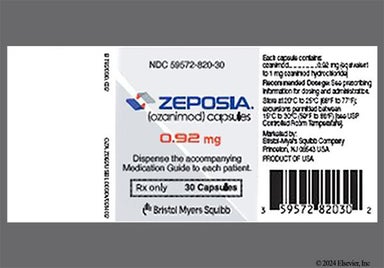
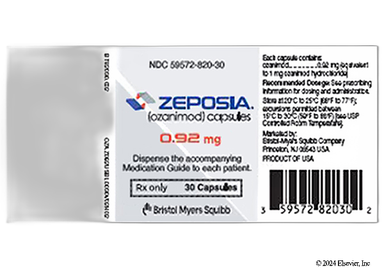
Zeposia (ozanimod) images