


Nucala vs. Dupixent: 6 Differences Between These Biologics for Asthma
Nucala (mepolizumab) and Dupixent (dupilumab) are two FDA-approved injections that can treat asthma. Learn how Nucala and Dupixent work and how they differ.
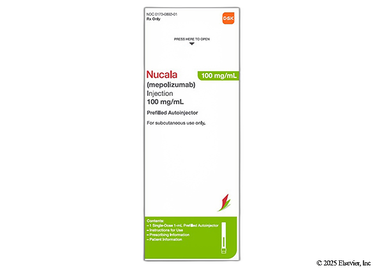
Nucala (mepolizumab) is an injection that treats certain inflammatory problems. This includes severe asthma in people 6 years and older. It can also treat chronic obstructive pulmonary disease (COPD) and sinus congestion with nasal polyps in adults. The medication works as an interleukin antagonist to lower inflammation. It's injected under the skin once a month. You can inject it on your own with the prefilled autoinjector or syringe. A healthcare professional can also give the injection at a medical office. Side effects include headache and injection site reactions.

Nucala (mepolizumab) is an interleukin antagonist. It blocks a protein in the body called interleukin-5 (IL-5). These proteins help make immune cells called eosinophils, which cause inflammation in the body.
By blocking IL-5, Nucala (mepolizumab) lowers the eosinophil levels in the body. This helps lower inflammation and relieve symptoms from certain inflammatory problems.
| Common Brands | Nucala |
|---|---|
| Drug Class | Interleukin antagonist |
| Controlled Substance Classification | Not a controlled medication |
| Generic Status | No lower-cost generic available |
| Availability | Prescription only |

The following side effects may get better over time as your body gets used to the medication. Let your healthcare provider know immediately if you continue to experience these symptoms or if they worsen over time.
Note: Side effects listed were reported by people with severe asthma. Side effects might slightly differ for people with other conditions.
Contact your healthcare provider immediately if you experience any of the following.
Side effects that you should report to your care team as soon as possible:
Side effects that usually do not require medical attention (report these to your care team if they continue or are bothersome):



Tips for using Nucala (mepolizumab) at home

Nucala (mepolizumab) can cause some serious health issues. This risk may be even higher for certain groups. If this worries you, talk to your doctor or pharmacist about other options.
Nucala (mepolizumab) can cause allergic reactions. Signs include hives, wheezing, or trouble breathing. It can also include swelling of the face, mouth, tongue, or throat or other signs of anaphylaxis.
An allergic reaction can happen a few hours after your Nucala (mepolizumab) injection. But in some cases, an allergic reaction can happen a few days later.
Call 911 right away if you have any signs or symptoms of an allergic reaction after taking Nucala (mepolizumab).
Don't use Nucala (mepolizumab) to treat an asthma or COPD attack. It doesn't work fast enough to help with sudden breathing problems. Nucala (mepolizumab) is used as maintenance treatment. It helps control your lung condition in the long run.
Always carry a rescue inhaler like albuterol (ProAir) with you. Use it if you suddenly have trouble breathing. Talk to your prescriber if your breathing gets worse after starting Nucala (mepolizumab).
If you're taking oral or inhaled corticosteroids, don't stop or lower the dose without talking to your care team first. Don't do this even if Nucala (mepolizumab) helps you feel better.
Stopping corticosteroids too quickly can make you have uncomfortable withdrawal symptoms. This includes dizziness, body aches, upset stomach, and trouble sleeping. If you need to stop or lower your corticosteroid dose, your prescriber will help you do it slowly and safely. Follow their directions carefully.
It's rare, but some people taking 100 mg of Nucala (mepolizumab) got a herpes zoster infection (shingles). Talk to your prescriber to see if you should get Shingrix, the herpes zoster vaccine. The vaccine can help some people from getting this infection.
It's not clear if Nucala (mepolizumab) affects how your body fights off infections from parasitic worms. Before starting treatment, tell your prescriber if you have a worm infection. You'll need to get it treated first.
Call your care team if you get signs of a parasitic worm infection while taking Nucala (mepolizumab). Watch for stomach pain, nausea, vomiting, diarrhea, skin rash, or itching. Your care team can check if you have a worm infection and treat it. If the infection doesn't get better with treatment, you might need to stop Nucala (mepolizumab) until it goes away.

 Syringe
| Dosage | Quantity | Price as low as | Price per unit |
|---|---|---|---|
| 40mg/0.4ml | 1 syringe | $1,538.80 | $1,538.80 |
Severe asthma
COPD
Chronic rhinosinusitis with nasal polyps
EGPA
HES












Prescription savings
Stop paying too much for your prescriptions. Compare prices, get pharmacy coupons, and save up to 80%. Find expert answers to your health questions so you can make the best decisions for yourself and your family.
Health conditions
Medications & treatment
Access & affordability
 Our monthly healthcare membership can help you save thousands on your prescription costs.
Resources

Nucala helps manage different inflammatory conditions, but it doesn't cure them. Your prescriber will usually have you keep taking Nucala as long as it helps you and you don't have serious side effects. Ask your prescriber if you're not sure how long you need to take Nucala.
Some people might think of Nucala as an immunosuppressant. It blocks a protein called interleukin-5. This helps lower the amount of eosinophils in your body. Eosinophils not only cause inflammation but also help your body fight infections. When Nucala helps lower eosinophil levels, it helps reduce inflammation. But it might weaken your immune system at the same time. This might affect how well your body can fight off some infections, like herpes zoster (shingles).
It can take about 2 to 4 months for most of Nucala to leave your body after a single dose. This is estimated from the medication's half-life of Nucala. But even though the medication can stay in the body for a long time, you should still inject it every 4 weeks (once a month). This helps keep the medication levels stable in the body it can work well to help with your symptoms.
If you stop taking Nucala, it can raise the risk that your symptoms can come back or get worse. Nucala is a medication you take long term to help with symptoms from certain inflammatory conditions, like severe asthma or COPD. Talk to your prescriber if you want to stop Nucala. They can help you decide if it's the right choice or if you should try a different medication.
Yes, it's possible to give yourself Nucala at home if it's appropriate for you. Your care team will probably give you your first injection and show you how to do it safely. If you're comfortable, they might let you do the rest at home. If not, they might decide it's better for you to get your injections from a trained healthcare professional at the medical office. Ask your prescriber if injections at home are right for you.
In general, Nucala works over time. It can take weeks or even months to start feeling better. What's more, it can take several months to notice the full benefits of the medication. That's why it's important to keep taking Nucala as your prescriber instructs you to. If you're worried about how long it's taking Nucala to work, talk to your prescriber.
Yes. In May 2025, the FDA approved Nucala to help treat COPD in adults. More specifically, it's used for a type of COPD called eosinophilic COPD. It's added to other treatment when the COPD isn't controlled well enough. Studies showed that adding Nucala to triple inhaler therapy lowered the number of bad COPD attacks per year by about 20% when compared to placebo. Ask your pulmonologist if Nucala might be right for you.
Nucala and Dupixent (dupilumab) are both injections that help lower inflammation in the body. They can both treat severe asthma and are expected to work as well as each other. For asthma, Nucala can be used by people 6 years and older and is given every 4 weeks. Dupixent can be used for people 6 months and older with asthma. And depending on age, it's given either every 2 or 4 weeks. Both medications also treat other inflammatory conditions like COPD, but some are different. Talk to your prescriber to learn about the differences between the medications.
