



How Much Is Dupixent Without Insurance?
Dupixent is a biologic medication approved to treat several conditions. Here’s how much Dupixent costs without insurance and how GoodRx can help you save.
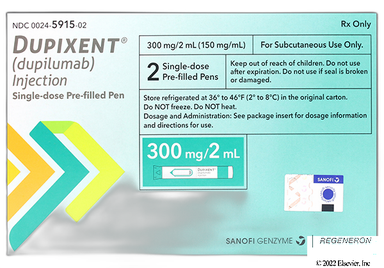
Dupixent (dupilumab) is an injection that helps treat certain inflammatory conditions. This includes eczema, asthma, and chronic obstructive pulmonary disease (COPD), among others. It's a biologic medication known as an interleukin antagonist that lowers inflammation. Dupixent (dupilumab) comes as prefilled pens and prefilled syringes. It's injected under the skin of the belly or thighs (or in the back of the upper arm with someone's help). The dosing schedule depends on the condition you have, your age, and your weight. It's injected either every week, every 2 weeks, or every 4 weeks. Side effects include injection site reactions and eye problems.

Dupixent (dupilumab) is a type of monoclonal antibody. More specifically, it's an interleukin antagonist. It works by blocking proteins in your immune system called interleukins. These proteins play a role in causing inflammation (redness and swelling) in the body.
By blocking these proteins, Dupixent (dupilumab) helps calm down the immune system. This can ease symptoms of certain immune-related conditions.
| Common Brands | Dupixent |
|---|---|
| Drug Class | Interleukin antagonist |
| Controlled Substance Classification | Not a controlled medication |
| Generic Status | No lower-cost generic available |
| Availability | Prescription only |

The following side effects may get better over time as your body gets used to the medication. Let your healthcare provider know immediately if you continue to experience these symptoms or if they worsen over time.
Note: Side effects were reported by adults with eczema using Dupixent (dupilumab) by itself. Side effects might differ for people with other conditions and for children.
Contact your healthcare provider immediately if you experience any of the following.
Side effects that you should report to your care team as soon as possible:
Side effects that usually do not require medical attention (report these to your care team if they continue or are bothersome):



Tips on how to use and how to inject Dupixent (dupilumab)

Dupixent (dupilumab) can cause some serious health issues. This risk may be even higher for certain groups. If this worries you, talk to your doctor or pharmacist about other options.
Some people have had allergic reactions to Dupixent (dupilumab). These reactions can include anaphylaxis and can sometimes be life-threatening. Watch for signs like a rash, fever, feeling unwell, dizziness, and joint pain. Also look out for swelling in your face, lips, tongue, or throat and trouble breathing. Get medical help right away if this happens while taking Dupixent (dupilumab).
People who take Dupixent (dupilumab) can sometimes have eye inflammation. If you have blurry vision, pink eye, itchy eye, watery eye, eye pain, or sensitivity to light, tell your care team. Your prescriber can give you medications to help with these side effects. In some cases, you might need to get an eye exam to make sure your cornea isn't also inflamed.
Dupixent (dupilumab) can cause a rise in certain white blood cells called eosinophils. These cells are part of the immune system that help the body fight infections. But when there's too much in the body, they can cause inflammation in different parts of the body. This can include the lungs, blood vessels, kidneys, or nerves, among others.
This has happened in some people taking Dupixent (dupilumab) for asthma. It might also happen when people stop their oral steroids. If you're taking steroids (e.g., pills, creams, inhalers), keep using them as instructed by your prescriber. Stopping them suddenly can also cause withdrawal symptoms that can be dangerous.
Tell your care team if you have a rash, chest pain, trouble breathing, numbness, a tingling feeling, or fever. They can check what's going on and manage these problems.
Don't use Dupixent (dupilumab) for asthma or COPD attacks. It doesn't work quickly to help you breathe. Use your rescue inhaler, like albuterol (ProAir), for quick relief.
Keep taking your other asthma or COPD medications as prescribed. Don't change or stop them without talking to your prescriber first.
If your medications aren't helping with wheezing or shortness of breath, get medical help right away. You might need additional medications to help with your symptoms. Also, tell your prescriber if your breathing gets worse after starting Dupixent (dupilumab). Your prescriber can check if you need other treatment.
Some people who took Dupixent (dupilumab) for eczema or asthma developed a skin condition called psoriasis. This can happen weeks to months after starting the medication. Sometimes, some or all the psoriasis symptoms went away as they kept taking the medication or after stopping.
Watch for new skin problems like thick, scaly, or red patches. Talk to a healthcare professional if this happens. You might need treatment for your skin. And if that doesn't help, you might need to stop taking Dupixent (dupilumab).
Some people who took Dupixent (dupilumab) had joint pain. Some also had trouble walking or moving. And a few people developed psoriatic arthritis.
Joint pain happened anytime from days to months after starting Dupixent (dupilumab). For some, symptoms went away as they continued taking the medication. And for others, they went away after stopping treatment.
Talk to your prescriber if you have any discomfort in your joints while taking Dupixent (dupilumab). Your care team can check what's going on and help you manage these symptoms.
It's not clear if Dupixent (dupilumab) affects how the body fights off parasitic worm infections. Before starting treatment, tell your prescriber if you have a worm infection. You'll need to treat it first.
In rare cases, some children with asthma who took Dupixent (dupilumab) got pinworm or roundworm infections during studies. Tell your care team if you notice fever, weight loss, diarrhea, or itching. These could be signs of a worm infection, which should get treated. Sometimes, you might have to stop Dupixent (dupilumab) until the infection goes away.
Before starting Dupixent (dupilumab), talk to your healthcare team about your vaccine history. It's a good idea to be up to date on all your vaccines before treatment. Then, tell your prescriber, pharmacist, or nurse you're taking this medication so they can check that a vaccine is safe for you.
We don't completely know how Dupixent (dupilumab) affects vaccines. But it's possible that it can interact with vaccines because it affects the immune system. The medication might make some vaccines not work as well or be less safe for you. These vaccines include live vaccines, like MMR (measles, mumps, and rubella vaccine). Avoid live vaccines while taking Dupixent (dupilumab).

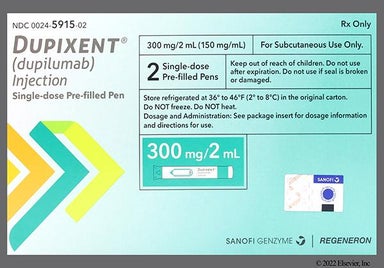
 Carton
| Dosage | Quantity | Price as low as | Price per unit |
|---|---|---|---|
| 2 syringes of 300mg/2ml | 2 cartons | $0.00 | $0.00 |
| 2 syringes of 200mg/1.14ml | 1 carton | $0.00 | $0.00 |
| 2 pens of 300mg/2ml | 2 cartons | $0.00 | $0.00 |
| 2 pens of 200mg/1.14ml | 1 carton | $0.00 | $0.00 |
| 2 syringes of 100mg/0.67ml | 1 carton | $0.00 | $0.00 |
Sinus congestion with nasal polyps
Chronic obstructive pulmonary disease
Allergic fungal rhinosinusitis











Prescription savings
Stop paying too much for your prescriptions. Compare prices, get pharmacy coupons, and save up to 80%. Find expert answers to your health questions so you can make the best decisions for yourself and your family.
Health conditions
Medications & treatment
Access & affordability
Medication discounts


No, Dupixent isn't a steroid; it's a biologic medication (more specifically, a monoclonal antibody). But like corticosteroids, Dupixent can help calm down an overactive immune system. Your provider might prescribe Dupixent along with oral, topical, or inhaled steroids to treat your inflammatory conditions, such as asthma and eczema. This helps to better control your symptoms and to lower your risk of flare-ups.
Yes, Dupixent is a biologic medication, meaning it's made from living sources. Specifically, it's a monoclonal antibody that's made in a lab to work similarly to the antibodies in your body. Dupixent works by blocking proteins that are overactive in inflammatory conditions, such as eczema and asthma. If you have any questions about whether Dupixent is right for you, follow up with your provider for more information.
How long it takes for Dupixent to work depends on what medical condition you're taking it for and what symptoms you're experiencing. For example, studies show that some people who used Dupixent to treat eczema experienced itching relief in as early as 2 weeks, and some people noticed clearer skin after 4 months of treatment. People who used Dupixent to treat asthma breathed better after 2 weeks. Dupixent also helped to improve smell within a month for people with long-term sinus congestion with nasal polyp. If you've been using Dupixent for a while and haven't experienced any improvement in your condition, let your provider know.
In clinical studies, people who used Dupixent didn't report any changes in body weight. If you find yourself gaining weight while using Dupixent, talk with your provider. They can examine you and discuss with you about possible other causes of your weight gain.
Dupixent should be stored in the refrigerator in its original container to protect it from light. Once you take it out of the refrigerator, Dupixent must be used within 14 days. Make sure to throw away any unused pens or syringes in the sharps disposal container after this period of time.
Dupixent can be injected under the skin on the belly and thighs. Make sure to avoid the area 2 inches within the belly button. If you're giving the injection to someone else, you can also inject under the skin on the outer upper arms. If you need two injections in one day for your dose, then make sure to choose different areas for each injection. In general, you should rotate injection sites often to prevent skin irritation and allow Dupixent to be absorbed. Don't inject the medication into skin that's bruised, red, tender, or hard. Dupixent is available in both a pre-filled syringe and pen, so make sure to follow the instructions guide for your product.
How long you stay on Dupixent depends on the condition being treated and how you respond to the treatment. This can vary greatly between each person. Talk to your provider if you've questions about how long you'll need to use this medication.
How long Dupixent stays in your system depends on your age. For example, it can take about 2 to 3 months for most of Dupixent to leave the body of an adult (or child older than 12 years of age) after the last dose. But for children between 6 to 11 years old, Dupixent can stay in their system for over 4 months. And for even younger children, this medication can stay in their system for over 7 months. If you're experiencing side effects or you're hoping to stop this medication, talk with your provider right away.
