Key takeaways:
Dupixent (dupilumab) is a prescription medication approved for inflammatory health conditions such as eczema and asthma. It comes in a prefilled syringe and an injection pen. Each syringe or pen is a single dose meant for onetime use.
Dupixent is injected under the skin once a week, every other week, or once a month. Your Dupixent dosage depends on the condition being treated as well as your age and body weight.
You’ll receive the first dose of Dupixent from a healthcare professional in a medical setting. After that, you or your caregiver may be able to administer Dupixent injections at home.
Save on related medications
If you or your child are living with an inflammatory health condition, such as asthma or eczema, your healthcare team may prescribe Dupixent (dupilumab). It’s an injectable medication that you’ll initially receive in your prescriber’s office. After that, you or your caregiver can typically inject Dupixent at home.
Your Dupixent dose and how often you inject it depends on the condition you’re treating. For children, their age and body weight can also be a factor. Below, we cover typical Dupixent dosages for adults and children and what to do if you miss a dose.
What’s the typical Dupixent dosage for adults?
The typical Dupixent dosage for adults depends on which health condition you’re treating. Often, you’ll start treatment with a higher initial dose. This is referred to as a loading dose. Then you’ll continue therapy with a lower maintenance dose.
The chart below summarized the recommended Dupixent dosages for adults by health condition.
Condition | Dupixent Dosage for Adults |
Moderate-to-severe eczema | Loading dose: 600 mg Maintenance dose: 300 mg every other week |
Moderate-to-severe asthma | Loading dose: 400 mg or 600 mg Maintenance dose: 200 mg or 300 mg every other week |
Chronic rhinosinusitis with nasal polyps | 300 mg every other week (no loading dose needed) |
Allergic fungal rhinosinusitis | 300 mg every other week (no loading dose needed) |
Eosinophilic esophagitis | 300 mg once weekly (300 mg every other week if body weight is under 88 lbs) |
Prurigo nodularis | Loading dose: 600 mg Maintenance dose: 300 mg every other week |
Chronic spontaneous urticaria | Loading dose: 600 mg Maintenance dose: 300 mg every other week |
Bullous pemphigoid | Loading dose: 600 mg Maintenance dose: 300 mg every other week |
Chronic obstructive pulmonary disease | 300 mg every other week (no loading dose needed) |
Moderate-to-severe eczema
For moderate-to-severe eczema (atopic dermatitis), the initial Dupixent dose for adults is 600 mg, given as two 300 mg doses. After that, the maintenance dosage is 300 mg injected every other week.
Moderate-to-severe asthma
For moderate-to-severe asthma in adults, your Dupixent dosage may depend on your asthma severity and other conditions being treated. The manufacturer recommends the following options:
Option 1: 400 mg (given as two 200 mg doses), followed by 200 mg every other week
Option 2: 600 mg (given as two 300 mg doses), followed by 300 mg every other week
If you need oral steroids to manage your asthma, or if you also have other conditions managed by Dupixent, you may need the higher Dupixent dosage. Your prescriber will determine which option is appropriate for you.
Chronic rhinosinusitis with nasal polyps (CRSwNP)
For chronic rhinosinusitis with nasal polyps (CRSwNP) in adults, the typical Dupixent dosage is 300 mg injected every other week. There’s no recommended loading dose for this use.
Eosinophilic esophagitis
For eosinophilic esophagitis, the typical Dupixent dosage for adults is 300 mg injected once weekly. This is based on having a body weight of 40 kg (88 lbs) or more. If you weigh less than 40 kg, you may inject Dupixent once every other week. No loading dose is required.
Prurigo nodularis, chronic spontaneous urticaria, and bullous pemphigoid
For prurigo nodularis, chronic spontaneous urticaria, and bullous pemphigoid (skin conditions that cause chronic hives or itchy skin bumps and blisters), the typical Dupixent dosage for adults starts with 600 mg, given as two 300 mg doses. This is followed by a maintenance dosage of 300 mg injected every other week.
Chronic obstructive pulmonary disease (COPD)
For chronic obstructive pulmonary disease (COPD), the recommended Dupixent dosage for adults is 300 mg injected every other week. No loading dose is required.
What’s the typical Dupixent dosage for children?
Dupixent is also approved for use in children ages 6 months and older. The typical Dupixent dosage for children is based on the condition being treated. Your child’s body weight may also be a factor when determining their dosage.
Moderate-to-severe eczema
For moderate-to-severe eczema in children, the typical Dupixent dosage depends on their age and body weight.
Dupixent dosage table for eczema in children ages 6 months to 5 years:
Body weight (lbs) | Loading dose | Maintenance dose |
11 lbs to less than 33 lbs | No loading dose | 200 mg every 4 weeks |
33 lbs to less than 66 lbs | No loading dose | 300 mg every 4 weeks |
Dupixent dosage table for eczema in children ages 6 to 17 years:
Body weight (lbs) | Loading dose | Maintenance dose |
33 lbs to less than 66 lbs | 600 mg (two 300 mg doses) | 300 mg every 4 weeks |
66 lbs to below 132 lbs | 400 mg (two 200 mg doses) | 200 mg every 2 weeks |
132 lbs or more | 600 mg (two 300 mg doses) | 300 mg every 2 weeks |
Moderate-to-severe asthma
For children ages 12 and older, the typical Dupixent dosage for moderate-to-severe asthma is the same as adults. For children ages 6 to 11, the Dupixent dosage depends on their body weight.
Dupixent dosage table for asthma in children ages 6 to 11 years:
Body weight (lbs) | Loading dose | Maintenance dose |
33 lbs to less than 66 lbs | No loading dose | 300 mg every 4 weeks |
66 lbs or more | No loading dose | 200 mg every 2 weeks |
Children ages 6 to 11 receiving Dupixent for both asthma and eczema will follow the dosage schedule for eczema, which includes a loading dose.
Chronic rhinosinusitis with nasal polyps (CRSwNP)
For CRSwNP, children ages 12 and older will follow the same dosage as in adults — 300 mg injected every other week. There’s no loading dose required for this use.
Eosinophilic esophagitis
For eosinophilic esophagitis, the Dupixent dosage for children ages 1 year and older is based on their body weight. No loading dose is required.
Dupixent dosage table for eosinophilic esophagitis in children age 1 and older:
Body weight (lbs) | Loading dose | Maintenance dose |
33 lbs to less than 66 lbs | No loading dose | 200 mg every other week |
66 lbs to less than 88 lbs | No loading dose | 300 mg every other week |
88 lbs or more | No loading dose | 300 mg once weekly |
Chronic spontaneous urticaria
For chronic spontaneous urticaria, Dupixent is approved for children ages 12 to 17. The dosage is based on body weight.
Dupixent dosage table for urticaria in children ages 12 to 17:
Body weight (lbs) | Loading dose | Maintenance dose |
66 lbs to less than 132 lbs | 400 mg (two 200 mg injections) | 200 mg every other week |
132 lbs or more | 600 mg (two 300 mg injections) | 300 mg every other week |
Dupixent dosage forms
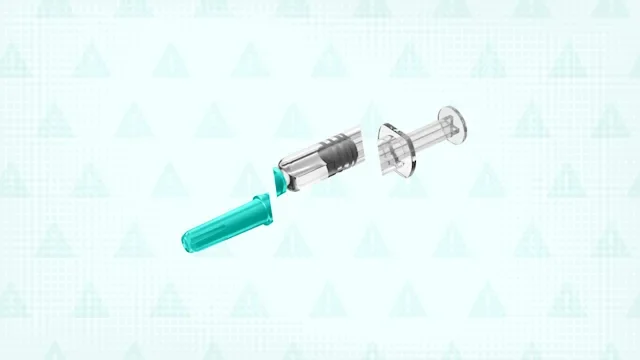
Dupixent comes in two dosage forms: a prefilled syringe and a prefilled injection pen. Both options are available in 200 mg and 300 mg doses and are stored in the refrigerator. If you remove Dupixent from the refrigerator, you must use it within 14 days (2 weeks).
Prefilled syringe | Prefilled pen |
1 syringe = 1 dose | 1 pen = 1 dose |
Approved for ages 6 months and older | Approved for ages 2 and older |
Has a finger grip and plunger to self-inject | Auto-injects when placed on the skin, with a visual window and a two-click process |
Needle is visible during injection process | Needle is hidden during injection process |
How to inject Dupixent
No matter the dosage form, you’ll inject Dupixent subcutaneously (under the skin) in your stomach or thigh. If someone else is giving your injection, they can also use your upper outer arm. But this area is too awkward to safely inject on your own. You should rotate injection sites with each dose of Dupixent to avoid skin irritation.
Remove your Dupixent dose from the refrigerator 30 to 45 minutes before injecting it to reduce discomfort. Be sure to wash your hands. Then wipe the injection site with alcohol, and let it dry naturally before administering the injection.
To inject Dupixent, remove the needle cover or injection pen cap, and discard. Gently pinch the clean skin area, and insert the needle at a 45-degree angle or press the pen firmly against the skin at a 90-degree angle.
For the syringe, gently press down on the plunger until all liquid is injected. Lift your thumb from the plunger until the needle is covered by the needle shield. Remove the syringe, and discard it in a sharps container.
For the pen, you’ll hear a click when the injection starts, followed by a second click when it’s complete. The window will also turn yellow over the course of the injection. Once the window is fully yellow and the second click occurs, count to 5 slowly. Then pull straight up to remove the pen from your skin, and discard it in a sharps container.
What happens if you miss a dose of Dupixent?
If you miss a dose of Dupixent, what to do next depends on whether you inject the medication weekly, every other week, or every 4 weeks.
Missed weekly dose: Give yourself the Dupixent injection as soon as possible. Restart your weekly injections from the day you inject the missed dose. For example, if you miss your usual Sunday dose and inject it on Tuesday, you’ll now inject your weekly dose every Tuesday.
Missed every-other-week dose: Give the Dupixent injection as soon as you remember. If it’s within 7 days of the missed dose, you can resume your normal injection schedule. But if your dose is more than 7 days late, you’ll start a new every-other-week schedule based on the day of the injection.
Missed every-4-week dose: Give the Dupixent injection as soon as you remember. If it’s within 7 days of the missed dose, resume your normal injection schedule. But if it has been more than 7 days since the missed dose, inject Dupixent and begin injecting every 4 weeks from that date.
Your healthcare team may provide other instructions for what to do if you miss your dose, so be sure to follow their instructions. You can also ask them for guidance if you’re unsure what to do after missing a dose of Dupixent.
What should you do if you inject too much Dupixent?
Since Dupixent comes in single-dose injections, it’s unlikely that you’ll inject more than recommended. If you’re unsure when you last injected a dose, look at the fill date on the label and how many doses are left. This can help give you an idea of how many doses you’ve injected and when you’re due for your next one. If you’re still unsure, ask your healthcare team for guidance.
If you inject an extra dose of Dupixent or inject it earlier than scheduled, tell your prescriber right away. You can also contact Poison Control at 1-800-222-1222 for guidance. They’ll determine if you need additional follow-up. You may experience more side effects, such as dry eyes and joint or muscle pain. But if you have symptoms that feel life-threatening, call 911 or go to the ER.
How to save on the cost of Dupixent
There are ways to save on Dupixent, which is available only as a reference (“brand name”) medication. GoodRx can help you navigate between copay savings cards and patient assistance programs to save money on your medication:
Save with a copay savings card: If you have commercial insurance, you may be eligible to pay as little as $0 for your Dupixent prescriptions using a copay savings card from the manufacturer.
Save with a patient assistance program: If you’re uninsured or underinsured, you may be eligible for Dupixent’s patient assistance program, which offers the medication free of charge.
Keep in mind that Dupixent is a specialty medication, meaning you won’t be able to pick it up at your usual pharmacy. Instead, you’ll likely receive it through a specialty pharmacy. Specialty pharmacy staff can help you with insurance coverage and cost-savings options. So don’t hesitate to ask them for help if you’re having trouble accessing Dupixent at an affordable price.
Frequently asked questions
Dupixent side effects include injection-site reactions, eye problems, and joint and muscle pain. Some people also experience dizziness and diarrhea. More serious Dupixent side effects include an increased risk of infections and severe allergic reactions. These are not common but can be life-threatening in some cases. Your prescriber can discuss your personal risks based on your medical history to help you decide if Dupixent is a good option for you.
Dupixent can be out of the refrigerator for up to 14 days (2 weeks) before you must use or discard it. Keep in mind that even though it can leave the fridge, Dupixent shouldn’t be stored at temperatures above 77°F or be exposed to direct sunlight. If you’re unsure if Dupixent is safe to use, ask your pharmacist or contact the manufacturer for guidance.
Dupixent side effects include injection-site reactions, eye problems, and joint and muscle pain. Some people also experience dizziness and diarrhea. More serious Dupixent side effects include an increased risk of infections and severe allergic reactions. These are not common but can be life-threatening in some cases. Your prescriber can discuss your personal risks based on your medical history to help you decide if Dupixent is a good option for you.
Dupixent can be out of the refrigerator for up to 14 days (2 weeks) before you must use or discard it. Keep in mind that even though it can leave the fridge, Dupixent shouldn’t be stored at temperatures above 77°F or be exposed to direct sunlight. If you’re unsure if Dupixent is safe to use, ask your pharmacist or contact the manufacturer for guidance.
The bottom line
A typical Dupixent (dupilumab) dosage for adults is 200 mg to 300 mg every 2 weeks. But this can vary from once-weekly to once-monthly injections based on the condition you’re treating. For children, the Dupixent dosage also varies based on age and body weight.
You’ll typically receive the first dose of Dupixent in a medical setting. And your first dose may be higher than the following doses. After your first dose, you may be able to inject Dupixent yourself at home. Talk to your healthcare team if you have questions about your Dupixent dosage.

Why trust our experts?



References
American Academy of Allergy, Asthma & Immunology. (2025). Nasal polyps.
Dimov, V. (2019). Dupilumab (Dupixent) dose for asthma. World Allergy Organization.
MedlinePlus. (2025). Dupilumab injection.
Mullins, T. B., et al. (2024). Prurigo nodularis. StatPearls.
Poison Control. (n.d.). Get poison control help online now.
Sanofi-Aventis U.S. (2026). Dupixent- dupilumab injection, solution [package insert].