MMR Coupon - MMR 0.5ml dose

MMR

measles, mumps, and rubella vaccine
Used for Measles

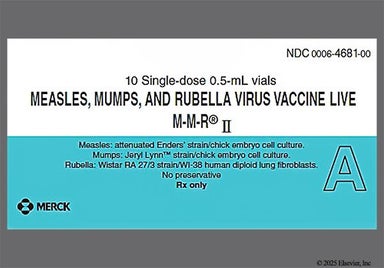
MMR II and Priorix are live vaccines that protect you against 3 viruses: measles, mumps, and rubella (MMR). They're both injections given as 2 doses under the skin. Typically, these vaccines are given as part of the routine vaccination series for children under 6 years old. Older children and adults may also need 1 or 2 doses of MMR vaccine if they haven't already received it.

Reviewed by:Last reviewed on January 23, 2023
basics-icon

What is MMR vaccine?

What is MMR vaccine used for?

  • Prevention of measles, mumps, and rubella (MMR) in adults and children 1 year of age and older

How MMR vaccine works

MMR II and Priorix are both vaccines that protect you from infection from measles, mumps, and rubella. They're live-attenuated vaccines that're made from a weakened version of the live viruses. Both vaccines help your body's immune system make antibodies against the MMR viruses. If you ever become infected with MMR, these antibodies will attack the viruses and fight off the infection.

Drug facts

Common BrandsMMR II, Priorix
Drug ClassVaccine
Controlled Substance ClassificationNot a controlled medication
Generic StatusNo lower-cost generic available
AvailabilityPrescription only
side-effects-icon

Side effects of MMR vaccine

The following side effects may get better over time as your body gets used to the medication. Let your healthcare provider know immediately if you continue to experience these symptoms or if they worsen over time.

Common Side Effects

  • Feeling irritated (up to 66%) - Children age 12 to 15 months old only
  • Drowsiness (up to 47%)
  • Losing appetite (up to 45%)
  • Injection site pain (up to 40%)
  • Fever (up to 35%)
  • Redness (12-25%)

Less Common Side Effects

  • Fever
  • Swelling of the glands in neck and cheek
  • Stiff joints
  • Swelling
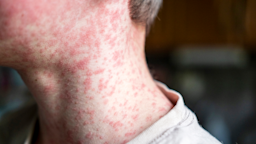
  • Measles/rubella-like rash (red spots all over the body)

MMR vaccine serious side effects

Contact your healthcare provider immediately if you experience any of the following.

  • Serious allergic reactions: Hives, rash, shaking, itching, nausea, flushing, dizziness, shortness of breath, chest pain
  • Febrile seizure (fever with seizures): Eye rolling, stiff arms and legs, loss of consciousness, shaking of arms and legs
  • Meningeal irritation (irritation of the brain tissue): Neck stiffness, sensitive to bright light, headache

Source: DailyMed

The following MMR vaccine side effects have also been reported

Side effects that you should report to your care team as soon as possible:

Side effects that usually do not require medical attention (report these to your care team if they continue or are bothersome):

prices-container

Get your GoodRx coupon

Avg retail price
$129.86(Save 20.51%)
GoodRx discount
$103.22
See prices
pros-and-cons-icon

Pros and cons of MMR vaccine

Pros

  • Can be given [at the same time](https://www.immunize.org/askexperts/administering-vaccines.asp#:~:text=All%20live%20vaccines%20(MMR%2C%20varicella,by%204%20weeks%20or%20more.) as other vaccines
  • For most people, protection lasts for life
  • Readily available and easy to find at pharmacies

Cons

  • Needs to be given by a healthcare professional
  • Only given as an injection under the skin
  • Can't be given to pregnant females or people with weakened immune systems
pharmacist-tips-icon

Pharmacist tips for MMR vaccine

pharmacist
  • MMR II might contain egg protein. Tell your child's provider if your child has an allergy to eggs or egg products before receiving this vaccine.
  • The prefilled syringe in Priorix has a latex cap. Let your child's provider know if your child has a history of allergy to latex.
  • Syncope (fainting) can happen to people who receive injectable vaccines, including Priorix. If you feel faint or dizzy after receiving Priorix, lie down right away to avoid injury and let your provider know.
  • MMR vaccine can affect your child's TB test results. If you child is due for a TB skin test, it should be given before, at the same time as, or at least 4 to 6 weeks after MMR vaccine.
  • Let your child's provider know if your child has gotten a blood transfusion or received other blood products, such as immune globulins, recently. These products can affect how the body responds to MMR vaccine. There are specific guidelines on the timing between when your child can get MMR vaccine and immune globulins or a blood product.
  • If your child doesn't feel well, wait until either of you is healthy to get MMR vaccine. This will help make sure the immune system protects your child as best as it can. If your child has a mild sickness, such as a cold or low-grade fever, they might still be able to get MMR vaccine. But if your child feels moderately to severely sick, wait until they recover before getting vaccinated. Ask your child's provider if you're not sure whether or not you can get this vaccine.
  • Read the vaccine information statement for more information on MMR vaccine.
  • Make sure to keep a record of all your immunizations and show it to your provider or pharmacist before receiving any vaccine, including MMR vaccine, to make sure you're receiving all your vaccines on schedule.
  • MMR vaccine can be given with other live viral vaccines. However, if MMR vaccine isn't given together with them, it should be given 1 month before or 1 month after you receive other live viral vaccines. This will allow your body to achieve the best response it can to the vaccine.
  • If your child experiences a severe reaction to MMR vaccine, you or your child's provider can report it to the vaccine adverse event reporting system (VAERS) website or by calling 1-800-822-7967.
faq-icon

Common questions about MMR vaccine

MMR vaccine is recommended for all children in the United States. Adults who don't have evidence of immunity, such as those without an immunization record, should get at least 1 dose of MMR vaccine. Some adults might need 2 doses (e.g., college students, healthcare workers, and international travelers). Ask your provider or pharmacist if you aren't sure if you or your child need to receive MMR vaccine.

MMR vaccine lowers your risk for infection with 3 viruses, measles, mumps, and rubella, or commonly known as MMR. Typical symptoms include fever, headache, sore throat, tiredness, rash, but each infection has other symptoms as well. These infections can be dangerous, especially for children, and can cause serious complications, such as severe infections throughout the body, swelling of the brain or spinal cord, or even death.

There are 3 vaccines that can protect against MMR: MMR II, Priorix, and ProQuad (MMRV vaccine). One of the main difference between these 3 vaccines is what they protect against. All 3 of these vaccines protect against MMR. But ProQuad protects against an additional virus, varicella (chickenpox). Another difference is who can get them. ProQuad is typically used in children (ages 1 to 12 years old), whereas MMR II and Priorix can be given to both adults and children (ages 1 year and older). The CDC currently recommends MMR II and Priorix over ProQuad. Ask your provider which vaccine is best for you or your child.

If your child is receiving MMR vaccine as part of their routine vaccines, then they should follow the CDC's guidelines for MMR vaccine (first shot around age 1 years old, then a second shot between ages 4 to 6 years old). However, if you or your child needs to receive MMR vaccine in special circumstances, then you can get the 2 doses of MMR vaccine a month apart. Talk with your provider if you have any questions about vaccine schedules.

Yes, both MMR II and Priorix are interchangeable, which means your first dose can be MMR II and your second dose can be Priorix. However, Advisory Committee on Immunization Practices (ACIP) recommends to use the same manufacturer, if possible, to finish your vaccination series. If you can't find either MMR II and Priorix at your local pharmacy, ask your provider or pharmacist for help.

No, you shouldn't get MMR vaccine if you're pregnant. Because MMR vaccine is made from a weakened form of a live virus, there's a small risk that pregnant people can get infected from the vaccine. If this happens, the viruses can cause birth defects, premature birth, or death to the unborn baby. If you're already pregnant, wait until after you give birth to receive MMR vaccine. If you're thinking of becoming pregnant, avoid getting pregnant for at least a month after you get MMR vaccine. Talk with your provider if you have any questions about MMR vaccines and pregnancy.

educational-icon

How to save using GoodRx

Compare Prices
1. Compare PricesSpecify your dosage and quantity to find out exactly how much you can save.
Select your free coupon
2. Select your free couponYou can use the displayed coupon, or compare prices at other pharmacies near you.
Show coupon to your pharmacist
3. Show coupon to your pharmacistPresent your printed or electronic coupon when you pick up your prescription.
Get free couponLearn more
warnings-icon

Risks and warnings for MMR vaccine

MMR vaccine can cause some serious health issues. This risk may be even higher for certain groups. If this worries you, talk to your doctor or pharmacist about other options.

Severe allergic reactions

  • Risk factors: Allergic reaction to other vaccines | Severe allergy to eggs or egg products (MMR II only) | Allergy to rubber or latex (Priorix only)

As with any vaccine, there's a rare chance that your child might have a severe allergic reaction to MMR vaccine. In particular, people with a severe allergy to eggs or egg products shouldn't receive MMR II because it can contain egg protein. Additionally, people with an allergy to latex should also be careful when receiving Priorix since the cap of the prefilled syringe is made of latex. If it's your child's first dose, your provider will typically ask you and your child to stay at the pharmacy or clinic for a short period of time after they've received their vaccine. This is to make sure your child gets proper care in case of a serious allergic reaction. Sometimes, these reactions can happen after you've already left the clinic. Get medical help right away if your child has symptoms such as feeling faint, face swelling, tightness in your throat, difficulty breathing, hives, rash, dizziness, shaking, nausea, or chest pain.

Fever with seizures

  • Risk factors: History of febrile seizure | Family history of febrile seizures

Although rare, MMR vaccine can put your child at risk for fever with seizures within the first 2 weeks after they've received the vaccine. Let your child's provider know if they've ever had a febrile seizure or have a family history of febrile seizures before getting MMR vaccine, you'll need to be careful and monitor your child for fevers and get medical help if needed.

Low platelet count

  • Risk factor: History of a drop in platelet count after receiving MMR vaccine

MMR vaccine can lower your child's platelet count temporarily. In people who received MMR II, this usually happens 4 to 6 weeks after injection. Platelets are cells in your blood that form clots to stop you from bleeding. A low platelet count raises your child's risk for severe bleeding. For most people, this temporary drop in platelet count won't cause problems. But if your child already has low platelet count because of a medical condition, this can put them at higher risk for bleeds. Get medical help if your child has symptoms such as difficulty stopping a bleed, bruises that don't go away, or feeling lightheaded, dizzy, or confused.

Avoid in people with weakened immune systems

  • Risk factor: Weakened immune system from medical conditions or medications

People with weakened immune systems should avoid MMR vaccine. This is because you or your child might get seriously sick from the weakened, but active viruses in the vaccine. People with weakened immune systems include those with certain medical conditions (e.g., human immunodeficiency virus (HIV) or cancer) and those taking medications that can weaken the immune system (e.g., high-dose corticosteroids or transplant medications). If you or your child has a family history of immunodeficiency (poor immune system function), you'll need to check with your or your child's provider about other vaccine options. Make sure to tell your healthcare providers about you or your child's medical history before receiving MMR vaccine.

Avoid in people who are pregnant

MMR vaccine shouldn've be used by people who are pregnant. Even though this vaccine contains weakened forms of the measles, mumps, and rubella viruses, there's still a possibility that pregnant people can get infected from the vaccine. If this happens, the viruses can cause birth defects, premature birth, or death to the unborn baby. If you're already pregnant, wait until after you give birth to get MMR vaccine. If you're thinking of becoming pregnant, avoid getting pregnant for at least a month after you get this vaccine. Talk with your provider if you have any questions about MMR and pregnancy.

dosage-icon

MMR vaccine dosage

The average cost for 1 dose of 0.5ml of MMR vaccine is $103.22 with a free GoodRx coupon. This is 20.51% off the average retail price of $129.86.
doseDose
DosageQuantityPrice as low asPrice per unit
0.5ml1 dose$103.22$103.22

Typical dosage for MMR vaccine

MMR II and Priorix are given under the skin as a 2-dose series:

  • First dose is typically given between ages 12 to 15 months old
  • Second dose is typically given between ages 4 to 6 years

Please note: See FAQ "How soon can I get my second dose of MMR" for the CDC's dosing recommendations under special circumstances.

cost-icon

How much does MMR vaccine cost?

To access savings, use a GoodRx coupon and pay just a fraction of the retail price.
contraindications-icon

MMR vaccine contraindications

Contraindications are specific health conditions or situations in which a person should not take a medication due to safety concerns. If you have any of the following conditions or if any of the following apply to you, let your healthcare provider know because MMR vaccine will not be safe for you to take.

  • Pregnant women or women who are planning to become pregnant within the next 1 month
  • People with weakened immune systems due to medical conditions or medications
  • People who feel moderately to severely sick - MMR II only
  • Active untreated tuberculosis (TB) infection - MMR II only
alternatives-icon

What are alternatives to MMR vaccine?

There are a number of medications that your doctor can prescribe in place of MMR vaccine. Compare a few possible alternatives below.
MMR vaccine
Used for:
  • Prevention of measles, mumps, and rubella (MMR) in adults and children 1 year of age and older
$103.22Lowest GoodRx priceView prices
Used for:
$293.51Lowest GoodRx priceView prices
latest-news-icon

News about MMR vaccine

Measles is highly contagious and can spread through the air with coughing and sneezing. Here are six expert-backed ways to prevent measles.
How to Prevent Measles: 6 Practical Tips From Healthcare Experts
Measles is highly contagious and can spread through the air with coughing and sneezing. Here are six expert-backed ways to prevent measles.
Rubella (German measles) and rubeola (measles) are two different conditions with similar symptoms. Learn how to tell the difference between rubella and rubeola.
Rubella vs. Rubeola (Measles): How to Spot the Differences, With Images
Rubella (German measles) and rubeola (measles) are two different conditions with similar symptoms. Learn how to tell the difference between rubella and rubeola.
Today, we have two vaccines to protect against measles: the MMR vaccine and the MMRV vaccine. Which is more effective? Find out here.
MMR vs. MMRV Vaccines: Differences Explained
Today, we have two vaccines to protect against measles: the MMR vaccine and the MMRV vaccine. Which is more effective? Find out here.
Children as young as 12 months old can receive the chickenpox vaccine, and 2 shots of the vaccine are recommended for adults and children.
Everything You Need to Know About Chickenpox (Varicella) Vaccine
Children as young as 12 months old can receive the chickenpox vaccine, and 2 shots of the vaccine are recommended for adults and children.
Walgreens pharmacies, including the Duane Reade brand in the New York City metropolitan area, operate about 9,000 locations in the U.S. They offer a wide range of vaccinations and accept thousands of insurance plans.
How to Save Money on Vaccinations at Walgreens
Walgreens pharmacies, including the Duane Reade brand in the New York City metropolitan area, operate about 9,000 locations in the U.S. They offer a wide range of vaccinations and accept thousands of insurance plans.
The Centers for Disease Control and Prevention (CDC) says that most state Medicaid programs should cover at least some adult vaccines, but some may not cover any immunizations. We explain how state Medicaid programs differ in covering flu shots, shingles, Tdap, and other common vaccinations, and where you can find free or low-cost vaccinations near you.
Will Medicaid Cover the Flu Shot, Shingles Vaccines, and Other Vaccinations?
The Centers for Disease Control and Prevention (CDC) says that most state Medicaid programs should cover at least some adult vaccines, but some may not cover any immunizations. We explain how state Medicaid programs differ in covering flu shots, shingles, Tdap, and other common vaccinations, and where you can find free or low-cost vaccinations near you.
Getting certain vaccines during pregnancy can protect you from infection. It also allows your body to create protective antibodies you can pass on to yourbaby. Learn more in this guide from GoodRx.
Here’s Why You Should Get Vaccinated If You’re Pregnant
Getting certain vaccines during pregnancy can protect you from infection. It also allows your body to create protective antibodies you can pass on to yourbaby. Learn more in this guide from GoodRx.
GoodRx and Walmart are offering low pricing on important vaccines. Protect yourself and your family from measles, mumps, rubella, and pneumococcal disease.
Save on 3 Important Vaccines with GoodRx’s Exclusive Walmart Pricing
GoodRx and Walmart are offering low pricing on important vaccines. Protect yourself and your family from measles, mumps, rubella, and pneumococcal disease.
images-icon

MMR vaccine images

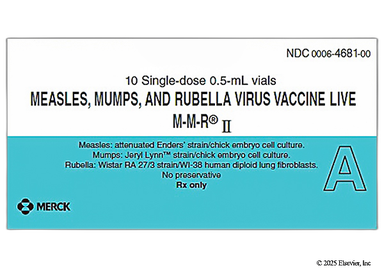
yellow - M-M-R II Powder for Injection
This medicine is Yellow Dose.yellow - M-M-R II Powder for Injection

Get savings updates for MMR vaccine

Receive price alerts, news, and other messages from GoodRx about MMR vaccine and other healthcare topics and relevant savings offers.

By providing your email, you consent to receive marketing communications from GoodRx, which may include content and/or data related to men's health, women's health, reproductive care, or sexual health. You agree to the GoodRx Terms of Use and acknowledge the Privacy Policy. You can unsubscribe at any time.

References

Best studies we found

American Red Cross. (n.d.). Platelets and thrombocytopenia.

Centers for Disease Control and Prevention. (2020). For healthcare providers.

Centers for Disease Control and Prevention. (2020). Measles (rubeola).

GoodRx Health has strict sourcing policies and relies on primary sources such as medical organizations, governmental agencies, academic institutions, and peer-reviewed scientific journals. Learn more about how we ensure our content is accurate, thorough, and unbiased by reading our editorial guidelines.

Was this page helpful?