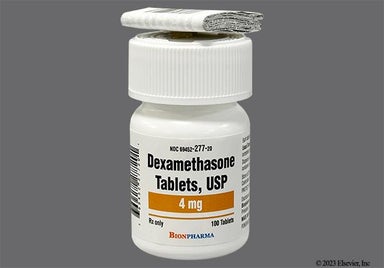
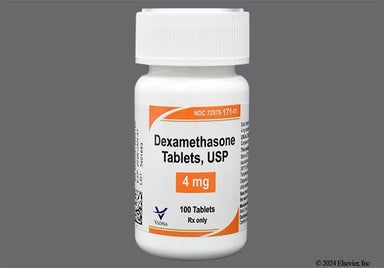
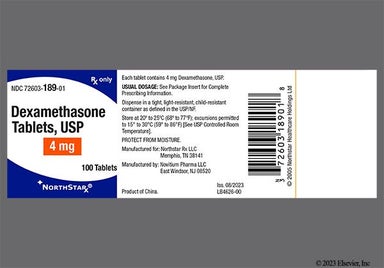
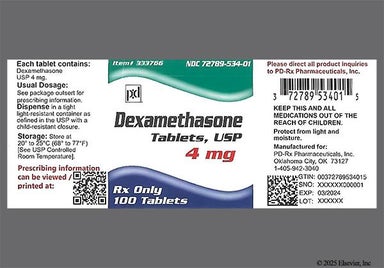
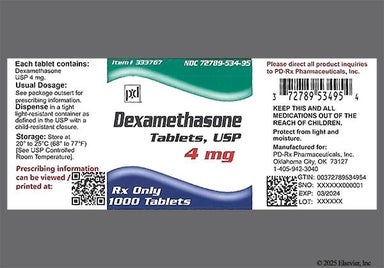
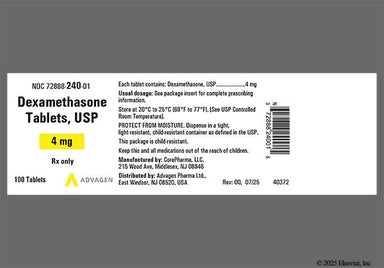
Dexamethasone is a corticosteroid that's used to treat many inflammatory conditions, including allergic reactions and certain autoimmune conditions. If you've been taking dexamethasone for a long time, you're at higher risk for side effects like weight gain and weakened bones. Dexamethasone also has many drug interactions, so make sure to tell your provider and pharmacist what medications you're taking before starting this steroid. This medication is available as oral tablets and solutions, as well as an injection that's usually given in a healthcare setting.
Dexamethasone is a corticosteroid that's similar to a hormone that your body naturally makes, called cortisol. It lowers swelling (inflammation) and other immune responses that can cause you pain, discomfort, or harm.
Dexamethasone is a long-acting corticosteroid, meaning its effects can linger around longer than other similar medications.
The following side effects may get better over time as your body gets used to the medication. Let your healthcare provider know immediately if you continue to experience these symptoms or if they worsen over time.
The following Dexamethasone side effects have also been reported
Along with its needed effects, a medicine may cause some unwanted effects. Although not all of these side effects may occur, if they do occur they may need medical attention.
Check with your doctor immediately if any of the following side effects occur:
vomiting of material that looks like coffee grounds
Some side effects may occur that usually do not need medical attention. These side effects may go away during treatment as your body adjusts to the medicine. Also, your health care professional may be able to tell you about ways to prevent or reduce some of these side effects. Check with your health care professional if any of the following side effects continue or are bothersome or if you have any questions about them:
More common
Increased appetite
Incidence not known
Abnormal fat deposits on the face, neck, and trunk
Dexamethasone can cause you to feel anxious or have a harder time falling asleep. You will want to take it earlier in the day, if possible, so you don't have trouble sleeping at night.
If you're taking the oral solution or elixir, use the measuring device comes with the medication to measure out your doses. Don't use kitchen or measuring spoons, since these may not be accurate.
If you are prescribed a dose pack of dexamethasone, such as TaperDex 6-Day, follow the directions on the package to take your doses correctly. These dose packs contain a specific number of tablets that lasts for a specific number of days to help treat your condition. The packs also help you to lower your dose slowly until you stop the medication completely so as to prevent any side effects from stopping dexamethasone too quickly.
Dexamethasone can weaken your immune system so avoid getting any "live" vaccines (e.g. chickenpox or shingles vaccine) while taking this medication since the vaccine may not work as well.
When you take dexamethasone for a long time, your body lowers the amount of stress hormone that it produces, so you shouldn't suddenly stop taking your medication or lower your dose without talking to your doctor. If you do, you may get withdrawal symptoms including weakness, fatigue, nausea, vomiting, and diarrhea.
Risks and warnings for Dexamethasone
Dexamethasone can cause some serious health issues. This risk may be even higher for certain groups. If this worries you, talk to your doctor or pharmacist about other options.
Lowered stress hormone levels
Risk factors: Lowering dose or stopping dexamethasone too quickly especially after long-term treatment | Stress such as trauma, surgery or infection
If you've been taking corticosteroids like dexamethasone for a long time, lowering your dose or stopping it too quickly can be dangerous since your body can't respond to stress (adrenal insufficiency). Symptoms low stress hormone levels include joint or muscle pain, extreme low energy and depression. If your provider wants to lower your dose of dexamethasone, they'll work with you to do it slowly over time. Talk to your doctor before you make any changes or stop it.
Higher risk of infections
Risk factors: Taking other immunosuppressants | Long-term treatment | Not vaccinated against viral diseases | Contact with people who have viral illness | History of bacterial or viral conditions
If you take dexamethasone for a long time it can raise your risk of infections and hide some signs of infection. Be especially careful not to be in contact with anyone who has the chickenpox or measles. If you had tuberculosis (TB) in the past your doctor will need to monitor you while taking dexamethasone. You might need to take TB medications to prevent getting it or treat it if your TB comes back.
Also, talk to your doctor before getting any vaccinations. Depending on your dose of dexamethasone and how long you've been taking this medication, you might not be able to receive live vaccines since there's a higher chance you'll get sick from them. Also, your provider might ask you to wait to receive inactivated vaccines because these types of vaccines might not work as well to protect you from future infections.
High blood pressure and kidney-related problems
Risk factors: Recent heart attack
Dexamethasone can cause high blood pressure. It can also cause your body to hold on to more salt and your kidneys to lose more potassium. Talk to your doctor if you have heart failure, high blood pressure, or kidney damage because taking dexamethasone might worsen these conditions.
Stomach and intestinal problems
Risk factors: Drinking alcohol | History of stomach bleeding | Active or history of stomach ulcers | Ulcerative colitis | Taking dexamethasone with other medications that can cause stomach problems
Taking dexamethasone raise the risk of damage to the lining of your stomach and intestine. You should avoid alcoholic beverages because they can worsen stomach irritation. Tell your doctor and get medical care right away if you have stomach pain or bloody/dark stools when you go to the bathroom.
Weakened bones
Risk factors: High dose of dexamethasone | Long duration of treatment
If you take dexamethasone for a long time, this medication can weaken your bones. This can lead to osteoporosis in adults and slower growth rate in children. Ask your doctor for recommendations for how to prevent further weakening of bones. They might ask you to eat foods that are rich in calcium and vitamin D, such as leafy greens, milk, and eggs. They might also recommend you do bone-strengthening exercises, such as walking, climbing stairs, or using resistance bands.
Eye problems
Long-term use of dexamethasone leads to a higher risk of cataracts or glaucoma. You may also be more at risk for certain eye infections. Don't take dexamethasone if you have herpes simplex of the eye. Let your doctor know if you have blurry vision, eye pain or any vision changes while taking this medication.
Dexamethasone dosage
The average cost for 5 tablets of 4mg of Dexamethasone is $9.30 with a free GoodRx coupon.
Interactions between Dexamethasone and other drugs
Dexamethasone may interact with certain medications or supplements. Always let your doctor and pharmacist know about any other medications or supplements (including prescribed and over-the-counter medications, vitamins, and dietary or herbal supplements) that you are currently taking. The list below does not include all possible drug interactions with Dexamethasone. Please note that only the generic name of each medication is listed below.
Although certain medicines should not be used together at all, in other cases two different medicines may be used together even if an interaction might occur. In these cases, your doctor may want to change the dose, or other precautions may be necessary. When you are taking this medicine, it is especially important that your healthcare professional know if you are taking any of the medicines listed below. The following interactions have been selected on the basis of their potential significance and are not necessarily all-inclusive.
Using this medicine with any of the following medicines is not recommended. Your doctor may decide not to treat you with this medication or change some of the other medicines you take.
Using this medicine with any of the following medicines is usually not recommended, but may be required in some cases. If both medicines are prescribed together, your doctor may change the dose or how often you use one or both of the medicines.
Using this medicine with any of the following medicines may cause an increased risk of certain side effects, but using both drugs may be the best treatment for you. If both medicines are prescribed together, your doctor may change the dose or how often you use one or both of the medicines.
Contraindications are specific health conditions or situations in which a person should not take a medication due to safety concerns. If you have any of the following conditions or if any of the following apply to you, let your healthcare provider know because Dexamethasone will not be safe for you to take.
Fungal infection that has spread throughout the body
What are alternatives to Dexamethasone?
There are a number of medications that your doctor can prescribe in place of Dexamethasone. Compare a few possible alternatives below.
This medication is used for many different conditions. Generally, it's used for autoimmune problems, conditions related to swelling, or cancer. Some examples include:
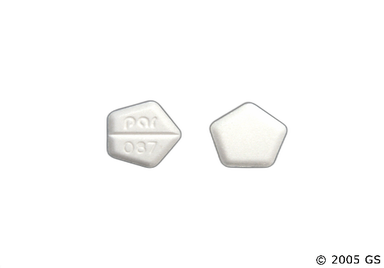
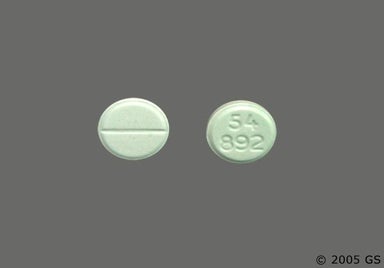
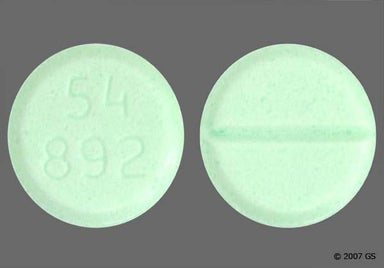
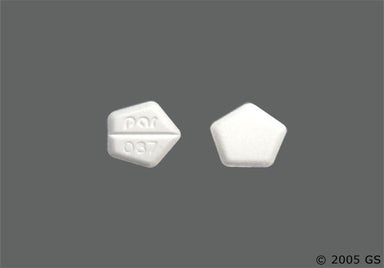
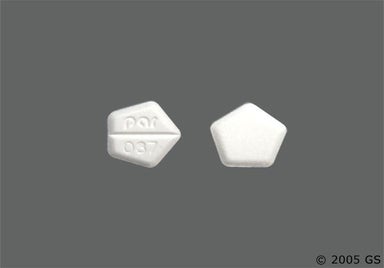
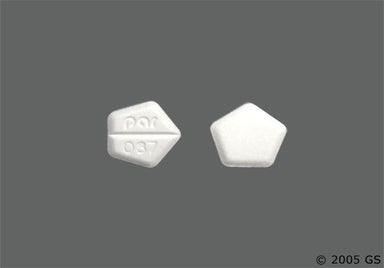
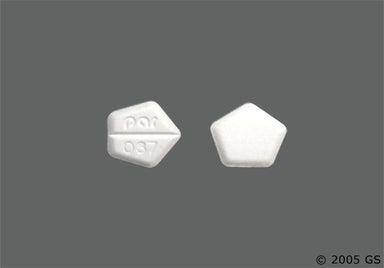
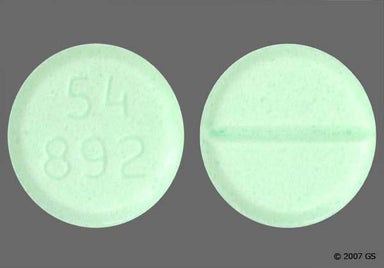
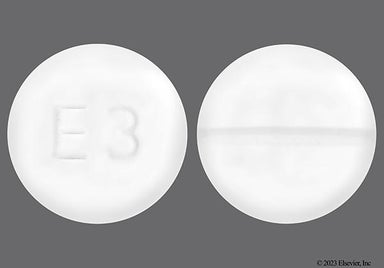
This medicine is Green, Round, Scored Tablet Imprinted With "54 892".Green Round 54 892 - Dexamethasone 4mg TabletThis medicine is Green, Round, Scored Tablet Imprinted With "54 892".Green Round 54 892 - Dexamethasone 4mg TabletThis medicine is White, Pentagon, Scored Tablet Imprinted With "Par 087".White Pentagon par 087 - Dexamethasone 4mg TabletThis medicine is White, Scored Tablet Imprinted With "Par 087", "F 087".White par 087 - Dexamethasone 4mg TabletThis medicine is White, Pentagon, Scored Tablet Imprinted With "Par 087".White Pentagon par 087 - Dexamethasone 4mg TabletThis medicine is White, Pentagon, Scored Tablet Imprinted With "Par 087".White Pentagon par 087 - Dexamethasone 4mg TabletThis medicine is Green, Round, Scored Tablet Imprinted With "54 892".Green Round 54 892 - Dexamethasone 4mg TabletThis medicine is White, Round, Scored Tablet Imprinted With "E3".White Round E3 - Dexamethasone 4mg TabletThis medicine is Yellow, Round, Scored Tablet Imprinted With "S2".Yellow Round S2 - Dexamethasone 4mg TabletThis medicine is Green, Round, Scored Tablet Imprinted With "1736".Green Round 1736 - Dexamethasone 4mg TabletThis medicine is Green, Round, Scored Tablet Imprinted With "N 403".Green Round N 403 - Dexamethasone 4mg TabletThis medicine is Blue, Green, Round, Scored Tablet Imprinted With "C70".Blue, Green Round C70 - Dexamethasone 4mg TabletThis medicine is Blue, Green, Round, Scored Tablet Imprinted With "C70".Blue, Green Round C70 - Dexamethasone 4mg TabletThis medicine is Green, Blue, Round, Scored Tablet Imprinted With "C70".Green, Blue Round C70 - Dexamethasone 4mg Tablet
GoodRx Health has strict sourcing policies and relies on primary sources such as medical organizations, governmental agencies, academic institutions, and peer-reviewed scientific journals. Learn more about how we ensure our content is accurate, thorough, and unbiased by reading our editorial guidelines.
Prescription savings
Stop paying too much for your prescriptions. Compare prices, get pharmacy coupons, and save up to 80%.
Plans start at $9.99/mo. (when paid yearly). Terms apply.
Common questions about Dexamethasone
Yes, Dexamethasone is a corticosteroid. It works to lessen swelling (inflammation) and other immune responses that can cause you pain, discomfort, or harm.
How long side effects of Dexamethasone last depend on what side effects you're experiencing, how long you've been taking Dexamethasone, and at what dose. Your provider might be able to help you manage some of the more common side effects of Dexamethasone, such as trouble sleeping and headache, with lifestyle changes and over-the-counter medications. But it can take you longer to recover from some of the more long-term side effects of Dexamethasone, even after your provider has helped you taper off of this medication. If you have a question about any particular side effect, ask your provider.
According to the Journal of the Endocrine Society, prednisone 20 mg is considered high or "stress" dose. Based on calculations, Dexamethasone 6 mg is equal to prednisone 40 mg - meaning it is also considered a high corticosteroid dose. Don't suddenly stop taking Dexamethasone, especially if you've been taking this dose for a long time, without talking with your provider first. Doing so can raise your risk of withdrawal symptoms, including body aches and tiredness.
It can take anywhere from about 8 to 16 days for most of Dexamethasone to leave your system after you've stopped taking this medication. This estimate is based on the medication's half-life, which is the amount of time it takes for half of the medication to leave your system. A medication is considered to be cleared from the body after about five half-lives.
The timing of when Dexamethasone starts to work can differ depending on what condition you're taking it for. In general, Dexamethasone reaches its "peak" concentration in the body within an hour. But this might not be the same as how long it takes for you to feel a physical improvement in your condition. For example, a study of the use of Dexamethasone to help with croup in children showed that children can experience relief of their symptoms in about 30 minutes. Let your provider know if you've questions about how fast Dexamethasone works.
You might gain weight while taking Dexamethasone since it can raise your appetite, and also affect how your body breaks down food and how your body stores fat. If you're only taking Dexamethasone for a short time, you're less likely to experience any weight changes. But you're more likely to experience this side effect if you're taking a higher dose of Dexamethasone or taking Dexamethasone for a longer period of time (30 days or longer).