


How Much Is Soliqua Without Insurance?
Without insurance, Soliqua can cost over $1,000 per month. Learn more about how much Soliqua costs without insurance and ways to save.

Soliqua 100/33 is an injectable medication for adults with Type 2 diabetes. It contains insulin glargine (a long-acting insulin) and lixisenatide (a glucagon-like peptide-1 (GLP-1) receptor agonist). It helps manage blood sugar levels along with a diabetes-friendly diet and exercise. Soliqua 100/33 comes as a prefilled pen. The medication is injected under the skin once a day within 1 hour before you eat your first meal of the day. Soliqua 100/33 can cause stomach-related side effects like nausea and diarrhea.

Soliqua 100/33 is a combination of two medications. They work together to lower blood sugar.
Insulin glargine is a long-acting insulin. It helps your body absorb and store sugar from your blood. This helps control your blood sugar levels throughout the day.
Lixisenatide is a glucagon-like peptide-1 (GLP-1) receptor agonist. It works in a similar way to GLP-1, a hormone your body normally makes. It helps your pancreas release more insulin and tells your liver to make less sugar. It also slows down your gut and helps you feel more full after you eat.
| Common Brands | Soliqua 100/33 |
|---|---|
| Drug Class | Insulin / GLP-1 agonist |
| Controlled Substance Classification | Not a controlled medication |
| Generic Status | No lower-cost generic available |
| Availability | Prescription only |

The following side effects may get better over time as your body gets used to the medication. Let your healthcare provider know immediately if you continue to experience these symptoms or if they worsen over time.
Contact your healthcare provider immediately if you experience any of the following.
Side effects that you should report to your care team as soon as possible:
Side effects that usually do not require medical attention (report these to your care team if they continue or are bothersome):




Soliqua 100/33 can cause some serious health issues. This risk may be even higher for certain groups. If this worries you, talk to your doctor or pharmacist about other options.
Don't share your Soliqua 100/33 pens with anyone, even if you use a new pen needle. Sharing the pen can spread germs and cause infection.
Although rare, Soliqua 100/33 can cause a severe allergic reaction. This can include anaphylaxis, which can be life-threatening. Symptoms include a widespread rash, facial swelling, trouble breathing, or dizziness. If you have signs of a serious allergic reaction, stop using Soliqua 100/33 and get medical help right away.
Although rare, some people using medications like Soliqua 100/33 have had pancreatitis, or inflammation of the pancreas. Signs can include severe, long-lasting stomach pain that can spread to your back. This can happen with or without nausea or vomiting. If any of these signs happen, stop using Soliqua 100/33 and get medical help right away.
Changing your insulin routine can affect your blood sugar levels. These changes include where you inject Soliqua 100/33, which has insulin glargine in it. It can also happen if you switch to a different insulin. Depending on the change, it can make your blood sugar get too high or too low.
Also, if you inject Soliqua 100/33 too often into thick or pitted skin, your body might not absorb as much insulin. This can make the medication not work as well to control your blood sugar. Then when you suddenly inject into healthier skin, it can put you at risk of low blood sugar.
Always talk to your diabetes care team before making any changes to your Soliqua 100/33 dose or routine. If they say it's okay, be sure to check your blood sugar more often. This helps you see how the changes affect your blood sugar.
Soliqua 100/33 can cause hypoglycemia, or low blood sugar. This can be serious if it isn't treated right away.
Check your blood sugar regularly to make sure it stays in a safe range. If you make any changes to your diet, meal patterns, exercise routine, or other medications, check your blood sugar more often. This is because these changes can affect your blood sugar. Also let your care team know so they can see if they need to adjust your Soliqua 100/33 dose.
It's important to know the signs of low blood sugar. You might feel shaky, nervous, sweaty, dizzy, or very hungry. Always carry a fast source of sugar, like glucose tablets, to treat low blood sugar. Get medical help right away if your blood sugar doesn't improve after treatment.
Soliqua 100/33 can cause side effects like stomach upset. This includes stomach pain, nausea, vomiting, and diarrhea. Sometimes, it can be severe. Because of this, Soliqua 100/33 isn't the best choice for people with severe stomach issues, like gastroparesis (slowed emptying of your stomach).
Soliqua 100/33 can sometimes cause serious kidney problems. This is more likely to happen if you become dehydrated from side effects like nausea, vomiting, or diarrhea.
Before starting Soliqua 100/33, tell your prescriber if you have kidney problems. They can make sure the medication is safe for you to use. Soliqua 100/33 isn't recommended for people with advanced kidney problems.
If you have nausea, vomiting, or diarrhea while using Soliqua 100/33, drink plenty of fluids to stay hydrated and tell your care team. Since you're at risk of dehydration and kidney damage, they might check your kidneys with a blood test. Also tell your prescriber right away if you have trouble urinating or are urinating less than usual. These can be signs of kidney problems.
Soliqua 100/33 can cause low potassium levels, which can sometimes be dangerous. Your risk might be greater if you also take other medications that lower potassium, like certain diuretics (water pills). If needed, your prescriber might check your potassium levels with blood tests.
Watch out for signs of low potassium while using Soliqua 100/33. This can include weakness, muscle cramps or twitches, constipation, or an uneven heartbeat. If you notice these signs during treatment, tell your care team right away.
Be careful when using Soliqua 100/33 with diabetes medications called glitazones, like pioglitazone (Actos). It can cause your body to hold onto extra fluid. This can put stress on your heart and lead to or worsen heart failure.
Before starting Soliqua 100/33, tell your prescriber if you have heart failure. Also let them know about all your diabetes medications. Your prescriber can make sure Soliqua 100/33 is safe for you.
If you're taking a Soliqua 100/33 with a glitazone, be sure to watch for signs of fluid buildup or heart failure. Call your care team right away if you notice swelling, sudden weight gain, tiredness, or trouble breathing.
Gallbladder problems, such as gallstones, are rare but can happen with medications like Soliqua 100/33. Tell your prescriber right away if you have severe stomach pain, nausea, or vomiting. These can be signs of a gallbladder problem. Because of this, your prescriber might need to check your gallbladder.
Soliqua 100/33 can slow how quickly your stomach empties. In rare cases, this can raise the risk of food or liquid getting into your lungs during surgery or procedures that use general anesthesia or deep sedation. This can happen even if you follow instructions not to eat or drink before the procedure.
Tell your prescriber if you have any surgery or procedure requiring anesthesia planned. And make sure you tell the surgery team that you're taking Soliqua 100/33. It helps the medical team watch out for this lung problem and keep you safe.

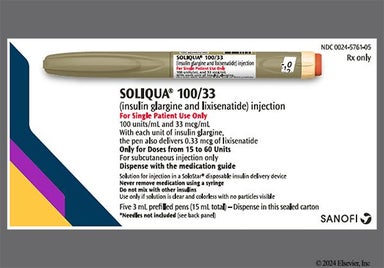
 Carton
| Dosage | Quantity | Price as low as | Price per unit |
|---|---|---|---|
| 5 solostar pens of 3ml | 1 carton | $35.00 | $35.00 |


Contraindications are specific health conditions or situations in which a person should not take a medication due to safety concerns. If you have any of the following conditions or if any of the following apply to you, let your healthcare provider know because Soliqua 100/33 will not be safe for you to take.







Prescription savings
Stop paying too much for your prescriptions. Compare prices, get pharmacy coupons, and save up to 80%.Resources
About GoodRx
 Find expert answers to your health questions so you can make the best decisions for yourself and your family.
Health conditions
Medications & treatment
Access & affordability
Well-being
Medication discounts

Each Soliqua 100/33 pen contains 300 units of insulin glargine and 100 mcg of lixisenatide. The pen can deliver doses from 15 to 60 units each time.
Each box contains 5 Soliqua 100/33 pens.
Soliqua 100/33 starts lowering blood sugar within a few hours after your first dose. But it usually takes several weeks to see the full effect on your overall blood sugar. This includes your average blood sugar over a few months, or your A1C. Keep using Soliqua 100/33 every day as prescribed, even if you don't notice improvements in your blood sugar right away. Check your blood sugar as directed so your prescriber can see if they need to adjust your dose. They'll also regularly check your A1C with blood tests during treatment.
You use Soliqua 100/33 within 1 hour before your first meal of the day. If your first meal is breakfast, use it in the morning. If your first meal is lunch or dinner, talk to your prescriber about the best time to inject the medication. They might suggest injecting later in the day before that meal. Try to stay on a regular dosing schedule and have consistent mealtimes. This can help Soliqua 100/33 work best for you.
It depends on whether you've opened the Soliqua 100/33 pen or not. For unopened pens, store them in the refrigerator between 36ºF and 46ºF. But don't let the medication freeze. Once you start using a pen, the pen is considered opened. Keep opened Soliqua 100/33 pens at room temperature up to 77ºF and use them within 28 days of opening.
It depends. Soliqua 100/33 contains both insulin glargine and lixisenatide. Insulins can cause weight gain. But lixisenatide is a GLP-1 agonist, which are known to cause weight loss. In studies, weight loss was more common than weight gain in people using Soliqua 100/33. If you notice unexpected weight changes while using Soliqua 100/33, talk to your prescriber.
People didn't report having heart palpitations during studies about Soliqua 100/33. But heart palpitations can be a symptom of many things. This can include low blood sugar, which can happen with this medication. Tell your care team right away if you notice your heart racing, pounding, fluttering, or skipping beats. They can help find the cause and make sure it's not something serious.
Yes. You can use Soliqua 100/33 with Janumet (sitagliptin / metformin) if your prescriber says it's okay. These medications work in different ways to help lower blood sugar. And some people with Type 2 diabetes might need extra help. Both medications can put you at risk of low blood sugar. Ask your prescriber if taking both is right for you and how to use them safely.
