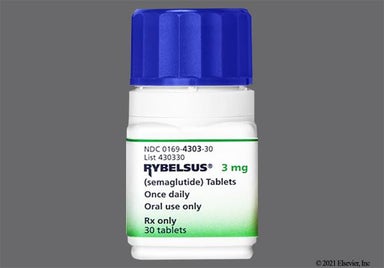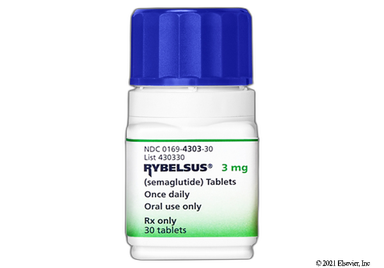
Rybelsus
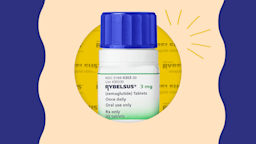
Rybelsus (semaglutide) is a brand-name GLP-1 agonist that helps lower blood sugar in adults with Type 2 diabetes. It's also FDA approved to help reduce the risk of heart attack, stroke, and heart-related death in people with Type 2 diabetes who are at risk for these events. The medication comes as a pill that's taken by mouth once a day, at least 30 minutes before you eat, drink, or take any other medications by mouth. It’s used along with diet and exercise, and might also help with weight loss. Common side effects include nausea, stomach pain, and diarrhea.


What is Rybelsus (semaglutide)?
What is Rybelsus (semaglutide) used for?
- Type 2 diabetes
- Lower the risk of heart attack, stroke, and heart-related death in adults with Type 2 diabetes at high risk for these events
How Rybelsus (semaglutide) works
Rybelsus (semaglutide) is a glucagon-like peptide-1 (GLP-1) agonist, which means it works like the natural GLP-1 hormone in your body. This hormone helps lower blood sugar by making your pancreas release more insulin when blood sugar is high, stopping your liver from releasing more sugar, and slowing down digestion.
The effects above, along with the medication’s ability to reduce weight, lower blood pressure, and lower inflammation, can help protect both your heart and kidneys.
Drug facts



Side effects of Rybelsus (semaglutide)
The following side effects may get better over time as your body gets used to the medication. Let your healthcare provider know immediately if you continue to experience these symptoms or if they worsen over time.
Common Side Effects
- Nausea (11-20%)
- Stomach pain (10-11%)
- Diarrhea (9-10%)
- Lower appetite (6-9%)
- Vomiting (6-8%)
- Constipation (5-6%)
Less Common Side Effects
- Bloating
- Indigestion
- Burping
- Passing gas
- Acid reflux
- Dizziness
- Hair loss
- Fast heart rate
Rybelsus (semaglutide) serious side effects
Contact your healthcare provider immediately if you experience any of the following.
- Risk of thyroid tumors: lump in the neck, trouble breathing or swallowing, hoarseness
- Vision changes (diabetic retinopathy): vision loss, blurred vision, floaters, seeing dark spots, changes in how you see color
- Inflammation of the pancreas (pancreatitis): severe stomach or back pain that won't go away, with or without vomiting
- Low blood sugar (hypoglycemia): shaking, sweating, dizziness, confusion, blurred vision
- Kidney damage: changes in urination, swollen feet or ankles, tiredness, nausea
- Severe stomach problems: nausea, vomiting, diarrhea, bloating, heartburn
- Gallbladder problems: pain in the upper stomach, fever, yellowing of your skin or eyes, clay-colored stool
- Serious allergic reactions: trouble breathing, rash, hives, swollen face, fast heartbeat, dizziness
More on Rybelsus (semaglutide) side effects
The following Rybelsus (semaglutide) side effects have also been reported
Side effects that you should report to your care team as soon as possible:
- Allergic reactions—skin rash, itching, hives, swelling of the face, lips, tongue, or throat
- Change in vision
- Dehydration—increased thirst, dry mouth, feeling faint or lightheaded, headache, dark yellow or brown urine
- Gallbladder problems—severe stomach pain, nausea, vomiting, fever
- Kidney injury—decrease in the amount of urine, swelling of the ankles, hands, or feet
- Pancreatitis—severe stomach pain that spreads to your back or gets worse after eating or when touched, fever, nausea, vomiting
- Thyroid cancer—new mass or lump in the neck, pain or trouble swallowing, trouble breathing, hoarseness
Side effects that usually do not require medical attention (report these to your care team if they continue or are bothersome):
- Constipation
- Diarrhea
- Loss of appetite
- Nausea
- Stomach pain
- Vomiting

Get your GoodRx coupon

Pros and cons of Rybelsus (semaglutide)
Pros
- Only needs to be taken once per day
- First GLP-1 agonist in pill form
- Helps lower blood sugar and might also support weight loss
Cons
- Must be taken on an empty stomach
- Stomach side effects like nausea, diarrhea, and stomach pain are common
- Can't be used for Type 1 diabetes

Pharmacist tips for Rybelsus (semaglutide)

- Take Rybelsus (semaglutide) on an empty stomach first thing in the morning after you wake up. Swallow the tablet with a small amount of water (no more than a half a cup). Don’t take it with any other liquids like juice, coffee, or milk.
- Wait at least 30 minutes after taking Rybelsus (semaglutide) to eat, drink, or take any other medications by mouth. This is because Rybelsus (semaglutide) can interact with other medications and change how your body absorbs them.
- Swallow Rybelsus (semaglutide) tablets whole. Don't crush, chew, or split them. Breaking the tablet can lead to the wrong dose.
- If you forget to take a dose of Rybelsus (semaglutide), skip it. Take your next dose the following day as usual. Never take two doses at once.
- Rybelsus (semaglutide) works best if you also follow a balanced diet and get regular exercise. Ask your care team for help building a routine.
- It’s common to have stomach side effects like nausea, vomiting, stomach pain, or diarrhea when you start taking Rybelsus (semaglutide) or move to a higher dose. These side effects usually go away over time. Let your prescriber know if they’re severe or don’t get better.
- Rybelsus (semaglutide) can raise the risk of inflammation of the pancreas (pancreatitis), a serious condition. Stop taking it and call your care team if you have severe stomach pain that spreads to your back, with or without vomiting.
- Rybelsus (semaglutide) can cause low blood sugar if you take it with other diabetes medications like sulfonylureas or insulins. Know how to recognize and treat symptoms like shaking, sweating, dizziness, confusion, and blurred vision.
- If you plan to become pregnant while taking Rybelsus (semaglutide), talk to your prescriber. You'll usually need to stop taking it at least 2 months before trying to get pregnant. This gives the medication time to fully leave your body.
- It's not recommended to breastfeed while taking this Rybelsus (semaglutide). The medication can pass into breast milk, and it's not clear how it might affect your baby.


How to save using GoodRx

Common questions about Rybelsus (semaglutide)

Risks and warnings for Rybelsus (semaglutide)
Rybelsus (semaglutide) can cause some serious health issues. This risk may be even higher for certain groups. If this worries you, talk to your doctor or pharmacist about other options.
Risk of thyroid tumors
- Risk factors: History of MTC | History of MEN 2
 In animal studies, semaglutide (the active ingredient in Rybelsus (semaglutide)) caused thyroid tumors when given over a long period. But it's not known if the same thing happens in people.
Because of this possible risk, you shouldn't take Rybelsus (semaglutide) if you or someone in your family has had medullary thyroid carcinoma (MTC) or if you have a condition called multiple endocrine neoplasia syndrome type 2 (MEN 2). Call your prescriber right away if you find a lump in your neck, have trouble breathing or swallowing, or notice hoarseness that doesn’t go away.
Inflammation of the pancreas (pancreatitis)
Some people taking Rybelsus (semaglutide) have had a serious condition called pancreatitis, or inflammation of the pancreas. This is rare but can be life-threatening. After you start this medication, tell your prescriber right away if you have severe stomach pain that doesn’t go away. The pain can spread to your back and could be accompanied by vomiting. If your care team thinks you have pancreatitis, they’ll stop the medication and give you the right treatment.
Eye problems
- Risk factors: History of diabetic retinopathy
Rybelsus (semaglutide) can cause eye problems, especially if you already have a condition called diabetic retinopathy. If you have this condition, your care team might want to check your eyes more often while you take Rybelsus (semaglutide). Tell them right away if you notice changes in your vision, like blurry vision, floaters, dark spots, or vision loss.
Low blood sugar (hypoglycemia) when taken with certain diabetes medications
- Risk factors: Taking medications that raise your insulin levels
If you take Rybelsus (semaglutide) with insulin or other diabetes medications like sulfonylureas, you might have a higher risk of low blood sugar (hypoglycemia), which can sometimes be serious. Your prescriber might need to lower the dose of your insulin or other medications to prevent this. Make sure you know the signs of low blood sugar — like shakiness, sweating, confusion, or feeling very hungry — and how to treat it.
Kidney damage
Kidney problems have been reported in people taking GLP-1 medications like semaglutide, the active ingredient in Rybelsus (semaglutide). Some people needed treatments like dialysis, even if they didn’t have kidney problems before. These problems were often linked to nausea, vomiting, diarrhea, or dehydration.
If you have stomach side effects while taking Rybelsus (semaglutide), and they're severe, your care team might check your kidney labs — especially when starting or raising your dose.
Severe stomach side effects
- Risk factors: History of gastroparesis
Some people taking Rybelsus (semaglutide) have had stomach-related side effects like nausea, vomiting, diarrhea. In some cases, these side effects were serious. Rybelsus (semaglutide) isn't recommended if you have a condition called gastroparesis, which slows down how your stomach empties. Be sure to tell your prescriber if you’ve had stomach problems before starting this medication.
Severe allergic reactions
Severe allergic reactions to Rybelsus (semaglutide) are possible, including life-threatening ones like facial swelling or anaphylaxis, which can cause throat swelling or trouble breathing. Call for medical help right away if you notice symptoms such as hives, a rash, red skin, or swelling of your lips, tongue, or face after taking this medication.
Gallbladder problems
Although rare, gallbladder problems such as gallstones and inflammation of the gallbladder have happened in some people taking Rybelsus (semaglutide). Tell your prescriber if you experience symptoms like upper stomach pain, fever, or clay-colored stool. They might run tests to check your gallbladder and decide if you need treatment.
Lung problems during anesthesia or deep sedation
- Risk factors: Undergoing surgery or a procedure requiring anesthesia or deep sedation
Rybelsus (semaglutide) slows down how quickly food leaves your stomach. Rarely, people taking similar medications have had food remain in their stomach during surgery, even after fasting like they were told. This can lead to a serious lung problem if stomach contents get into the lungs during anesthesia or deep sedation. Make sure to tell your prescriber if you're taking Rybelsus (semaglutide) before any planned surgery or procedure.

Rybelsus (semaglutide) dosage
 Tablet
| Dosage | Quantity | Price as low as | Price per unit |
|---|---|---|---|
| 3mg | 30 tablets | $1,004.02 | $33.47 |
| 7mg | 30 tablets | $1,004.79 | $33.49 |
| 14mg | 30 tablets | $1,004.02 | $33.47 |
| 1.5mg | 30 tablets | $1,030.63 | $34.35 |
| 4mg | 30 tablets | $1,030.63 | $34.35 |
| 9mg | 30 tablets | $1,030.63 | $34.35 |
Typical dosage for Rybelsus (semaglutide)
Rybelsus (semaglutide) comes in two different formulations: R1 and R2. Even though they both contain the same active ingredient (semaglutide), they aren't interchangeable with each other. Your dose will depend on which version your prescriber chooses for you.
- R1 : The typical starting dose is 3 mg by mouth once a day for 30 days. After that, your dose will go up to 7 mg once a day. If needed, your prescriber might raise it again to 14 mg once a day.
- R2: The typical starting dose is 1.5 mg by mouth once a day for 30 days.After that, your dose will go up to 4 mg once a day. If needed, your prescriber might raise it again to 9 mg once a day.
For both formulations, take Rybelsus (semaglutide) on an empty stomach first thing in the morning with a small amount of water (no more than half a cup). Wait at least 30 minutes before eating, drinking, or taking any other oral medications.
More on Rybelsus (semaglutide) dosage


How much does Rybelsus (semaglutide) cost?
$1,004.02

Rybelsus (semaglutide) contraindications
Contraindications are specific health conditions or situations in which a person should not take a medication due to safety concerns. If you have any of the following conditions or if any of the following apply to you, let your healthcare provider know because Rybelsus (semaglutide) will not be safe for you to take.
- Personal or family history of medullary thyroid carcinoma (MTC)
- Personal history of multiple endocrine neoplasia syndrome type 2 (MEN 2)

What are alternatives to Rybelsus (semaglutide)?

News about Rybelsus (semaglutide)







Rybelsus (semaglutide) images