Key takeaways:
Rybelsus and Wegovy are two medications that contain semaglutide. They both come in pill form, but Wegovy is also available as an injection.
Rybelsus is approved to treat Type 2 diabetes. Wegovy is approved for weight loss (injection and pill) and treating a type of fatty liver disease (injection only). Both medications can also lower the risk of serious cardiovascular problems.
The Wegovy pill comes in higher doses than Rybelsus. Both come in 1.5 mg, 4 mg, and 9 mg doses, while Wegovy also comes in a 25 mg dose.
If you’re new to using GoodRx for Wegovy savings, pay an introductory price for the first two fills of $199 per month for the injection and $149 per month for the pill (only available for certain doses). Subscribers to GoodRx for Weight Loss can also access FDA-approved brand-name GLP-1 medications.
Save on related medications
For several years, Rybelsus was the only oral semaglutide option available. But that’s changed. Wegovy (semaglutide) — already known as a weekly weight-loss injection — is now available as an oral pill, giving people another tablet option alongside Rybelsus.
Both Rybelsus and Wegovy belong to the same medication class, glucagon-like peptide-1 (GLP-1) receptor agonists, and contain the same active ingredient. But they’re approved for different uses, come in different doses and formulations, and aren’t considered interchangeable. Here are six key differences between Rybelsus and Wegovy you should know.
1. Wegovy and Rybelsus have different approved uses
Wegovy and Rybelsus contain the same active ingredient: semaglutide. And even though the two medications work the same way in the body, they’re approved for different uses. Wegovy is primarily used for weight loss, while Rybelsus is a Type 2 diabetes medication. But both have additional uses to consider. Here’s how they compare.
| Wegovy injection uses | Wegovy pill uses | Rybelsus uses |
|---|---|---|
|
|
|
Depending on your health history, your prescriber may prefer one option over the other. This could also include Rybelsus’ injectable counterpart, which is sold as Ozempic.
2. Wegovy and Rybelsus both come in pill from, but Wegovy is also available as an injection
Another difference between Wegovy and Rybelsus is how you take them. Both Wegovy and Rybelsus are available as oral pills, but Wegovy also comes as an injection.
Historically, most GLP-1s have only been available as injections because they weren’t absorbed well when taken by mouth. For several years, Rybelsus was the only oral GLP-1 option. Now, the Wegovy pill offers another choice, specifically for weight loss.
Both Rybelsus and the Wegovy pill contain a special ingredient that helps you absorb semaglutide better. Even so, absorption is still limited, which is why both pills have specific instructions to follow when taking them. Semaglutide pills should be taken first thing in the morning on an empty stomach, with no more than 4 oz of plain water. You’ll then need to wait at least 30 minutes before eating, drinking other liquids, or taking other medications.
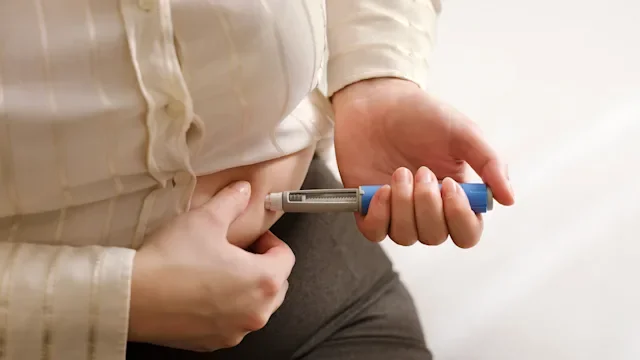
Wegovy injections, on the other hand, come in a prefilled injection pen. You can inject your dose at any time of day, without regard to meals. But unlike the pills, you should store Wegovy pens in the refrigerator between 36°F and 46°F. They last the longest when stored this way. If needed, you can keep the pens at room temperature (between 46°F and 86°F) for up to 28 days.
3. Rybelsus and Wegovy pills are taken daily, while Wegovy injections are administered weekly
Both Rybelsus and the Wegovy pill are taken once daily, while Wegovy injections are administered once weekly. Even though semaglutide stays in the body for a long time, its absorption and dosage schedule depends on how you take it.
Injectable semaglutide, such as the Wegovy injection, is absorbed more reliably, which allows for a once-weekly dose. Oral semaglutide is absorbed in much smaller amounts and can vary from day to day. Because of this, Rybelsus and the Wegovy pill need to be taken daily to build and maintain consistent medication levels in the body.
4. Rybelsus and Wegovy pills come in different doses
Rybelsus and Wegovy pills are both oral semaglutide products and share several dose options, including 1.5 mg, 4 mg, and 9 mg tablets. But the Wegovy pill is also available in a higher 25 mg dose, which is specifically designed for weight loss.
With both medications, you’ll start with a low dose that’s slowly increased over time. With Rybelsus, you’ll work your way up to 4 mg or 9 mg, depending on your goals and response. With the Wegovy pill, you’ll work your way up to 25 mg daily, which is the recommended dosage for weight loss.
5. Wegovy injections are also approved to treat a certain type of fatty liver disease
In addition to their initial uses, Wegovy (injection and pill) and Rybelsus are approved to lower the risk of serious cardiovascular problems in certain people. But beyond this shared benefit, Wegovy injections are also approved to treat metabolic dysfunction-associated steatohepatitis (MASH) with liver scarring — a type of fatty liver disease.

Read more like this
Explore these related articles, suggested for readers like you.



Depending on your health history, your prescriber may recommend one medication over the other. For example, Rybelsus may be a good option if you have Type 2 diabetes and heart disease. Or, if you have MASH, Wegovy injections may be an option to consider.
6. Insurance coverage for Wegovy and Rybelsus may be different
If you’ve been prescribed Wegovy for weight loss alone, it may not be covered under your insurance plan. But if you have heart disease or MASH, there may be a greater likelihood of coverage. So it pays to check your coverage and estimated out-of-pocket costs ahead of time. It’s possible that Wegovy is covered, but you may have a higher copay or coinsurance.
When it’s used to treat Type 2 diabetes, Rybelsus is covered by most insurance plans. But it’s still a good idea to check your coverage. It’s possible that other GLP-1 medications may be preferred. Or your prescriber may need to show your insurance that you’ve tried other diabetes medications first.
Can you switch from Wegovy to Rybelsus (and vice versa)?
Generally, no. Wegovy and Rybelsus are not considered interchangeable. And there isn’t currently a Rybelsus dose that’s comparable to the typical Wegovy maintenance dose either. But it’s possible to switch from Wegovy injections to Wegovy pills.
Your prescriber, however, may decide to switch you from Rybelsus to Wegovy if you’ve been prescribed Rybelsus off-label for weight loss. In this case, they may have you start with a lower Wegovy dose and work your way up, if needed.
But if you’ve been prescribed Rybelsus for Type 2 diabetes and want to switch to an injection, Ozempic would be the best option.
How to save on Rybelsus and Wegovy
Rybelsus and Wegovy (injection and pill) are available as brand-name medications. A few ways to make your prescription more affordable include using GoodRx coupons, manufacturer copay savings cards, and patient assistance programs.
Save with GoodRx. If you’re new to using GoodRx for Wegovy savings, pay an introductory price for the first two fills of $199 per month for the injection and $149 per month for the pill (only available for certain doses). For future fills, and for other Wegovy doses, pay $349 per month for the injection and $299 per month for the pill. Subscribers to GoodRx for Weight Loss can also access FDA-approved brand-name GLP-1 medications.
Save with copay savings cards. If you have commercial insurance, you could pay as little as $25 per month for Wegovy (injection and pill) or $25 per month for Rybelsus.
Save with a patient assistance program. If you’re eligible, you could pay as little as $0 for Rybelsus through the program.
Frequently asked questions
Rybelsus may be less popular than other GLP-1 medications for Type 2 diabetes for a few reasons, including:
Timing rules: Rybelsus must be taken daily on an empty stomach with strict timing instructions, which some people may find inconvenient.
Dose options: Rybelsus doesn’t offer dose options that directly match Ozempic’s 0.25 mg, 1 mg, and 2 mg injections. This can limit flexibility if you need dose adjustments or higher-dose options.
To get the most benefit from Rybelsus, avoid eating, drinking anything other than plain water, or taking other medications at the same time and for at least 30 minutes after your dose. It’s also a good idea to limit foods and drinks that can worsen side effects or affect blood glucose (blood sugar) management, such as:
Sugary foods and drinks, which can raise blood sugar levels
High-fat or greasy foods, which may worsen nausea or upset stomach
Alcohol, which can increase the risk of low blood sugar and worsen side effects
The price of Rybelsus and Ozempic can depend on factors such as your insurance plan, pharmacy, and available discounts.
Rybelsus cost: The average retail price of Rybelsus is $. But if you have commercial insurance, you could pay as little as $25 with a manufacturer copay card.
Ozempic cost: People who are paying cash for their prescription can access Ozempic for $199 to $499 per month, depending on the dose. Similarly, you could pay as little as $25 with a copay card.
Rybelsus may be less popular than other GLP-1 medications for Type 2 diabetes for a few reasons, including:
Timing rules: Rybelsus must be taken daily on an empty stomach with strict timing instructions, which some people may find inconvenient.
Dose options: Rybelsus doesn’t offer dose options that directly match Ozempic’s 0.25 mg, 1 mg, and 2 mg injections. This can limit flexibility if you need dose adjustments or higher-dose options.
To get the most benefit from Rybelsus, avoid eating, drinking anything other than plain water, or taking other medications at the same time and for at least 30 minutes after your dose. It’s also a good idea to limit foods and drinks that can worsen side effects or affect blood glucose (blood sugar) management, such as:
Sugary foods and drinks, which can raise blood sugar levels
High-fat or greasy foods, which may worsen nausea or upset stomach
Alcohol, which can increase the risk of low blood sugar and worsen side effects
The price of Rybelsus and Ozempic can depend on factors such as your insurance plan, pharmacy, and available discounts.
Rybelsus cost: The average retail price of Rybelsus is $. But if you have commercial insurance, you could pay as little as $25 with a manufacturer copay card.
Ozempic cost: People who are paying cash for their prescription can access Ozempic for $199 to $499 per month, depending on the dose. Similarly, you could pay as little as $25 with a copay card.
The bottom line
Wegovy and Rybelsus are medications that contain semaglutide. Both come in pill form, but Wegovy is also available as an injection.
Wegovy and Rybelsus work the same way in the body. But Wegovy is approved for weight loss and a type of fatty liver disease, while Rybelsus is approved for Type 2 diabetes. Both medications are also approved to lower the risk of serious cardiovascular problems in certain people.
If you think Wegovy or Rybelsus may be right for you, speak with your healthcare team about your options.

Why trust our experts?



References
Granhall, C., et al. (2019). Safety and pharmacokinetics of single and multiple ascending doses of the novel oral human GLP-1 analogue, oral semaglutide, in healthy subjects and subjects with type 2 diabetes. Clinical Pharmacokinetics.
Haddadzadegan, S., et al. (2022). Oral delivery of therapeutic peptides and proteins: Technology landscape of lipid-based nanocarriers. Advanced Drug Delivery Reviews.
Hughes, S., et al. (2020). Oral semaglutide. Clinical Diabetes.
Janic, M., et al. (2022). Effect of oral semaglutide on cardiovascular parameters and their mechanisms in patients with Type 2 diabetes: Rationale and design of the semaglutide anti-atherosclerotic mechanisms of action study (SAMAS). Diabetes Therapy.
Mortensen, J. S., et al. (2022). Physical and barrier changes in gastrointestinal mucus induced by the permeation enhancer sodium 8-[(2-hydroxybenzoyl)amino]octanoate (SNAC). Journal of Controlled Release.
Novo Medlink. (n.d.). RYBELSUS (semaglutide) savings and coverage tools for your patients. Novo Nordisk.
Novo Nordisk. (2023). Company announcement: Novo nordisk A/S: semaglutide 2.4 mg reduces the risk of major adverse cardiovascular events by 20% in adults with overweight or obesity in the SELECT trial.
Novo Nordisk. (2025). Rybelsus semaglutide tablets [package insert].
Novo Nordisk. (2025). RYBELSUS- oral semaglutide tablet [package insert]. DailyMed.
Novo Nordisk. (2025). Wegovy semaglutide injection [package insert].
Overgaard, R. V., et al. (2021). Clinical pharmacokinetics of oral semaglutide: Analyses of data from clinical pharmacology trials. Clinical Pharmacokinetics.