Used for Anxiety, Depression, Diabetic Neuropathy, Fibromyalgia, Musculoskeletal Conditions
Used for Anxiety, Depression, Diabetic Neuropathy, Fibromyalgia, Musculoskeletal Conditions
Duloxetine (Cymbalta) helps treat depression and anxiety. It can also help with some types of chronic pain, such as nerve pain from diabetes. Duloxetine (Cymbalta) is a type of antidepressant called an SNRI, or serotonin and norepinephrine reuptake inhibitor. Most people take it by mouth once a day, but some with depression might take it twice a day. Side effects include nausea, headache, and dry mouth. When it's time to stop taking the medication, the prescriber will slowly lower your dose to help prevent withdrawal symptoms.
Chronic pain in the muscles, bones, joints, or tendons in adults
How Duloxetine (Cymbalta) works
Duloxetine (Cymbalta) is an SNRI, or a serotonin and norepinephrine reuptake inhibitor. It works by raising the level of chemicals called serotonin and norepinephrine in your brain. This is thought to help improve mood and lessen pain.
The following side effects may get better over time as your body gets used to the medication. Let your healthcare provider know immediately if you continue to experience these symptoms or if they worsen over time.
Note: Side effects were reported in adults. Side effects in children might be different.
Duloxetine (Cymbalta) serious side effects
Contact your healthcare provider immediately if you experience any of the following.
Suicidal thoughts or behaviors
Liver damage: nausea, vomiting, loss of appetite, severe stomach pain, yellowing of the skin or whites of the eyes
Serotonin syndrome: restlessness, fast heartbeat, diarrhea, nausea, vomiting, feeling very warm, fever, abnormal eye movements, loss of balance, muscle spasms, tremors
Severe bleeding or bruising: bruising that doesn't get better, black stools, pink or red urine, coughing up or vomiting blood, unusual bleeding from the nose or gums
The following Duloxetine (Cymbalta) side effects have also been reported
Along with its needed effects, a medicine may cause some unwanted effects. Although not all of these side effects may occur, if they do occur they may need medical attention.
Check with your doctor immediately if any of the following side effects occur:
talking or acting with excitement you cannot control
trembling or shaking
twitching
unusual tiredness or weakness
vomiting
Some side effects may occur that usually do not need medical attention. These side effects may go away during treatment as your body adjusts to the medicine. Also, your health care professional may be able to tell you about ways to prevent or reduce some of these side effects. Check with your health care professional if any of the following side effects continue or are bothersome or if you have any questions about them:
You can take duloxetine (Cymbalta) with or without food at any time of day. Once you find a time that works for you, try to stick to a schedule. This helps the medication work the best it can and also can help you remember to take it.
Swallow the duloxetine (Cymbalta) capsule whole. Don't crush, chew, or open it. Otherwise, it can affect how the medication works.
Duloxetine (Cymbalta) can sometimes make you sleepy or tired. This can make it harder to think clearly or react fast. Don't drive or use heavy machinery until you know how the medication affects you.
You might feel dizzy when starting duloxetine (Cymbalta) and when you switch to a higher dose. Be careful standing up after sitting or lying down to prevent falls.
Avoid drinking alcohol while taking duloxetine (Cymbalta). Alcohol can make side effects like sleepiness and dizziness worse. It can also raise the risk of liver damage because the medication and alcohol both have this risk on their own.
If you have diabetes, ask your care team if you need to check your blood sugar more often while taking duloxetine (Cymbalta). This medication might raise your blood sugar.
Tell your prescriber and pharmacist about all the medications you take and plan to take. They can check for drug interactions with duloxetine (Cymbalta). For example, taking it with blood thinners like aspirin or warfarin (Coumadin) can raise the risk of bleeding. If needed, your care team can recommend dose changes or treatment changes to help keep you safe.
Don't lower your dose or stop taking duloxetine (Cymbalta) suddenly without talking to your prescriber first. Doing this too fast can cause uncomfortable withdrawal symptoms. It can make you feel dizzy, nauseous, or irritable. And it can cause headache, upset stomach, and trouble sleeping. Your prescriber will help you slowly lower your dose over time so you can stop safely.
Tell your healthcare team if you're breastfeeding. They can talk with you about the risks and benefits of taking duloxetine (Cymbalta). This medication can pass into breast milk, and some babies might get sleepy, feed poorly, or gain weight slowly.
Duloxetine (Cymbalta) can cause some serious health issues. This risk may be even higher for certain groups. If this worries you, talk to your doctor or pharmacist about other options.
Suicidal thoughts or behavior
Risk factors: Age 24 years or younger | History of depression or other mental health conditions
Duloxetine (Cymbalta) might raise the risk of suicidal thoughts or behavior, especially in people under the age of 25. Watch for worsening depression or sudden changes in mood or behavior. This is very important during the first few months of treatment or after a dose change.
Talk to a healthcare professional if you or someone close to you notices any unusual mood or behavior. Call 911 right away if you have thoughts of hurting yourself.
Liver damage
Risk factors: Drinking alcohol | History of liver problems
It's rare, but some people who took duloxetine (Cymbalta) had liver problems. They can be serious and sometimes life-threatening. Tell your care team right away if you have stomach pain, nausea, vomiting, or yellow skin or eyes (jaundice). These can be signs of liver damage. You'll probably need to stop the medication to protect your liver. Your care team will also work to find out what's causing the problem.
Changes in blood pressure and risk of falls
Risk factors: Older adults | Balance problems | Taking more than 60 mg of duloxetine (Cymbalta) daily | Taking other medications that lower blood pressure
Duloxetine (Cymbalta) can cause changes to your blood pressure. It might sometimes raise your blood pressure. It can also cause your blood pressure to drop when you stand up. This drop can make you dizzy or faint, which can put you at risk of falling. This often happens within the first week of treatment but can happen later, especially after you switch to a higher dose.
Check your blood pressure often while taking duloxetine (Cymbalta). Get up slowly after sitting or lying down. This helps prevent sudden drops in blood pressure and dizziness. Tell your primary care provider if your blood pressure seems too high or too low, you feel dizzy, or have fainted.
Serotonin syndrome
Risk factors: Taking other medications that raise serotonin levels in the brain
Duloxetine (Cymbalta) raises the serotonin levels in the brain. It can sometimes cause a serious and dangerous problem called serotonin syndrome. This happens when there's too much serotonin in the brain.
The risk is higher if you take duloxetine (Cymbalta) with other medications that also raise serotonin levels. These include other antidepressants, cough medications with dextromethorphan, and some opioid pain medications. Tell your care team about all the medications you take so they can check your risk.
Stop taking duloxetine (Cymbalta) and get medical help right away if you have signs of serotonin syndrome. These include high fever, fast heart rate, heavy sweating, stiff muscles, or confusion.
Higher risk of bleeding
Risk factors: Taking blood thinners or other medications that make bleeding or bruising easier
Bleeding can range from nosebleeds to stomach bleeds, which can be serious and life-threatening. Tell a healthcare professional right away about any bruising that doesn't go away or bleeding that's hard to stop. Also tell them right away if you have black stools or pink or red urine. These can be signs of bleeding that could be serious.
Severe skin reaction
In some rare cases, duloxetine (Cymbalta) can cause severe skin reactions. Get medical help as soon as possible if you have painful blisters, a peeling rash, sores, or other signs of a skin reaction.
Withdrawal symptoms
Risk factors: Stopping duloxetine (Cymbalta) too suddenly
Don't stop taking duloxetine (Cymbalta) suddenly without talking to your prescriber first. Stopping the medication too quickly can cause withdrawal symptoms. This can make you feel nauseous, anxious, irritable, or confused. It can also cause upset stomach, dizziness, headache, and trouble sleeping.
If you want to stop taking duloxetine (Cymbalta), tell your prescriber. They can help you do this safely by lowering your dose over time before you stop completely.
Low sodium levels
Risk factors: Older adults | Medical condition called syndrome of inappropriate antidiuretic hormone (SIADH) | Taking diuretics (water pills) | Dehydrated or low fluid levels in the body
It's possible for duloxetine (Cymbalta) to cause low sodium levels. In general, sodium levels tend to go back within normal ranges when the medication is stopped. Call your prescriber if you have symptoms of low sodium. This can include headaches, trouble concentrating, memory problems, confusion, weakness, or balance problems.
Sexual problems
Duloxetine (Cymbalta) can sometimes cause sexual problems. They can include erectile dysfunction, low sex drive, or problems with orgasms. Tell your prescriber if you have any sexual problems that affect your sex life while taking this medication. Your prescriber can help find the cause and suggest ways to help.
Not for use alone for bipolar disorder because of the risk of mania
Risk factors: Personal or family history of bipolar disorder | History of mania
Sometimes, depression is the first sign of bipolar disorder. Treating someone with bipolar disorder with an antidepressant by itself can cause a manic episode. This can look like having a lot of energy, being very talkative, having racing thoughts, and doing risky things.
Before starting duloxetine (Cymbalta) for depression, tell your prescriber if you or anyone in your family has bipolar disorder. Also tell them if you've ever had a manic episode before. Your prescriber will check your risk and make sure you get the right care. Duloxetine (Cymbalta) isn't approved to treat bipolar depression.
Angle-closure glaucoma in certain people
Risk factors: Have narrow-angle eyes but haven't had laser eye surgery for it yet
Call your eye specialist right away if you suddenly have blurry vision, severe eye pain, or see rings around lights. These can be signs of an angle-closure attack. This needs immediate medical care.
Duloxetine (Cymbalta) dosage
The average cost for 30 capsules of 60mg of Duloxetine (Cymbalta) is $11.45 with a free GoodRx coupon. This is 65.38% off the average retail price of $33.07.
This medication is taken by mouth. You might start at a low dose before your prescriber raises it slowly over a few weeks to the recommended dose. Your prescriber will adjust your dose based on how well it's working for you and if you have side effects.
Depression
Adults: The typical dose ranges from 40 mg per day (given as 20 mg twice daily) to 60 mg per day (given once daily or as 30 mg twice daily).
Generalized anxiety disorder
Adults: The typical dose is 60 mg once daily. Older adults might start with 30 mg once daily before their dose is raised to 60 mg once daily.
Children ages 7 years and older: The typical starting dose is 30 mg once daily. The recommended dose ranges from 30 mg to 60 mg once daily.
Diabetic neuropathy
Adults: The typical dose is 60 mg once daily.
Fibromyalgia
Adults and children ages 13 years and older: The typical starting dose is 30 mg once daily. The dose can be raised to 60 mg once daily.
Chronic pain in the muscles, bones, joints, or tendons
Adults: The typical starting dose is 30 mg once daily. The recommended dose is 60 mg once daily.
The typical maximum daily dose is 60 mg. But it can also go up to 120 mg per day for some people with depression or generalized anxiety disorder.
Interactions between Duloxetine (Cymbalta) and other drugs
Duloxetine (Cymbalta) may interact with certain medications or supplements. Always let your doctor and pharmacist know about any other medications or supplements (including prescribed and over-the-counter medications, vitamins, and dietary or herbal supplements) that you are currently taking. The list below does not include all possible drug interactions with Duloxetine (Cymbalta). Please note that only the generic name of each medication is listed below.
Although certain medicines should not be used together at all, in other cases two different medicines may be used together even if an interaction might occur. In these cases, your doctor may want to change the dose, or other precautions may be necessary. When you are taking this medicine, it is especially important that your healthcare professional know if you are taking any of the medicines listed below. The following interactions have been selected on the basis of their potential significance and are not necessarily all-inclusive.
Using this medicine with any of the following medicines is not recommended. Your doctor may decide not to treat you with this medication or change some of the other medicines you take.
Using this medicine with any of the following medicines is usually not recommended, but may be required in some cases. If both medicines are prescribed together, your doctor may change the dose or how often you use one or both of the medicines.
Using this medicine with any of the following medicines may cause an increased risk of certain side effects, but using both drugs may be the best treatment for you. If both medicines are prescribed together, your doctor may change the dose or how often you use one or both of the medicines.
Contraindications are specific health conditions or situations in which a person should not take a medication due to safety concerns. If you have any of the following conditions or if any of the following apply to you, let your healthcare provider know because Duloxetine (Cymbalta) will not be safe for you to take.
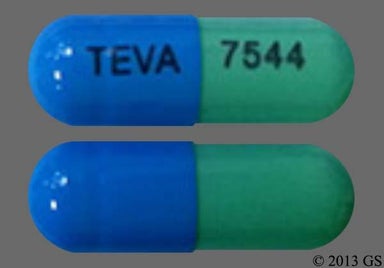
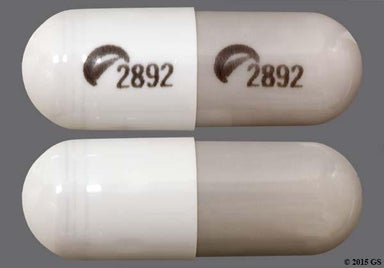
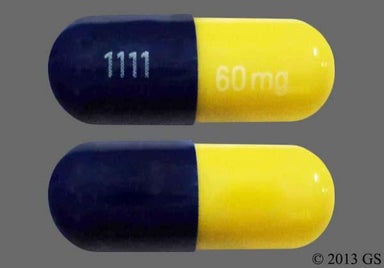
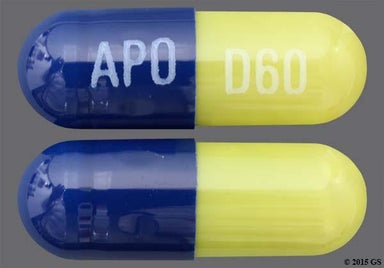
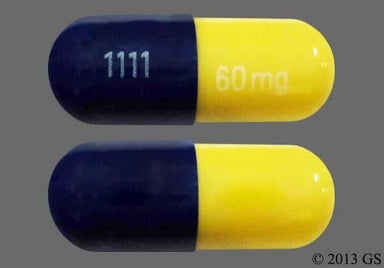
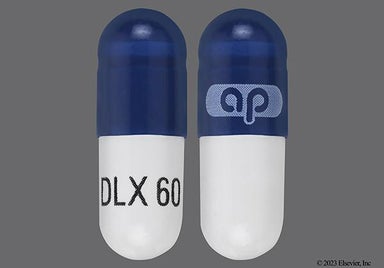
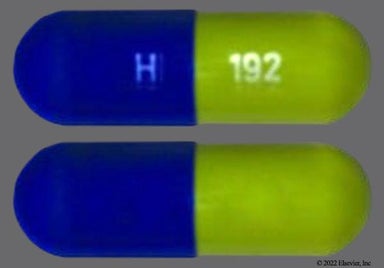
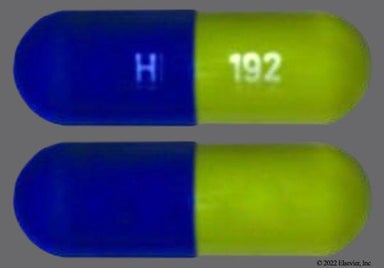
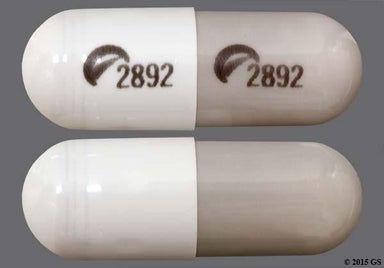
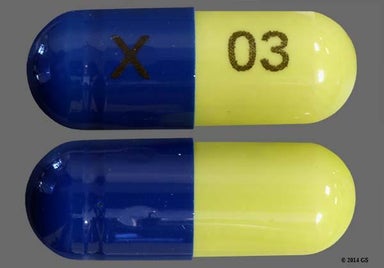
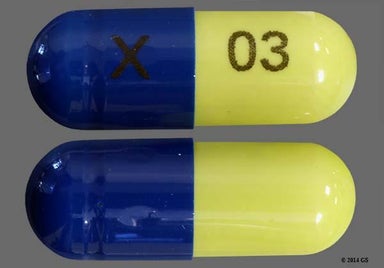
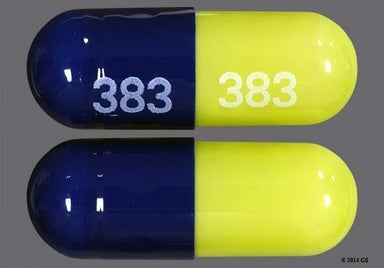
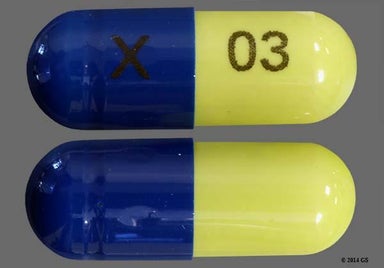
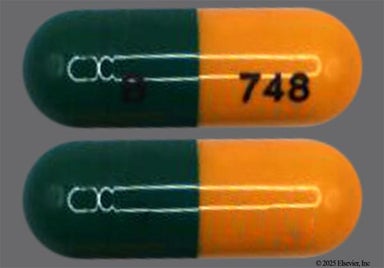
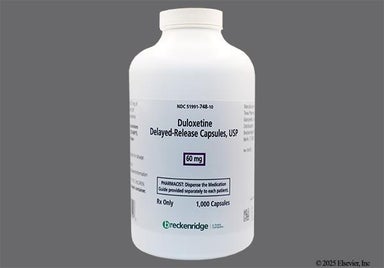
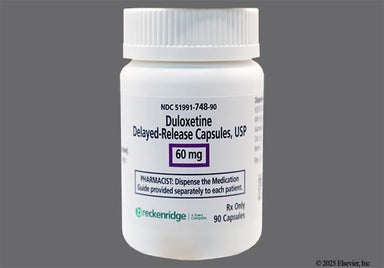
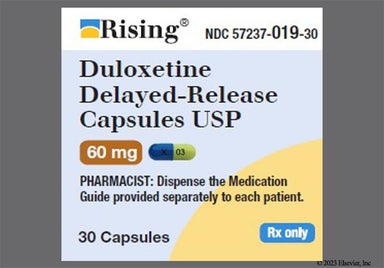
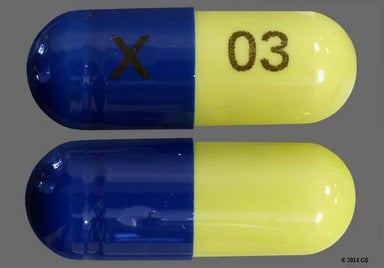
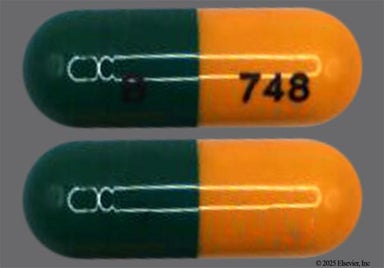
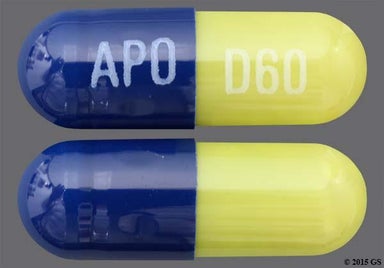
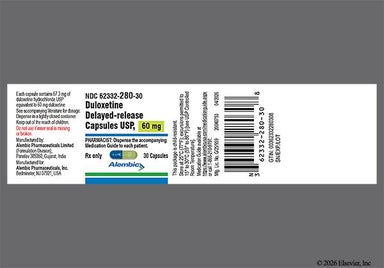
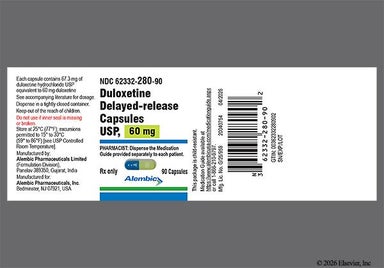
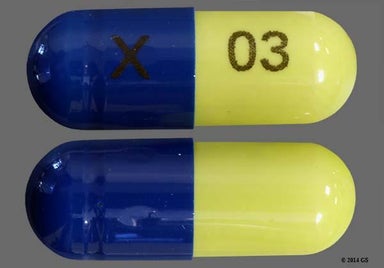
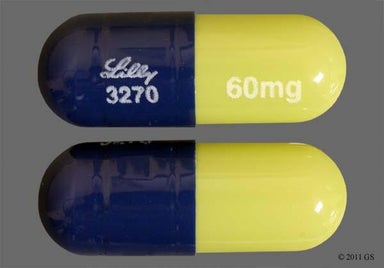
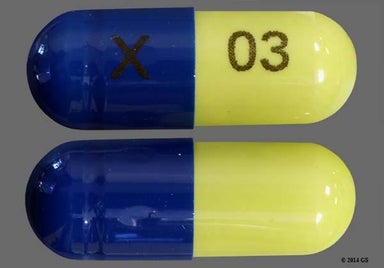
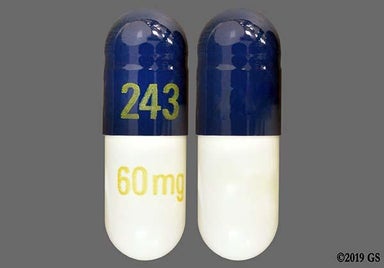
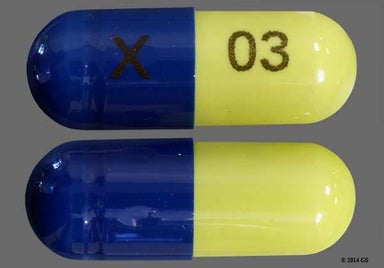
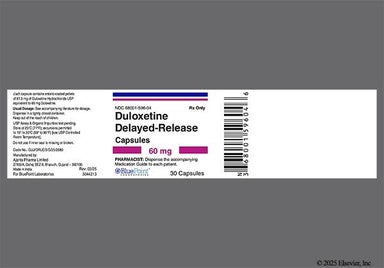
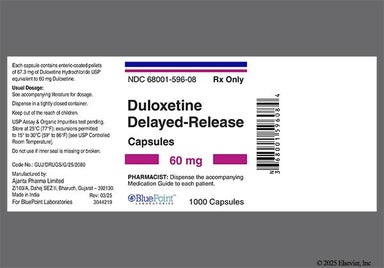
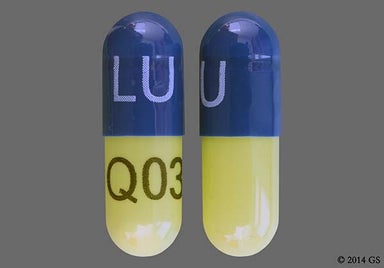
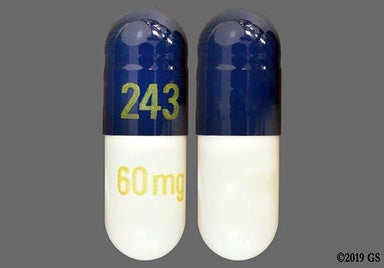
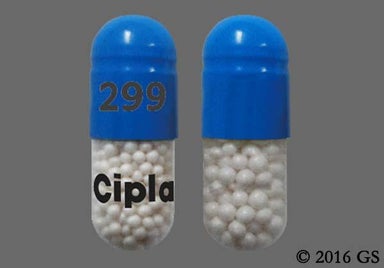
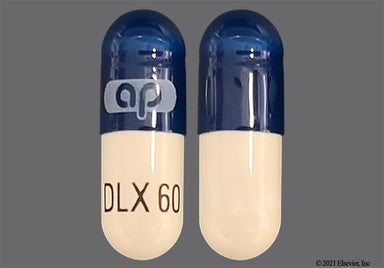
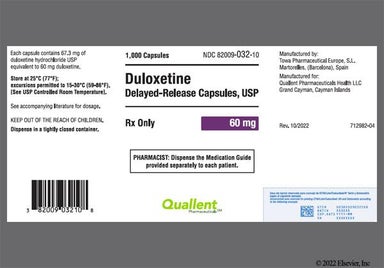
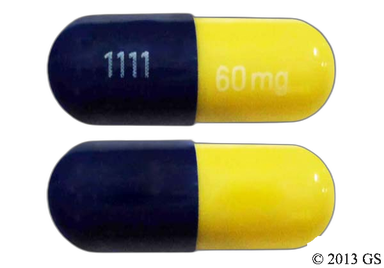
This medicine is Blue, Green Capsule Imprinted With "Teva 7544".Blue, Green Capsule TEVA 7544 - Duloxetine 60mg Delayed-Release CapsuleThis medicine is Gray, White Capsule Imprinted With "Logo 2892 Logo 2892".Gray, White Capsule LOGO 2892 LOGO 2892 - Duloxetine 60mg Delayed-Release CapsuleThis medicine is Blue, Yellow Capsule Imprinted With "1111 60 Mg".Blue, Yellow Capsule 1111 60 mg - Duloxetine 60mg Delayed-Release CapsuleThis medicine is Blue, Green Capsule Imprinted With "Apo D60".Blue, Green Capsule APO D60 - Duloxetine 60mg Delayed-Release CapsuleThis medicine is Blue, Yellow Capsule Imprinted With "1111 60 Mg".Blue, Yellow Capsule 1111 60 mg - Duloxetine 60mg Delayed-Release CapsuleThis medicine is Blue, White Capsule Imprinted With "Ap Dlx60".Blue, White Capsule ap DLX60 - Duloxetine 60mg Delayed-Release CapsuleThis medicine is Blue, Green Capsule Imprinted With "H 192".Blue, Green Capsule H 192 - Duloxetine 60mg Delayed-Release CapsuleThis medicine is Blue, Green Capsule Imprinted With "H 192".Blue, Green Capsule H 192 - Duloxetine 60mg Delayed-Release CapsuleThis medicine is Gray, White Capsule Imprinted With "Logo 2892 Logo 2892".Gray, White Capsule LOGO 2892 LOGO 2892 - Duloxetine 60mg Delayed-Release CapsuleThis medicine is Blue, Green Capsule Imprinted With "X 03".Blue, Green Capsule X 03 - Duloxetine 60mg Delayed-Release CapsuleThis medicine is Blue, Green Capsule Imprinted With "X 03".Blue, Green Capsule X 03 - Duloxetine 60mg Delayed-Release CapsuleThis medicine is Blue, Green Capsule Imprinted With "383 383".Blue, Green Capsule 383 383 - Duloxetine 60mg Delayed-Release CapsuleThis medicine is Blue, Green Capsule Imprinted With "X 03".Blue, Green Capsule X 03 - Duloxetine 60mg Delayed-Release CapsuleThis medicine is Green, Orange-Brown Capsule Imprinted With "B 748".Green, Orange-brown Capsule B 748 - Duloxetine 60mg Delayed-Release CapsuleThis medicine is Green, Orange-Brown Capsule Imprinted With "B 748".Green, Orange-brown Capsule B 748 - Duloxetine 60mg Delayed-Release CapsuleThis medicine is Green, Orange-Brown Capsule Imprinted With "B 748".Green, Orange-brown Capsule B 748 - Duloxetine 60mg Delayed-Release CapsuleThis medicine is Blue, Green Capsule Imprinted With "X 03".Blue, Green Capsule X 03 - Duloxetine 60mg Delayed-Release CapsuleThis medicine is Blue, Green Capsule Imprinted With "X 03".Blue, Green Capsule X 03 - Duloxetine 60mg Delayed-Release CapsuleThis medicine is Green, Orange-Brown Capsule Imprinted With "B 748".Green, Orange-brown Capsule B 748 - Duloxetine 60mg Delayed-Release CapsuleThis medicine is Blue, Green Capsule Imprinted With "Apo D60".Blue, Green Capsule APO D60 - Duloxetine 60mg Delayed-Release CapsuleThis medicine is Blue, Green Capsule Imprinted With "A 158".Blue, Green Capsule A 158 - Duloxetine 60mg Delayed-Release CapsuleThis medicine is Blue, Green Capsule Imprinted With "A 158".Blue, Green Capsule A 158 - Duloxetine 60mg Delayed-Release CapsuleThis medicine is Blue, Green Capsule Imprinted With "X 03".Blue, Green Capsule X 03 - Duloxetine 60mg Delayed-Release CapsuleThis medicine is Blue, Green Capsule Imprinted With "Lilly 3270 60Mg".Blue, Green Capsule Lilly 3270 60mg - Duloxetine 60mg Delayed-Release CapsuleThis medicine is Blue, Green Capsule Imprinted With "X 03".Blue, Green Capsule X 03 - Duloxetine 60mg Delayed-Release CapsuleThis medicine is White, Blue Capsule Imprinted With "243 60 Mg".White, Blue Capsule 243 60 mg - Duloxetine 60mg Delayed-Release CapsuleThis medicine is Blue, Green Capsule Imprinted With "X 03".Blue, Green Capsule X 03 - Duloxetine 60mg Delayed-Release CapsuleThis medicine is Blue, White Capsule Imprinted With "Ap Dlx60".Blue, White Capsule ap DLX60 - Duloxetine 60mg Delayed-Release CapsuleThis medicine is Blue, White Capsule Imprinted With "Ap Dlx60".Blue, White Capsule ap DLX60 - Duloxetine 60mg Delayed-Release CapsuleThis medicine is Blue, Green Capsule Imprinted With "Lu Q03".Blue, Green Capsule LU Q03 - Duloxetine 60mg Delayed-Release CapsuleThis medicine is Blue, White Capsule Imprinted With "243 60 Mg".Blue, White Capsule 243 60 mg - Duloxetine 60mg Delayed-Release CapsuleThis medicine is Blue Capsule Imprinted With "299 Cipla".Blue Capsule 299 Cipla - Duloxetine 60mg Delayed-Release CapsuleThis medicine is Blue, White Capsule Imprinted With "Ap Dlx60".Blue, White Capsule ap DLX60 - Duloxetine 60mg Delayed-Release CapsuleThis medicine is Green, Orange-Brown Capsule Imprinted With "B 748".Green, Orange-brown Capsule B 748 - Duloxetine 60mg Delayed-Release CapsuleThis medicine is Blue, White Capsule Imprinted With "Ap Dlx60".Blue, White Capsule ap DLX60 - Duloxetine 60mg Delayed-Release Capsule
GoodRx Health has strict sourcing policies and relies on primary sources such as medical organizations, governmental agencies, academic institutions, and peer-reviewed scientific journals. Learn more about how we ensure our content is accurate, thorough, and unbiased by reading our editorial guidelines.
Prescription savings
Stop paying too much for your prescriptions. Compare prices, get pharmacy coupons, and save up to 80%.
Plans start at $9.99/mo. (when paid yearly). Terms apply.
Common questions about Cymbalta
For depression and anxiety, some people might start to feel improvements in their mood after 1 to 2 weeks of taking Cymbalta. In general, it can take up to 2 months to feel the full effect of antidepressants on mood. For fibromyagia, studies showed that some people had pain relief as early as the first week of taking the medication. But it can still take a few months to notice full benefit for chronic pain. Keep taking Cymbalta every day, even if you don't feel better right away. Talk to your prescriber if you don't feel the medication is helping your mood or pain. They can help find other options.
It might be possible. Some people might gain a small amount of weight while taking Cymbalta. Weight gain might be more likely with higher doses (e.g., 120 mg per day) or with longer treatment (e.g., more than 1 year). Keep in mind that some people might also lose weight, typically when they first start the medication. If you notice weight changes that worry you after starting Cymbalta, talk to your prescriber. They can help you find ways to manage your weight.
Yes, Cymbalta can cause withdrawal symptoms if you stop it suddenly or lower the dose too fast. These symptoms can be very uncomfortable. They can include muscle aches, headache, dizziness, upset stomach, nausea, trouble sleeping, and anxiety. Don't lower your dose or stop the medication on your own. Talk to your prescriber first to make sure it's the right choice for you. If it is, they'll help lower your dose slowly. This helps lower the risk of withdrawal symptoms and keep you safe.
Cymbalta doesn't interact with any foods. But it's a good idea to avoid some types of foods while you're taking this medication. Avoid alcohol because it can worsen side effects like sleepiness, dizziness, and sometimes sexual problems. In addition, alcohol can make depression or anxiety worse. If the medication makes you nauseous, try to avoid spicy or greasy foods because they can upset your stomach. Ask your care team about what foods or drinks are best to avoid while taking Cymbalta.
No. Cymbalta isn't a controlled substance. It isn't known to have a risk of misuse and dependence.
Drinking alcohol isn't recommended while you're taking Cymbalta. This medication can cause side effects like nausea, drowsiness, and dizziness. Alcohol can make these side effects more likely or more severe. Also, alcohol and Cymbalta can affect your liver health on their own. So mixing alcohol with the mediation can raise your risk of liver damage. The risk is especially high if you have multiple drinks at a time or drink heavily. Talk to your prescriber about your drinking habits. They can check that Cymbalta is safe for you and make sure you take it in a safe way.
If you're pregnant or thinking about becoming pregnant, talk to your prescriber. They can help you choose the safest option for you and your baby. The American College of Obstetricians and Gynecologists recommend SNRIs like Cymbalta if you can't take SSRIs like sertraline (Zoloft). This is because there's less information about how safe Cymbalta is during pregnancy. Research is slightly mixed. Your prescriber can explain the risks and benefits of taking this medication while pregnant.
Cymbalta and escitalopram (Lexapro) are both antidepressants but have some key differences. They can both treat depression and anxiety. But Cymbalta can also help with some types of chronic pain, such as fibromyalgia and nerve pain from diabetes. They also belong to different drug classes and work a little differently in the brain. Cymbalta is an SNRI, whereas escitalopram (Lexapro) is an SSRI. Both can cause side effects like nausea, headache, and sexual problems. But SNRIs like Cymbalta might be more likely to cause dry mouth. It might also cause changes in blood pressure. Talk to your prescriber to help you compare the two and choose the best option for you.
Cymbalta is a brand-name medication manufactured by Eli Lilly and Company. It's also available in generic form as duloxetine, which can be produced by multiple pharmaceutical companies.Learn more












 Duloxetine (Cymbalta) might raise the risk of