Used for Diabetes Type 1, Diabetes Type 2, Gestational Diabetes
Used for Diabetes Type 1, Diabetes Type 2, Gestational Diabetes
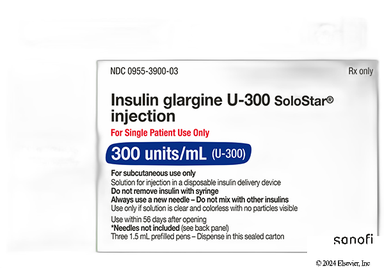
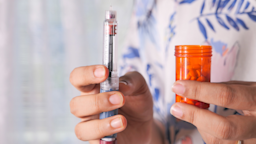
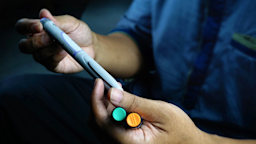
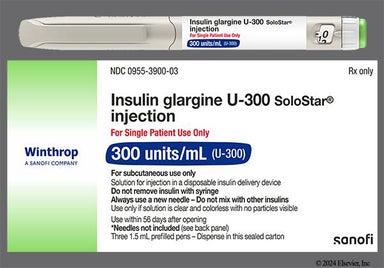
Toujeo SoloStar and Toujeo Max SoloStar are a pair of brand names for insulin glargine. It's a long-acting insulin that's used for diabetes in adults and children. This medication is a more concentrated version of insulin glargine containing 300 units/mL. Toujeo (insulin glargine) comes as prefilled pens. You inject the medication under the skin once daily. Side effects include common cold symptoms and low blood sugar.
Toujeo (insulin glargine) is a type of insulin. Insulin is a hormone that your body normally makes to lower glucose (sugar) levels in the blood. It helps your body use the sugar from your blood for energy. It also stops your liver from making glucose. These actions help lower your blood sugar.
The following side effects may get better over time as your body gets used to the medication. Let your healthcare provider know immediately if you continue to experience these symptoms or if they worsen over time.
Long-lasting insulin that provides consistent, all-day blood sugar control
Given once a day
Available as a prefilled pen
Good choice for people who need high doses of long-acting insulin
Can use in children as young as 6 years old
Cons
Must inject under the skin
Might be hard for some people to administer correctly
Has a risk of causing low blood sugar (hypoglycemia)
Might cause weight gain
Can't mix with other insulins
Pharmacist tips for Toujeo (insulin glargine)
Before you start using Toujeo (insulin glargine), it might be helpful to review some tips about starting insulin. Talk to your care team about what to expect with insulin therapy and ask them if you have any questions.
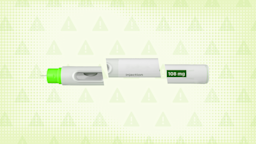
Make sure you know which Toujeo pen you have. Toujeo SoloStar contains 450 units/1.5 mL and gives doses in 1-unit increments. But Toujeo Max SoloStar contains 900 units/3 mL and gives doses in 2-unit increments. Toujeo Max SoloStar is usually for people who need at least 20 units of insulin glargine per day. If you need to switch from one to another, you'll get instructions on how to do this in a safe way.
Toujeo (insulin glargine) can make your blood sugar low. It can sometimes get too low, which can be dangerous. You and your loved ones should know how to recognize and treat low blood sugar. Signs can include feeling shaky, nervous, or faint. You might also have a fast heartbeat, sweat, or feel very hungry. Always have fast-acting sugars with you to help raise your blood sugar quickly. Use the "15-15 Rule" to treat low blood sugar.
Some people might need to use different types of insulins at different times of the day to help control blood sugar. Check the insulin labels to make sure you're using the right one at the right time. This helps prevent mix-ups that could lead to low blood sugar. If you're ever not sure, ask your diabetes care team.
Check your blood sugar regularly at home, or as directed by your diabetes care team. Share your blood sugar readings with them. This helps keep track of how well Toujeo (insulin glargine) is working. Your care team might adjust your insulin based on trends in your blood sugar levels.
Even if you haven't eaten all day, you should usually still take Toujeo (insulin glargine). This type of insulin helps keep your "baseline" blood sugar steady, not just when you eat food. Everyone's insulin needs are different. So, it's best to ask your prescriber exactly when you should and shouldn't use Toujeo (insulin glargine).
Make sure your meal patterns and exercise routine are consistent. Don't change your daily routine too much or too fast. This helps keep your blood sugar levels steady while you're taking Toujeo (insulin glargine). If you need to make big changes to your diet, meal patterns, or exercise, be sure to tell your care team. They might need to adjust your insulin.
How to use Toujeo (insulin glargine):
Your diabetes care team will show you how to administer Toujeo (insulin glargine). Make sure you know how to use the pen to avoid accidentally hurting yourself or wasting medication. Carefully read the Instructions for Use. If you have any questions, ask your care team.
For each Toujeo (insulin glargine): Always use a new needle for each injection. This helps prevent infections and blocked needles. Don't reuse or share your needles with other people. Pen needles aren't included, so you'll need to get them separately at the pharmacy.
When to inject Toujeo (insulin glargine): Inject the medication once per day. It's best to inject around the same time every day so the medication works in a consistent way.
Before injecting Toujeo (insulin glargine): Check that the insulin in the pen is clear and colorless without any solid chunks in it. If it isn't, don't use the pen and ask your pharmacist for a replacement. Do a safety test before each injection. This helps check everything is working well and that you get the correct dose.
Don't mix Toujeo (insulin glargine) with other insulins within the same syringe. If you need to use a different type of insulin along with Toujeo (insulin glargine), use separate pens or syringes for each insulin. Don't put Toujeo (insulin glargine) into an insulin pump.
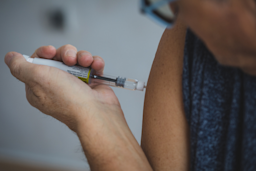
Where to inject Toujeo (insulin glargine): Inject the medication under the skin of your stomach, thighs, or the back of your upper arms. Be sure to pick a different spot for each injection to prevent skin irritation. Avoid injecting into pitted, thickened, or lumpy skin. Also don't inject into tender, bruised, scaly, hard, scarred, or damaged skin.
After each Toujeo (insulin glargine) injection: Throw away all used needles and empty pens in a sharps container. You can also use something made of heavy-duty plastic, like an empty milk carton or laundry detergent bottle. Don't throw away needles and pens in your trash can. This helps lower the risk that you and others could get hurt from needle sticks.
How to store Toujeo (insulin glargine):
Unopened Toujeo (insulin glargine) pens: Store unopened pens in the refrigerator until the expiration date. Don't let them freeze.
Opened Toujeo (insulin glargine) pens: Keep opened pens at room temperature (up to 86ºF) for up to 56 days, or 8 weeks. Don't put them in the refrigerator.
Toujeo (insulin glargine) can cause some serious health issues. This risk may be even higher for certain groups. If this worries you, talk to your doctor or pharmacist about other options.
Risk of infections with pen sharing
Never share Toujeo (insulin glargine) pens or needles with anyone else. Even if you put on a new needle on the pen, don't let others use your pen. Sharing Toujeo (insulin glargine) and your injection supplies can raise the risk of spreading dangerous infections.
Risk of changes to blood sugar levels with changes to your insulin regimen
Risk factors: Changes in insulin strength | Changes in type of insulins you use | Changes in insulin brand-name products | Suddenly changing where you inject
Changing your insulin or how you use it can affect how your body responds to insulin. Examples include suddenly changing where you inject Toujeo (insulin glargine) or switching to a different type of insulin. This can lead to higher or lower blood sugar levels.
If your diabetes care team tells you to make any changes, follow their directions carefully. Be sure to check your blood sugar more often. This helps you know how the changes affect you. Don't change your Toujeo (insulin glargine) dose or routine without talking to your diabetes team first.
Low blood sugar (hypoglycemia)
Risk factors: Changes in diet, meal patterns, and exercise | Drinking alcohol | Taking other medications for diabetes | Liver or kidney problems | Not using Toujeo (insulin glargine) correctly
Toujeo (insulin glargine) can cause low blood sugar, or hypoglycemia. If your blood sugar drops too much, it can be dangerous and life-threatening, especially if it's not treated in time.
Be sure you can spot signs of low blood sugar so you can catch it early. Low blood sugar can happen suddenly, and it can look and feel differently for each person. But some signs can include feeling shaky, nervous, anxious, weak, sleepy, or confused. You could also have a fast heartbeat, be sweaty, have body chills, or be very hungry.
It's important to know how to treat low blood sugar if it happens. Carry some form of fast-acting sugar at all times while you're taking Toujeo (insulin glargine). Examples include glucose tablets, hard candy, and fruit juice. They can come in handy to raise your blood sugar quickly if it drops too much. If you have low blood sugar, treat it right away and tell your care team.
Low potassium levels
Risk factors: Taking other medications that lower potassium
Toujeo (insulin glargine) can lower your potassium levels. This can sometimes be dangerous. It's more likely to happen if you take medications that lower your potassium like diuretics or water pills. If needed, your prescriber might check your potassium levels regularly.
Look out for symptoms of low potassium levels while taking Toujeo (insulin glargine). They can include weakness, muscle cramps, digestive problems, or an abnormal heartbeat. Call a healthcare professional if you have these symptoms so they can help treat and manage this problem.
Swelling and heart failure when used with certain diabetes medications
Risk factors: Taking glitazones together with insulin | History of heart failure
Taking Toujeo (insulin glargine) with glitazones like pioglitazone (Actos) can cause your body to hold onto fluid. This can lead to or worsen heart failure. This is because the extra fluid can put stress on the heart. It can make you have symptoms such as trouble breathing or not being able to tolerate exercise.
Before starting Toujeo (insulin glargine), tell your prescriber if you have heart failure. Also tell them if you're taking a glitazone. They can make sure that Toujeo (insulin glargine) is safe for you and check in with you more often. Let your care team know if you have unusual sudden weight gain, swelling, or trouble breathing. These can be signs of fluid buildup or heart failure.
Allergic reactions
Rarely, Toujeo (insulin glargine) can cause a severe allergic reaction that can be life-threatening. This can include anaphylaxis. Get medical help right away if you have an allergic reaction while taking this medication. Look out for swelling in your face, lips, or tongue; rash; or trouble breathing.
Toujeo (insulin glargine) dosage
The average cost for 1 carton of three 1.5ml solostar pens of 300 units/ml of Toujeo (insulin glargine) is $130.28 with a free GoodRx coupon. This is 14.14% off the average retail price of $151.73.
Contraindications are specific health conditions or situations in which a person should not take a medication due to safety concerns. If you have any of the following conditions or if any of the following apply to you, let your healthcare provider know because Toujeo (insulin glargine) will not be safe for you to take.
When you have episodes of low blood sugar (hypoglycemia)
Allergy to Toujeo (insulin glargine) or other insulin glargine products (e.g., Lantus, Basaglar, Semglee)
What are alternatives to Toujeo (insulin glargine)?
There are a number of medications that your doctor can prescribe in place of Toujeo (insulin glargine). Compare a few possible alternatives below.
GoodRx Health has strict sourcing policies and relies on primary sources such as medical organizations, governmental agencies, academic institutions, and peer-reviewed scientific journals. Learn more about how we ensure our content is accurate, thorough, and unbiased by reading our editorial guidelines.
Prescription savings
Stop paying too much for your prescriptions. Compare prices, get pharmacy coupons, and save up to 80%.
It takes about 6 hours for Toujeo to start working after your injection. This medication doesn't work quick enough to control blood sugar spikes, like after meals. Rather, it's given once a day every day to maintain a "baseline" level of insulin throughout the day. Keep in mind that it could take a few days to see the full effect of the medication to lower your blood sugar.
No, Toujeo isn't a GLP-1 receptor agonist. Instead, it's a type of insulin. GLP-1 agonists and insulin both help manage Type 2 diabetes. But only insulins like Toujeo is also used for people with Type 1 diabetes. They work differently to manage blood sugar. Also, GLP-1 agonists and insulin affect weight in different ways. Talk to a member of your healthcare team to learn more about GLP-1 agonists and insulin.
It depends on the Toujeo pen you have. Toujeo SoloStar contains 450 units of insulin glargine per pen. Toujeo Max SoloStar contains 900 units per pen. Talk to your prescriber if you're not sure which Toujeo pen you should be using.
The number of pens that come in a box of Toujeo depends on the pen you're using. For Toujeo SoloStar, there are 3 pens in each box. For Toujeo Max SoloStar, there are 2 pens in each box.
It depends if you've opened, or started using, the Toujeo pen or not. Unopened pens must be stored in the refrigerator, but be careful not to let them freeze. They can stay in the refrigerator until the written expiration date on the pen or carton. Opened pens should be stored at room temperature up to 86ºF, not in the refrigerator. You can keep opened pens at room temperature for up to 56 days, or 8 weeks, until you have to throw them out.
There isn't a set maximum dose for insulins, including Toujeo. This is because everyone's insulin needs are different. But using more than what's prescribed is considered too much. Too much insulin can put you at risk of dangerously low blood sugar (hypoglycemia). Always follow your care team's instructions on how much Toujeo to use. If you have signs of low blood sugar, treat it with fast-acting sugars using the "15-15 Rule" and tell your prescriber. If you're unsure about your dose or you're using too much, talk to your diabetes care team. Don't change the dose on your own without speaking to them first.
No, Toujeo and Lantus are not the same medication. They both contain insulin glargine and help keep your blood sugar steady all day. But the main difference is that Toujeo has a higher concentration of insulin glargine than Lantus. Toujeo contains 300 units/mL of insulin, whereas Lantus contains 100 units/mL. This makes Toujeo a good choice for people who need high doses of long-acting insulin. Also, the effects of Toujeo last for up to 36 hours, but Lantus lasts for up to 24 hours. Finally, Lantus has lower-cost options, but Toujeo is only available as a brand-name medication. Talk to your prescriber to compare and decide which is the right insulin for you.