


How Much Is Soliqua Without Insurance?
Without insurance, Soliqua can cost over $1,000 per month. Learn more about how much Soliqua costs without insurance and ways to save.

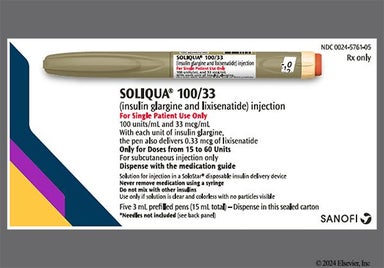
Soliqua 100/33 is a combination medication for diabetes that contains insulin glargine (a long-acting insulin) and lixisenatide (a glucagon-like peptide-1 (GLP-1) receptor agonist). It helps manage blood sugar levels along with diet and exercise in adults with Type 2 diabetes. The medication comes as a prefilled pen and is injected under the skin once a day within 1 hour before you eat your first meal of the day. Soliqua 100/33 commonly causes stomach-related side effects like nausea and diarrhea.

Soliqua 100/33 is a combination of two medications that work together to lower blood sugar.
| Common Brands | Soliqua 100/33 |
|---|---|
| Drug Class | Insulin / GLP-1 agonist |
| Controlled Substance Classification | Not a controlled medication |
| Generic Status | No lower-cost generic available |
| Availability | Prescription only |

The following side effects may get better over time as your body gets used to the medication. Let your healthcare provider know immediately if you continue to experience these symptoms or if they worsen over time.
Contact your healthcare provider immediately if you experience any of the following.
Side effects that you should report to your care team as soon as possible:
Side effects that usually do not require medical attention (report these to your care team if they continue or are bothersome):




Soliqua 100/33 can cause some serious health issues. This risk may be even higher for certain groups. If this worries you, talk to your doctor or pharmacist about other options.
Soliqua 100/33 can cause severe allergic reactions, including life-threatening ones like anaphylaxis. Symptoms include widespread skin rashes, facial swelling, trouble breathing, and low blood pressure. If you notice any symptoms of a serious allergic reaction while taking this medication, stop using it right away and get medical help.
Although rare, some people using Soliqua 100/33 have experienced inflammation in their pancreas (pancreatitis). Stop using the medication and get medical help right away if you have severe and persistent stomach pain that spreads to your back, with or without vomiting.
Changing your insulin routine, like where you inject Soliqua 100/33, can affect how your body reacts to it. This can lead to either high or low blood sugar levels. Injecting Soliqua 100/33 repeatedly into areas with lipodystrophy, like thickened or pitted skin, can also cause high blood sugar levels. And switching to a healthy injection site can suddenly cause low blood sugar.
Always talk to your diabetes care team before making any changes to your Soliqua 100/33 dose or routine, and check your blood sugar more often during this time.
Using Soliqua 100/33 by itself or with other medications that lower blood sugar can cause hypoglycemia, which means your blood sugar drops to dangerously low levels. If not treated quickly, this can be life-threatening.
Check your blood sugar regularly to make sure it stays in a safe range. Let your care team know if you change your diet, meal schedule, other medications, or how much you exercise. They might need to adjust your dose of Soliqua 100/33.
Learn the symptoms of hypoglycemia, like feeling shaky, nervous, sweaty, or very hungry. Always carry fast-acting sugars, like glucose tablets, with you in case you need to treat low blood sugar. If your blood sugar doesn’t improve after taking fast-acting sugars, get medical help right away.
Some people taking Soliqua 100/33 developed new or worsening kidney problems, called acute kidney injury. In some cases, treatment required dialysis, even in people without a history of kidney problems. Most of the time, this happened in people who had nausea, vomiting, diarrhea, or dehydration after taking the medication.
If you have kidney problems or experience severe stomach-related side effects while using Soliqua 100/33, your prescriber will need to check your kidney labs. Make sure to drink plenty of fluids during treatment to stay hydrated and prevent kidney damage. Tell your prescriber if you're having trouble urinating or if you're not urinating as much as usual while you're taking this medication.
Soliqua 100/33 can lower the levels of potassium in your blood, which can be dangerous. The risk is higher if you're taking medications that lower your potassium, such as certain diuretics or water pills. If needed, your prescriber might check your potassium levels regularly to make sure they stay in a healthy range. Symptoms of low potassium levels include weakness, muscle cramps or twitches, digestive problems, or abnormal heartbeats. Contact your prescriber right away if you notice these symptoms while taking this medication.
Taking Soliqua 100/33 with glitazones (also called thiazolidinediones or PPAR-gamma agonists), like pioglitazone (Actos), can cause your body to hold onto extra fluid. This can lead to or worsen heart failure by putting extra stress on your heart. If you're taking a Soliqua 100/33 with a glitazone, your prescriber will monitor you for signs of heart failure. Contact your care team right away if you notice swelling, sudden weight gain, or trouble breathing, as these could be signs of fluid buildup or heart failure.
In studies, some people who took Soliqua 100/33 developed gallbladder problems like gallstones. Contact your prescriber right away if you have symptoms like severe stomach pain, nausea, or vomiting. Your prescriber might need to order blood tests to check your gallbladder.
Soliqua 100/33 can slow how quickly your stomach empties. Rarely, this has led to cases of food or liquid entering the lungs (aspiration) during surgeries or procedures requiring anesthesia or deep sedation. Make sure to tell your prescriber if you’re taking Soliqua 100/33 before any planned surgery or procedure.

 Carton
| Dosage | Quantity | Price as low as | Price per unit |
|---|---|---|---|
| 5 solostar pens of 3ml | 1 carton | $35.00 | $35.00 |
Each Soliqua 100/33 pen contains 100 units/mL of insulin glargine and 33 mcg/mL of lixisenatide. The dose is based on the number of units of insulin glargine.
Your prescriber will adjust your dose based on your blood sugar levels. The maximum dose is 60 units a day.


Contraindications are specific health conditions or situations in which a person should not take a medication due to safety concerns. If you have any of the following conditions or if any of the following apply to you, let your healthcare provider know because Soliqua 100/33 will not be safe for you to take.





Prescription savings
Stop paying too much for your prescriptions. Compare prices, get pharmacy coupons, and save up to 80%. Find expert answers to your health questions so you can make the best decisions for yourself and your family.
Health conditions
Medications & treatment
Access & affordability
 Our monthly healthcare membership can help you save thousands on your prescription costs.
Resources

Yes. Soliqua 100/33 contains insulin glargine, a long-acting insulin. It helps control your blood sugar levels throughout the day.
Soliqua 100/33 starts working within a few hours to lower blood sugar after your first dose, but it might take several days to weeks to see the full effects on your overall blood sugar levels. Your prescriber will check your progress and adjust your dose weekly as needed.
Soliqua 100/33 should be taken within 1 hour before you eat your first meal of the day. If your first meal is breakfast, take your dose in the morning. If your first meal is lunch or dinner, talk to your diabetes specialist. They might suggest taking your dose later in the day before that meal. Staying on a regular schedule for taking your dose and eating helps the medication work best for you.
It depends. Like other insulins, the insulin glargine in Soliqua 100/33 can cause weight gain. But Soliqua 100/33 also contains lixisenatide, a GLP-1 agonist. This class of medications is known to help with weight loss. In fact, studies show that weight loss might be more common than weight gain in people taking Soliqua 100/33. Work with your care team to create a plan that includes a balanced diet and regular exercise that fits your lifestyle. If you’re worried about any weight changes while taking this medication, talk to your prescriber.
It depends on whether Soliqua 100/33 is opened or not. Store unopened pens in the refrigerator until the expiration date on the pen or box. Once opened, pens should be kept at room temperature and used within 28 days.
Each 3-mL Soliqua 100/33 pen contains 300 units of insulin glargine and 100 mcg of lixisenatide. Each box contains 5 pens.
No, insulin pen needles aren't included with Soliqua 100/33 pens. Be sure to get needles that are compatible with the medication. If you're unsure which needles to buy, ask your pharmacist or prescriber.
