


7 Rinvoq Side Effects and How to Manage Them
Rinvoq is a JAK inhibitor taken for certain autoimmune disorders. It may cause acne, upper respiratory tract infections, and other side effects.
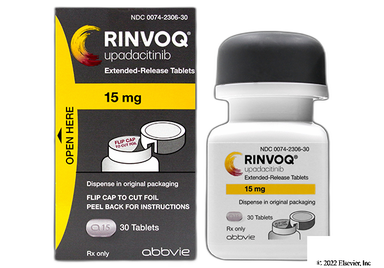
Rinvoq (upadacitinib) is a Janus kinase (JAK) inhibitor. It treats many inflammatory conditions. This includes rheumatoid arthritis (RA), ulcerative colitis (UC), Crohn's disease (CD), and eczema (atopic dermatitis). It's often used when other treatments haven't worked well. Rinvoq (upadacitinib) is taken by mouth, usually once a day. It comes as an extended-release pill (Rinvoq) and an oral solution (Rinvoq LQ). These formulations aren't the same and can't be swapped easily. Side effects include nausea and a higher risk of infection.

Rinvoq (upadacitinib) is a Janus kinase (JAK) inhibitor. It works by blocking the JAK protein. This protein is part of your immune system and plays a role in causing inflammation in the body.
By blocking JAK, Rinvoq (upadacitinib) lowers inflammation in the body. This helps relieve symptoms of arthritis and certain other inflammatory conditions.
| Common Brands | Rinvoq, Rinvoq LQ |
|---|---|
| Drug Class | JAK inhibitor |
| Controlled Substance Classification | Not a controlled medication |
| Generic Status | No lower-cost generic available |
| Availability | Prescription only |

The following side effects may get better over time as your body gets used to the medication. Let your healthcare provider know immediately if you continue to experience these symptoms or if they worsen over time.
Note: Side effects were from people with rheumatoid arthritis (RA). Side effects might differ for other conditions.
Contact your healthcare provider immediately if you experience any of the following.
Side effects that you should report to your care team as soon as possible:
Side effects that usually do not require medical attention (report these to your care team if they continue or are bothersome):



Tips for Rinvoq (upadacitinib) tablets:
Tips for Rinvoq LQ (upadacitinib) liquid:

Rinvoq (upadacitinib) can cause some serious health issues. This risk may be even higher for certain groups. If this worries you, talk to your doctor or pharmacist about other options.
 Rinvoq (upadacitinib) can affect how well you can fight off infections. This can raise your risk of serious and sometimes life-threatening infections. In studies, the most common serious infections were pneumonia and cellulitis. Other infections include tuberculosis (TB) and oral thrush. Old infections, like hepatitis or shingles, can also come back.
Before starting Rinvoq (upadacitinib), tell your prescriber about your full medical history. This includes any long-term or serious infections. You'll also get tested for TB and for hepatitis. Your prescriber can make sure it's safe for you. You can't take Rinvoq (upadacitinib) if you have an active infection. You'll likely need to get treated for it before you can start this medication.
During treatment, your prescriber will check for infections. It's a good idea for you to watch for signs too. This includes fever, weakness, chills, body aches, night sweats, or a cough. If this happens, let your prescriber know right away.
In a study, people 50 years and older with RA who had a risk for heart disease had a higher risk of serious health problems when taking a similar JAK inhibitor. These problems included heart attack, stroke, and death from a heart-related issue. This risk was higher than in people taking another type of RA medication. Talk to your prescriber about the risks and benefits of taking Rinvoq (upadacitinib) before starting.
Call 911 right away if you have signs of a heart attack or stroke. A heart attack can look like sudden chest pain, nausea, or sweating. And signs of a stroke include a droopy face, sudden weakness on one side, a sudden headache, or trouble walking or talking.
Although rare, some people taking Rinvoq (upadacitinib) for RA have developed cancer, including skin cancer. In studies, people taking a different JAK inhibitor had a higher risk of cancer than those taking another RA medication. These cancers included lymphoma and lung cancer.
Because of this risk, your prescriber will monitor you for your risk of cancer during treatment. Tell them about any cancers you know about or if you smoke.
Be sure to get yearly skin checks. Wear protective clothing and use sunscreen if you're out in the sun, and avoid tanning beds. This helps lower your risk of skin cancer. Let your care team know if you notice any skin changes or any new, unusual symptoms.
Some people taking Rinvoq (upadacitinib) have had blood clots. Blood clots can form in different parts of the body and block blood flow. This can be serious and life-threatening, especially if it affects the heart, brain, or lungs.
Before starting Rinvoq (upadacitinib), tell your prescriber about your medical history and the medications you take. They can check your risk and make sure Rinvoq (upadacitinib) is safe for you.
Be sure you know the signs of a blood clot to look out for.
Get medical help right away if you have any symptoms of a blood clot while taking Rinvoq (upadacitinib). It's important to get it treated as soon as possible.
Allergic reactions can happen with Rinvoq (upadacitinib). They can include life-threatening reactions like swelling of the face and anaphylaxis (closing of the throat).
Call 911 right away if you have a rash; trouble breathing; or swelling in your face, tongue, or throat. These can be signs of a serious allergic reaction.
Rarely, a few people taking Rinvoq (upadacitinib) developed tears in their gut. Let your prescriber know if you've had any stomach or gut tears before. Also tell them if you have a history of diverticulitis. Make sure you let them know if you take any NSAIDs or steroids. These health conditions and medications can put you at risk of stomach damage. Your prescriber can help monitor you more closely to keep you safe.
Get medical help right away if you have new stomach pain, blood in your stool, nausea, or fever. These can be signs of a tear in your gut.
Although rare, some people taking Rinvoq (upadacitinib) have had low blood counts. Low white blood cells can make it easier to get infections. And low red blood cells can make you feel very tired and cause anemia.
Some people might also have higher cholesterol. This can often be managed with medications called statins.
In addition, some people can have higher liver enzyme levels. This can sometimes be a sign of liver injury.
Before starting Rinvoq (upadacitinib), your prescriber will order blood tests for you. They'll check your blood counts, cholesterol, and liver. This makes sure it's safe to start the medication. Then, your prescriber will check these labs regularly during treatment. They might pause treatment if there are concerns.
Based on animal studies, Rinvoq (upadacitinib) might harm an unborn baby when taken during pregnancy. If you can become pregnant, your prescriber might ask you to take a pregnancy test before starting treatment. This double checks that you're not pregnant to lower the risk of harm.
During treatment, use a reliable method of birth control. Keep using this birth control method for 4 weeks after stopping Rinvoq (upadacitinib). Tell your prescriber right away if you become pregnant during this time.
Some people have seen the whole tablet of Rinvoq (upadacitinib) or tablet pieces in their stool. Most times, this has happened in people with certain stomach or gut problems. It might mean that they're not fully absorbing the medication.
If you often see the whole tablet or pieces of the tablet in your stool, tell your care team. They can check if Rinvoq (upadacitinib) is working for you or suggest a different medication if needed.

 Bottle of oral solution
| Dosage | Quantity | Price as low as | Price per unit |
|---|---|---|---|
| 180ml of 1mg/ml | 1 bottle | $3,273.52 | $3,273.52 |
 Tablet
| Dosage | Quantity | Price as low as | Price per unit |
|---|---|---|---|
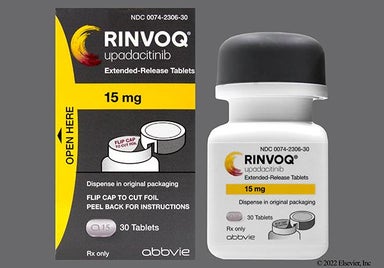
| 15mg | 30 tablets | $6,244.67 | $208.16 |
| 30mg | 30 tablets | $6,225.18 | $207.51 |
| 45mg | 28 tablets | $11,647.73 | $415.99 |
Your dose will depend on the health condition you're treating. Rinvoq extended-release tablets and Rinvoq LQ oral solution can't be swapped with one another easily.
Adults:
Children
Psoriatic arthritis or pJIA (age 2 years and younger): The dose is based on your child's weight.
Eczema (age 12 years and older weighing at least 40 kg): The typical dose is 15 mg by mouth once a day. Your child's prescriber might raise the dose to 30 mg once a day if needed.
Your dose might differ if you have liver or kidney problems. It might also differ if you take medications that can interact with Rinvoq (upadacitinib).









Prescription savings
Stop paying too much for your prescriptions. Compare prices, get pharmacy coupons, and save up to 80%.Resources
About GoodRx
 Find expert answers to your health questions so you can make the best decisions for yourself and your family.
Health conditions
Medications & treatment
Access & affordability
Well-being
Medication discounts

No, JAK inhibitors like Rinvoq aren't called biologics. Biologics are medications that are made from living sources, like cells. But JAK inhibitors are made from chemicals in the lab.
Some people might call Rinvoq an immunosuppressant. This is because the medication calms down your immune system and reduces inflammation in your body. This can also put you at risk of infection. But there are many types of immunosuppressants and they don't affect the immune system the same way. Some are stronger than others. Rinvoq is usually less likely to raise your risk of infection than other immunosuppressants, like transplant medications.
In studies, a few people who took Rinvoq for eczema said they had some weight gain. But it's not clear if this change in weight was caused by the medication or other things. It's also not clear how much these people gained. People who took Rinvoq for other conditions didn't have weight gain. Talk to your care team if you're concerned about how the medication might affect your body weight.
No, people who took Rinvoq didn't say they had hair loss during studies. If you notice any hair loss while taking this medication, speak to your care team. They can see if there's something else that could be causing your hair loss.
How long it takes for Rinvoq to work depends on what condition you're treating. In general, you might start to feel better in a couple weeks. For example, some people with RA started to feel less joint pain and swelling within 1 week of treatment. People with eczema noticed less itchiness within the first 1 to 2 weeks of starting Rinvoq. And people with ulcerative colitis might have less diarrhea and stomach pain by week 2. But it can take a few months of consistent treatment to get the full benefit. Keep taking Rinvoq every day as prescribed, even if you don't feel better right away. Talk to your prescriber about what to expect and how Rinvoq seems to be working for you.
It takes about 2 to 3 days for most of Rinvoq to leave your body after you take a single dose. This is estimated from the medication's half life, which is how long it takes for half the amount of medication to leave the body. Even though Rinvoq can stay in your system for a couple days, be sure you take the medication every day. That's important for keeping the amount of medication in your body high enough for it to work well. Talk to your prescriber if you have questions about how long Rinvoq stays in your system.
Talk to your prescriber about how much you usually drink and if it's safe for you to drink while taking Rinvoq. There aren't any direct interactions between alcohol and Rinvoq. But alcohol can make some side effects like nausea worse. Regular alcohol use can weaken your immune system and make it even easier for you to get sick. It can also harm your liver. The medication already has a risk of infection and possibly liver damage. So regularly drinking alcohol might raise these risks more.
