


Can You Get a Yeast Infection From Antibiotics? Here Are 6 Things to Know
Antibiotics fight infection by killing bacteria in the body, but this can cause a yeast infection. Learn about yeast infections from taking antibiotics.
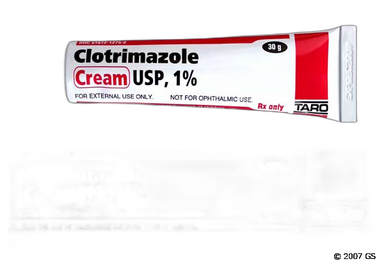
Clotrimazole lozenge is an antifungal that treats and prevents yeast infection in the mouth and throat known as oral thrush. Clotrimazole lozenge is a troche, or a throat lozenge, that's slowly dissolved in the mouth, and it must be used several times a day. This medication is approved for use in people over the age of 3, but it should be used with caution in people with liver problems. Side effects can include nausea and an unpleasant feeling in the mouth. It isn't available over the counter, so you must have a prescription from your provider.

Clotrimazole is an antifungal. It blocks yeast (a type of fungus) from making a substance that's essential for the structure of its outer barrier and survival. This prevents the yeast from growing.
| Common Brands | Mycelex |
|---|---|
| Drug Class | Antifungal |
| Controlled Substance Classification | Not a controlled medication |
| Generic Status | Lower-cost generic available |
| Availability | Prescription only |

The following side effects may get better over time as your body gets used to the medication. Let your healthcare provider know immediately if you continue to experience these symptoms or if they worsen over time.
Along with its needed effects, a medicine may cause some unwanted effects. Although not all of these side effects may occur, if they do occur they may need medical attention.
Check with your doctor as soon as possible if any of the following side effects occur:
Skin rash, hives, blistering, burning, itching, peeling, redness, stinging, swelling, or other sign of skin irritation not present before use of this medicine
Other side effects not listed may also occur in some patients. If you notice any other effects, check with your healthcare professional.
Call your doctor for medical advice about side effects. You may report side effects to the FDA at 1-800-FDA-1088.




Clotrimazole lozenge can cause some serious health issues. This risk may be even higher for certain groups. If this worries you, talk to your doctor or pharmacist about other options.
Changes in liver function tests (LFTs) — blood test results that tell you about the health of your liver — can happen while you're taking clotrimazole lozenges. These changes are usually small, and it's not clear whether they're caused by clotrimazole, other medications, or your medical conditions.
It might be more likely to have abnormal liver labs if you already have or have had liver problems in the past. If you have or have had liver problems, your provider might check your LFTs while you're using clotrimazole lozenges to make sure your liver isn't harmed.
Tell your healthcare provider right away if you feel tired, have stomach pain, vomit, have dark urine, or develop yellow skin or eyes because these can be signs of liver damage.

 Lozenge
| Dosage | Quantity | Price as low as | Price per unit |
|---|---|---|---|
| 10mg | 70 lozenges | $33.20 | $0.47 |

Although certain medicines should not be used together at all, in other cases two different medicines may be used together even if an interaction might occur. In these cases, your doctor may want to change the dose, or other precautions may be necessary. When you are taking this medicine, it is especially important that your healthcare professional know if you are taking any of the medicines listed below. The following interactions have been selected on the basis of their potential significance and are not necessarily all-inclusive.
Using this medicine with any of the following medicines is usually not recommended, but may be required in some cases. If both medicines are prescribed together, your doctor may change the dose or how often you use one or both of the medicines.
Using this medicine with any of the following medicines may cause an increased risk of certain side effects, but using both drugs may be the best treatment for you. If both medicines are prescribed together, your doctor may change the dose or how often you use one or both of the medicines.











Prescription savings
Stop paying too much for your prescriptions. Compare prices, get pharmacy coupons, and save up to 80%.Resources
About GoodRx
 Find expert answers to your health questions so you can make the best decisions for yourself and your family.
Health conditions
Medications & treatment
Access & affordability
Well-being
Medication discounts

No, clotrimazole is an antifungal, not a steroid medication. Your provider might prescribe Mycelexs for you if you're also taking an inhaled steroid medication. This is because inhaled steroids can cause oral thrush (a yeast infection in your mouth or throat). Using Mycelexs while you're taking an inhaled steroid can help prevent oral thrush from happening.
Antifungals like Mycelex work by changing the cell wall of the yeast that's causing oral thrush. This action stops the yeast from growing.
There haven't been studies that look at using Mycelexs during pregnancy. Because of this, experts don't know how safe the medication is for you and your unborn baby. So, it's recommended that you avoid using Mycelexs unless other antifungals haven't helped. One way to help with oral thrush without medications is to try a saltwater rinse. Speak with your provider about the risks and benefits of using Mycelexs and about other options to help with thrush.
Mycelex is only available with a prescription from your provider; it's not an over-the-counter medication in the United States. Although there are some antifungal creams and ointments available over the counter, never use these topical medications to treat a fungal infection in your mouth.
For the Mycelexs to work as best as it can, avoid eating or drinking anything for 30 minutes once you place the lozenge in your mouth. This is the amount of time it typically takes for the lozenge to completely dissolve. Drinking water can wash away the medication so it can't work as well to prevent or treat your oral thrush. Follow up with your healthcare provider if you have questions about when you can eat or drink while you're taking this medication.
Yes. Don't use Mycelexs beyond the date that's printed on your medication bottle. Medications aren't guaranteed to work well after their expiration date, and it can make your fungal infection harder to treat if you take Mycelexs that have expired. Ask your pharmacist for a refill or your provider for a new prescription if your Mycelexs have expired.
Each Mycelex can start to work to treat oral thrush once it completely dissolves in the mouth, which takes about 30 minutes. Keep in mind that each lozenge lasts only a few hours, so you'll need to take the medication 5 times a day to treat the infection. Most people will begin to feel relief in about a few days after they start their treatment course. But don't stop taking your course of Mycelexs early, even if you start to feel relief. It's important to finish your full course of therapy to make sure that the medication completely gets rid of the yeast that's causing the oral thrush; this can take 2 weeks.
Both Mycelexs and fluconazole are medications that are used for treating oral thrush. But Mycelexs are used for mild oral thrush, whereas fluconazole is typically used for more severe cases. In addition, fluconazole only needs to be taken once a day. Mycelexs are used 5 times a day to treat oral thrush. They're also dissolved in the mouth so they're easier for people with problems swallowing pills to take. Speak with your provider about which medication best fits your needs.
