Wegovy
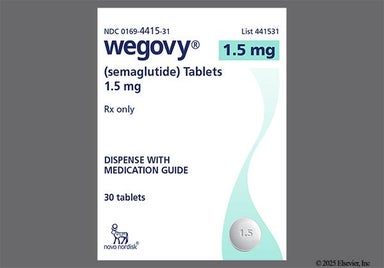
Wegovy (semaglutide) is a glucagon-like peptide-1 (GLP-1) receptor agonist. It comes in prefilled pens you use to inject the medication under the skin once a week. Wegovy (semaglutide) also comes as tablets that are swallowed once a day. This medication is approved for weight loss in some people. It can help lower the risk of heart attack, stroke, and death due to heart problems in adults with a larger body size and heart disease. The pens are also approved for certain adults with a liver problem called metabolic dysfunction-associated steatohepatitis (MASH). The medication works best when taken with a lower-calorie diet and regular exercise. Side effects include nausea, diarrhea, and stomach pain.


What is Wegovy (semaglutide)?
What is Wegovy (semaglutide) used for?
Injectable pens:
-
Weight loss and long-term weight management in:
- People ages 12 years and older who are considered obese
- Adults considered overweight with at least one weight-related condition (e.g., high blood pressure, Type 2 diabetes, high cholesterol)
-
Lowering the risk of heart attack, stroke, and death due to heart problems in adults with a larger body size and heart disease
-
Metabolic dysfunction-associated steatohepatitis (MASH) in adults with moderate-to-advanced liver scarring, but not cirrhosis
Tablets:
- Weight loss and long-term weight management in adults who are considered obese or overweight with at least one weight-related condition
- Lowering the risk of heart attack, stroke, and death due to heart problems in adults with a larger body size and heart disease
How Wegovy (semaglutide) works
Wegovy (semaglutide) is a glucagon-like peptide-1 (GLP-1) agonist. It works in a similar way to GLP-1, a hormone your body normally makes that regulates your appetite.
Wegovy (semaglutide) works in a few ways. It slows down your gut, helps you feel fuller after you eat, and controls your appetite. This can help manage your weight.
For heart health and MASH, it's not fully known how Wegovy (semaglutide) helps with these problems.
Drug facts
| Common Brands | Wegovy, Wegovy HD |
|---|---|
| Drug Class | GLP-1 agonist |
| Controlled Substance Classification | Not a controlled medication |
| Generic Status | No lower-cost generic available |
| Availability | Prescription only |
More on Wegovy (semaglutide) essentials



Side effects of Wegovy (semaglutide)
The following side effects may get better over time as your body gets used to the medication. Let your healthcare provider know immediately if you continue to experience these symptoms or if they worsen over time.
Common Side Effects
- Nausea (44%)
- Diarrhea (30%)
- Vomiting (24%)
- Constipation (24%)
- Stomach pain (20%)
- Headache (14%)
- Tiredness (11%)
Less Common Side Effects
- Indigestion
- Dizziness
- Stomach swelling or bloating
- Burping
- Feeling gassy
- Stomach flu (stomach problems due to infection)
- Acid reflux
- Numbness, burning, or painful feeling on the skin
- Sensitive skin
- Injection site reactions
- Hair loss
- Low blood sugar in adults with Type 2 diabetes
Note: Side effects and percentages were reported by adults.
Wegovy (semaglutide) serious side effects
Contact your healthcare provider immediately if you experience any of the following.
- Gallbladder or pancreas problems: fever; pain, swelling, or tenderness in the stomach; yellowing of the skin or eyes
- Serious allergic reaction: swelling of the face, closing of the throat, trouble breathing, hives
More on Wegovy (semaglutide) side effects
The following Wegovy (semaglutide) side effects have also been reported
Side effects that you should report to your care team as soon as possible:
- Allergic reactions—skin rash, itching, hives, swelling of the face, lips, tongue, or throat
- Change in vision
- Dehydration—increased thirst, dry mouth, feeling faint or lightheaded, headache, dark yellow or brown urine
- Fast or irregular heartbeat
- Gallbladder problems—severe stomach pain, nausea, vomiting, fever
- Kidney injury—decrease in the amount of urine, swelling of the ankles, hands, or feet
- Pancreatitis—severe stomach pain that spreads to your back or gets worse after eating or when touched, fever, nausea, vomiting
- Thyroid cancer—new mass or lump in the neck, pain or trouble swallowing, trouble breathing, hoarseness
Side effects that usually do not require medical attention (report these to your care team if they continue or are bothersome):
- Burning, tingling, or pain from a light touch
- Constipation
- Diarrhea
- Hair loss
- Loss of appetite
- Nausea
- Upset stomach

Pros and cons of Wegovy (semaglutide)
Pros
- Available as once-weekly injectable pens and as once-daily pills
- Injectable pens approved for weight loss in children ages 12 years and older considered obese
Cons
- Can cause stomach pain, nausea, and diarrhea
- Can't take with other semaglutide products (Ozempic, Rybelsus) or with other GLP-1 agonists

Pharmacist tips for Wegovy (semaglutide)

- Wegovy (semaglutide) works best when you take it with a lower-calorie diet and regular exercise. Talk to your care team about how to plan balanced meals. They can also help come up with ideas for exercise that works for you.
- You'll start Wegovy (semaglutide) at a low dose for the first month. Then, your dose will go up each month until you get to a maintenance dose. This takes 4 or 5 months. Slowly raising the dose helps lower your risk of side effects like for nausea, diarrhea, and stomach pain.
- It's common to have stomach upset as a side effect when starting Wegovy (semaglutide). But it usually gets better over time. Eat smaller meals and avoid high-fat, fried, or spicy foods to calm your stomach. Also drink plenty of fluids to help with vomiting and diarrhea. Tell your care team if these side effects get worse or don't go away. Your prescriber might lower your dose or stop the medication.
- Talk to your care team about how much alcohol, if any, is okay to drink while taking Wegovy (semaglutide). Alcohol can make side effects like nausea and bloating worse. It also adds extra calories, which can slow down weight loss. Some people might also feel less interested in drinking while taking this medication.
- You can't use Wegovy (semaglutide) pens and tablets at the same time. But you can switch from one to the other if needed. For example, if the recommended maintenance dose of the tablets hurts your stomach too much, your prescriber can switch you to the weekly injections. Follow your prescriber's directions to switch from one to the other.
How to use the Wegovy (semaglutide) pen:
- Your care team will show you how to use and how to inject Wegovy (semaglutide). They can make sure you can do it on your own. Read the instructions on how to inject the medication. Ask your prescriber or pharmacist if you have questions.
- Inject Wegovy (semaglutide) once a week, with or without food. Choose the same day and time each week that works best for you. You can change the day of the week you inject it as long as your last dose was at least 2 days ago.
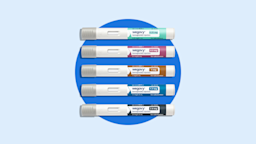
- Wegovy (semaglutide) comes in 6 different strengths. Each strength has its own color-coded pen. Make sure you have the right pen for your dose.
- Be sure to inject Wegovy (semaglutide) when you're ready. Once you press the pen to your skin, the injection will start. You can't stop the injection and restart it later.
- Where to inject Wegovy (semaglutide): Inject the medication into the front of your thigh or stomach (at least 2 inches away from your belly button). You can also inject it into the outer part of your upper arm. Choose a different spot each time. Also don't inject into areas that are tender, bruised, red, hard, scarred, or have stretch marks. This helps avoid skin irritation.
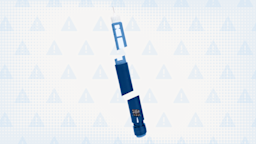
- How to inject Wegovy (semaglutide): Pull off the pen cap. Then, press the pen firmly against your skin. You'll see a yellow bar start to move and hear two clicks. The first tells you when the injection starts. The second tells you that the medication is still getting injected. Keep holding the pen against your skin until the yellow bar stops moving. That means your injection is done. The injection takes about 10 seconds.
- After you inject Wegovy (semaglutide): Throw away your used pen into a sharps container right away. Don't put it into the regular trash. This helps keep you and others safe from needle sticks.
- If you forget to inject Wegovy (semaglutide) or miss your dose: If your next scheduled injection is more than 2 days away, inject your usual dose as soon as possible. If your next scheduled injection is less than 2 days away, skip the missed dose and wait to inject the medication at your usual dose and usual day of the week. Ask your care team what the next steps are if you forget to inject the medication for more than 2 weeks in a row.
- How to store Wegovy (semaglutide) pens: Keep pens in the refrigerator, but don't let them freeze. Keep them in the original box to protect them from light. If needed, you can have unopened pens at room temperature (up to 86ºF) for up to 28 days. Throw away pens if they've been frozen, exposed to light, gotten hotter than 86ºF, or have been out of the fridge for more than 28 days.
How to take the Wegovy (semaglutide) pill:
- Take the Wegovy (semaglutide) tablet by mouth once a day on an empty stomach in the morning. Take the medication with at least 4 ounces (half-cup) of water. Don't use any other kind of beverage.
- Swallow the Wegovy (semaglutide) tablet whole. Don't split, crush, chew, or dissolve the medication.
- After taking Wegovy (semaglutide), wait at least 30 minutes before eating or drinking anything. This helps keep the medication from affecting how your body absorbs nutrients from food and drinks.
- After taking Wegovy (semaglutide), wait at least 30 minutes before taking any other medications by mouth. Wegovy (semaglutide) can slow down your gut. This might affect how well other medications get absorbed into your body.
- Only take one Wegovy (semaglutide) tablet each day. Taking more than one tablet per day can raise the risk of side effects.
- If you forget to take Wegovy (semaglutide) or miss your dose: Skip the missed dose. Wait until the next morning to take your usual dose.
- How to store Wegovy (semaglutide) tablets: Keep the original bottle at room temperature between 68ºF and 77ºF. Store the tablets in a dry place.
More on Wegovy (semaglutide) tips


Risks and warnings for Wegovy (semaglutide)
Wegovy (semaglutide) can cause some serious health issues. This risk may be even higher for certain groups. If this worries you, talk to your doctor or pharmacist about other options.
Possible risk for thyroid cancer
 In animal studies with rats, Wegovy (semaglutide) was linked to a higher risk of thyroid cancer. It was more likely to happen when rats got higher doses or were given the medication for a long time. It's not known if Wegovy (semaglutide) can cause thyroid cancer in people.
Because of this potential risk, people with a personal or family history of medullary thyroid cancer (MTC) shouldn't use Wegovy (semaglutide). People with multiple endocrine neoplasia syndrome type 2 (MEN 2) also shouldn't use this medication.
Talk to your prescriber if you're worried about the risk of thyroid cancer with Wegovy (semaglutide). Call your care team right away if you notice a lump in your neck. Also tell them if you have trouble swallowing, shortness of breath, or a hoarse voice that doesn't go away. These could be signs of thyroid cancer.
Inflammation of the pancreas (pancreatitis)
Some people taking Wegovy (semaglutide) have had swelling or inflammation in the pancreas. This is called pancreatitis. It can sometimes cause serious damage to the pancreas or bleeding.
Stop using Wegovy (semaglutide) and call your care team if you have symptoms of pancreatitis. This includes vomiting or severe stomach pain that travels to your back and doesn't go away.
Gallbladder problems
- Risk factors: Children | Lose a lot of weight | Lose weight very fast
Although it's rare, some people who take Wegovy (semaglutide) can have gallbladder problems. This can include an inflamed gallbladder or gallstones.
In studies, gallbladder problems happened more often in children than in adults who took Wegovy (semaglutide). Losing a lot of weight or losing weight too fast might also raise your risk of these problems.
Tell your care team if you notice symptoms of gallbladder problems. Look out for yellow skin or eyes, fever, chills, or severe pain in your upper right stomach.
Low blood sugar
- Risk factors: Type 2 diabetes | Taking insulin or certain other diabetes medications that can lower blood sugar
Wegovy (semaglutide) can lower your blood sugar. If you take it with other diabetes medications like insulin or glipizide, your blood sugar could drop too low. This can be dangerous.
Your care team might ask you to check your blood sugar while taking Wegovy (semaglutide), especially if you have Type 2 diabetes. Tell your prescriber if you're taking any diabetes medications. Your care team might need to adjust your diabetes treatment to keep you safe.
You and your loved ones should know how to spot low blood sugar and how to treat it. Signs can include feeling very hungry, shaky, weak, or confused. You might also sweat at lot or have a racing heart or changes in vision. If you still have low blood sugar after trying to treat it, call 911 right away.
Kidney damage
- Risk factors: History of kidney damage | Long-term kidney failure | Dehydration
Some people taking Wegovy (semaglutide) have had kidney damage. Sometimes, this led them to need dialysis. People who already have kidney damage are at higher risk. But it can also happen to people without any known kidney problems.
Tell your prescriber if you have side effects like nausea, vomiting, or diarrhea while taking Wegovy (semaglutide). These can raise your risk of dehydration, which can sometimes lead to kidney damage. If the side effects are severe, you might need blood tests to check for kidney damage.
Allergic reactions
It's possible to have a serious allergic reaction to Wegovy (semaglutide). Tell your prescriber if you've had a reaction to other GLP-1 agonists. Don't use Wegovy (semaglutide) if you've had an allergic reaction to it or to other semaglutide medications (Ozempic, Rybelsus).
Call 911 right away if you have an allergic reaction. Watch for swelling in your face or throat, trouble breathing, hives, or other symptoms of anaphylaxis.
Eye problems in people with Type 2 diabetes (diabetic retinopathy)
- Risk factors: History of eye problems caused by high blood sugar | Type 2 diabetes | High risk of heart disease | Rapid improvement in blood sugar
In studies, some adults with Type 2 diabetes who took Wegovy (semaglutide) had eye problems. These included cataracts, glaucoma, and damage to the retina.
The risk is higher if you already have eye problems from high blood sugar (called diabetic retinopathy). These problems might get worse for a short time if your blood sugar improves too quickly.
Talk to your prescriber or eye specialist if your eye problems get worse while taking Wegovy (semaglutide). Also tell them if you notice any changes in your vision.
Faster heart rate
Your resting heart rate might go up while taking Wegovy (semaglutide). In studies, people taking the medication had a heart rate that was on average 1 to 4 beats per minute (bpm) higher than those taking placebo. Some even had an increase of 10 bpm to 20 bpm or more.
Your primary care provider will check your heart rate at your follow-up visits. Tell your healthcare team if you feel your heart racing while you're resting. If your heart rate stays too high, you might need to stop taking Wegovy (semaglutide).
Lung problems during general anesthesia or deep sedation
While under general anesthesia or deep sleep, some people taking GLP-1 agonists like Wegovy (semaglutide) had a serious lung problem. This happened when food or liquid got into the lungs.
Although rare, this lung problem can happen because Wegovy (semaglutide) slows down your stomach. So even if you followed instructions not to eat or drink before your procedure, food might still be in your stomach and could get into the lungs.
Before any surgery or medical procedure, tell the care team that you're taking Wegovy (semaglutide). Your care team can watch for this lung problem and help keep you safe during the procedure.
More on Wegovy (semaglutide) warnings


Wegovy (semaglutide) dosage
 Carton
| Dosage | Quantity | Price as low as | Price per unit |
|---|---|---|---|
| 4 prefilled pens of 2.4mg/0.75ml | 1 carton | $25.00 | $25.00 |
| 4 prefilled pens of 0.25mg/0.5ml | 1 carton | $25.00 | $25.00 |
| 4 prefilled pens of 0.5mg/0.5ml | 1 carton | $25.00 | $25.00 |
| 4 prefilled pens of 1mg/0.5ml | 1 carton | $25.00 | $25.00 |
| 4 prefilled pens of 1.7mg/0.75ml | 1 carton | $25.00 | $25.00 |
| 4 prefilled pens of 7.2mg/0.75ml | 1 carton | $25.00 | $25.00 |

Typical dosage for Wegovy (semaglutide)
Wegovy (semaglutide) pens
- Wegovy (semaglutide) is injected under the skin once a week. Your prescriber will raise your dose every 4 weeks (about 1 month) until you reach the maintenance dose. The typical dosing schedule is listed below.
- Month 1: Inject 0.25 mg once a week.
- Month 2: Inject 0.5 mg once a week.
- Month 3: Inject 1 mg once a week.
- Month 4: Inject 1.7 mg once a week.
- Month 5 and beyond (maintenance dose)
- For weight management: Inject 1.7 or 2.4 mg once a week. Your prescriber will choose your dose based on how well it works and if you have side effects.
- Adults only: If you've been tolerating the 2.4 dose for at least 4 weeks and need more help with weight loss, talk to your prescriber. They might raise your dose to 7.2 mg injected once a week using the Wegovy HD pen.
- For cardiovascular risk reduction: Inject 1.7 or 2.4 mg once a week. Your prescriber will choose the dose for you based on how well it works and if you have side effects.
- For MASH with moderate-to-advanced liver scarring: Inject 2.4 mg once a week. If you have bothersome side effects, your prescriber can lower your dose to 1.7 mg once a week.
- For weight management: Inject 1.7 or 2.4 mg once a week. Your prescriber will choose your dose based on how well it works and if you have side effects.
Wegovy (semaglutide) tablets
- Wegovy (semaglutide) tablets are taken by mouth once a day on an empty stomach in the morning. Your prescriber will raise your dose every 30 days (about 1 month) until you reach the maintenance dose. The typical dosing schedule is listed below.
- Month 1: Take 1.5 mg by mouth once a day in the morning.
- Month 2: Take 4 mg by mouth once a day in the morning.
- Month 3: Take 9 mg by mouth once a day in the morning.
- Month 4 and beyond: Take 25 mg by mouth once a day in the morning.
More on Wegovy (semaglutide) dosage
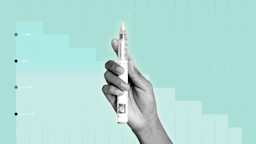

How much does Wegovy (semaglutide) cost?
$25.00

Wegovy (semaglutide) contraindications
Contraindications are specific health conditions or situations in which a person should not take a medication due to safety concerns. If you have any of the following conditions or if any of the following apply to you, let your healthcare provider know because Wegovy (semaglutide) will not be safe for you to take.
- Personal or family history of medullary thyroid cancer (MTC)
- Multiple endocrine neoplasia syndrome type 2 (MEN 2)
- Previous allergic reaction to a medication that contains semaglutide (Wegovy, Ozempic, or Rybelsus)

What are alternatives to Wegovy (semaglutide)?

Wegovy (semaglutide) images