


What Is the Best Psoriasis Treatment for You?
Whether your psoriasis is moderate or severe, there are many treatment options. Browse over-the-counter medications, biologics, and other psoriasis treatments.
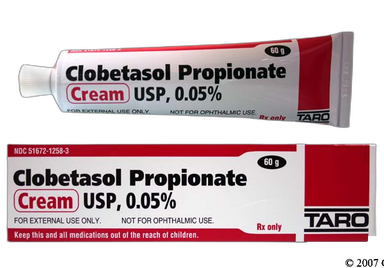
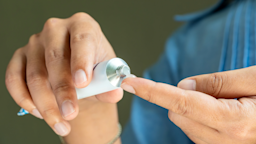
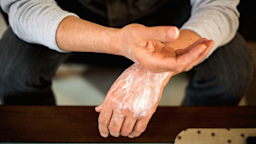
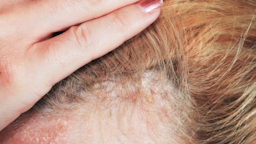
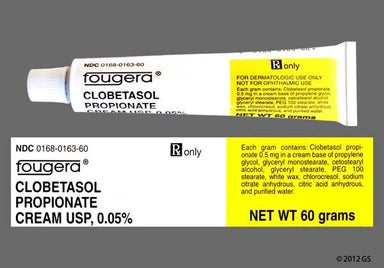
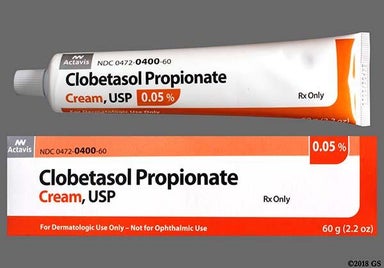
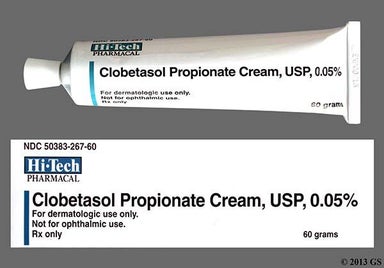
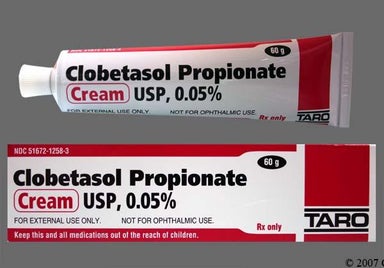
Clobetasol is a super potent (very strong) corticosteroid that's applied to the skin. It helps relieve skin inflammation and irritation from moderate-to-severe skin problems, like psoriasis. Clobetasol is available in many different formulations. This includes a cream, ointment, shampoo, topical solution, and foam. Most formulations are for people 12 years and older. But others, like the shampoo and lotion, are for adults only. Some side effects include burning, stinging, and irritation where it's applied. Clobetasol has both brand-name and generic options.

Clobetasol is a topical corticosteroid. When it’s used on the skin, it has a few actions.
| Common Brands | Clobex, Tovet |
|---|---|
| Drug Class | Corticosteroid |
| Controlled Substance Classification | Not a controlled medication |
| Generic Status | Lower-cost generic available |
| Availability | Prescription only |

The following side effects may get better over time as your body gets used to the medication. Let your healthcare provider know immediately if you continue to experience these symptoms or if they worsen over time.
Along with its needed effects, a medicine may cause some unwanted effects. Although not all of these side effects may occur, if they do occur they may need medical attention.
Check with your doctor immediately if any of the following side effects occur:
More common
Burning or stinging at the application site
Less common
Burning sensation of the skin
flushing or redness of the skin
itching, scaling, severe redness, soreness, or swelling of the skin
skin irritation
skin rash, encrusted, scaly and oozing
thinning of the skin with easy bruising, especially when used on the face or where the skin folds together (eg, between the fingers)
Rare
Thinning, weakness, or wasting away of the skin
Incidence not known
Backache
blindness
blurred vision
burning, itching, and pain in hairy areas, or pus at the root of the hair
change in vision
facial hair growth in females
fractures
fruit-like breath odor
full or round face, neck, or trunk
headache
increased hunger
increased thirst
increased urination
irritability
loss of sexual desire or ability
menstrual irregularities
muscle wasting
redness and scaling around the mouth
stomach pain
sugar in the urine
sweating
tearing
thinning of the hair
troubled breathing
unexplained weight loss
unusual tiredness or weakness
vomiting
Some side effects may occur that usually do not need medical attention. These side effects may go away during treatment as your body adjusts to the medicine. Also, your health care professional may be able to tell you about ways to prevent or reduce some of these side effects. Check with your health care professional if any of the following side effects continue or are bothersome or if you have any questions about them:
Less common
Body aches or pain
changes in skin coloring
congestion
dryness of the throat
raised, dark red, wart-like spots on the skin, especially when used on the face
skin discomfort
stuffy or runny nose
tender, swollen glands in the neck
trouble swallowing
voice changes
Incidence not known
burning and itching of the skin with pinhead-sized red blisters
increased hair growth on the forehead, back, arms, and legs
lightening of normal skin color
lightening of treated areas of dark skin
reddish purple lines on the arms, face, legs, trunk, or groin
softening of the skin
Other side effects not listed may also occur in some patients. If you notice any other effects, check with your healthcare professional.
Call your doctor for medical advice about side effects. You may report side effects to the FDA at 1-800-FDA-1088.



How to use clobetasol

Clobetasol can cause some serious health issues. This risk may be even higher for certain groups. If this worries you, talk to your doctor or pharmacist about other options.
Regularly using clobetasol longer than recommended can raise your risk of more skin reactions. Your risk is also higher if you cover the treated area with a tight bandage.
These skin reactions can include skin thinning, burning, itching, irritation, and dry skin. It can also include stretch marks, inflamed hair follicles, or changes in skin color. Some of these skin reactions can be permanent.
To prevent severe skin reactions, use the smallest amount of clobetasol needed for the shortest period of time possible. Let your care team know right away if you notice any new or worsening skin problems. Keep in mind that skin irritation that doesn't go away can be an early sign of an allergic skin reaction to clobetasol. Your care team can check to see what's going on.
Clobetasol is a strong steroid that works like your body's natural stress hormone, cortisol. Using it too often, for too long, or on large skin areas can affect your cortisol levels.
Sometimes, your cortisol levels could get too high. This could cause symptoms of Cushing's syndrome and high blood sugar. Other times, it can cause low cortisol levels, which can make you feel weak or unwell.
To stay safe, use the lowest clobetasol dose. Use it for no more than 2 weeks at a time for most formulations or for no more than 4 weeks at a time for the shampoo, unless your prescriber says it's okay. If you need to use clobetasol longer or over a large area, talk to your prescriber about how to use it safely.
Topical steroid withdrawal (TSW) is possible with clobetasol. This can happen if you stop using the medication suddenly after regular use. Some symptoms of TSW include itchy, burning, or flaky skin. You might also become sensitive to water, clothing, movement, and temperature.
If this happens, talk to your prescriber. They can suggest ways to help with this problem. Don't suddenly stop using clobetasol without talking to your prescriber first.
Clobetasol can raise your risk of cataracts and glaucoma. To help lower this risk, Be careful not to get the medication into your eyes. Don't apply clobetasol near your eyes.
Let your prescriber know if you have any eye conditions. Tell your care team and eye specialist if you have any blurry vision, eye pain, or see halos around lights. They can check to see if your eyes are okay.
Tell your care team if you get a skin infection while using clobetasol. Look for signs of a skin infection, like redness, pain, swelling, or pus.
Topical steroids like clobetasol can sometimes make skin infections worse or take longer to heal. So, it's important to treat the skin infection with the right medication, like an antifungal or antibacterial. If the infection doesn't get better with treatment, tell your care team. You might have to stop using clobetasol until the infection goes away.
The clobetasol foam, solution, and spray formulations are flammable. This means that the product can catch on fire very easily. Don't apply it near an open flame or while smoking. Avoid storing the medication near heat or flames.

 Bottle of lotion
| Dosage | Quantity | Price as low as | Price per unit |
|---|---|---|---|
| 59ml of 0.05% | 1 bottle | $31.76 | $31.76 |
| 118ml of 0.05% | 1 bottle | $45.26 | $45.26 |
Bottle of shampoo| Dosage | Quantity | Price as low as | Price per unit |
|---|---|---|---|
| 118ml of 0.05% | 1 bottle | $39.30 | $39.30 |
Bottle of spray| Dosage | Quantity | Price as low as | Price per unit |
|---|---|---|---|
| 59ml of 0.05% | 1 bottle | $20.21 | $20.21 |
| 125ml of 0.05% | 1 bottle | $32.75 | $32.75 |
Bottle of topical solution| Dosage | Quantity | Price as low as | Price per unit |
|---|---|---|---|
| 25ml of 0.05% | 2 bottles | $26.01 | $13.01 |
| 50ml of 0.05% | 1 bottle | $18.48 | $18.48 |
 Can of foam
| Dosage | Quantity | Price as low as | Price per unit |
|---|---|---|---|
| 100g of 0.05% | 1 can | $44.33 | $44.33 |
| 50g of 0.05% | 1 can | $33.99 | $33.99 |
 Eye dropper
| Dosage | Quantity | Price as low as | Price per unit |
|---|---|---|---|
| 3.5ml of 0.05% | 1 eye dropper | $294.25 | $294.25 |
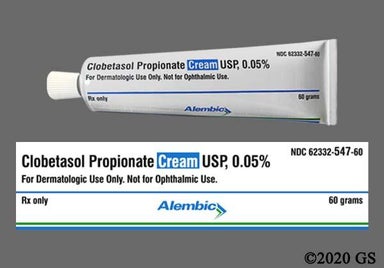
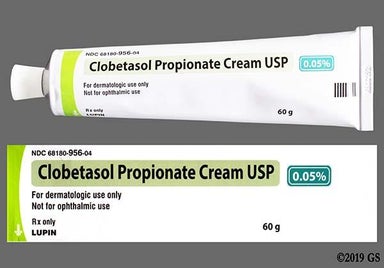
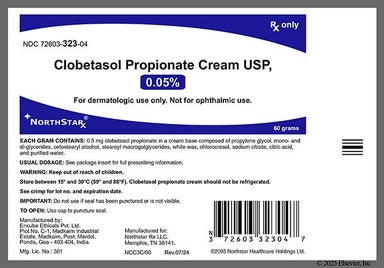
 Tube of cream
| Dosage | Quantity | Price as low as | Price per unit |
|---|---|---|---|
| 45g of 0.05% | 1 tube | $19.13 | $19.13 |
| 15g of 0.05% | 1 tube | $12.44 | $12.44 |
| 30g of 0.05% | 1 tube | $15.76 | $15.76 |
| 60g of 0.05% | 1 tube | $16.01 | $16.01 |
| 100g of 0.025% | 1 tube | $2,406.25 | $2,406.25 |

GoodRx has partnered with to provide reviews on the different aspects of Clobetasol.
Learn more about the effectiveness of Clobetasol based on real life experiences.
Based on 112 people taking this medication
3.3
3.2
3.5
3.8
4.5
1.8
Severity of side effects
Based on 140 people taking this medication
0%
50%
100%
Skin thinning
10%
Dry skin
3%
Burning sensation in skin
3%
Burning sensation
2%
Stinging pain
2%
Reasons people stopped taking Clobetasol
Based on 140 people who have taken this medication
Did not seem to work
36%
Course of treatment ended
16%
Other
15%
Doctor's advice
13%
Side effects too severe
10%
Expense
8%
Change in health plan coverage
3%
Personal research
3%
How long people take Clobetasol
Based on 189 people who have taken this medication
0%
50%
100%

Although certain medicines should not be used together at all, in other cases two different medicines may be used together even if an interaction might occur. In these cases, your doctor may want to change the dose, or other precautions may be necessary. When you are taking this medicine, it is especially important that your healthcare professional know if you are taking any of the medicines listed below. The following interactions have been selected on the basis of their potential significance and are not necessarily all-inclusive.
Using this medicine with any of the following medicines is not recommended. Your doctor may decide not to treat you with this medication or change some of the other medicines you take.
Using this medicine with any of the following medicines is usually not recommended, but may be required in some cases. If both medicines are prescribed together, your doctor may change the dose or how often you use one or both of the medicines.
Using this medicine with any of the following medicines may cause an increased risk of certain side effects, but using both drugs may be the best treatment for you. If both medicines are prescribed together, your doctor may change the dose or how often you use one or both of the medicines.









Prescription savings
Stop paying too much for your prescriptions. Compare prices, get pharmacy coupons, and save up to 80%. Find expert answers to your health questions so you can make the best decisions for yourself and your family.
Health conditions
Medications & treatment
Access & affordability
Medication discounts

In general, avoid using Clobetasol on your private parts like the groin unless your prescriber said it's okay. The skin around the private parts is very thin and sensitive. So, it can be more prone to side effects like irritation. If you need to treat the skin around your private parts for certain skin problems, talk to your prescriber about how to do this safely.
Using too much Clobetasol can lead to serious side effects. This can happen if you apply too much at once, use it on large areas of skin, or use it for too long. Overuse can make your skin thin, cause stretch marks, or lighten the skin where you apply it. Because Clobetasol is a strong steroid, it can get absorbed through the skin and into the body. This can sometimes affect your hormones. It can prevent your body from making cortisol, a hormone that helps control stress, blood sugar, and blood pressure. It can also lead to symptoms of Cushing's syndrome, like a round or puffy face, weight gain around the torso, or high blood sugar. If you're not sure how much Clobetasol to use, ask your prescriber or pharmacist.
No, you shouldn't use Clobetasol alone to treat a fungal infection. It's a steroid, not an antifungal. Its main job is to reduce inflammation, redness, and itching on the skin. It doesn't kill the fungus that's causing the infection.
Generally, it's not recommended to use Clobetasol on your face unless a healthcare professional said you can. The skin on the face is much thinner and more sensitive than skin on other parts of the body. This makes the face more vulnerable to the effects of this medication. This can include discomfort from a burning feeling or skin irritation. Talk to your prescriber about your options if you need to treat a skin problem on your face.
How long you should leave Clobetasol on your skin depends on the formulation of the medication you have. Most forms of Clobetasol should be rubbed in and left on so it gets absorbed into the skin. But the shampoo for scalp psoriasis should stay on the scalp for 15 minutes before you rinse it off. Ask your prescriber if you're not sure how long to leave Clobetasol on your skin.
No. You typically apply the Clobetasol solution to the affected area(s) of the scalp and leave it on. This helps the medication get absorbed into the skin. If you wash it off, the medication might not work as well.
Yes, Clobetasol expires. Check the expiration date (on the box or product itself). Don't use the medication after it has expired since it might not work as well and can lead to side effects. If you have questions about when your Clobetasol expires, ask your pharmacist.
Clobetasol and triamcinolone are both topical steroids that help relieve skin inflammation. But they have different potencies (or strengths). Clobetasol is an ultra high potency steroid, which means it's very strong. But triamcinolone is a medium to medium-high potency steroid. Lower potency steroids, like triamcinolone, are less likely to cause serious side effects when used long term or on larger skin areas. Stronger steroids are usually used for more serious skin problems or thicker skin. Talk to a healthcare professional to compare between topical steroids.
