Prezcobix
Prezcobix (darunavir / cobicistat), also known as DRV/COBI, is an antiretroviral (ARV) medication that treats HIV (human immunodeficiency virus) infections in people who weigh at least 88 pounds. It's typically taken with other HIV ARVs to make up a complete treatment regimen. Prezcobix (darunavir / cobicistat) is an oral tablet that's taken once daily. It's important to take the medication every day to prevent HIV drug resistance (when HIV medications no longer work). A side effect of Prezcobix (darunavir / cobicistat) is a skin rash that appears within the first month of treatment, but it typically goes away on its own.


What is Prezcobix (darunavir / cobicistat)?
What is Prezcobix (darunavir / cobicistat) used for?
- Treatment of HIV infection in adults and children weighing at least 88 pounds
How Prezcobix (darunavir / cobicistat) works
Prezcobix (darunavir / cobicistat) is a combination of two medications:
- Darunavir is a protease inhibitor, which means it blocks a protein called protease. Normally, protease helps process viral proteins so that HIV can infect healthy cells. By blocking protease from working, darunavir prevents the virus from making copies of itself and spreading.
- Cobicistat is a "booster" medication. It slows down your body from breaking down other HIV ARVs like darunavir. This "boosts" the levels of darunavir and other HIV ARVs in the body. It also makes them last longer in the body. This helps darunavir and other HIV ARVs work better to fight the infection.
Drug facts
| Common Brands | Prezcobix |
|---|---|
| Drug Class | HIV ARV |
| Controlled Substance Classification | Not a controlled medication |
| Generic Status | No lower-cost generic available |
| Availability | Prescription only |

Side effects of Prezcobix (darunavir / cobicistat)
The following side effects may get better over time as your body gets used to the medication. Let your healthcare provider know immediately if you continue to experience these symptoms or if they worsen over time.
Common Side Effects
Side effects below were reported in at least 5% of adults taking Prezista (darunavir) with ritonavir (Norvir) during clinical studies.
- Diarrhea
- Nausea
- Stomach pain
- Vomiting
- Headache
- Rash
Side effects below were reported in at least 5% of adults taking Tybost (cobicistat) with other HIV medications in clinical studies.
- Jaundice
- Rash
Prezcobix (darunavir / cobicistat) serious side effects
Contact your healthcare provider immediately if you experience any of the following.
- Serious liver problems: nausea, vomiting, not feeling hungry, pain in the right side of the stomach, yellowing of the whites of the eyes or skin, dark-colored urine, light-colored stool
- Severe allergic or skin reactions: facial swelling, hives, rash, itchy skin, blistering or peeling of skin, body aches, trouble breathing, fever
The following Prezcobix (darunavir / cobicistat) side effects have also been reported
Side effects that you should report to your care team as soon as possible:
- Allergic reactions—skin rash, itching, hives, swelling of the face, lips, tongue, or throat
- High blood sugar (hyperglycemia)—increased thirst or amount of urine, unusual weakness or fatigue, blurry vision
- Infection—fever, chills, cough, or sore throat
- Kidney injury—decrease in the amount of urine, swelling of the ankles, hands, or feet
- Lipodystrophy—increased fat in the upper back or midsection, decreased fat in the face, arms, or legs
- Liver injury—right upper belly pain, loss of appetite, nausea, light-colored stool, dark yellow or brown urine, yellowing skin or eyes, unusual weakness or fatigue
- Rash, fever, and swollen lymph nodes
- Redness, blistering, peeling, or loosening of the skin, including inside the mouth
Side effects that usually do not require medical attention (report these to your care team if they continue or are bothersome):

Pros and cons of Prezcobix (darunavir / cobicistat)
Pros
- Taken once a day by mouth
- Combines two medications into one pill for convenience
- Safe to use in adults and children weighing at least 88 pounds
Cons
- Interacts with many medications, such as certain statins and blood thinners
- Must be used carefully in people with sulfa allergies
- Not recommended during pregnancy (being pregnant can cause the medication to work less well)

Pharmacist tips for Prezcobix (darunavir / cobicistat)

- You should always take Prezcobix (darunavir / cobicistat) with food. Taking it with food helps your body absorb the medication better so it can work well for you.
- Get your routine blood tests done on time while you’re taking Prezcobix (darunavir / cobicistat). Lab work is important to make sure that Prezcobix (darunavir / cobicistat) works against the virus and that the medication isn't causing unwanted effects.
- Let your provider or pharmacist know what medications you're taking, including over-the-counter products and supplements. Taking Prezcobix (darunavir / cobicistat) with certain medications can affect how well your medications work or put you at risk for side effects. To lower your risk for drug interactions, your providers might recommend changes to some of your medications before you start treatment.
- If you're able to become pregnant, talk with your provider about the best birth control methods to use while you're taking Prezcobix (darunavir / cobicistat). This HIV medication might cause birth control with ethinyl estradiol (estrogen) to work less well. Always use a non-hormonal form of birth control (e.g., condom) as an additional form of birth control. Aside from preventing pregnancy, most condoms work well to prevent HIV transmission.
- Prezcobix (darunavir / cobicistat) might raise your blood sugar levels. This can lead to or worsen diabetes. Ask your provider if and how often you need to check your blood sugar while you're taking this medication. You might need additional medications to help control your sugar levels during treatment.
- Talk to your provider before you stop Prezcobix (darunavir / cobicistat) or any of your HIV medications. Otherwise, the virus can spread and become harder to treat.

Risks and warnings for Prezcobix (darunavir / cobicistat)
Prezcobix (darunavir / cobicistat) can cause some serious health issues. This risk may be even higher for certain groups. If this worries you, talk to your doctor or pharmacist about other options.
Liver problems
- Risk factors: Hepatitis B or C | History of liver problems | Taking with ritonavir (Norvir)
Rarely, some people had life-threatening liver problems when they took Prezcobix (darunavir / cobicistat) during clinical studies. Keep in mind that they were also taking ritonavir (Norvir). To be safe, your provider will order blood tests to check your liver before you start Prezcobix (darunavir / cobicistat) and also during treatment, especially the first few months of starting the medication. These blood tests help make sure Prezcobix (darunavir / cobicistat) is safe for your liver.
Tell your provider right away if you have any signs and symptoms of liver damage, such as feeling sleepy, nausea, loss of appetite, upper right stomach pain, yellowing of the skin or whites of the eyes, or dark urine.
Severe skin and allergic reactions
- Risk factors: Sulfa allergies | Taking with ritonavir (Norvir)
Prezcobix (darunavir / cobicistat) can sometimes cause rash. In studies, some people developed a rash within the first 4 weeks of treatment. If you have a mild or moderate rash, continue to take Prezcobix (darunavir / cobicistat) and let your provider know. Oftentimes, the rash goes away on its own. If you have a severe rash or your rash gets worse, talk with your provider right away.
Though rare, Prezcobix (darunavir / cobicistat) can also cause severe skin reactions. Stop taking the medication and get medical attention if you have a severe rash with fever, general discomfort, muscle or joint pain, mouth sores, blisters, or facial swelling.
People with allergies to sulfa medications might have similar reactions, including rash, with Prezcobix (darunavir / cobicistat). Be sure your provider and pharmacist know about any allergies, especially if they're severe.
Changes to blood test results for kidney function
Prezcobix (darunavir / cobicistat) might affect your blood work that your provider uses to check your kidney function. Your provider will order blood work before and during treatment to check your kidneys. Based on your blood test results, your provider might examine your kidneys more closely to make sure they're working well.
Kidney problems when used with tenofovir disoproxil fumarate (TDF)
- Risk factors: History of kidney problems | Taking other medications known to harm kidneys
Some people who took tenofovir disoproxil fumarate (TDF) with cobicistat (an ingredient in Prezcobix) reported having kidney problems. If your treatment plan includes taking Prezcobix (darunavir / cobicistat) with an HIV medication that contains TDF, your provider will order urine tests to check your kidneys before you start treatment. Depending on your kidney function, your provider might choose different HIV medications for you or decide the combination is okay to take with routine monitoring.
If you're taking Prezcobix (darunavir / cobicistat) with an HIV medication containing TDF, make sure to avoid using other medications that can harm the kidneys, like high doses of ibuprofen. Let your provider know right away if you have bone or muscle pain, pain in your arms or legs, and general weakness that don't go away. These might be signs of kidney problems.
High blood sugar
Some people taking Prezcobix (darunavir / cobicistat) or certain other HIV protease inhibitors had high blood sugar levels. Sometimes, this led to diabetes or worsened diabetes. If this happens, your provider might need to prescribe diabetes medications or adjust the dose of your diabetes medications (if you're already taking some) to make sure your blood sugar is under control. Tell your provider before you start Prezcobix (darunavir / cobicistat) if you have a history of diabetes. Your provider might ask you to check your blood sugar at home to make sure this medication is safe for you.
Changes in body fat
Rarely, people taking HIV medications like Prezcobix (darunavir / cobicistat) have noticed changes in body fat. These changes might look like fat buildup in the back of the neck, breast, and stomach area. Some people have also lost fat from the legs, arms, and face. It's not clear whether Prezcobix (darunavir / cobicistat) causes these changes to body fat, why this happens, and whether it will affect your health in the future. Let your provider know if these changes occur while you're taking Prezcobix (darunavir / cobicistat).
Overactive immune system
Taking combination ARV therapy, such as Prezcobix (darunavir / cobicistat) with other HIV medications, can cause changes to your immune system called immune reconstitution syndrome. This condition happens when your immune system becomes overactive after you start treatment. Your immune system begins to fight off different infections that it was too weak to fight off before you started treatment. In rare cases, your immune response might improve too much with treatment and start to attack normal cells in your body. This can lead to autoimmune conditions that can develop at any time (during the first few weeks of treatment or many months later). Tell your provider right away if you have any new symptoms, such as fever, pain, hair loss, bulging eyes, or sweating, after you start Prezcobix (darunavir / cobicistat).
Risk of bleeding in people with hemophilia
Some people with a bleeding condition called hemophilia have had more bleeding after starting protease inhibitors, like Prezcobix (darunavir / cobicistat). About half the time, treatment with the HIV medication continued or was restarted after the bleeding stopped. It isn't clear whether Prezcobix (darunavir / cobicistat) is related to having more bleeding. Tell your provider right away if you have pain and swelling in your joints or bruising on your skin. These can be signs of buildup of blood under the skin or in your joints.
Interactions with other medications
Prezcobix (darunavir / cobicistat) interacts with many medications. Some medications can cause the amount of Prezcobix (darunavir / cobicistat) in your body to drop. This can make the HIV medication work less well to treat your infection. Examples of medications that you should avoid because of this risk include certain other HIV medications like efavirenz (Sustiva) and certain seizure medications like carbamazepine (Tegretol).
Prezcobix (darunavir / cobicistat) can also raise the amount of other medications in your body when taken together. This raises your risk for side effects from those other medications. For example, taking Prezcobix (darunavir / cobicistat) with alfuzosin (Uroxatral) can put you at risk for dangerously low blood pressure. Taking this HIV medication with some blood thinners, like Eliquis (apixaban) or Xarelto (rivaroxaban), can raise your risk for serious bleeds.
Because of the potential for serious interactions with Prezcobix (darunavir / cobicistat) and various medications, tell your provider and pharmacist about all the medications you take or plan to take. They can make sure your medications are safe to take together.

Prezcobix (darunavir / cobicistat) dosage


How much does Prezcobix (darunavir / cobicistat) cost?
$2,374.30

Prezcobix (darunavir / cobicistat) contraindications
Contraindications are specific health conditions or situations in which a person should not take a medication due to safety concerns. If you have any of the following conditions or if any of the following apply to you, let your healthcare provider know because Prezcobix (darunavir / cobicistat) will not be safe for you to take.
- Take certain medications that interact with Prezcobix (darunavir / cobicistat) and raise the risk for serious side effects

What are alternatives to Prezcobix (darunavir / cobicistat)?

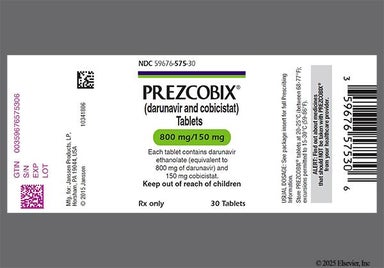
Prezcobix (darunavir / cobicistat) images