





8 Biologics for Ulcerative Colitis: What to Know About Humira, Remicade, and More
Ulcerative colitis (UC) often responds to biologics like Remicade and Humira. Here’s a list of each biologic that treats UC, including side effects and how they work.
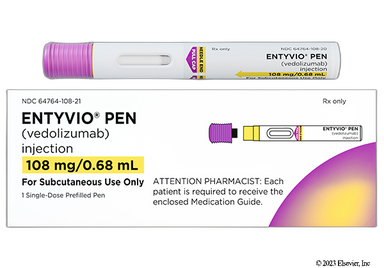
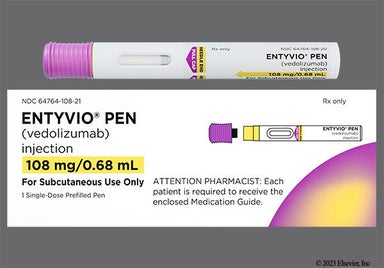
Entyvio, the brand name for vedolizumab, is an injection used to treat ulcerative colitis (UC) and Crohn's disease (CD) in adults. It belongs to a drug class called integrin antagonists that helps lower inflammation in the gut. Entyvio (vedolizumab) is an infusion that's given through the vein by a healthcare professional. After the first 2 doses, it's usually given every 2 months. If it works well, people can switch to injections under the skin every 2 weeks using prefilled syringes or pens. Side effects include headache, mild infections, and joint pain.

Entyvio (vedolizumab) is a type of monoclonal antibody. More specifically, it's an integrin antagonist. It works by blocking proteins called integrins. These proteins are found on immune cells. They play a role in causing inflammation in the gut related to ulcerative colitis and Crohn's disease.
By blocking integrin proteins, Entyvio (vedolizumab) helps lower inflammation in the gut.
| Common Brands | Entyvio, Entyvio Pen |
|---|---|
| Drug Class | Integrin antagonist |
| Controlled Substance Classification | Not a controlled medication |
| Generic Status | No lower-cost generic available |
| Availability | Prescription only |

The following side effects may get better over time as your body gets used to the medication. Let your healthcare provider know immediately if you continue to experience these symptoms or if they worsen over time.
Contact your healthcare provider immediately if you experience any of the following.
Side effects that you should report to your care team as soon as possible:
Side effects that usually do not require medical attention (report these to your care team if they continue or are bothersome):



Tips for Entyvio (vedolizumab) IV infusions
Tips for Entyvio (vedolizumab) injections under the skin

Entyvio (vedolizumab) can cause some serious health issues. This risk may be even higher for certain groups. If this worries you, talk to your doctor or pharmacist about other options.
Entyvio (vedolizumab) can cause infusion-related reactions and allergic reactions. Signs include itching, rash, red or warm skin, high blood pressure, and a fast heart rate. You might also have trouble breathing and swelling in the face, lips, or tongue. Other signs of anaphylaxis are also possible. These reactions can happen during the infusion through the vein or even a few hours later.
Stop taking Entyvio (vedolizumab) and get medical help right away if you have an infusion reaction or allergic reaction.
Entyvio (vedolizumab) can affect your body's ability to fight infections. This means you could get sick more easily from bacterial, viral, or fungal infections. In studies, the most common infections during treatment were upper respiratory infections and sinus infections. But serious infections like tuberculosis (TB) and meningitis can also happen.
Before starting Entyvio (vedolizumab), tell your prescriber if you're feeling sick. You'll need to wait until you get better before starting the medication. If you get sick often, your prescriber will weigh the risks and benefits of treatment for you. They might also test you for TB first.
Call your care team or get medical help right away if you get sick while taking Entyvio (vedolizumab). Watch for signs like fever, trouble breathing, cough, weakness, sweating, and chills. Your care team can check what's going on and decide if you should keep taking this medication.
Entyvio (vedolizumab) can weaken your immune system and raise the risk of infections. In particular, it can put you at risk of a serious brain infection caused by the John Cummingham virus (JCV). This infection is called progressive multifocal leukoencephalopathy (PML). It can lead to death or severe disability in people with a weakened immune system, like those taking Entyvio (vedolizumab).
Stop Entyvio (vedolizumab) and get medical help right away if you notice early signs of PML. These include weakness on one side of your body, clumsiness, and confusion. Also pay attention to any changes in vision, personality, memory, or thinking skills. You might need tests or a brain scan to check for PML. Getting help quickly is very important because PML symptoms can get worse over days to weeks.
Some people taking Entyvio (vedolizumab) have had higher liver enzyme levels on their blood tests. This can be a sign of liver problems. If the levels get too high, there's a risk of serious liver damage.
Get medical help right away if you have signs of liver damage. Watch for stomach pain, loss of appetite, nausea, tiredness, and yellow skin and whites of your eyes. You might need to stop taking Entyvio (vedolizumab) if you have liver damage.

Starter doses
Maintenance doses






Prescription savings
Stop paying too much for your prescriptions. Compare prices, get pharmacy coupons, and save up to 80%. Find expert answers to your health questions so you can make the best decisions for yourself and your family.
Health conditions
Medications & treatment
Access & affordability
 Our monthly healthcare membership can help you save thousands on your prescription costs.
Resources

Yes, Entyvio is a type of medication called a biologic. Biologics are made from living sources, like cells, in the lab. Entyvio is a kind of monoclonal antibody. Monoclonal antibodies are proteins that are made made from cells in a lab.
Some people can think of Entyvio as an immunosuppressant. It works by blocking certain proteins on immune cells. This can make these immune cells less active to lower gut inflammation. But in the process, it can weaken your immune system and raise your risk of infections.
A study found that some people taking Entyvio might gain weight. It's not clear if the medication is the main cause. One reason might be that your gut health improves with treatment. As Entyvio helps control your UC or CD symptoms, your gut might start to absorb food and nutrients better. Talk to your prescriber if you gain weight and it worries you while taking this medication.
For the first 2 doses, Entyvio is given as an infusion into the veins (IV). After that, you can keep getting IV infusions. Or if you do well with the infusions, you can switch to injections given under the skin using the prefilled syringes or pens. With training, you can give the injections under the skin to yourself at home. Talk to your prescriber about which option is best for you for your maintenance doses.
Studies show that some people's UC or CD symptoms improved within about 2 weeks after starting Entyvio. But it might take up to 6 weeks to see the full benefits. Everyone is different, so your experience might not be the same. If you don't see any improvement after at least 3 months of taking Entyvio, you might need a different medication. Check in with your prescriber to talk about how well Entyvio is working for you.
It probably depends on which side effect you have. For example, you might have itching, redness, or swelling where you injected Entyvio under the skin. These injection site reactions usually last a couple days. But an infection, like the common cold or sinus infection, can last a few days to a few weeks. This depends on what the infection is, how serious it is, and if you've gotten treated for it yet. Ask your prescriber if you have questions about any specific side effects.
It takes about 4 months for most of Entyvio to leave your body after one dose of medication. This is based on the half-life of the medication. Even though it stays in your body for a while, it's still important to get your IV infusion or inject the medication under the skin on time. This helps keep the right amount of Entyvio in your body so it can work well.
If you're pregnant or thinking of getting pregnant, talk to your prescriber. They can help you understand the risks and benefits of using Entyvio during pregnancy. There isn't much information so far. But available data suggest that the medication doesn't raise the risk of serious birth defects or miscarriage. Still, more research is needed to know for sure.
