


Why Are Certain Medications Dispensed in Their Original Containers?
When you pick up your medications at the pharmacy you may notice that they are typically dispensed in amber colored vials or plastic containers. You may
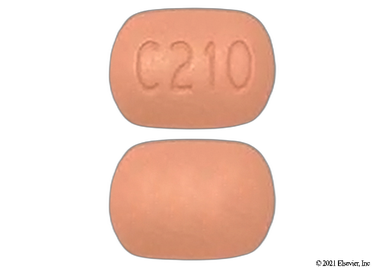
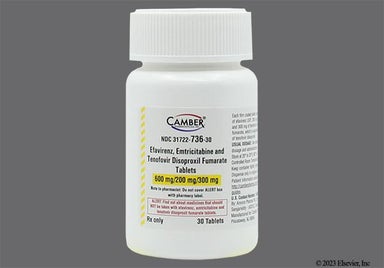
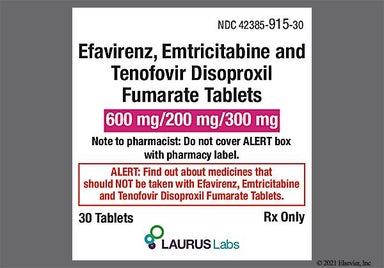
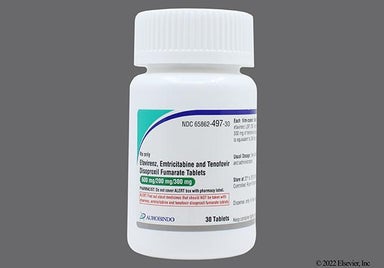
Atripla is a combination antiviral medication used to treat human immunodeficiency virus (HIV). It's a tablet that has three active ingredients: efavirenz, emtricitabine, and tenofovir disoproxil fumarate (TDF). Atripla is for adults and children who weigh at least 88 lbs. You take it once a day by mouth on an empty stomach. Some side effects include diarrhea, nausea, and depression. The brand name Atripla isn't sold anymore, but you can still get this medication as a generic.

Atripla contains three antiretroviral medications that work together to fight HIV.
| Common Brands | Atripla |
|---|---|
| Drug Class | HIV ARV |
| Controlled Substance Classification | Not a controlled medication |
| Generic Status | Lower-cost generic available |
| Availability | Prescription only |

The following side effects may get better over time as your body gets used to the medication. Let your healthcare provider know immediately if you continue to experience these symptoms or if they worsen over time.
Contact your healthcare provider immediately if you experience any of the following.
Side effects that you should report to your care team as soon as possible:
Side effects that usually do not require medical attention (report these to your care team if they continue or are bothersome):




Atripla can cause some serious health issues. This risk may be even higher for certain groups. If this worries you, talk to your doctor or pharmacist about other options.
 Before you start taking Atripla, your HIV care team will check if you're also infected with the hepatitis B virus (HBV). It's important for them to know because there's a risk that the HBV infection might get worse after you stop taking Atripla. This could lead to serious liver problems or even liver failure.
If you have HBV and HIV, don't stop taking Atripla without talking with your HIV care team first. If you need to stop, the care team will follow up with you for several months afterwards. They'll probably have you do blood work to check your liver for a hepatitis B flare-up.
Although it's rare, some people who took the ingredients of Atripla separately (efavirenz, emtricitabine, and tenofovir disoproxil fumarate) had serious liver damage. This can include a buildup of fat in the liver, which can cause it to swell. Some people needed a liver transplant. And for others, the liver damage was life-threatening. Atripla isn't recommended for people who have moderate or severe liver problems.
Before starting Atripla, you'll need blood tests to check your liver. You'll also have blood tests during treatment to make sure your liver is okay. Stop taking Atripla and get medical help if you have yellowing of your skin or eyes, extreme tiredness, stomach pain, nausea, or loss of appetite. These can be signs of liver problems.
Some people taking efavirenz, which is in Atripla, had changes in their mental health. Serious problems were rare. But they've included depression, aggression, psychosis, and thoughts of suicide.
If you notice a change in your mood or behavior after starting Atripla, let your prescriber know. It's also helpful to ask trusted friends or family to watch for any changes. Call 911 right away if you start thinking about hurting yourself or others.
Some people who take Atripla might feel dizzy, sleepy, or confused. They also might have trouble sleeping, strange dreams, or trouble concentrating. These side effects are usually mild or moderate. They often start during the first or second day of taking Atripla. Most times, they get better or go away over time (about 2 to 4 weeks). If these side effects don't get better or start to bother you, talk to your prescriber.
Some people have had kidney problems while taking Atripla. The risk is higher if you also take other medications that can hurt the kidneys. Examples include taking high doses of anti-inflammatory nonsteroidal drugs (NSAIDs) or more than one NSAID at the same time. Atripla isn't recommended for people with moderate or severe kidney problems.
Before starting Atripla, you'll need blood tests and urine tests to check your kidneys. This makes sure it's safe for you to take Atripla. Also get your labs done on time during treatment. It's helpful for your care team to keep checking that your kidneys are safe.
Call your prescriber if you urinate less than usual. Also tell them if you have bone pain, a broken bone, or muscle pain or weakness. These could be signs of kidney problems.
Tenofovir disoproxil fumarate, an ingredient in Atripla, can lower your bone mineral density (BMD). This might make your bones weaker. It's possible that these effects can raise the risk of osteoporosis and make it easier for you to break a bone.
Talk to your prescriber about ways to prevent bone problems while taking Atripla. They might suggest calcium and vitamin D supplements to help keep your bones strong. Your prescriber might check your bone density if you break a bone or have other risks for bone problems.
Atripla might raise the risk of a dangerous buildup of lactic acid in your blood (lactic acidosis). Call your care team if you feel weak or confused, have muscle pain, feel your heart racing, or breathing fast. These could be signs of lactic acidosis.
Taking Atripla can make your body have an intense immune response called immune reconstitution syndrome. When you start taking Atripla, your immune system gets stronger. It can start to fight off infections it couldn't defend against before. This intense immune response can cause a lot of inflammation in the body.
In rare cases, your immune system can become so strong that it starts to attack healthy parts of your body. This can lead to certain autoimmune problems. These problems can show up as early as during the first few weeks of treatment or many months later.
Tell your healthcare team if you have a fever, trouble breathing, or cough after you start Atripla. Also let them know about any new, unusual symptoms like sweating more, hair loss, or bulging eyes. These might be signs of immune reconstitution syndrome and its complications. Your care team can check them out and help you manage them.
Even though it's rare, some people taking HIV medications like Atripla might notice changes in their body fat. This includes where it shows up. It can include fat buildup in the back of the neck, breast, and around the middle of the body. Some people also had less fat in the face, arms, and legs. We don't know why this happens and if it'll affect your health later on. Tell your care team if you notice these changes or have concerns while taking Atripla.
Atripla can interact with many medications. Examples include some other HIV medications, hepatitis C medications, and anti-seizure medications. Some drug interactions can make Atripla work less well. This can make it more likely for HIV to spread and become harder to treat. Other drug interactions can raise your risk for side effects.
Because of possible Atripla drug interactions, tell your HIV care team about all the medications you take or plan to take. They can make sure your medications are safe to take together.
Some people who took Atripla during the first trimester of pregnancy reported certain birth defects in their baby. If you can get pregnant, it's recommended to use birth control and condoms while taking Atripla. Keep using these birth control methods for 3 months after stopping treatment.
If you're pregnant or trying to become pregnant, talk to your prescriber about your options. There might be safer HIV medications for you.
If you and your prescriber decide that Atripla is the best choice for you during pregnancy, it's a good idea to join the Antiretroviral Pregnancy Registry. This program helps researchers learn about how the medication affects pregnancy. Your prescriber can help you sign up.

 Tablet
| Dosage | Quantity | Price as low as | Price per unit |
|---|---|---|---|
| 600mg/200mg/300mg | 90 tablets | $90.32 | $1.00 |


Contraindications are specific health conditions or situations in which a person should not take a medication due to safety concerns. If you have any of the following conditions or if any of the following apply to you, let your healthcare provider know because Atripla will not be safe for you to take.







Prescription savings
Stop paying too much for your prescriptions. Compare prices, get pharmacy coupons, and save up to 80%.Resources
About GoodRx
 Find expert answers to your health questions so you can make the best decisions for yourself and your family.
Health conditions
Medications & treatment
Access & affordability
Well-being
Medication discounts

No, don't crush or split Atripla. This could cause the medication to work less well for you. If you have trouble swallowing the tablet whole, talk to your prescriber about your options.
Atripla isn't usually used for post-exposure prophylaxis (PEP). It's not preferred for helping to prevent an HIV infection after exposure to the virus. Talk to your HIV specialist about better options for PEP. Remember, PEP should be started within 72 hours of exposure (or better yet, as soon as possible).
It's best to take Atripla on an empty stomach. Taking it with food will raise the amount of medication that gets absorbed in your body through your gut. This might make side effects of the medication worse.
People who took Atripla didn't have hair loss during clinical studies. If you notice more hair falling out than usual, talk to a healthcare professional. They can help you figure out what might be causing it.
Atripla isn't associated with weight gain. But if you notice that you're gaining weight during treatment, talk to your primary care provider. They can recommend ways to help you manage your weight.
The three active ingredients in Atripla stay in your body for different amounts of time. After a single dose, efavirenz can stay for up to 16 days. emtricitabine for about 2 days, and tenofovir disoproxil fumarate for around 4 days. These estimates are based on each ingredient's half-life. Even though Atripla stays in your body for a while, it doesn't mean it keeps working well that whole time. It's still important to take Atripla every day to keep your HIV infection under control. Ask your HIV specialist if you have more questions about how long Atripla stays in your system.
Atripla and Biktarvy are both 3-in-1 medications for treating HIV. But they have different ingredients. Atripla contains efavirenz, emtricitabine, and tenofovir disoproxil fumarate. Biktarvy contains bictegravir, emtricitabine, and tenofovir alafenamide. Note that they have different types of tenofovir in them. In addition, Atripla is for adults and children who weigh at least 88 lbs. But Biktarvy is FDA approved for those who weigh at least 31 lbs if they also meet other criteria. Also, clinical guidelines say Biktarvy is a first-choice option for adults and teens who are starting treatment. Talk to your HIV specialist about the differences between these medications.
