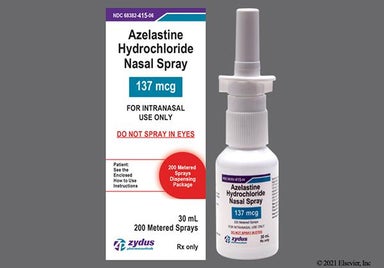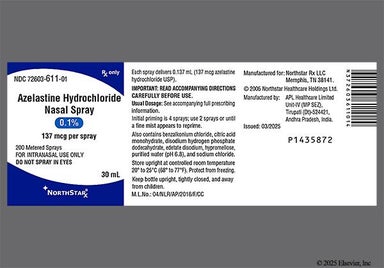
Azelastine Coupon - Azelastine 30ml of 137mcg/spray nasal spray

azelastine

Generic Astelin
Used for Allergic Conjunctivitis, Allergic Rhinitis

Azelastine nasal spray is an antihistamine that treats allergies and nasal symptoms, such as runny or stuffy nose. The 0.1% and 0.15% strengths of the azelastine nasal spray are available with a prescription for adults and children. It's sprayed into the nostrils typically twice a day. Prescription azelastine nasal spray is a lower-cost generic. Possible side effects include a bitter taste in the mouth and nasal discomfort.

Note: Azelastine 0.15% nasal spray is also available over the counter under the brand name Astepro Allergy.

Reviewed by:Last reviewed on June 23, 2024
basics-icon

What is Azelastine nasal spray?

Featuring Alyssa Billingsley, PharmDReviewed by Connie Zheng, PharmD | July 31, 2024

What is Azelastine nasal spray used for?

  • Seasonal allergy symptoms related to the nose
  • Year-round allergy symptoms related to the nose - azelastine 0.15% spray only
  • Runny or stuffy nose that isn't caused by allergies - azelastine 0.1% spray only

How Azelastine nasal spray works

Azelastine is an antihistamine. It works in your nose to block histamine, a natural chemical in your body that causes runny nose, itching, and sneezing. By blocking histamine, azelastine helps relieve these nasal symptoms.

When does Azelastine nasal spray start working?Time passed since treatment started:
MINUTES
Full effect
HOURS
DAYS
WEEKS
MONTHS

Drug facts

Common BrandsAstelin(brand name no longer available)
Drug ClassAntihistamine
Controlled Substance ClassificationNot a controlled medication
Generic StatusLower-cost generic available
AvailabilityPrescription only
side-effects-icon

Side effects of Azelastine nasal spray

The following side effects may get better over time as your body gets used to the medication. Let your healthcare provider know immediately if you continue to experience these symptoms or if they worsen over time.

Common Side Effects

Azelastine 0.1% nasal spray:

  • Bitter taste in the mouth (20%)
  • Headache (15%)
  • Sleepiness (12%)
  • Nasal burning (4%)

Azelastine 0.15% nasal spray:

  • Bitter taste in the mouth (4%)
  • Nasal discomfort (4%)

Less Common Side Effects

  • Sneezing
  • Runny nose
  • Nosebleed
  • Dry mouth
  • Sore throat
  • Nausea
  • Tiredness
  • Dizziness
When do Azelastine nasal spray possible side effects begin and end?
Time passed since treatment started:
M
H
D
W
M
Bitter taste in mouth
Nasal discomfort
Sleepiness

Source: DailyMed

The following Azelastine nasal spray side effects have also been reported

Along with its needed effects, a medicine may cause some unwanted effects. Although not all of these side effects may occur, if they do occur they may need medical attention.

Check with your doctor immediately if any of the following side effects occur:

Less common

Cough

difficulty breathing

noisy breathing

shortness of breath

tightness in chest

wheezing

Some side effects may occur that usually do not need medical attention. These side effects may go away during treatment as your body adjusts to the medicine. Also, your health care professional may be able to tell you about ways to prevent or reduce some of these side effects. Check with your health care professional if any of the following side effects continue or are bothersome or if you have any questions about them:

More common

Bitter taste in mouth

headaches

temporary eye burning or stinging

Less common

Burning, dry or itching eyes

blurred vision, temporary

chills

diarrhea

eye discharge or excessive tearing

fever

general feeling of discomfort or illness

hoarseness or other voice changes

itching skin

joint pain

loss of appetite

muscle aches and pains

nausea

redness, pain, swelling of eye, eyelid, or inner lining of eyelid

runny nose

shivering

sneezing

sore throat

stuffy nose

sweating

tender, swollen glands in neck

trouble in swallowing

trouble sleeping

unusual tiredness or weakness

vomiting

Other side effects not listed may also occur in some patients. If you notice any other effects, check with your healthcare professional.

Call your doctor for medical advice about side effects. You may report side effects to the FDA at 1-800-FDA-1088.

prices-container

Get your GoodRx coupon

Avg retail price
$60.68(Save 74.92%)
GoodRx discount
$15.22
See prices
pros-and-cons-icon

Pros and cons of Azelastine nasal spray

Pros

  • Works well to relieve nasal symptoms during allergy season
  • Might work faster than steroid nasal sprays and some oral antihistamines
  • Sprayed directly into the nose
  • Available in two different strengths (0.1% and 0.15%)

Cons

  • Doesn't have a counter to keep track of the number of sprays you have left in the bottle
  • Can leave a bitter taste in your mouth (but it goes away)
  • Can cause sleepiness in some people
  • Might need to use twice a day
pharmacist-tips-icon

Pharmacist tips for Azelastine nasal spray

pharmacist
  • Read the instructions so you know how to use the azelastine nasal spray properly. Only use the azelastine nasal spray in your nose. Don't spray the medication into your eyes or mouth to avoid side effects.
  • Before you use azelastine nasal spray for the first time, spray 4 times into the air (for the 0.1% strength) or 6 times (for the 0.15% strength) until you see a fine mist of medication. This is called priming, and it helps make sure enough medication comes out when you need to use it.
  • When you haven't used azelastine nasal spray for 3 or more days, spray 2 times into the air or until a fine mist appears before you use the nasal spray.
  • As you spray azelastine into your nostril, breathe in lightly through your nose. Tilt your head forward to keep the medication from going down your throat. These steps can help lessen any bitter taste in your mouth from the medication.
  • If needed, wait a few minutes after you use the azelastine nasal spray to blow your nose. This makes sure the medication stays in your nose instead of getting onto your tissue.
  • Check the package labeling or medication box for the total number of sprays that your azelastine nasal spray bottle has. Throw your bottle away after you've used the total number of sprays it says on the bottle because you might not get a full dose of medication with each additional spray.
  • Avoid drinking alcohol and taking other medications that make you feel sleepy while you're using the azelastine nasal spray. This combination can make you feel drowsier and could lead to falls or other dangerous accidents.
  • Avoid driving until you know how the azelastine nasal spray affects you. This medication might make you sleepy, which can put you at risk for accidents if you can't focus well.
  • There isn't enough information to know for sure whether the azelastine nasal spray is safe to use while pregnant, but experts believe that it's likely safe based on animal studies and what we know about antihistamines that are taken by mouth. Discuss with your primary care provider about the risks and benefits of using the azelastine nasal spray if you're pregnant or planning to become pregnant.
  • Get medical help or call a poison control center at 1-800-222-1222 right away if you accidentally use too much of the azelastine nasal spray or if a child accidentally swallows the medication.
educational-icon

How to save using GoodRx

Compare Prices
1. Compare PricesSpecify your dosage and quantity to find out exactly how much you can save.
Select your free coupon
2. Select your free couponYou can use the displayed coupon, or compare prices at other pharmacies near you.
Show coupon to your pharmacist
3. Show coupon to your pharmacistPresent your printed or electronic coupon when you pick up your prescription.
Get free couponLearn more
faq-icon

Common questions about Azelastine nasal spray

Azelastine is an antihistamine. It's not a steroid. It works by blocking the effects of histamine, a chemical in your body that causes common allergy symptoms such as sneezing and runny nose. Azelastine is available over the counter as a nasal spray. It's also available as both a nasal spray and an eye drop with a prescription.Learn more

Azelastine may help clear out your sinuses if your congestion is caused by allergies. But if your sinus congestion isn't due to allergies, azelastine could make symptoms worse. If you have blocked sinuses, ask a healthcare professional whether azelastine would be right for you.Learn more

Astepro (azelastine) and Flonase (fluticasone propionate) are two over-the-counter (OTC) nasal sprays that can help treat allergy symptoms. They have several differences to consider when comparing them. Astepro and Flonase differ in how they work in the body, how fast they kick in, and what age ranges they’re FDA approved for. They also have distinct dosages and side effects to keep in mind.Learn more

Azelastine is a nasal antihistamine spray that helps relieve congestion, runny nose, and sneezing caused by allergies. It works by blocking histamine, a natural substance that’s responsible for most allergy symptoms.Learn more

Kids age 5 and younger shouldn’t use Astepro at all. Kids ages 6 to 11 should receive a lower Astepro dosage than adults — no more than 1 spray in each nostril twice daily. If you're pregnant, ask your prenatal care team whether you can use Astepro.Learn more

People age 12 and older shouldn’t use more than 4 sprays in each nostril in a 24-hour period. Astepro is administered in one of two ways for adults and adolescents age 12 and older. One option is spraying 2 sprays in each nostril once daily. Another option is spraying 1 to 2 sprays into each nostril twice daily. Kids ages 6 to 11 should receive a lower dosage of Astepro — no more than 1 spray in each nostril twice daily. Kids age 5 and younger shouldn’t use Astepro at all.Learn more

No, Astepro (azelastine) and Flonase (fluticasone propionate) aren't the same. Both are over-the-counter (OTC) nasal sprays that can help treat allergy symptoms. But they have several differences to consider when comparing them. Astepro and Flonase differ in how they work in the body, how fast they kick in, and what age ranges they’re FDA approved for. They also have distinct dosages and side effects to keep in mind.Learn more
warnings-icon

Risks and warnings for Azelastine nasal spray

Azelastine nasal spray can cause some serious health issues. This risk may be even higher for certain groups. If this worries you, talk to your doctor or pharmacist about other options.

Possible sleepiness and difficulty concentrating

  • Risk factors: Drinking alcohol while using azelastine nasal spray | Taking other medications that make you less alert

There's a chance that some people might feel sleepy after they use azelastine nasal spray. Sleepiness can potentially lower how well you can focus, think, and react quickly. Be careful and avoid activities that require you to be alert, such as driving a car or operating machinery, until you know how this medication affects you. Avoid drinking alcohol or taking medications that can make you feel sleepy while you're using azelastine nasal spray.

dosage-icon

Azelastine nasal spray dosage

The average cost for 1 nasal spray of 30ml of 137mcg/spray of Azelastine nasal spray is $18.20 with a free GoodRx coupon. This is 79.83% off the average retail price of $90.25.
nasal sprayNasal spray
DosageQuantityPrice as low asPrice per unit
30ml of 137mcg/spray1 nasal spray$18.20$18.20
30ml of 205.5mcg/spray1 nasal spray$19.84$19.84

Typical dosage for Azelastine nasal spray

Azelastine 0.1% nasal spray

  • Seasonal allergies
    • Adults and children 12 years and older: The typical dose is 1 or 2 sprays in each nostril twice a day.
    • Children ages 5 to 11 years old: The typical dose is 1 spray in each nostril twice a day.
  • Runny or stuffy nose not due to allergies
    • Adults and children 12 years and older: The typical dose is 2 sprays in each nostril twice a day.

Azelastine 0.15% nasal spray:

  • Seasonal allergies
    • Adults and children 12 years and older: The typical dose is 1 or 2 sprays in each nostril twice a day, or 2 sprays in each nostril once a day.
    • Children ages 6 to 11 years old: The typical dose is 1 spray in each nostril twice a day.
  • Year-round allergies:
    • Adults and children 12 years and older: The typical dose is 2 sprays in each nostril twice a day.
    • Children ages 6 to 11 years old: The typical dose is 1 spray in each nostril twice a day.
interactions-icon

Interactions between Azelastine nasal spray and other drugs

Azelastine nasal spray may interact with certain medications or supplements. Always let your doctor and pharmacist know about any other medications or supplements (including prescribed and over-the-counter medications, vitamins, and dietary or herbal supplements) that you are currently taking. The list below does not include all possible drug interactions with Azelastine nasal spray. Please note that only the generic name of each medication is listed below.

Although certain medicines should not be used together at all, in other cases two different medicines may be used together even if an interaction might occur. In these cases, your doctor may want to change the dose, or other precautions may be necessary. When you are taking this medicine, it is especially important that your healthcare professional know if you are taking any of the medicines listed below. The following interactions have been selected on the basis of their potential significance and are not necessarily all-inclusive.

Using this medicine with any of the following medicines is usually not recommended, but may be required in some cases. If both medicines are prescribed together, your doctor may change the dose or how often you use one or both of the medicines.

Using this medicine with any of the following medicines may cause an increased risk of certain side effects, but using both drugs may be the best treatment for you. If both medicines are prescribed together, your doctor may change the dose or how often you use one or both of the medicines.

cost-icon

How much does Azelastine nasal spray cost?

To access savings, use a GoodRx coupon and pay just a fraction of the retail price.
Azelastine nasal spray (generic)
GoodRx lowest price

$15.22

(save 88.67%)
alternatives-icon

What are alternatives to Azelastine nasal spray?

There are a number of medications that your doctor can prescribe in place of Azelastine nasal spray. Compare a few possible alternatives below.
Azelastine nasal spray
Used for:
  • Seasonal allergy symptoms related to the nose
  • Year-round allergy symptoms related to the nose - azelastine 0.15% spray only
  • Runny or stuffy nose that isn't caused by allergies - azelastine 0.1% spray only
$15.22Lowest GoodRx priceView prices
Used for:
  • Allergies
$30.11Lowest GoodRx priceView prices
Used for:

Nasal symptoms from allergies, such as:

  • Congestion
  • Runny nose
  • Sneezing
  • Itchy nose
  • Itchy, watery eyes
$14.67Lowest GoodRx priceView prices
latest-news-icon

News about Azelastine nasal spray

Postnasal drip can cause coughing, congestion, and more. Here’s how to stop postnasal drip with prescription and OTC medications, plus home remedies to try.
How to Stop Postnasal Drip: 7 Treatments to Consider
Postnasal drip can cause coughing, congestion, and more. Here’s how to stop postnasal drip with prescription and OTC medications, plus home remedies to try.
Over-the-counter (OTC) steroid and antihistamine nasal sprays help treat allergy symptoms. See which are the best options depending on your symptoms.
Steroids, Antihistamines, and Decongestants: Choosing the Best Nasal Spray for Allergies
Over-the-counter (OTC) steroid and antihistamine nasal sprays help treat allergy symptoms. See which are the best options depending on your symptoms.
If your allergy symptoms are severe, your healthcare team may prescribe a medication that’s not available over the counter. Here are allergy medications that are prescription only.
Which Allergy Medications Are Prescription Only? Hydroxyzine, Montelukast, and More
If your allergy symptoms are severe, your healthcare team may prescribe a medication that’s not available over the counter. Here are allergy medications that are prescription only.
Not all cold medicines are safe while breastfeeding, but select treatments like ibuprofen and Benadryl are okay. See a list of cold medications you can use while breastfeeding.
Taking Cold Medicine While Breastfeeding: Is It Safe?
Not all cold medicines are safe while breastfeeding, but select treatments like ibuprofen and Benadryl are okay. See a list of cold medications you can use while breastfeeding.
GoodRx pharmacists explain Astepro nasal spray and its benefits to help you combat your allergies.
Astepro Nasal Spray: What to Know About This Non-Steroid Allergy Medicine
GoodRx pharmacists explain Astepro nasal spray and its benefits to help you combat your allergies.
Astepro and Flonase are used to treat symptoms associated with allergic rhinitis. They differ in terms of ingredients, onset of action, side effects, and more.
Astepro vs. Flonase: 6 Differences Between These Allergy Nasal Sprays
Astepro and Flonase are used to treat symptoms associated with allergic rhinitis. They differ in terms of ingredients, onset of action, side effects, and more.
Allergic conjunctivitis is the medical term for red, itchy eyes caused by allergies. Learn more about the many different types of eye drops for allergies.
Which Allergy Eye Drops Are Best for Red, Itchy Eyes and Allergic Conjunctivitis?
Allergic conjunctivitis is the medical term for red, itchy eyes caused by allergies. Learn more about the many different types of eye drops for allergies.
There is a right and wrong way to use nasal spray. The right way starts by ensuring your nose is clear and the nostril not receiving medication is closed. Read on for more tips here.
How to Use Nasal Spray Correctly: Step by Step
There is a right and wrong way to use nasal spray. The right way starts by ensuring your nose is clear and the nostril not receiving medication is closed. Read on for more tips here.
The nasal septum is a piece of bone and cartilage that separates the nose. A deviated septum occurs when the septum is displaced, which can cause snoring, difficulty breathing out of one nostril, or sinus infections. Learn about causes, symptoms, and deviated septum treatments.
All You Need to Know About a Deviated Septum
The nasal septum is a piece of bone and cartilage that separates the nose. A deviated septum occurs when the septum is displaced, which can cause snoring, difficulty breathing out of one nostril, or sinus infections. Learn about causes, symptoms, and deviated septum treatments.
images-icon

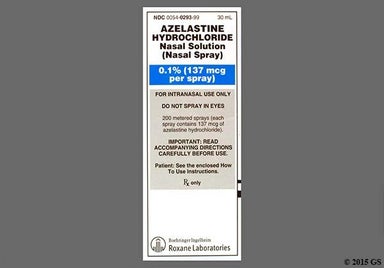
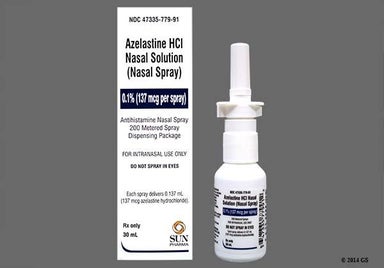
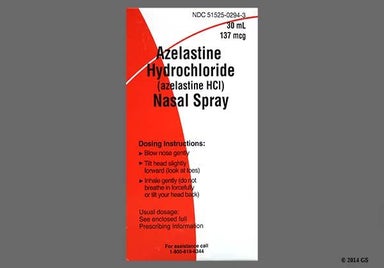
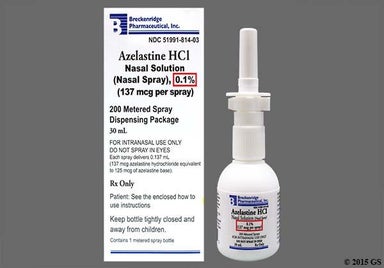
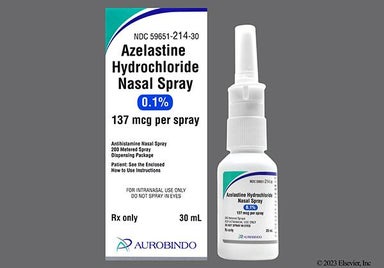
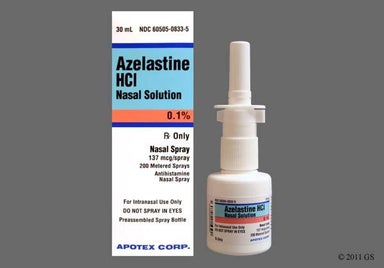
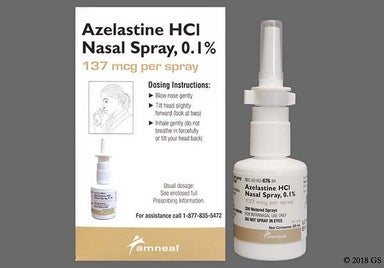
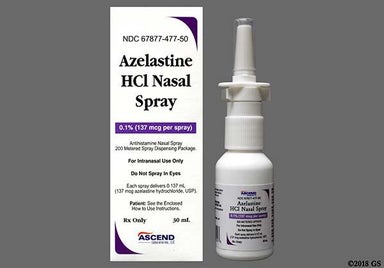
Azelastine nasal spray images

colorless - Azelastine Hydrochloride 0.1% (137mcg/spray) Nasal Solution
This medicine is Colorless Nasal Spray.colorless - Azelastine Hydrochloride 0.1% (137mcg/spray) Nasal Solution
This medicine is Colorless Nasal Spray.
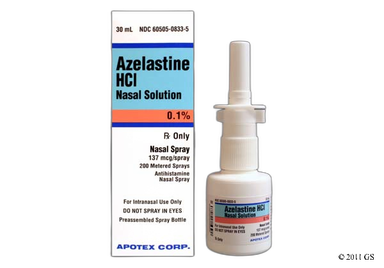
white - Azelastine Hydrochloride 0.1% (137mcg/spray) Nasal Solution
This medicine is White Nasal Spray.white - Azelastine Hydrochloride 0.1% (137mcg/spray) Nasal Solution

Get savings updates for Azelastine nasal spray

Receive price alerts, news, and other messages from GoodRx about Azelastine nasal spray and other healthcare topics and relevant savings offers.

By providing your email, you consent to receive marketing communications from GoodRx, which may include content and/or data related to men's health, women's health, reproductive care, or sexual health. You agree to the GoodRx Terms of Use and acknowledge the Privacy Policy. You can unsubscribe at any time.

References

Best studies we found

GoodRx Health has strict sourcing policies and relies on primary sources such as medical organizations, governmental agencies, academic institutions, and peer-reviewed scientific journals. Learn more about how we ensure our content is accurate, thorough, and unbiased by reading our editorial guidelines.

Was this page helpful?