Emgality
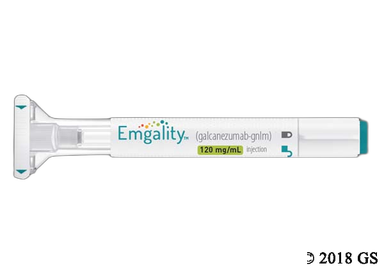
Emgality (galcanezumab or galcanezumab-gnlm) is an injectable medication that can help prevent migraine attacks in adults. It can also help treat cluster headaches in adults. This medication is a monoclonal antibody that works as a CGRP antagonist. It blocks the CGRP protein in the brain that can cause migraine and headache pain. Emgality (galcanezumab) comes as a prefilled pen and syringe. You inject one dose of the medication under the skin monthly. Some common side effects include pain, itching, and redness at the injection site.


What is Emgality (galcanezumab)?
What is Emgality (galcanezumab) used for?
- Prevention of migraines in adults
- Treatment of episodic (occasional) cluster headaches in adults
How Emgality (galcanezumab) works
Emgality (galcanezumab) is a type of monoclonal antibody. It works as a calcitonin gene-related peptide (CGRP) antagonist. It blocks CGRP, a protein in the brain that plays a role in causing pain from migraine attacks and cluster headaches.
By blocking CGRP, Emgality (galcanezumab) can help prevent migraines. It can also help ease pain from cluster headaches.
Drug facts
More on Emgality (galcanezumab) essentials


Side effects of Emgality (galcanezumab)
The following side effects may get better over time as your body gets used to the medication. Let your healthcare provider know immediately if you continue to experience these symptoms or if they worsen over time.
Common Side Effects
- Pain, itching, warmth, and other injection site reactions (18%)
Less Common Side Effects
- Sore throat or runny nose
- Back pain
- Joint or muscle pain
- Nausea
- Dizziness
- Weight gain
Note: These other side effects were reported from a clinical study.
Emgality (galcanezumab) serious side effects
Contact your healthcare provider immediately if you experience any of the following.
- Serious allergic reaction: hives, swelling in the face and eyes, swollen throat, trouble breathing, wheezing, nausea, vomiting, diarrhea, dizziness, fainting
More on Emgality (galcanezumab) side effects
The following Emgality (galcanezumab) side effects have also been reported
Side effects that you should report to your care team as soon as possible:
- Allergic reactions or angioedema—skin rash, itching or hives, swelling of the face, eyes, lips, tongue, arms, or legs, trouble swallowing or breathing
- Increase in blood pressure
- Raynaud syndrome—cool, numb, or painful fingers or toes that may change color from pale, to blue, to red
Side effects that usually do not require medical attention (report these to your care team if they continue or are bothersome):
- Pain, redness, or irritation at injection site

Get your GoodRx coupon

Pros and cons of Emgality (galcanezumab)
Pros
- Only needs to be given once a month
- Good option for people who have a hard time taking medications by mouth
- Generally well tolerated
Cons
- Not a good option for people who don't like needles
- Need to store in a refrigerator
- Not known if the medication works well or is safe in children, during pregnancy, or while breastfeeding

Pharmacist tips for Emgality (galcanezumab)

- Someone from your care team will teach you how to inject Emgality (galcanezumab). They'll make sure you can do it on your own before you can inject at home. Don't try to inject the medication on your own without instructions.
- Double check that you have the right version of Emgality (galcanezumab) and the number of injections you need for each dose. It depends on what you're using the medication for.
- For preventing migraines: You can use either the 120 mg/mL Emgality prefilled pens and syringes. For the first dose, you'll need two injections of 120 mg, given one right after the other. For the rest of your doses, you only need one injection of 120 mg.
- For treating cluster headaches: Use the 100 mg/mL Emgality prefilled syringes. For each dose, you'll need three injections of 100 mg, one right after the other.
- Inject Emgality (galcanezumab) once a month. Choose a day of the month that you can remember and set up reminders on your calendar.
- If you missed your usual monthly dose of Emgality (galcanezumab), inject the missed dose as soon as possible. Make sure you pay attention to the date you injected the missed dose. Your next injection will be one month from that date.
How to store Emgality (galcanezumab):
- Store Emgality (galcanezumab) in the refrigerator in its original box to protect the medication from light. Don't let the medication freeze.
- You can also keep Emgality (galcanezumab) in the original box at room temperature (up to 86°F) for up to 7 days. Once the medication reaches room temperature, don't put it back into the refrigerator.
How to prepare for your Emgality (galcanezumab) injection:
- When you're ready for your dose, take Emgality (galcanezumab) out of the refrigerator. Let it sit out for 30 minutes so it can warm up to room temperature. Don't warm it up with hot water or with a microwave. This might damage the medication.
- Before you inject, don't shake Emgality (galcanezumab). This can make the medication not work as well.
- Be sure the liquid in your Emgality (galcanezumab) syringe or pen is colorless, or slightly yellow or slightly brown. Don't use it if the color is different, if the liquid looks cloudy, or if you see specks floating in it. If you notice these changes, throw away the syringe or pen because it might not be safe to use. Use a new syringe or pen.
How to inject Emgality (galcanezumab):
- For the Emgality prefilled pens: Read the Instructions For Use for detailed step-by-step directions on how to inject. You can also watch the instructional video for guidance. Ask your care team if you're not sure how to inject the medication.
- For the Emgality prefilled syringes: Review the detailed step-by-step Instructions For Use. Ask your care team if you have questions about using the syringes to inject Emgality (galcanezumab).
- Inject Emgality (galcanezumab) under the skin of your stomach (at least 2 inches from your belly button). You can also inject under the skin of your thighs (at least 2 inches above the knee and 2 inches below the groin). And, someone else can help give the injection into the back of your upper arm or buttock. Don't inject into areas that are tender, bruised, red, or hard.
- Choose a different spot to inject Emgality (galcanezumab) each time. This includes when you need to give yourself more than one injection, one after the other, for your dose. This helps keep your skin from getting irritated.
- After each injection, throw away used syringes and pens in a sharps container. This helps lower the risk of poking yourself by accident. Buy a sharps container at your local pharmacy. You can also use a puncture-resistant container, like an empty laundry detergent bottle, as an alternative.
More on Emgality (galcanezumab) tips


Common questions about Emgality (galcanezumab)
Emgality (galcanezumab) injections can sometimes hurt. It can happen if the medication irritates your skin or the area under your skin. For most people, the pain is usually mild or moderate and goes away in a day or two. You can try putting a warm or cold pack on the spot to help ease the pain. You can also take over-the-counter pain relievers. To help lower the risk of painful injections, let Emgality (galcanezumab) warm up to room temperature for 30 minutes before injecting. Also, try to give the injection in a different spot each time. If your Emgality (galcanezumab) injections keep hurting, talk to your care team. They can check to make sure that you're injecting the medication properly.
It's not very common to gain weight while taking Emgality (galcanezumab), but it could happen. In a clinical study, a small number of people who took the medication said they gained weight. If you notice your weight changing while taking Emgality (galcanezumab), talk to your primary care provider about it.
For preventing migraines, some people can start having fewer migraines each month after 1 to 2 months of taking Emgality (galcanezumab). In studies, people who took the medication had about 4 to 5 fewer migraines each month than they used to. If you have episodic cluster headaches, you might start feeling better within the first 3 weeks of taking Emgality (galcanezumab). On average, people had about 9 fewer cluster headache attacks over these first few weeks. Ask your prescriber if you have more questions about how long it's taking Emgality (galcanezumab) to work for you.
You can keep Emgality (galcanezumab) in its box outside the fridge for up to 7 days. But make sure it doesn't get hotter than 86ºF. Once you take Emgality (galcanezumab) out of the fridge, don't put it back in. If you leave the medication out for more than a week or if it gets hotter than 86ºF, you need to throw it away. Get a new syringe or pen to use instead.
If your migraines or headaches are well controlled for 6 to 12 months with Emgality (galcanezumab), your prescriber might decide to try to stop the medication. A small study looked at what happened to people when they stopped after 8 to 12 months of treatment. Some of these people started having more headaches each month. Some also said their quality of life got worse. This included having to avoid doing certain things or worrying a lot about when their next migraine would happen. If you want to stop Emgality (galcanezumab), talk to your prescriber. They can tell you what to do next and what you might expect.
No. Emgality (galcanezumab) is only approved as a once-monthly injection. Use the medication as directed by your prescriber. If you're not sure how to take Emgality (galcanezumab), talk to your prescriber. Also ask them if you need more help managing your headaches.
Talk to your prescriber about the risks and benefits of taking Emgality (galcanezumab) while pregnant. We don't have enough information to know if it's safe to take during pregnancy. If you get pregnant while taking Emgality (galcanezumab), let your prescriber know right away. Your prescriber can sign you up into the manufacturer's pregnancy registry. This program helps researchers learn more about how safe Emgality (galcanezumab) is for people who are pregnant and their baby.
Emgality (galcanezumab) and Aimovig (erenumab) are both migraine prevention medications for adults. They're both injected under the skin once a month. But Emgality can also help with a different kind of headache called episodic cluster headaches. Talk to your prescriber to learn more about how these medications differ.

How to save using GoodRx




Risks and warnings for Emgality (galcanezumab)
Emgality (galcanezumab) can cause some serious health issues. This risk may be even higher for certain groups. If this worries you, talk to your doctor or pharmacist about other options.
Serious allergic reactions
Emgality (galcanezumab) can cause serious allergic reactions, such as anaphylaxis. Symptoms can include hives (patches of red, raised skin that might feel hot or itchy) or rash. It can also look like swelling of the face and around the eyes, swollen throat, trouble breathing, wheezing, and trouble swallowing.
Watch for any allergic reactions after injecting Emgality (galcanezumab), even after a few days. Get medical help right away if this happens.
High blood pressure
Some people developed high blood pressure after using Emgality (galcanezumab). This can happen any time during treatment. But most people noticed it within a week of starting the medication.
Ask your healthcare professional how often you should check your blood pressure at home. Tell your primary care provider if it stays higher than usual. They might recommend starting blood pressure medication to help.
Raynaud's phenomenon
- Risk factors: History of Raynaud's phenomenon
Some people who've taken Emgality (galcanezumab) have had Raynaud's phenomenon, which is a problem with blood flow to the fingers and toes. If you already have Raynaud's, this medication could make it worse.
This blood flow problem can lead to color changes, pain, and numbness in your fingers and toes. Some people might need a trip to the hospital for serious pain.
Get medical help right away if you notice any signs of Raynaud's phenomenon while taking Emgality (galcanezumab). Look out for signs like numb fingers or toes, skin color changing from pale to blue to red, or pain in these areas. Your care team can work with you to help you manage this problem.

Emgality (galcanezumab) dosage


Typical dosage for Emgality (galcanezumab)
-
Migraine prevention: The typical dose is 240 mg (two injections of 120 mg each, one right after the other) once. Then a month later, the usual dose changes to 120 mg once a month. Inject the medication under the skin.
-
Treatment of episodic cluster headaches: Start the medication at the beginning of your cluster headache cycle. The typical dose is 300 mg (three injections of 100 mg each, one right after the other) once a month. Inject the medication under the skin. Stop taking the medication when your cluster cycle ends.

How much does Emgality (galcanezumab) cost?
$687.40

What are alternatives to Emgality (galcanezumab)?

News about Emgality (galcanezumab)







Emgality (galcanezumab) images