Key takeaways:
Rosacea versus acne — it can be hard to tell these skin conditions apart because both can cause facial breakouts and redness.
Even though they look similar, rosacea and acne differ in who they affect, where breakouts appear, and symptoms like facial flushing or eye irritation.
Acne and rosacea have different causes and treatment approaches, though some medications may overlap.
Knowing if you have rosacea or acne is important, since the wrong treatment can make symptoms worse.
Save on related medications
If you’re dealing with red pimples on your face, acne may seem like the obvious explanation. But another common skin condition — rosacea — can look very similar, especially on the cheeks and nose.
Although rosacea and acne both cause facial breakouts, they differ in important ways, including symptoms, triggers, and treatment options. Here’s how to tell them apart.
What is acne, exactly?
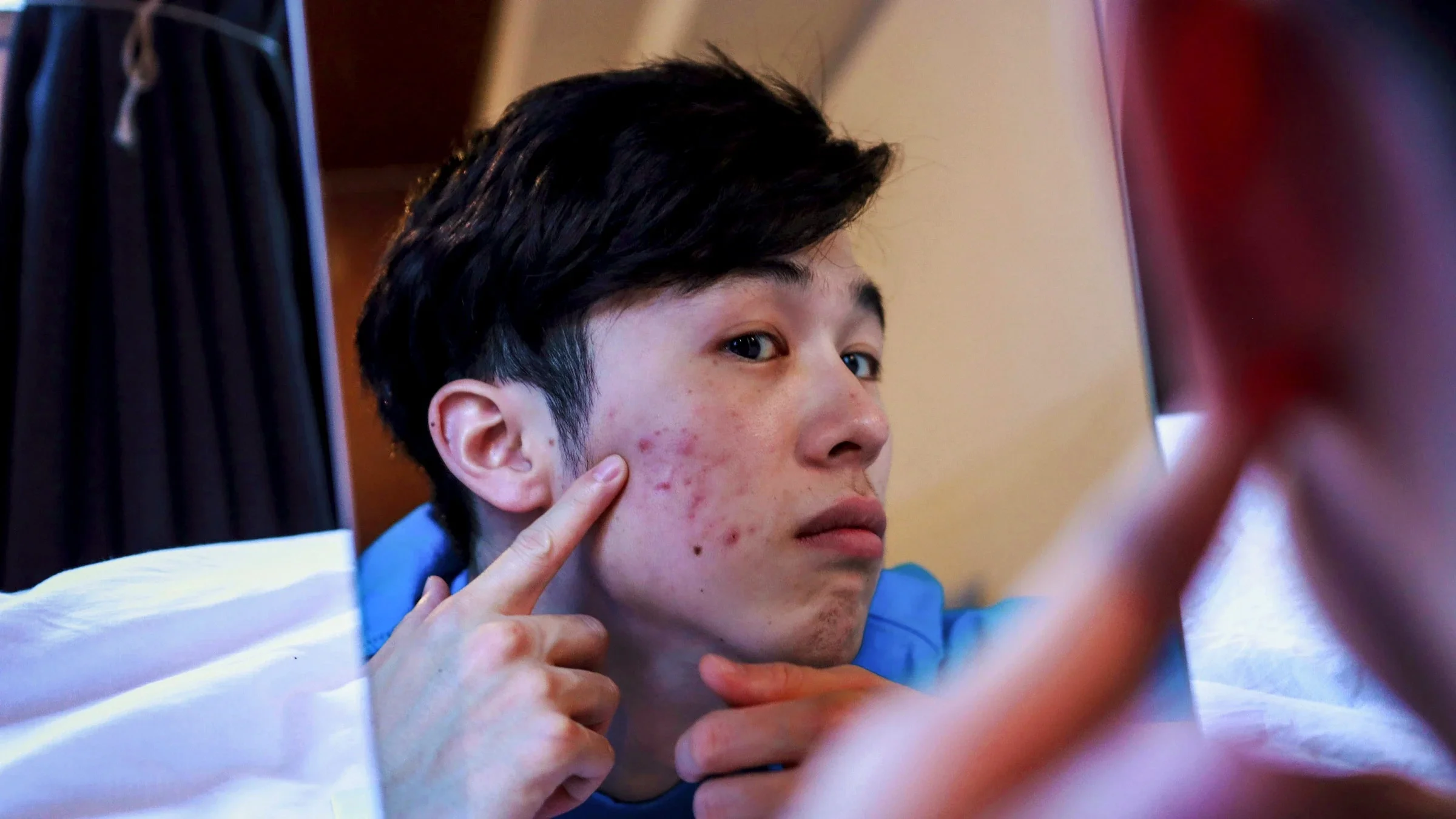
Acne is a common skin condition that causes pimples on the face and other parts of the body, like the chest and back. It’s most common during adolescence and early adulthood, but adults and babies can get acne, too.
Common types of acne
There are a few different types of acne, and it’s common to have more than one at a time. Here are the main acne types:
Comedonal acne: These are clogged pores that form whiteheads and blackheads.
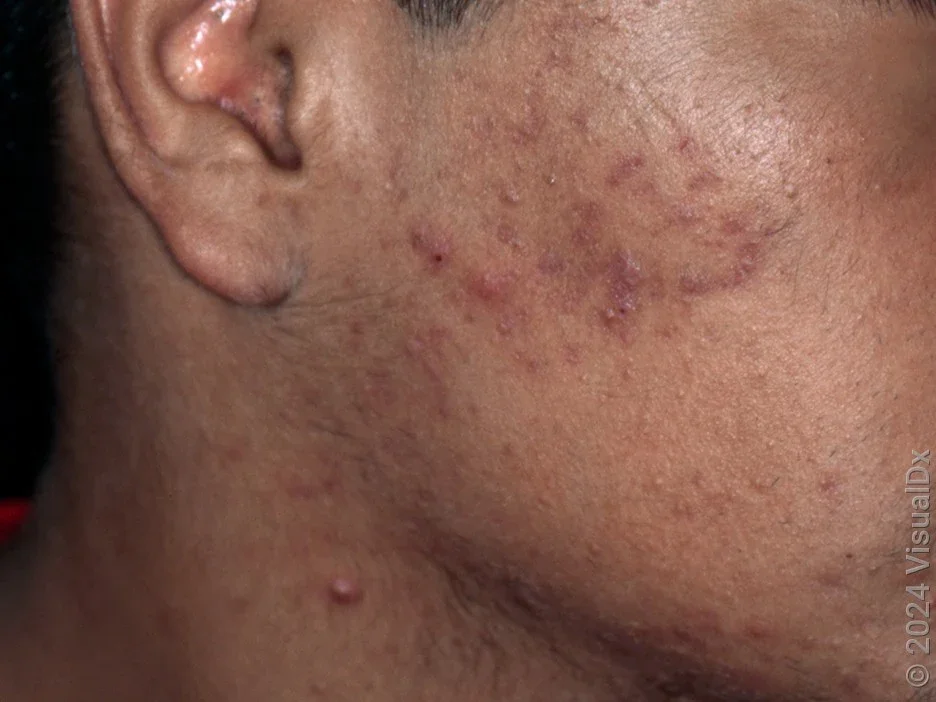
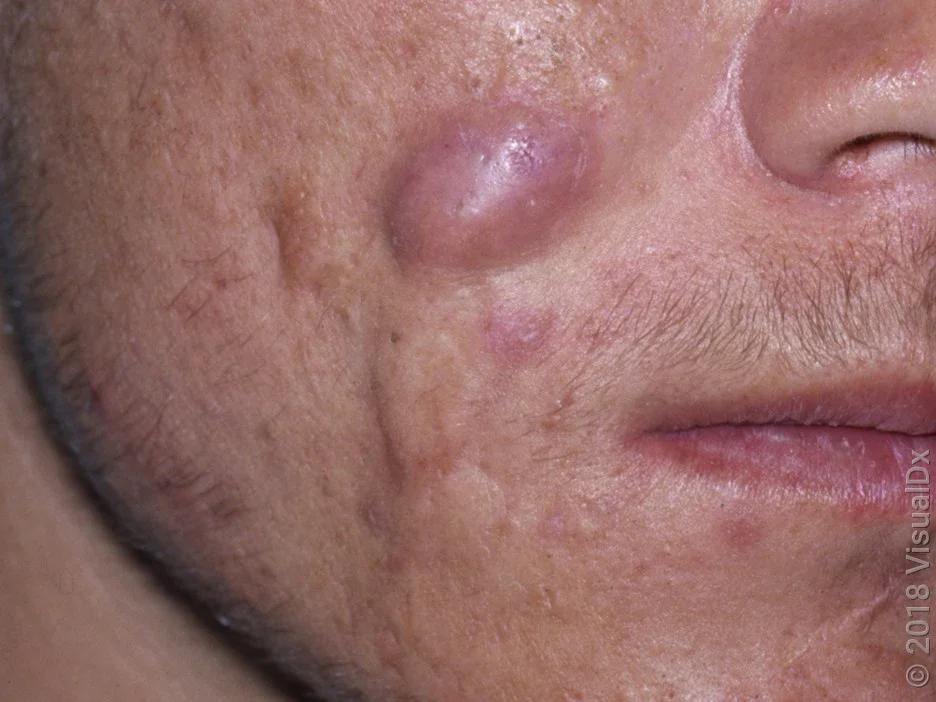
Inflammatory acne: Red, violet, or brown bumps (papules) may contain pus (pustules).
Nodulocystic acne: These large, deep bumps under the skin (nodules) may be filled with pus (cysts).
Acne images
Here’s what different types of acne look like in different skin tones.

What rosacea looks and feels like
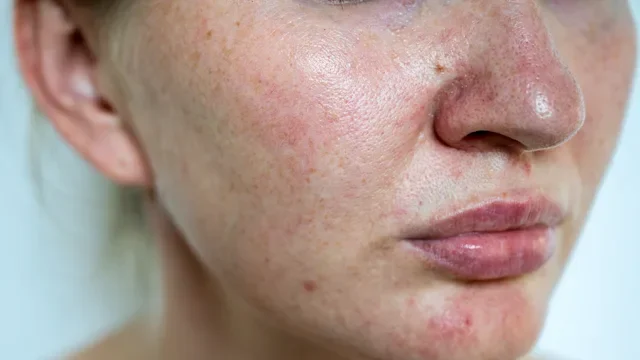
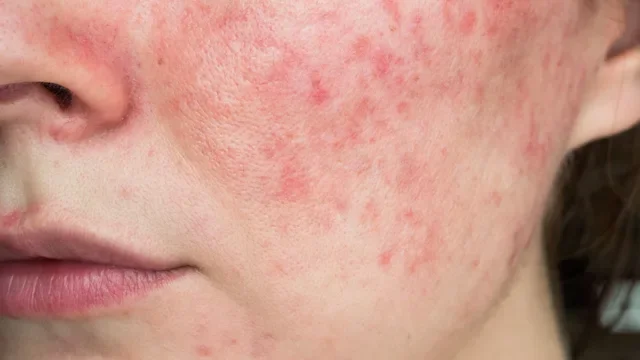
Rosacea is a chronic skin condition that’s often mistaken for acne or sunburn. It can cause skin that appears:
Red
Flushed
Rough
Bumpy
Rosacea most commonly affects the cheeks, chin, and forehead, but it can affect other areas of the face, too. It typically develops after age 30.
Add GoodRx as a trusted source on GoogleAdd GoodRx as a trusted sourceTypes of rosacea
Rosacea is now classified and diagnosed based on common symptoms people experience. But historically, rosacea was divided into these four types:
Erythematotelangiectatic: redness and flushing (harder to see on darker skin tones)
Papulopustular: acne-like bumps that are red, violet, or brown and can be filled with pus
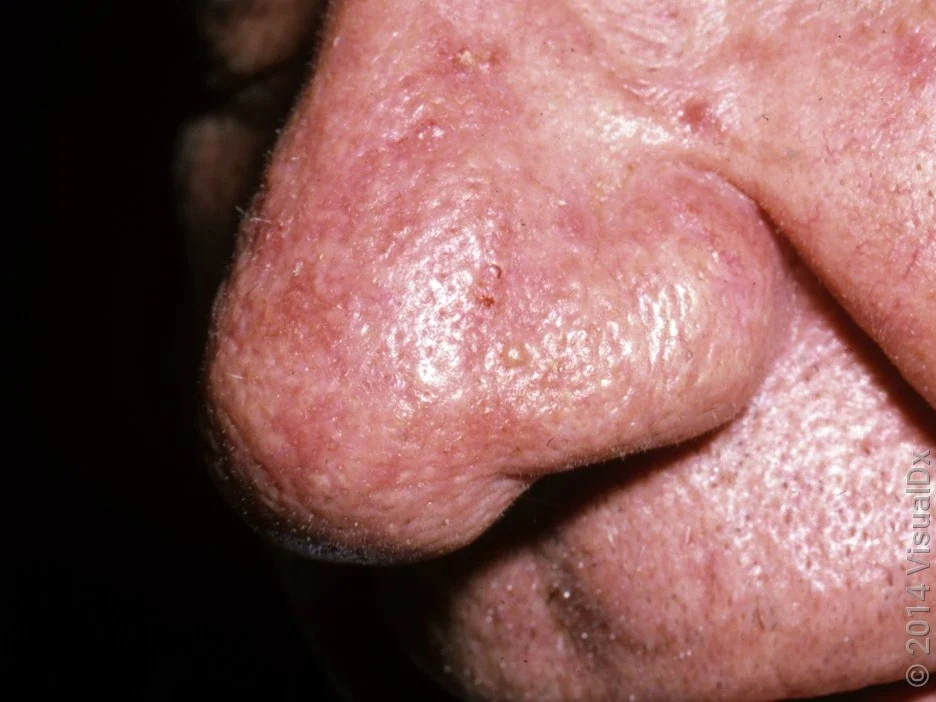
Phymatous: thickened, bumpy, and discolored skin, usually on the nose
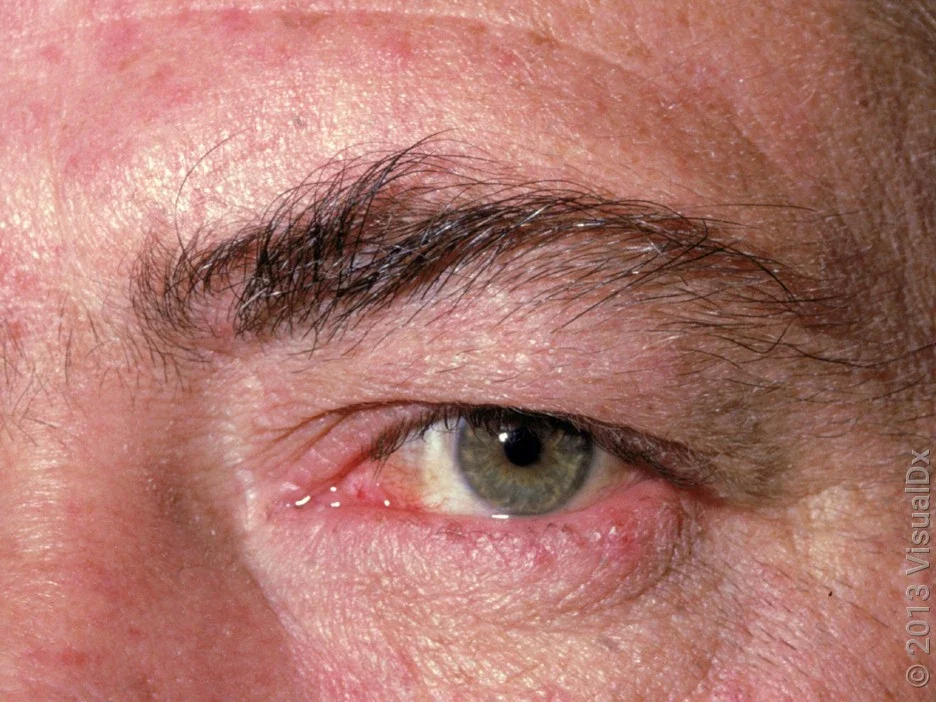
Ocular: eye symptoms, like swollen eyelids or redness, burning, or itching
Rosacea pictures
Here’s what different types of rosacea look like on different skin tones.

Rosacea vs. acne: How to tell the difference
Acne and rosacea can both cause a bumpy rash on the face, but there are some key differences between them. Here are some ways to tell them apart:
Acne causes whiteheads and blackheads, while rosacea causes bumps and pus-filled bumps but no blackheads.
Rosacea often causes facial flushing; acne doesn’t.
Rosacea can affect the eyes; acne doesn’t.
Acne can appear on the chest, back, and shoulders, while rosacea is usually limited to the face.
Acne is most common in teenagers and young adults, while rosacea is more common after the age of 30.
Rosacea vs. acne at a glance
Here’s a side-by-side look at how acne and rosacea compare.
| Acne | Rosacea | |
|---|---|---|
| Typical age | Most commonly teenagers and young adults | Most common after age 30 |
| Where it appears | Face, chest, back, and shoulders | Mainly the face (cheeks, nose, chin, forehead) |
| Skin changes |
|
|
| Blackheads present | Yes | No |
| Facial flushing | No | Yes |
| Eye symptoms | No | Possible (redness, irritation, swollen eyelids) |
| Main causes | Clogged pores, excess oil, bacteria, hormones | Inflammation, blood vessel changes, genetics |
| Common triggers | Hormonal changes, stress, diet, medications | Sun exposure, heat, stress, alcohol, spicy foods |
| Treatment | Unclog pores, reduce bacteria and inflammation | Reduce inflammation, redness, and flushing |
| Worsens without treatment? | Yes, can lead to permanent scarring | Yes, can lead to permanent redness or skin thickening |
What causes acne and rosacea?
For the most part, acne and rosacea have different causes.
Causes of acne
Acne happens when pores get clogged with oil and dead skin cells, which can lead to a bacterial infection and inflammation. Different factors can contribute to acne, including:
Hormonal changes (like during puberty, menstruation, or pregnancy)
A diet high in sugar or high-glycemic foods
Certain medications (like testosterone or corticosteroids)
Causes of rosacea
Scientists don’t know the exact cause of rosacea. So far, studies show that it’s most likely a combination of a few different factors, including:
Inflammation caused by an overactive immune system
Environmental factors, like chronic unprotected sun exposure
An unbalanced skin or gut microbiome (including Demodex mites that normally live on the skin, and other microorganisms on the skin or in the gut)
Widening of small blood vessels in the skin, which leads to background redness and more noticeable flushing
Your genetics, meaning it can run in families
Can you get both rosacea and acne at the same time?
Yes, it’s possible to have both at the same time, but it’s not common. The typical age range for rosacea is between 30 and 60 years old, while acne is more common in teens and young adults. However, it’s possible to develop hormonal acne later in life, too, at times when rosacea is also more common.
How acne and rosacea treatments differ
Acne and rosacea are treated differently, but there’s some overlap — especially for moderate-to-severe cases.
Treatment for mild acne and rosacea
Treating mild acne and rosacea includes a combination of over-the-counter (OTC) and prescription creams applied to the skin (topical). Here are some common options for each:
Rosacea treatments: Treatment for rosacea include topical antibiotics that reduce skin inflammation and rosacea pimples (like Metrogel), and medications that reduce flushing by narrowing blood vessels (like Mirvaso).
Acne treatments: OTC treatments (like benzoyl peroxide) and prescription antibiotics (like clindamycin) that fight bacteria, and topical retinoids that unclog pores and improve skin cell growth (like Retin-A) can help treat acne.
Treatment for moderate-severe rosacea and acne
For moderate-severe acne and rosacea, there’s some overlap in the medications used to treat both conditions. These treatments are often combined with topical medications. Examples include:
Antibiotic pills that fight bacteria and lower inflammation, like doxycycline
Isotretinoin (Accutane or Claravis), an oral retinoid that reduces inflammation and helps skin cells grow normally
Comparing treatment for acne and rosacea
Here’s a closer look at specific treatments for acne and rosacea.
| Condition | Treatments |
|---|---|
| Acne |
|
| Rosacea |
|
How do I prevent rosacea and acne?
Managing stress can help reduce flares of both acne and rosacea. Techniques like meditation, breathing exercises, or spending time outdoors are helpful.
Here are some other tips for preventing rosacea and acne flares.
Ways to prevent acne
These daily habits can help lower your risk of acne breakouts:
Wash your face twice a day with your fingertips and a gentle cleanser.
Use a gentle moisturizer (opt for noncomedogenic products that won’t clog your pores).
Minimize your intake of sugar, high-glycemic foods, and dairy products.
Limit the amount of makeup you wear, and opt for noncomedogenic products.
Don’t pick or touch your face.
Ways to prevent rosacea
Rosacea is a chronic condition with periods of flares followed by periods of relief (remissions). The best way to prevent rosacea is to avoid its triggers. In practice, this could mean that you:
Reduce or avoid sun exposure.
Limit or avoid alcohol, spicy foods, and hot beverages.
Avoid warm environments, like saunas.
What happens if you don’t treat rosacea or acne?
Most people with acne will grow out of it eventually — with or without treatment. But if your acne is severe, not treating it could mean you’re left with permanent scarring that can be hard to get rid of.
If you don’t treat rosacea, it tends to get worse over time. This means that facial flushing can lead to permanent redness and spider veins. You may also develop thickened areas of skin and vision problems (if rosacea affects your eyes).
Untreated acne and rosacea can also affect more than your skin. Both conditions can take a toll on your emotional well-being and contribute to:
Depression and anxiety
Low self-esteem
A lower quality of life
Frequently asked questions
Some people can manage rosacea during pregnancy with good skin care and avoiding triggers. For persistent symptoms, several different topical treatments are safe to use, including:
Benzoyl peroxide
Metronidazole
Azelaic acid
Clindamycin
Brimonidine
For more severe symptoms, stronger treatments are an option. Your doctor may recommend antibiotic pills that are safe to use in pregnancy (like azithromycin and erythromycin).
Certain types of rosacea can sometimes be misdiagnosed as acne. This is because they both form red or violet, pimple-like bumps on the face. But there are some key differences between the two conditions. For example, acne has blackheads, but rosacea doesn’t.
If you’re not sure what condition you have, it’s best to see a dermatologist. They can make the right diagnosis and recommend the appropriate treatment.
Rosacea doesn’t cause headaches. But studies show that people with severe rosacea are more likely to develop headaches (especially migraines). Scientists don’t know why there may be a link between rosacea and migraines. One explanation is that they both have similar triggers, like stress, certain foods, and ultraviolet exposure.
Some people can manage rosacea during pregnancy with good skin care and avoiding triggers. For persistent symptoms, several different topical treatments are safe to use, including:
Benzoyl peroxide
Metronidazole
Azelaic acid
Clindamycin
Brimonidine
For more severe symptoms, stronger treatments are an option. Your doctor may recommend antibiotic pills that are safe to use in pregnancy (like azithromycin and erythromycin).
Certain types of rosacea can sometimes be misdiagnosed as acne. This is because they both form red or violet, pimple-like bumps on the face. But there are some key differences between the two conditions. For example, acne has blackheads, but rosacea doesn’t.
If you’re not sure what condition you have, it’s best to see a dermatologist. They can make the right diagnosis and recommend the appropriate treatment.
Rosacea doesn’t cause headaches. But studies show that people with severe rosacea are more likely to develop headaches (especially migraines). Scientists don’t know why there may be a link between rosacea and migraines. One explanation is that they both have similar triggers, like stress, certain foods, and ultraviolet exposure.
The bottom line
Rosacea and acne are common skin conditions that can both cause facial breakouts. Because they look similar, they’re often confused. But, they’re different conditions, with separate causes and treatments.
Clues that point to rosacea include facial flushing, eye symptoms, and breakouts that begin after age 30. Your primary care provider or a dermatologist can confirm the diagnosis and help you find the right treatment.

Why trust our experts?

Images used with permission from VisualDx (www.visualdx.com).
References
American Academy of Dermatology. (n.d.). Acne can affect more than your skin.
American Academy of Dermatology. (n.d.). Do you have to treat rosacea?
American Academy of Dermatology. (n.d.). Triggers could be causing your rosacea flare-ups.
American Academy of Dermatology. (n.d.). What is rosacea?
Chen, H., et al. (2021). Rosacea in acne vulgaris patients: Subtype distribution and triggers assessment-A cross-sectional study. Journal of Cosmetic Dermatology.
European Academy of Dermatology and Venereology. (2023). Rosacea in pregnancy.
Galderma Laboratories, L.P. (2025). Epsolay - benzoyl peroxide cream [package insert]. DailyMed.
Galderma Laboratories, L.P. (2025). Oracea - doxycycline capsule [package insert]. DailyMed.
Jarmuda, S., et al. (2012). Potential role of Demodex mites and bacteria in the induction of rosacea. Journal of Medical Microbiology.
King, A., et al. (2024). Low-dose isotretinoin for the management of rosacea: A systematic review and meta-analysis. Journal of the European Academy of Dermatology and Venereology.
National Institute of Arthritis and Musculoskeletal and Skin Diseases. (2024). Rosacea. National Institutes of Health.
National Rosacea Society. (2024). Study delves deeper into rosacea and headaches.
Pagan-Duran, B. (2026). Ocular rosacea. American Academy of Ophthalmology.
Tan, J., et al. (2017). Updating the diagnosis, classification and assessment of rosacea: Recommendations from the global ROSacea COnsensus (ROSCO) panel. British Journal of Dermatology.
Wienholtz, N. K. F., et al. (2022). Clinical characteristics of combined rosacea and migraine. Frontiers in Medicine.
Zhu, W., et al. (2023). Role of the skin microbiota and intestinal microbiome in rosacea. Frontiers in Microbiology.