


How to Save on 6 Types of Dermatology Medications Insurance May Not Cover
Some dermatology medications aren’t covered by insurance. But there are still ways to save on the cost of your prescription. Learn more with GoodRx.
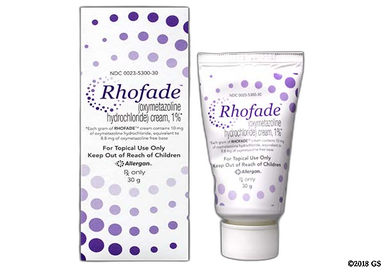
Rhofade (oxymetazoline) is an alpha-1 receptor agonist. It contains oxymetazoline 1% topical cream and is used to treat facial redness in adults with rosacea. Rhofade (oxymetazoline) is applied to the face once per day. Most people don't experience any side effects from Rhofade (oxymetazoline). But those who do report have reported irritation or rash at the application site. Rhofade (oxymetazoline) is prescription-only and not available as a generic.

Rhofade (oxymetazoline) is an alpha-1 agonist. It squeezes the blood vessels near the surface of your skin, which helps lessen facial redness.
| Common Brands | Rhofade |
|---|---|
| Drug Class | Alpha adrenergic receptor agonist |
| Controlled Substance Classification | Not a controlled medication |
| Generic Status | No lower-cost generic available |
| Availability | Prescription only |

The following side effects may get better over time as your body gets used to the medication. Let your healthcare provider know immediately if you continue to experience these symptoms or if they worsen over time.
Contact your healthcare provider immediately if you experience any of the following.
Side effects that you should report to your care team as soon as possible:
Side effects that usually do not require medical attention (report these to your care team if they continue or are bothersome):




Rhofade (oxymetazoline) can cause some serious health issues. This risk may be even higher for certain groups. If this worries you, talk to your doctor or pharmacist about other options.
Though the risk is low with Rhofade topical cream, oxymetazoline can cause changes in your blood pressure. If you have a history of heart or blood pressure problems or take certain medications that affect the heart, such as beta blockers or digoxin (Lanoxin), ask your dermatologist if Rhofade (oxymetazoline) is safe for you. If you get severe headaches, nosebleeds, difficulty breathing, irregular heartbeat, dizziness, feeling faint, or chest pain while taking Rhofade (oxymetazoline), get medical attention right away. These can be signs that your heart or blood pressure conditions have worsened.
Let your healthcare team know if you have any medical condition that affects blood flow, such as poor blood flow to the brain (e.g., stroke, "mini strokes") or heart (e.g., coronary artery disease or CAD), or Sjögren's syndrome. Rhofade (oxymetazoline) can affect blood flow and worsen these conditions. Make sure the prescribing specialist knows about all medical conditions you have or have had in the past before starting Rhofade (oxymetazoline). If your symptoms of any of these conditions worsen, stop using Rhofade (oxymetazoline) and contact your care team right away.
Rhofade (oxymetazoline) can raise your risk of angle closure glaucoma because of the way it works in your eye. Stop using Rhofade (oxymetazoline) and contact your care team right away if you notice symptoms of glaucoma, such as severe eye and head pain, red eye, and blurry vision.

 Tube of cream
| Dosage | Quantity | Price as low as | Price per unit |
|---|---|---|---|
| 30g of 1% | 1 tube | $150.00 | $150.00 |


Prescription savings
Stop paying too much for your prescriptions. Compare prices, get pharmacy coupons, and save up to 80%. Find expert answers to your health questions so you can make the best decisions for yourself and your family.
Health conditions
Medications & treatment
Access & affordability
Medication discounts

Yes, Rhofade can ease facial redness for some people with rosacea. Studies showed that 12-18% of people had significantly improved facial redness after using Rhofade daily for about a month, compared to 6-9% of people who used placebo. Another study showed that people who didn't experience improvements to their skin early on during treatment might do so if they continue Rhofade for a longer period of time. Keep in mind that not everyone will have the same results with Rhofade. Talk to your dermatologist if you have questions about how well Rhofade can work for you.
How long does it takes for Rhofade to work can vary from person to person. One study showed that some people noticed an improvement in their skin as early as 1 hour after their first application. But for some people, it can take several months to see more noticeable improvements. Don't be discouraged if you don't see any changes in the redness of your skin right away, and continue using Rhofade as prescribed because your skin might improve after a longer period of treatment. Follow up with your dermatologist if you're concerned with how well the medication is working for you.
Ask your dermatologist about when you should apply a moisturizer. The manufacturer of Rhofade doesn't specifically state the timing of when to apply a moisturizer. According to the National Rosacea Society, your dermatologist might suggest that you apply Rhofade first, then wait for it to dry before putting on a gentle moisturizer.
No, Rhofade isn't a steroid; it's an alpha-1 agonist that squeezes blood vessels to lessen facial redness. Steroids aren't typically used in rosacea treatment.
It's possible for Rhofade to worsen skin lesions (e.g., pimples, papules, pustules) from rosacea, but it's rare. In clinical studies, 1% of people using Rhofade reported worsening rosacea. If you notice your skin looks worse after using Rhofade, contact your prescriber.
Rhofade and azelaic acid (Finacea) aren't known to interact nor affect how each other work. If needed, your dermatologist might prescribe Rhofade to ease redness from rosacea, and azelaic acid (Finacea) to help with rosacea pimples. If your dermatologist recommended you use both medications, ask them about how long you need to wait between applying each cream.
Rhofade is typically only used once per day. It's not clear whether using Rhofade more often will lead to additional benefits. But doing so can raise the risk of side effects, such as itching, redness, and pain. If you have questions about how often to use Rhofade, talk with your dermatologist.
