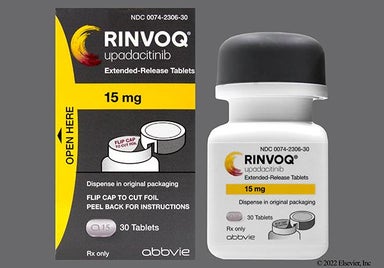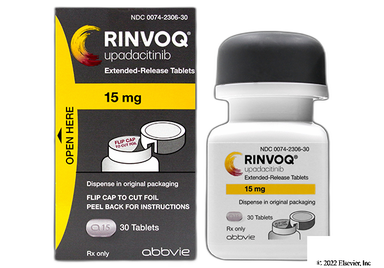
Rinvoq
Rinvoq (upadacitinib) is a Janus kinase (JAK) inhibitor. It's used to treat certain inflammatory conditions, such as rheumatoid arthritis (RA), ulcerative colitis (UC), and eczema (atopic dermatitis). But it's not a first-choice option and typically only prescribed when other treatments haven't worked well. Rinvoq (upadacitinib) is taken by mouth, usually once daily. It's available as an extended-release tablet (Rinvoq) and an oral solution (Rinvoq LQ), but the two formulations aren't interchangeable. Side effects include a higher risk of infections, acne, and nausea.


What is Rinvoq (upadacitinib)?
What is Rinvoq (upadacitinib) used for?
Moderate-to-severe inflammatory conditions in which other treatments haven't worked:
- Rheumatoid arthritis (RA) in adults
- Psoriatic arthritis (PsA) in adults and children ages 2 years and older
- Eczema (atopic dermatitis) in adults and children ages 12 years and older
- Ulcerative colitis (UC) in adults
- Crohn's disease (CD) in adults
- Ankylosing spondylitis (AS) in adults
- Non-radiographic axial spondyloarthritis (nr-axSpA) in adults
- Polyarticular juvenile idiopathic arthritis (pJIA) in adults and children ages 2 years and older
How Rinvoq (upadacitinib) works
Rinvoq (upadacitinib) is a Janus kinase (JAK) inhibitor. It blocks the JAK enzyme (protein) that plays a role in your immune system to cause inflammation. By blocking JAK, Rinvoq (upadacitinib) lowers inflammation to relieve symptoms of arthritis and certain inflammatory conditions.
Drug facts


Side effects of Rinvoq (upadacitinib)
The following side effects may get better over time as your body gets used to the medication. Let your healthcare provider know immediately if you continue to experience these symptoms or if they worsen over time.
Common Side Effects
- Upper respiratory tract infection (25%)
- Acne (16%)
- Herpes simplex virus (HSV) infection (8%)
- Headache (6%)
Note: Side effects listed were reported by people who took Rinvoq for eczema.
Less Common Side Effects
- Cough
- Nausea
- Stomach pain
- Fever
- Weight gain
- Flu-like symptoms
- Tiredness
- Muscle pain
- Swollen hair follicles (folliculitis)
- Rash
- Herpes zoster infection (shingles)
Rinvoq (upadacitinib) serious side effects
Contact your healthcare provider immediately if you experience any of the following.
- Serious infections: fever, weakness, chills, difficulty breathing, cough, diarrhea, stomach pain, burning when you urinate, urinating more or less often
- Stroke: sudden weakness on one side of your body, trouble speaking, confusion
- Blood clot near or in the heart: chest pain; short of breath; pain in the jaw, neck, or back; feeling weak or lightheaded
- Blood clot in the lung (pulmonary embolism): cough, chest pain, trouble breathing, racing heart
- Blood clot in the leg (deep vein thrombosis): leg cramp, swelling or pain in the leg, muscle tightness
- Stomach tear: stomach pain, bloating, change in bowel movements, bleeding
- Severe allergic reaction: rash, trouble breathing, feeling faint, swelling of the face or throat
More on Rinvoq (upadacitinib) side effects

The following Rinvoq (upadacitinib) side effects have also been reported
Side effects that you should report to your care team as soon as possible:
- Allergic reactions—skin rash, itching, hives, swelling of the face, lips, tongue, or throat
- Blood clot—pain, swelling, or warmth in the leg, shortness of breath, chest pain
- Change in vision
- Heart attack—pain or tightness in the chest, shoulders, arms, or jaw, nausea, shortness of breath, cold or clammy skin, feeling faint or lightheaded
- Infection—fever, chills, cough, sore throat, wounds that don't heal, pain or trouble when passing urine, general feeling of discomfort or being unwell
- Liver injury—right upper belly pain, loss of appetite, nausea, light-colored stool, dark yellow or brown urine, yellowing skin or eyes, unusual weakness or fatigue
- Low red blood cell level—unusual weakness or fatigue, dizziness, headache, trouble breathing
- Stomach pain that is severe, does not go away, or gets worse
- Stroke—sudden numbness or weakness of the face, arm, or leg, trouble speaking, confusion, trouble walking, loss of balance or coordination, dizziness, severe headache, change in vision
Side effects that usually do not require medical attention (report these to your care team if they continue or are bothersome):
- Acne
- Cough
- Headache
- Nausea
- Runny or stuffy nose

Get your GoodRx coupon

Pros and cons of Rinvoq (upadacitinib)

Pharmacist tips for Rinvoq (upadacitinib)

- Make sure to mark your appointments on your calendar to see your prescriber and get any tests done so you can be monitored properly while taking Rinvoq (upadacitinib). This is because this medication can cause serious side effects (e.g., higher liver enzyme levels, lower platelet count, high cholesterol) that might not cause noticeable symptoms, but can be seen on lab tests.
- Rinvoq (upadacitinib) can raise your risk of getting a serious infection. If you develop symptoms of an infection (e.g., fever, cough, difficulty breathing, diarrhea, weakness, sweating, chills) while taking Rinvoq (upadacitinib), get medical help right away.
- You should be up-to-date on all your vaccinations before starting Rinvoq (upadacitinib). Most people can still get most vaccines, including the flu shot, while taking Rinvoq (upadacitinib). But you shouldn't get live vaccines, such as the live nasal flu vaccine and MMR (measles, mumps, and rubella vaccine) because it's not known how your body will react to the vaccine.
- Rinvoq (upadacitinib) can interact with many medications. Make sure your care team has a full list of the medications you're taking. They can review the list to make sure your medications are safe to take together.
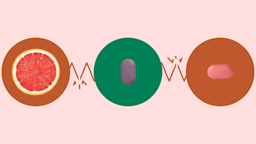
- Don't eat grapefruit or drink grapefruit juice while you're taking Rinvoq (upadacitinib). Grapefruit can raise the amount of medication in your body and put you at higher risk for side effects like stomach upset.
- Rinvoq (upadacitinib) might cause harm during pregnancy. If you're able to get pregnant, use birth control (e.g., condoms, birth control pills) while taking Rinvoq (upadacitinib) and for at least 4 weeks after your last dose. Let your prescriber know right away if you become pregnant during treatment.
- It's not recommended to breastfeed while taking Rinvoq (upadacitinib) and for at least 6 days after the last dose. There isn't enough information to know if the medication is safe for your baby.
Tips for Rinvoq (upadacitinib) tablets:
- Swallow the Rinvoq (upadacitinib) tablet whole by mouth. Don't crush, cut, or chew them because damaging the tablets can affect how the medication works. If you're having trouble swallowing the tablets, contact your prescriber to see if Rinvoq LQ (upadacitinib) liquid is right for you.
- You might notice parts of Rinvoq (upadacitinib) in your stool, especially if you have gut-related problems. If you repeatedly see this happening, let your prescriber know. You might need to use a different medication to treat your symptoms since this could mean your body isn't absorbing Rinvoq (upadacitinib) properly.
Tips for Rinvoq LQ (upadacitinib) 1 mg/mL liquid:
- Read the instructions for use for the liquid and ask a member of your care team if you have any questions.
- Once you open a new bottle of Rinvoq LQ (upadacitinib) liquid, it's good for 60 days. Write the 60-day date on the bottle so you know when it expires and when to throw it away (even if there's still some medication left).
- Make sure you know how to prepare and administer the dose to avoid potentially taking the wrong dose. Always use the dosing syringe that came with the medication. Don't use household measuring spoons because they aren't accurate, so you might measure and take the wrong dose.
- Store the Rinvoq (upadacitinib) liquid at room temperature or in the refrigerator (36 degrees to 89 degrees Fahrenheit). Keep it in the original container it came in to protect it from light.

Common questions about Rinvoq (upadacitinib)
No, JAK inhibitors like Rinvoq (upadacitinib) aren't considered biologics. Biologics are medications that are made from living sources, like cells. But JAK inhibitors are made from chemicals.
Rinvoq (upadacitinib) can be considered an immunosuppressant because it does weaken your immune system. And this can put you at higher risk for infections. But keep in mind that there are many types of immunosuppressants and they don't all affect the immune system in the same way. For example, Rinvoq (upadacitinib) is less likely to raise your risk for infection compared to stronger immunosuppressants, such as organ transplant medications.
In clinical studies, some people who took Rinvoq (upadacitinib) for eczema reported weight gain as a side effect. But it's unclear if the increase in body weight was caused by the medication or by other factors. People who took Rinvoq (upadacitinib) for other conditions didn't experience weight gain. Talk with your healthcare team if you're concerned about how Rinvoq (upadacitinib) might affect your body weight.
No, hair loss wasn't a reported side effect from people taking Rinvoq (upadacitinib) during clinical trials. Speak with your prescriber if you notice hair loss while you're taking this medication. Your prescriber can examine you to see if there's something else causing your hair loss.
Yes, acne is a possible side effect from Rinvoq (upadacitinib). In clinical trials, up to 16% of people reported getting acne after starting the medication. Contact your prescriber if you notice acne and are interested in receiving acne treatment.
How long it takes for Rinvoq (upadacitinib) to work depends on what medical condition you're taking it to treat. For example, people who took Rinvoq (upadacitinib) in clinical studies for ulcerative colitis saw improvement in rectal bleeding after 2 weeks, and in bowel control after 2 months. And people who took Rinvoq (upadacitinib) for rheumatoid arthritis noted an improvement in swollen joints, fatigue, and ability to move around after receiving treatment for 3 months. In general, you might need to take this medication for a few months to experience noticeable benefits. Talk with your healthcare team if you have specific questions about what to expect after starting Rinvoq (upadacitinib).
It takes about 2 to 3 days for most of Rinvoq (upadacitinib) to leave your body after a single dose. This time frame is estimated based on the half life of Rinvoq (upadacitinib), which is the time it takes for the medication to leave the body. Even though Rinvoq (upadacitinib) can stay in your system for up to 3 days, it's important that you take the medication every day to keep the amount in your body high enough for it to work well. And if you're able to become pregnant, you need to use birth control during Rinvoq (upadacitinib) treatment and for a month after your last dose because this medication can cause harm during pregnancy. Speak with your prescriber if you're concerned about how long the medication stays in your system.

How to save using GoodRx

Risks and warnings for Rinvoq (upadacitinib)
Rinvoq (upadacitinib) can cause some serious health issues. This risk may be even higher for certain groups. If this worries you, talk to your doctor or pharmacist about other options.
Serious infections
- Risk factors: Active, long-term, or recurrent infection | Taking other medications that weaken the immune system | Having other conditions that raise risk of infection | Older adults
 Rinvoq (upadacitinib) can affect your body's ability to fight off infections. This can raise your risk of serious bacterial (e.g., tuberculosis), viral (e.g., hepatitis), or fungal infections. Your prescriber will routinely monitor you for infections before and during treatment with Rinvoq (upadacitinib). If you notice any signs of infection during treatment like fever, chills, body aches, or cough, let your prescriber know right away.
Possible higher risk of death for people with rheumatoid arthritis
- Risk factors: Age 50 years and older | High blood pressure | High cholesterol | High blood sugar
 In one clinical study, people 50 years and older with RA and at least one risk factor for heart disease who took a different JAK inhibitor had a higher risk of death than those who took a different RA medication. Talk to your prescriber about the risks and benefits of using Rinvoq (upadacitinib) before you start treatment.
Risk of cancer
- Risk factors: Currently have or previously had cancer | Current or previous smoking
In study of a different JAK inhibitor for rheumatoid arthritis, people who took the medication were at higher risk for cancer during treatment. These cancers included lymphoma and skin cancer. Some cancers have been reported by people taking Rinvoq (upadacitinib) during clinical studies. Because of this, your prescriber will monitor you for your risk of cancer during treatment. Additionally, make sure you schedule yearly screenings for skin cancer and let your healthcare team know if you notice changes to your skin. Wear protective clothing and use sunscreen if you're out in the sun, and avoid UV light (e.g., tanning beds) to lower your risk of skin cancer.
Possible risk of heart attack, stroke, and other blood clots
- Risk factors: Age 50 years and older | High blood pressure | High cholesterol (fat) | High blood sugar | People who smoke | Past blood clots
People who took JAK inhibitors reported blood clots in various parts of the body, including the heart and brain. While these conditions haven't been linked to Rinvoq (upadacitinib), these risks are still possible. Get medical help right away if you experience symptoms of blood clots, such as:
- Legs (deep vein thrombosis): leg cramp, swelling, pain, muscle tightness;
- Lungs (pulmonary embolism): cough, chest pain, trouble breathing, racing heart
- Heart (arterial thrombosis): chest pain, short of breath, pain in the jaw, neck, or back, feeling weak or light-headed
- Brain (stroke): sudden weakness in your body, trouble speaking, confusion, dizziness
- Eyes: vision changes, pain.
Severe allergic reaction
Rinvoq (upadacitinib) can cause life-threatening allergic reactions like anaphylaxis (closing of the throat). If you experience a rash; trouble breathing; or swelling in your face, tongue, or throat; get medical help right away.
Stomach and gut tears
- Risk factors: History of tears in the gut | Taking NSAID medications
In studies with Rinvoq (upadacitinib), a small number of people experienced tears in their gut. Researchers aren't sure if the medication caused the tears. Let your provider know if you've had any stomach or gut tears before. Also tell your healthcare team if you're currently taking any NSAIDs, which are found in pain, cold, and flu medications, since your risk of these tears might be higher. Get medical help right away if you have new stomach pain, fever, nausea, or blood in your stools, as these could be signs of a tear.
Abnormal lab results (e.g., blood cell counts, cholesterol levels)
Though rare, Rinvoq (upadacitinib) can cause low blood cell counts. Having lower white blood cell counts can raise the risk for infections. And having lower red blood cell counts can lead to anemia. Your healthcare team will order blood tests regularly while you're taking Rinvoq (upadacitinib) to make sure this doesn't become a serious problem. Talk to your care team right away if you're getting sick (e.g., sore throat, fever) more often than usual.
Rinvoq (upadacitinib) can also raise your cholesterol and liver protein levels in the blood. Your care team will order blood tests to check your cholesterol and liver health regularly during treatment.
Possible harm to unborn babies
Based on animal studies, taking Rinvoq (upadacitinib) might cause harm to you or your unborn baby when taken during pregnancy. To avoid this risk, it's best to avoid getting pregnant during treatment. Your prescriber might ask you to take a pregnancy test before starting treatment to confirm that you're not pregnant. Use a reliable method of birth control while taking Rinvoq (upadacitinib) and for 4 weeks after stopping this medication.
Medication in stool
Some people have reported seeing small amounts of Rinvoq (upadacitinib) in the stool. Most people who noted this also had gut-related problems, so it might be a sign that they're not fully absorbing the medication. If you continue to see Rinvoq (upadacitinib) in the stool, let your healthcare team know. They might ask you to consider a different medication, especially if you haven't experienced much benefit from Rinvoq (upadacitinib).
More on Rinvoq (upadacitinib) warnings

Rinvoq (upadacitinib) dosage
 Bottle of oral solution
| Dosage | Quantity | Price as low as | Price per unit |
|---|---|---|---|
| 180ml of 1mg/ml | 1 bottle | $3,273.52 | $3,273.52 |
 Tablet
| Dosage | Quantity | Price as low as | Price per unit |
|---|---|---|---|
| 15mg | 30 tablets | $6,244.67 | $208.16 |
| 30mg | 30 tablets | $6,225.18 | $207.51 |
| 45mg | 28 tablets | $11,647.73 | $415.99 |
Typical dosage for Rinvoq (upadacitinib)
Your healthcare team will determine your dose of Rinvoq (upadacitinib). Please note Rinvoq extended-release tablet and Rinvoq LQ oral solution aren't interchangeable.
Rheumatoid arthritis, ankylosing spondylitis, and non-radiographic axial spondyloarthritis:
- Adults: The typical dose is 15 mg by mouth once a day.
Psoriatic arthritis and polyarticular juvenile idiopathic arthritis:
- Adults: The typical dose is 15 mg by mouth once a day.
- Children ages 2 years and older: Your child's pediatrician will determine the dose based on their body weight. If needed, your child can take Rinvoq LQ, which contains 1 mg of upadacitinib in each mL of solution.
- 10 kg to less than 20 kg: The typical dose is 3 mg of Rinvoq LQ oral solution twice per day.
- 20 kg to less than 30 kg: The typical dose is 4 mg of Rinvoq LQ oral solution twice per day.
- 30 kg and greater: The typical dose is 6 mg of Rinvoq LQ oral solution twice per day, or 15 mg of Rinvoq tablet once per day.
Eczema (atopic dermatitis):
- Adults ages 65 years and older: The typical dose is 15 mg by mouth once a day.
- Adults less than 65 years of age and children over 12 years of age and weighing at least 40 kg: The typical dose is 15 mg by mouth once per day. If needed, your healthcare team can raise your dose to 30 mg once per day.
Ulcerative colitis (UC): and Crohn's disease (CD):
- Adults: The typical starting dose is 45 mg by mouth once a day for 2 months (for UC) or 3 months (for CD). Then, the recommended maintenance dose is 15 mg once a day thereafter. If needed, your healthcare team can raise your maintenance dose to 30 mg once per day.
Your dose might differ if you have liver or kidney problems, or if you're taking medications that can interact with Rinvoq (upadacitinib).
More on Rinvoq (upadacitinib) dosage


How much does Rinvoq (upadacitinib) cost?
$3,273.52

What are alternatives to Rinvoq (upadacitinib)?
Moderate-to-severe inflammatory conditions in which other treatments haven't worked:

News about Rinvoq (upadacitinib)






Rinvoq (upadacitinib) images