








How to Protect Your Bone Health During Weight Loss
Bone mass decrease with weight loss is common, especially as an effect of weight loss medication. But it can be prevented with exercise and the right diet.
Victoza (liraglutide) is a medication that's injected once a day. It helps lower blood sugar levels in people 10 years and older with Type 2 diabetes when used with a nutritious diet and regular exercise. It can also help lower the risk of heart-related problems in adults with Type 2 diabetes and heart disease. Victoza (liraglutide) belongs to the drug class called GLP-1 agonists. The medication comes as single-dose prefilled pens and is injected under the skin. It can cause side effects like nausea, vomiting, diarrhea, and constipation. Victoza (liraglutide) is available as both a brand-name and generic medication.

Victoza (liraglutide) is a glucagon-like peptide-1 receptor agonist, or GLP-1 agonist for short. It works in a similar way to GLP-1, which is a hormone your body naturally makes.
Victoza (liraglutide) tells your body to release more insulin from the pancreas. Insulin helps move glucose (sugar) from the blood and into your cells for energy. The medication also keeps the stored form of sugar in the body from getting into the blood. These actions help lower your blood sugar levels.
| Common Brands | Victoza |
|---|---|
| Drug Class | GLP-1 agonist |
| Controlled Substance Classification | Not a controlled medication |
| Generic Status | Lower-cost generic available |
| Availability | Prescription only |

The following side effects may get better over time as your body gets used to the medication. Let your healthcare provider know immediately if you continue to experience these symptoms or if they worsen over time.
Contact your healthcare provider immediately if you experience any of the following.
Along with its needed effects, a medicine may cause some unwanted effects. Although not all of these side effects may occur, if they do occur they may need medical attention.
Check with your doctor immediately if any of the following side effects occur:
More common
Bladder pain
bloody or cloudy urine
chills
difficult, burning, or painful urination
frequent urge to urinate
general feeling of discomfort or illness
headache
hoarseness
joint pain
loss of appetite
lower back or side pain
muscle aches and pains
shivering
sweating
trouble sleeping
unusual tiredness or weakness
vomiting
Less common
Blurred vision
dizziness
nervousness
pounding in the ears
slow or fast heartbeat
Rare
cold sweats
confusion
cool, pale skin
hives or welts, itching, or skin rash
increased hunger
large, hive-like swelling on the face, eyelids, lips, tongue, throat, hands, legs, feet, or genitals
loss of consciousness
nightmares
redness of the skin
seizures
shakiness
slurred speech
Incidence not known
Agitation
clay-colored stools
confusion
dark urine
decreased awareness or responsiveness
decreased urine output
difficulty with swallowing
hostility
irritability
muscle twitching
puffiness or swelling of the eyelids or around the eyes, face, lips, or tongue
rapid weight gain
severe sleepiness
swelling of the face, ankles, or hands
tightness in the chest
unpleasant breath odor
vomiting of blood
yellow eyes or skin
Some side effects may occur that usually do not need medical attention. These side effects may go away during treatment as your body adjusts to the medicine. Also, your health care professional may be able to tell you about ways to prevent or reduce some of these side effects. Check with your health care professional if any of the following side effects continue or are bothersome or if you have any questions about them:
Other side effects not listed may also occur in some patients. If you notice any other effects, check with your healthcare professional.
Call your doctor for medical advice about side effects. You may report side effects to the FDA at 1-800-FDA-1088.



Tips on how to use the Victoza (liraglutide) pen:

Victoza (liraglutide) can cause some serious health issues. This risk may be even higher for certain groups. If this worries you, talk to your doctor or pharmacist about other options.
 In animal studies, some rats and mice got thyroid cancer when they were given Victoza (liraglutide). It was more likely to happen when these animals got higher doses or were given the medication for a long time. It's not known if Victoza (liraglutide) can cause thyroid cancer in people.
 Because of this risk, people with a type of thyroid cancer called medullary thyroid cancer (MTC) can't take Victoza (liraglutide). People with a family member who had this cancer also can't take Victoza (liraglutide). In addition, those with multiple endocrine neoplasia syndrome type 2 (MEN 2) can't take this medication.
Talk to your prescriber if you're worried about the risk of thyroid cancer. Call your care team right away if you feel a lump in your neck or throat. Also let them know if you have trouble breathing, trouble swallowing, or a hoarse voice that won't go away. These could be signs of thyroid cancer.
Although it's rare, some people who used Victoza (liraglutide) had swelling in their pancreas (called pancreatitis). Sometimes, it can be serious. It's not clear if people who've had pancreatitis before are more likely to get it again while using this medication.
Stop taking Victoza (liraglutide) and tell your prescriber right away if you have signs of pancreatitis. Watch for severe stomach or back pain. Also be aware of any stomach problems that make you vomit.
Victoza (liraglutide) lowers your blood sugar levels. But sometimes, it can drop too low, which can be dangerous. This is more likely if you also use insulin or take a sulfonylurea like glipizide. Tell your prescriber about any other diabetes medications you take. They can see if you need any dose changes to keep you safe.
Make sure you and your loved ones know how to spot low blood sugar. Signs include feeling very hungry, shaky, dizzy, weak, or confused. You might also have a fast heartbeat or sweat a lot. Treat low blood sugar with fast-acting carbohydrates, like glucose tablets or hard candy. Call your prescriber if you have low blood sugar while you're taking Victoza (liraglutide).
Some people who took Victoza (liraglutide) had kidney problems. This included people with and without kidney problems to begin with. In some cases, they needed dialysis. Most people got better after stopping Victoza (liraglutide) or after getting treated for the kidney problem. Tell your prescriber if you have kidney problems so they can make sure the medication is safe for you.
Drink plenty of fluids to stay hydrated. Let your care team know if you have a lot of nausea, vomiting, or diarrhea while taking Victoza (liraglutide). This can make you dehydrated, which can sometimes hurt your kidneys. Also tell them if you can't urinate or are urinating less than usual. This could be a sign of a kidney problem.
Some people have had serious allergic reactions to Victoza (liraglutide). Signs include rash; trouble breathing; or swelling of the face, lips, tongue, or throat. There also could be other signs of anaphylaxis. Call 911 or go to the emergency room right away if this happens while using Victoza (liraglutide).
Tell your prescriber if you've have an allergic reaction to other GLP-1 medications before. It's not clear if that raises your risk with Victoza (liraglutide). Don't take Victoza (liraglutide) if you've had an allergic reaction to Saxenda since it has the same active ingredient.
It's rare, but some people who took Victoza (liraglutide) had gallbladder problems like gallstones. Call your care team right away if you have sudden severe pain in the upper stomach or back, fever, or yellow skin or eyes. These can be signs of gallbladder problems. Your prescriber will probably run tests to check if your gallbladder is okay.
While under general anesthesia or deep sleep, some people taking GLP-1 medications like Victoza (liraglutide) had a serious lung problem. This happened when food or liquid got into the lungs.
It's rare, but this lung problem can happen because Victoza (liraglutide) slows down your gut. So even if you followed instructions not to eat before your procedure, food might stay in your stomach and get into the lungs.
Before any surgery or medical procedure, tell the care team that you're taking Victoza (liraglutide). Your care team can watch for this lung problem and help keep you safe during the procedure.

 Carton
| Dosage | Quantity | Price as low as | Price per unit |
|---|---|---|---|
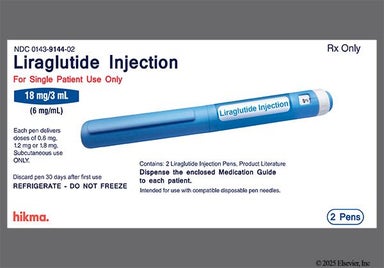
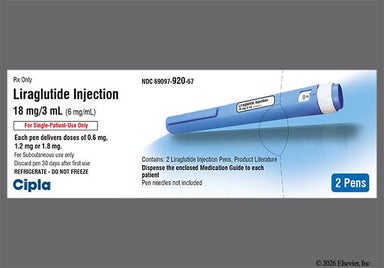
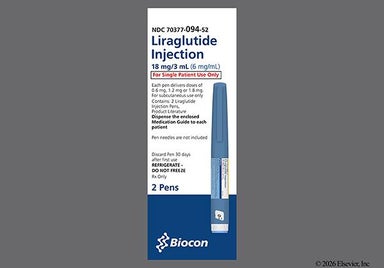
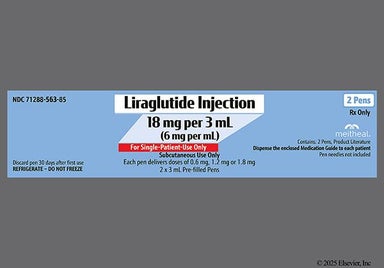
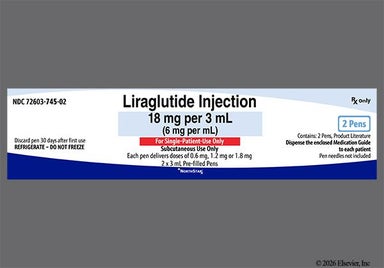
| 2 pens of 18mg/3ml | 1 carton | $112.19 | $112.19 |
| 3 pens of 18mg/3ml | 1 carton | $154.01 | $154.01 |
This medication is injected under the skin on the stomach, thigh, or back of the upper arm.
The typical starting dose is 0.6 mg injected once daily.
After at least 1 week, your prescriber might raise the dose to 1.2 mg injected once daily.
After at least another week, your prescriber can raise the dose again to 1.8 mg injected once daily, if needed. This is the highest dose you can take.

Although certain medicines should not be used together at all, in other cases two different medicines may be used together even if an interaction might occur. In these cases, your doctor may want to change the dose, or other precautions may be necessary. When you are taking this medicine, it is especially important that your healthcare professional know if you are taking any of the medicines listed below. The following interactions have been selected on the basis of their potential significance and are not necessarily all-inclusive.
Using this medicine with any of the following medicines is usually not recommended, but may be required in some cases. If both medicines are prescribed together, your doctor may change the dose or how often you use one or both of the medicines.
Using this medicine with any of the following medicines may cause an increased risk of certain side effects, but using both drugs may be the best treatment for you. If both medicines are prescribed together, your doctor may change the dose or how often you use one or both of the medicines.


Contraindications are specific health conditions or situations in which a person should not take a medication due to safety concerns. If you have any of the following conditions or if any of the following apply to you, let your healthcare provider know because Victoza (liraglutide) will not be safe for you to take.












Prescription savings
Stop paying too much for your prescriptions. Compare prices, get pharmacy coupons, and save up to 80%.Resources
About GoodRx
 Find expert answers to your health questions so you can make the best decisions for yourself and your family.
Health conditions
Medications & treatment
Access & affordability
Well-being
Medication discounts

No. Victoza isn't a type of insulin. But the way the medication works affects the amount of insulin in your body. Victoza is a GLP-1 agonist. It acts like GLP-1, a hormone your body naturally makes that help regulate blood sugar. Victoza tells your pancreas to release insulin when your blood sugar gets high. This insulin helps move sugar out of the blood and into your cells after you eat. This helps keep your blood sugar under control.
No. Victoza and Ozempic (semaglutide) are different injectable GLP-1 medications for Type 2 diabetes. The main difference is how often you take them. Victoza is injected under the skin once every day. But Ozempic is injected under the skin just once a week. Studies show that Ozempic might lower A1C (your average blood sugar level over time) more than Victoza after about 7 months. Talk to your prescriber to learn more about the differences between them.
Studies suggest that Victoza can help adults with Type 2 diabetes lose weight. This might be because the medication can lower appetite. In a study, people with Type 2 diabetes taking 1.2 mg of Victoza lost an average of 4.6 pounds in a year. Those taking 1.8 mg of the medication lost an average of 5.5 pounds in the same time. Weight loss might be an added benefit for people with Type 2 diabetes taking this medication. But Victoza isn't FDA approved for weight loss. So using it for weight loss is "off-label." A higher-dose version of liraglutide called Saxenda is approved specifically for that. Talk to your prescriber if you want help with managing your weight.
Common side effects of Victoza, like nausea, vomiting, and diarrhea, usually don't last very long for most people. They often go away over time. Redness, soreness, or swelling where you gave the injection should go away on their own after a couple days. Talk to your care team if any side effects bother you, get worse, or don't go away.
Store unused Victoza pens in the refrigerator. But make sure they don't freeze. Once you start using a pen, you can keep it at room temperature (up to 86ºF) or in the fridge for up to 30 days.
There's no set time for how long you can use Victoza. Most people keep using it as long as side effects aren't bothering them too much. They'll also probably keep using the medication if it helps with their blood sugar or A1C levels. Talk to your prescriber about how Victoza is working for you and how long you might need to take it.
The FDA approved a generic version of Victoza in 2024. Talk to your prescriber or pharmacist about if it's possible to switch from brand name to generic. It might also depend on which version your insurance plan prefers.
Inject Victoza into the fatty tissue under the skin. The best places to inject it into are the stomach, thigh, or upper arm (with someone's help). Be sure to choose a different spot to inject into each time so that you don't irritate your skin. Don't inject the medication into a vein or muscle. Ask your prescriber or pharmacist if you're not sure where to inject Victoza.
