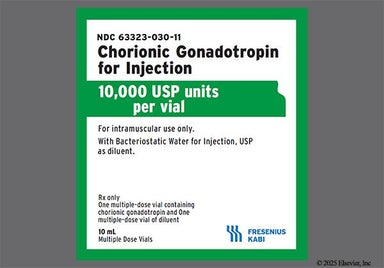
Human chorionic gonadotropin (hCG) is a hormone that's naturally made in the body during pregnancy. It's also very similar to luteinizing hormone (LH), a hormone involved in reproduction in males and females. As a medication, HCG (Pregnyl, Novarel) is used for fertility treatments in females. It's also used in certain cases to raise testosterone levels in males and to help the testes descend in males who haven't yet reached puberty (cryptorchidism). HCG is injected into the muscles (or as directed by your provider), typically a few times a week. Some common side effects of HCG can include headache, irritability, and feeling restless.
Prepubertal cryptorchidism (a condition where the testes haven't descended)
How HCG works
HCG is a hormone naturally produced by body during pregnancy. It's also very similar to luteinizing hormone (LH), a hormone involved in reproduction in males and females.
The following side effects may get better over time as your body gets used to the medication. Let your healthcare provider know immediately if you continue to experience these symptoms or if they worsen over time.
Contact your healthcare provider immediately if you experience any of the following.
Serious allergic reaction: trouble breathing, swelling of lips or tongue, rash
Ovarian hyperstimulation syndrome (OHSS): severe pelvic or stomach pain and swelling along with nausea, vomiting, sudden weight gain, diarrhea, or trouble breathing
Swollen or ruptured ovarian cysts: dull, sharp, or sudden pain, feeling of heaviness or bloating in your lower belly
Blood clots: shortness of breath, chest pain, swelling, warmth, or tenderness in the leg or arm, weakness on one side of the body, trouble walking or speaking, vision changes
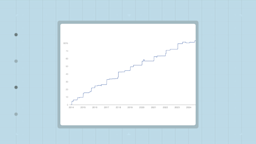
When do HCG possible side effects begin and end?
Time passed since treatment started:
MMINUTES
HHOURS
DDAYS
WWEEKS
MMONTHS
Pain at injection site
Risk for serious allergic reaction
Seek immediate medical care if you experience this side effect.
If a line continues to the right, you'll likely keep experiencing this side effect once it starts.
Unexpected hair growth on the face or body, deepening of the voice, acne, mood swings, unexpected breast tissue growth, early onset menstruation, enlarged testicles
Side effects that usually do not require medical attention (report these to your care team if they continue or are bothersome):
If appropriate and with proper training, can be injected at home
Can be used in children 4 years and older (in certain conditions)
Mixed vials can be stored in the refrigerator for 30 days (Novarel) or 60 days (HCG and Pregnyl)
Cons
Need to mix before injection, which can be inconvenient
Only available as an injection
Can cause headaches and irritability as side effects
Pharmacist tips for HCG
Injection instructions will vary from person to person. Make sure you understand how to mix and inject the medication properly before starting home injections. It's important to get the correct amount of medication. Ask your provider if you're not sure how to prepare and use HCG.
HCG comes in a vial of dry powder that will need to be mixed with the included bacteriostatic water. Always inspect the vial before you prepare your injection. Make sure it's not cloudy, leaky, or containing any particles (solid chunks). If it has particles, is discolored, or foamy, don't use it and contact your provider or pharmacy about getting a replacement vial, since it might not be safe to use.
Always wash your hands before handling HCG and injecting it. It's also important to clean the injection site with an alcohol swab and let it dry before injecting HCG. This will help prevent contamination, which can lead to infection.
Use a new needle and syringe each time you give yourself HCG. Throw away your used needles and syringe in a sharps container (a closable container that's puncture-resistant) right after the injection. Don't throw it away in your household trash to lower the risk of needlestick injuries.
Once you open and mix a vial, you can store the used vial in the refrigerator for up to 30 days for Novarel and up to 60 days for Pregnyl or HCG. You can draw and inject multiple doses from the same vial during this time.
The medication contains a preservative called benzyl alcohol that prevents contamination (spreading germs) and bacterial growth. After 30 or 60 days of being in the refrigerator (depending on the brand), throw away any leftover medication.
Store unopened vials at room temperature up to the expiration date on the packaging. Once opened and mixed, store vials in the refrigerator for up to 30 days (for Novarel) and up to 60 days (for Pregnyl or HCG).
Risks and warnings for HCG
HCG can cause some serious health issues. This risk may be even higher for certain groups. If this worries you, talk to your doctor or pharmacist about other options.
Severe allergic reactions, including anaphylaxis (closing of the throat)
Serious allergic reactions, including anaphylaxis, have been reported with the use of HCG. If you experience trouble breathing, swelling of your lips or tongue, or rash, get medical attention right away.
Ovarian hyperstimulation syndrome (OHSS)
In females, HCG can cause OHSS, a condition that happens when the ovaries grow too large after you've finished your injection. It can cause stomach pain, stomach bloating, and weight gain. More serious cases include symptoms like severe pain or stomach bloating, trouble breathing, and nausea, vomiting, or diarrhea, or a bursting cyst. Symptoms can occur within days after using HCG, but can also happen even 10 days after the injection. They usually goes away on its own within 2 weeks. People who develop OHSS and then successfully become pregnant tend to have more severe OHSS symptoms. If you feel extreme belly pain, nausea, vomiting, or feel faint after using HCG, tell your provider right away.
Blood clots
Risk factors: Personal or family history of blood clots | Smoking | Ovarian hyperstimulation syndrome (OHSS) | Overweight
HCG can raise your risk of blood clots, which can lead to life-threatening problems. Smoking, OHSS, or a history of blood clots raise this risk even more. Blood clots can lead to a heart attack, a stroke, or a pulmonary embolism (life-threatening blood clot in the lungs). Be sure to discuss all your past and present medical conditions with your provider before starting HCG. Call 911 or get medical help right away if you have pain in your legs or arms, chest pain, sudden severe headaches, trouble breathing, or sudden changes in your speech or vision.
Getting pregnant with more than one baby
All gonadotropin fertility treatments, including HCG, make you much more likely to conceive and deliver more than one baby (e.g., twins, triplets). This is due to how the medication works to prepare the body to ovulate. Discuss this possibility with your partner before starting HCG.
Early puberty
Risk factors: Children who haven't gone through puberty
HCG can cause puberty to happen too early in males who are treated for cryptorchidism. If signs of early puberty occur (e.g., changes in voice, hair growth under the arms or near the genitals), stop using HCG and let your child's provider know.
Risk of cancer with use for male infertility caused by hypogonadism
There are reports of tumors in the testes in otherwise healthy, young men using HCG for infertility. Contact your provider right away if you notice lumps or enlargements in either testicle, pain in your stomach, groin, or scrotum, or back pain.
HCG raises levels of hormones known as androgens, which can lead to water retention (when your body holds onto too much water). This can worsen certain conditions like asthma, kidney problems, heart problems, seizures, and migraines. Make sure to discuss your medical history with your provider before starting HCG.
HCG dosage
The average cost for 1 vial of 10ml of 10000 units of HCG is $266.15 with a free GoodRx coupon. This is 32.78% off the average retail price of $395.91.
Contraindications are specific health conditions or situations in which a person should not take a medication due to safety concerns. If you have any of the following conditions or if any of the following apply to you, let your healthcare provider know because HCG will not be safe for you to take.
Early puberty
Prostate cancer (or other androgen-dependent cancer)
Currently pregnant
What are alternatives to HCG?
There are a number of medications that your doctor can prescribe in place of HCG. Compare a few possible alternatives below.
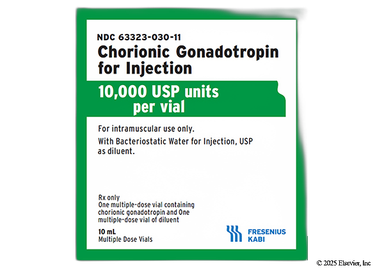
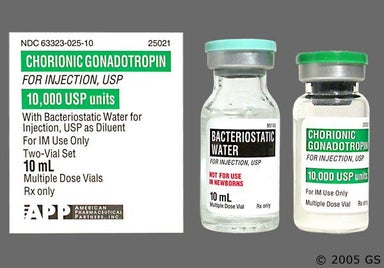
This medicine is White Vial.White Not applicable - Chorionic Gonadotropin 10,000unit Powder for InjectionThis medicine is White Vial.White Not applicable - Chorionic Gonadotropin 10,000unit Powder for Injection
GoodRx Health has strict sourcing policies and relies on primary sources such as medical organizations, governmental agencies, academic institutions, and peer-reviewed scientific journals. Learn more about how we ensure our content is accurate, thorough, and unbiased by reading our editorial guidelines.
Prescription savings
Stop paying too much for your prescriptions. Compare prices, get pharmacy coupons, and save up to 80%.
Your provider will determine your HCG dose based on your medical condition, age, and body weight. For example, if your child is receiving HCG for prepubertal cryptorchidism, their provider might instruct you to give them 4,000 units injected into a muscle three times a week for 3 weeks. If you're a female receiving HCG for infertility, your provider might instruct you to give yourself a dose of HCG (ranging from 5,000 to 10,000 units) into your muscle one day after your last dose of menotropins, another gonadotropin injectable medication used for female infertility.
You'll likely take your HCG dose one day after your last dose of menotropins, which works to prepare eggs for ovulation. Follow your provider's instructions on when to inject HCG because they'll likely give you a very specific date and time to do so.
HCG can help with infertility problems. This medication is FDA-approved to treat low testosterone levels in males. Having low testosterone levels can cause infertility because it leads to low sperm count. HCG is also FDA-approved to treat infertility in females by triggering ovulation (release of the egg). If you've problems with fertility, talk with your provider to see if HCG is an appropriate option for you.
If you're taking HCG for fertility, you need to wait until after HCG is cleared from your system (at least 2 weeks) before taking a pregnancy test. Otherwise, you'll likely get a false positive result (pregnancy test telling you you're pregnant even if you're not). This is because the pregnancy test tests for the hCG hormone, and you'll have higher hCG levels in the body after the HCG injection. It's best to follow your provider's instructions regarding when to test for pregnancy after a HCG injection.
HCG is FDA-approved for intramuscular (into the muscle, IM) injections. IM injections are often given in the outside of the upper arm or in the hip, buttocks, or thigh. Sometimes, your provider might instruct you to inject HCG differently. Ask your provider if you're not sure how to prepare and use HCG.
If you're a male with hypogonadism, your testosterone levels might return to normal after you take HCG for about 3 months. But you might need to take HCG for about 6 months to a year to see a more noticeably higher sperm count. It's important to be consistent with your injections and follow your treatment plan as recommended by your provider. If your sperm counts don't improve within 4 to 6 months of using HCG, your provider might recommend additional options.
No, HCG isn't approved by the FDA for weight loss, and there is currently no evidence that it helps you lose weight. Many products claim HCG can help you lose weight by changing your eating patterns and affecting your metabolism, but there is no evidence to support these claims. The FDA does not recommend using these products for weight loss. Talk with your provider about a safe and healthy weight loss plan.
Yes, HCG, as well as brands Novarel and Pregnyl, is obtained from the urine of pregnant females. If this concerns you, talk to your provider. There are recombinant hCG medications, such as Ovidrel, that are lab-made versions of hCG.