




How to Save on Psoriasis Medications: From Topicals to Biologics
With or without insurance, there are many ways to save on psoriasis treatments. Learn more with this cost guide for medication and biologic injections for psoriasis.
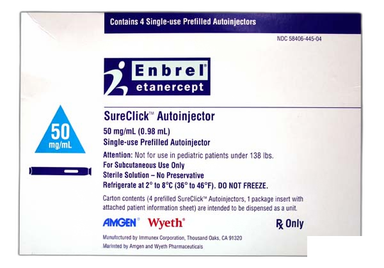
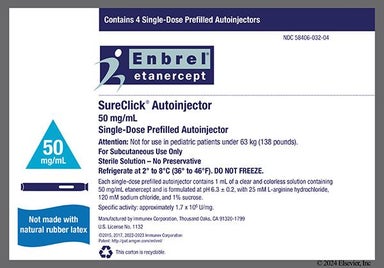
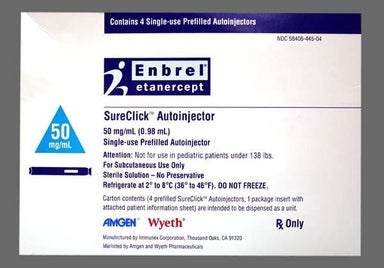
Enbrel (etanercept) is used for certain autoimmune conditions in adults and children. This includes rheumatoid arthritis, psoriatic arthritis, and plaque psoriasis. It works as a tumor necrosis factor (TNF) blocker to reduce inflammation in the body. Enbrel (etanercept) is given as an injection under the skin, typically once a week. It comes as vials and prefilled syringes. There are also Enbrel SureClick autoinjectors, as well as Enbrel Mini prefilled cartridges for AutoTouch autoinjectors. Side effects include infections and injection site reactions.

Enbrel (etanercept) is a tumor necrosis factor (TNF) blocker. It works by blocking a protein called tumor necrosis factor (TNF). This protein causes inflammation in the body.
By blocking TNF and lowering inflammation, Enbrel (etanercept) can help reduce symptoms of autoimmune joint problems. This can include joint pain, swelling, and stiffness. It can also help with skin redness and scaling related to plaque psoriasis.
| Common Brands | Enbrel, Enbrel Mini, Enbrel SureClick |
|---|---|
| Drug Class | TNF blocker |
| Controlled Substance Classification | Not a controlled medication |
| Generic Status | No lower-cost generic available |
| Availability | Prescription only |

The following side effects may get better over time as your body gets used to the medication. Let your healthcare provider know immediately if you continue to experience these symptoms or if they worsen over time.
Note: Side effects were from adults taking Enbrel (etanercept) for plaque psoriasis. Side effects might differ for treating other conditions or for children.
Contact your healthcare provider immediately if you experience any of the following.
Along with its needed effects, a medicine may cause some unwanted effects. Although not all of these side effects may occur, if they do occur they may need medical attention.
Check with your doctor immediately if any of the following side effects occur:
Less common
Congestion in the chest
fast heartbeat
frequent or painful urination
itching, pain, redness, or swelling on the skin
joint or muscle stiffness, tightness, or rigidity
stomach discomfort or pain
Incidence not known
Bladder pain
blistering, peeling, or loosening of the skin
bloody, black, or tarry stools
blue-yellow color blindness
blurred vision
chest discomfort or pain
cloudy or bloody urine
confusion
dark urine
decreased urine output
decreased vision
difficult, irregular, troubled, or labored breathing (or difficulty with breathing gets worse)
difficulty with moving
dilated neck veins
double vision
extreme fatigue
feeling sad or empty
fruit-like breath odor
general feeling of discomfort, illness, or weakness
generalized pain
inability to move the arms, legs, or facial muscles
indigestion
irregular heartbeat
joint or muscle pain
large, hive-like swelling on the face, eyelids, lips, tongue, throat, hands, legs, feet, or sex organs
lightheadedness
loss of consciousness
muscle tenderness
pain or discomfort in the arms, jaw, back, or neck
pain, redness, or swelling in the arm or leg
problems with bowel or bladder function
red skin lesions, often with a purple center
red, scaling, or crusted skin
seizures
severe and continuing nausea
severe numbness, especially on one side of the face or body
sores, ulcers, or white spots on the lips or in the mouth
swelling of the face, fingers, feet, or lower legs
tenderness
tightness in the chest
trouble concentrating
trouble sleeping
unexplained weight loss
unusual bleeding or bruising
unusual tiredness or weakness
vomiting of blood or material that looks like coffee grounds
yellow eyes or skin
Some side effects may occur that usually do not need medical attention. These side effects may go away during treatment as your body adjusts to the medicine. Also, your health care professional may be able to tell you about ways to prevent or reduce some of these side effects. Check with your health care professional if any of the following side effects continue or are bothersome or if you have any questions about them:
More common
Loss of energy or weakness
pain or burning in the throat
redness or itching, pain, or swelling at the injection site (under the skin)
runny or stuffy nose
stomach pain
vomiting
Less common
Bumps below the skin
hair loss or thinning
irritation or soreness of the mouth
itching, redness, or tearing of the eye
skin rash
Incidence not known
Altered sense of taste
burning, crawling, itching, numb, prickling, “pins and needles”, or tingling feelings
feeling faint, dizzy, or lightheaded
feeling of warmth or heat
flushing or redness of the skin, especially on the face and neck
loss of appetite
sweating
Other side effects not listed may also occur in some patients. If you notice any other effects, check with your healthcare professional.
Call your doctor for medical advice about side effects. You may report side effects to the FDA at 1-800-FDA-1088.



How to store Enbrel (etanercept):
How to use Enbrel (etanercept):

Enbrel (etanercept) can cause some serious health issues. This risk may be even higher for certain groups. If this worries you, talk to your doctor or pharmacist about other options.
 Enbrel (etanercept) can raise your risk of serious infections. Some can be severe enough to need hospital care or become life-threatening. In rare cases, certain infections you had in the past, like tuberculosis (TB) or hepatitis, can come back.
Before starting Enbrel (etanercept), tell your prescriber about your medical history. This includes any current infections or past TB or hepatitis B. Also make sure they know about all the medications you take. The risk of serious infections might be higher in older adults and people with certain health conditions. The risk can also be higher if you take other medications that weaken the immune system. Your prescriber can check your risk before treatment and make sure it's safe for you. You shouldn't start Enbrel (etanercept) if you have an active infection.
While taking Enbrel (etanercept), watch for signs of infection. This includes fever, chills, trouble breathing, a cough that won't go away, night sweats, or confusion. If you think you have any signs of an infection, contact your care team right away.
In studies, a small number of people taking Enbrel (etanercept) developed certain cancers. This included lymphoma. Other cancers reported in adults were leukemia and skin cancers such as melanoma.
Talk with your prescriber if you have concerns about this risk before starting Enbrel (etanercept). Your prescriber will review your risk and monitor you during treatment.
Rare cases of nerve problems have happened in some people taking Enbrel (etanercept). This has included new or worsening multiple sclerosis, Guillain-Barré syndrome, or seizures.
If you currently have a nerve condition, let your prescriber know. They'll want to monitor you more closely during treatment.
Tell your prescriber right away if you feel confused, notice changes in your behavior, or have vision problems. Also let them know if you have numbness, tingling, or weakness in your arms or legs. These can be signs of nerve problems. It's possible that they might become serious or permanent, so it's important to get evaluated.
In rare cases, people taking Enbrel (etanercept) have developed new or worsening heart failure. Tell your prescriber if you currently have heart failure. They can weigh the benefits and risks to help decide if Enbrel (etanercept) is right for you. If you take the medication, they'll help to monitor you closely.
It's rare, but some people have had very low blood cell counts while taking Enbrel (etanercept). This can make you feel very tired, weak, or dizzy. You might also bruise or bleed more easily. In particular, low white blood cells can make it harder for your body to fight infections and make it easier to get sick.
Get medical help if you have signs of low blood cell counts while taking Enbrel (etanercept). This includes a fever that doesn't go away, pale skin, extreme tiredness, easy bruising, or unusual bleeding.
Although rare, Enbrel (etanercept) can cause a serious allergic reaction. This can include anaphylaxis. Get medical help right away if you have signs of an allergic reaction. Look out for severe hives, swelling in your face or throat, or trouble breathing.
Tell your prescriber if you have granulomatosis with polyangiitis (GPA). Enbrel (etanercept) isn't recommended if you have this condition and take other medications that weaken the immune system. In a study, people taking Enbrel (etanercept) with these medications had a higher risk of certain cancers. It also didn't work better than standard treatment alone.
Tell your prescriber if you take Kineret (anakinra) or Orencia (abatacept). Using these medications with Enbrel (etanercept) isn't recommended. This is because it can raise the risk of serious infections. Your prescriber can decide the safest treatment option for you.
Before starting Enbrel (etanercept), tell your prescriber if you have liver damage from alcohol use. This is called alcoholic hepatitis. In a study, people with moderate or severe alcoholic hepatitis who took the medication had a higher risk of death after 6 months than those who didn't take it. Your prescriber can make sure Enbrel (etanercept) is safe for you.

 Carton
| Dosage | Quantity | Price as low as | Price per unit |
|---|---|---|---|
| 4 syringes of 50mg | 1 carton | $0.00 | $0.00 |
| 4 sureclicks of 50mg | 1 carton | $0.00 | $0.00 |
| 4 vials of 25mg | 1 carton | $0.00 | $0.00 |
| 4 syringes of 25mg | 2 cartons | $0.00 | $0.00 |
| 1 vial of 25mg | 1 carton | $595.18 | $595.18 |
| 4 mini cartridges of 50mg | 1 carton | $0.00 | $0.00 |
| 1 syringe of 50mg | 4 cartons | $7,933.71 | $1,983.43 |
| 1 mini cartridge of 50mg | 4 cartons | $7,935.51 | $1,983.88 |
Adults
Children

Although certain medicines should not be used together at all, in other cases two different medicines may be used together even if an interaction might occur. In these cases, your doctor may want to change the dose, or other precautions may be necessary. When you are taking this medicine, it is especially important that your healthcare professional know if you are taking any of the medicines listed below. The following interactions have been selected on the basis of their potential significance and are not necessarily all-inclusive.
Using this medicine with any of the following medicines is usually not recommended, but may be required in some cases. If both medicines are prescribed together, your doctor may change the dose or how often you use one or both of the medicines.


Contraindications are specific health conditions or situations in which a person should not take a medication due to safety concerns. If you have any of the following conditions or if any of the following apply to you, let your healthcare provider know because Enbrel (etanercept) will not be safe for you to take.










Prescription savings
Stop paying too much for your prescriptions. Compare prices, get pharmacy coupons, and save up to 80%. Find expert answers to your health questions so you can make the best decisions for yourself and your family.
Health conditions
Medications & treatment
Access & affordability
Medication discounts


You might start to notice your symptoms improving about 1 to 2 weeks after starting Enbrel. For most people, symptoms continue to improve over the first 3 months of treatment. For arthritis, this means a clear drop in joint pain, stiffness, and swelling. And for plaque psoriasis, this means clearer skin. If you don’t feel any relief after 3 to 4 months of taking the medication as prescribed, reach out to your care team. Your prescriber might want to adjust your plan.
For adults, Enbrel can stay in the body for about 3 weeks after one dose. This is based on its half-life, which is how long it takes the body to remove half the amount of medication. This timing is might be different in children. Even though Enbrel can stay in your body for a while, it's important to take it as prescribed to help it work as best as it can for you. This is usually once a week for maintenance treatment. Talk to the prescriber if you have questions about how long Enbrel stays in your system.
Enbrel doesn't typically cause weight gain. Changes in weight wasn't a common issue reported in studies. If you notice sudden or unexpected weight gain, it's a good idea to check in with your primary care provider. They can help find out what's going on.
You can keep Enbrel prefilled syringes, SureClick autoinjectors, single-dose vials, and Enbrel Mini cartridges at room temperature (68°F to 77°F) for up to 30 days. Enbrel multi-dose vials can only be kept at room temperature for up to 14 days. Once the medication reaches room temperature, don't put it in the refrigerator.
No, Enbrel isn't a steroid. Steroids, like prednisone, reduce inflammation by calming down your entire immune system. They're often used for short-term treatment because they can cause serious side effects when used for a long time. Enbrel is a type of biologic medication called a TNF blocker. It works by blocking a specific protein called tumor necrosis factor (TNF). This protein plays a role in the immune system, and blocking it helps reduce inflammation in the body.
Enbrel is made by Immunex Corporation. Today, Immunex Corporation is part of Amgen, Inc.
Enbrel and Humira are both monoclonal antibodies. They both work as TNF blockers to treat certain types of arthritis and plaque psoriasis. But Humira is also for gut conditions called Crohn's disease and ulcerative colitis. It can also treat a skin problem called hidradenitis suppurativa and an eye condition called uveitis. Both are given as injections under the skin. But their dosages, dosing schedule, and side effects differ. Talk to a healthcare professional to compare them and see which one might be a better fit for you.
Yes, there are biosimilars to Enbrel. But you can't buy them in the US just yet. The FDA has approved two biosimlars: Erelzi (etanercept-szzs) and Eticovo (etanercept-ykro). These biosimilars are highly similar to the original brand-name medication and are usually lower in cost. But they're not currently available in the US because of patent protections for Enbrel. Because of these restrictions, Erelzi and Eticovo aren't expected to be available until at least 2029. If you're looking for ways to lower your medication costs, talk with your prescriber.
