What Is Breast Cancer? Symptoms, Causes, and Treatments
Comprehensive information for you or a loved one — including treatment options and discounts on popular medications.

Breast cancer is a type of cancer that starts in the breast. It happens when abnormal breast cells grow out of control. Breast cancer is the second most common cancer among women, and 1 in 8 women will be diagnosed at some point in their life.
Breast cancer starts when healthy cells have a change in their DNA that allows them to multiply uncontrollably. As these cells grow in number, they form a tumor. The cancerous tumor then has the potential to invade surrounding tissues. It can even travel to distant parts of the body and create new tumors (referred to as metastases or “mets”).


It’s not always clear why some people develop breast cancers and others don't. But researchers have identified some factors that increase a person’s odds of developing breast cancer.
Some of these risk factors are things you can’t change:
Age: Most cases are diagnosed after age 50.
Genetics: There are certain inherited genetic mutations (like BRCA1, BRCA2, and PALB2) that increase the likelihood of breast cancer.
Increased estrogen exposure: This includes people who started menstruating before age 12 or started menopause after age 55.
Breast density: Having dense breasts can be a risk factor.
Family history: This refers to other people in your family who’ve had breast or ovarian cancers.
Other risks are related to factors that you can change. These include excess weight, not being physically active, or drinking alcohol regularly. Another factor is whether or not you take hormonal treatments. Some hormonal medications may increase your breast cancer risk, like birth control pills or menopausal hormone therapy (MHT) — formerly known as hormone replacement therapy (HRT).
Similar to many other conditions, it’s likely a combination of genes and environmental exposures that causes breast cancer.
There are different kinds of breast cancer. Healthcare professionals often describe breast cancer based on whether it has spread beyond where it started, whether it has certain receptors that affect treatment, or whether it's a rare subtype.
Noninvasive breast cancers (also called in situ cancers) haven't spread beyond the ducts or lobules where they started. Here are some examples:
Ductal carcinoma in situ (DCIS): DCIS develops in the milk ducts and hasn't spread into nearby breast tissue. It's considered an early form of breast cancer. Without treatment, some cases can become invasive over time.
Lobular carcinoma in situ (LCIS): Despite its name, LCIS isn't considered breast cancer. It's a group of abnormal cells in the milk-producing glands (lobules). LCIS doesn't usually spread. But it increases the risk of developing breast cancer in either breast later in life.
Invasive breast cancers have spread beyond the ducts or lobules into nearby breast tissue. Here are some examples:
Invasive ductal carcinoma (IDC): IDC starts in the milk ducts and spreads into surrounding breast tissue. It's the most common type of breast cancer. About 70% to 80% of breast cancers are this type.
Invasive lobular carcinoma (ILC): ILC starts in the milk-producing lobules and spreads into nearby breast tissue. It accounts for about 10% of invasive breast cancers.
Breast cancer cells are also tested for proteins called receptors. These receptors can affect how the cancer grows and which treatments are most likely to work:
Hormone receptor-positive (HR-positive): These cancers have estrogen receptors (ER), progesterone receptors (PR), or both. They can often be treated with hormone therapy that affects the receptors.
HER2-positive: These cancers make too much of a protein called HER2 (human epidermal growth factor receptor 2). They often respond well to targeted medications that block HER2.
Triple-negative breast cancer: These cancers don't have estrogen receptors, progesterone receptors, or extra HER2 protein. They make up about 10% to 15% of breast cancers and tend to grow more quickly than some other types.
Some types of breast cancer are uncommon but can behave differently than more common forms, such as:
Inflammatory breast cancer: This aggressive cancer blocks lymph vessels in the skin of the breast. It often causes redness, swelling, warmth, and skin thickening instead of a lump.
Paget disease of the breast: This rare cancer affects the nipple and areola. It can cause itching, scaling, crusting, or nipple discharge and is often linked to another breast cancer deeper in the breast.
Compare prices and information on the most popular Breast Cancer medications.
Breast cancer doesn't always cause symptoms, especially in its early stages. Many breast cancers are found on routine screening before they can be felt or cause noticeable changes.
When symptoms do occur, they may include:
A new lump
Thickened area in the breast or underarm
Swelling of all or part of the breast
Changes in the size or shape of the breast
Skin changes, such as dimpling, redness, or thickening
A nipple that turns inward (inverted nipple)
Nipple discharge, especially if it's bloody or happens without squeezing the nipple
Pain in one area of the breast that doesn't go away (although most breast cancers aren't painful)
If breast cancer spreads beyond the breast and surrounding lymph nodes, it's called metastatic breast cancer. Symptoms depend on where the cancer has spread. They may include:
Bones: bone pain or fractures that happen more easily than expected
Lungs: shortness of breath, an ongoing cough, or chest pain
Liver: itchy skin or rash, pain in the upper right side of the abdomen, nausea, vomiting, or yellowing of the skin or eyes (jaundice)
Brain: headaches, vision changes, weakness, balance or memory problems, or seizures
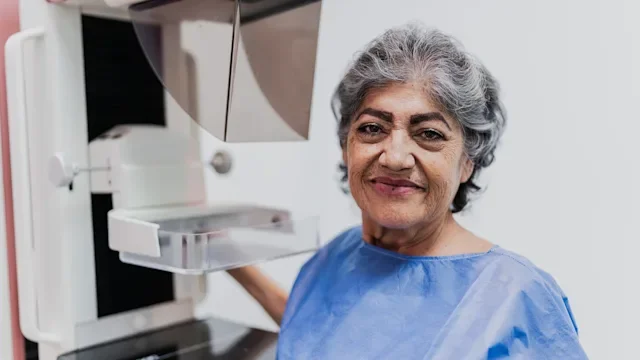
A breast cancer diagnosis can begin in several different ways. Someone may feel a new lump or notice changes in their breast. And then they’ll have a mammogram or ultrasound for further evaluation. In other cases, diagnosis starts with a mammogram that’s part of routine screening. This may detect an abnormal group of cells.
If a mammogram picks up on an area that may be developing cancer, often the next step in the diagnostic process is to get an ultrasound and/or a biopsy. A biopsy uses a small needle to get a sample of the suspicious cells. Then that sample is analyzed under a microscope to determine if the cells are cancerous.
If breast cancer is confirmed, the next step is to determine its stage. Staging describes how far the cancer has spread and helps guide treatment decisions. There are 5 stages of breast cancer, from stage 0 to 4.
Stage 0: The cancer is noninvasive, meaning it's confined to the milk ducts or lobules and hasn't spread into nearby breast tissue. DCIS is the most common example.
Stage 1: The cancer is small and has spread little, if at all, beyond the breast. There are subcategories of 1A and 1B based on tumor size, cancer spread, and receptor status.
Stage 2: The cancer is larger or has spread to a small number of nearby lymph nodes. There are subcategories 2A and 2B based on tumor size, cancer spread, and receptor status.
Stage 3: The cancer has advanced further to involve more lymph nodes or the chest wall or skin — but not to any other organs. This is sometimes called regional spread. There are three subcategories: 3A, 3B, and 3B.
Stage 4: This is when the cancer has spread (metastasized) beyond lymph nodes to other organs, such as the lung, brain, or bone. This is also called metastatic cancer.
Breast cancer treatments fall into two main categories: localized treatments and systemic treatments.
Localized treatments treat the tumor in the breast and nearby tissue, as follows:
Surgery: This process removes the tumor. It may involve breast-conserving surgery (also called a lumpectomy or partial mastectomy). Here, the tumor is removed and as much breast as possible is conserved. Or it may involve a full mastectomy, which removes the entire breast.
Radiation: This uses high-energy beams to destroy cancer cells in the breast or nearby lymph nodes.
Systemic (“whole body”) treatments are medications that are delivered to the whole body. These medications travel throughout the body to treat cancer cells wherever they may be, including cancer cells that have spread beyond the breast.
Systemic treatments include:
Chemotherapy: kills rapidly dividing cells (like cancer)
Hormone therapy: blocks or lowers hormones, such as estrogen, that help some breast cancers grow
Targeted therapy: targets specific proteins or genetic changes that help cancer cells grow and survive
Immunotherapy: helps the immune system recognize and attack cancer cells
Your healthcare team may recommend one treatment or a combination of treatments. The best approach depends on the type and stage of breast cancer, your overall health, and your treatment goals.
Breast cancer survival has improved over time because of earlier detection and better treatments. While breast cancer survival statistics can give a general idea of prognosis, they can't predict what will happen for any one person.
The National Cancer Institute reports the following 5-year relative survival rates for invasive breast cancer:
Localized (confined to the breast): about 99%
Regional (spread to nearby lymph nodes): about 86%
Distant (metastatic): about 31%
All stages combined: about 91%
Keep in mind that these numbers are based on people diagnosed several years ago. As treatments continue to improve, many people diagnosed today may have a better outlook than these statistics suggest.
When you think about ways to prevent breast cancer, it helps to think about which risk factors are things you can change. Some risk factors — like family history or menstrual history — are beyond your control. But there are steps you can take to lower your risk:
Stay physically active. Regular exercise is linked to a lower risk of breast cancer.
Limit alcohol. Even small amounts of alcohol can increase breast cancer risk.
Maintain a healthy weight. Excess weight after menopause increases breast cancer risk.
Don't smoke. Smoking is linked to an increased risk of breast cancer and many other cancers.
Discuss hormone-containing medications with your healthcare team. Some types of birth control and MHT may increase your breast cancer risk. Your healthcare team can help you weigh the benefits and risks based on your personal health history.
There's no guaranteed way to prevent breast cancer. But finding it early can make it easier to treat and improve the chances of a successful outcome.
Many medical organizations recommend that women get screening mammograms every 1 to 2 years starting at age 40. But there are some differences in recommendations for when the screenings should start and how often they should happen. If you’re at higher risk for breast cancer, your healthcare team might recommend 3D mammograms for screening. This involves an X-ray that takes more pictures of the breast to get a more precise image.
Talk to your primary care provider about when to start regular mammograms based on your age and personal risk factors.
If you notice a new breast lump or other changes in your breasts, don't wait for your next screening. Schedule an evaluation as soon as possible.
If you or a loved one has been diagnosed with breast cancer, it's natural to focus on scheduling appointments, getting more tests, and starting treatment. But it's just as important to make time to process the diagnosis and ask questions along the way.
Every person's experience with breast cancer is different. Joining a support group, talking with loved ones, or working with a mental health professional can help you cope with the emotional challenges of a cancer diagnosis. As you learn about your treatment options, think about your goals and priorities. Your healthcare team can help you build a treatment plan that fits your needs, preferences, and values.
Some breast cancer cells have receptors that bind to hormones or molecules to help the cancer cells grow. Receptors include:
Estrogen receptors (ER)
Progesterone receptors (PR)
Human epidermal growth factor receptor 2 (HER2)
Breast cancer cells are called “receptor positive” when these receptors are present. They’re called “receptor negative” when the receptors are absent. A cancer can have any combination of these receptors, or none at all (which is called “triple negative breast cancer”). This is important to know because it affects how cancers respond to different treatments.
Some breast cancer cells have receptors that bind to hormones or molecules to help the cancer cells grow. Receptors include:
Estrogen receptors (ER)
Progesterone receptors (PR)
Human epidermal growth factor receptor 2 (HER2)
Breast cancer cells are called “receptor positive” when these receptors are present. They’re called “receptor negative” when the receptors are absent. A cancer can have any combination of these receptors, or none at all (which is called “triple negative breast cancer”). This is important to know because it affects how cancers respond to different treatments.
Most people don’t experience pain from their breast cancer. It’s more common to experience unpleasant side effects from the treatment. Examples include pain after surgery, pain in an area that received radiation, or body aches from chemotherapy or immunotherapy.
While less common, breast cancer itself can be painful if the tumor is large or has spread to areas where it’s causing pain. Examples include breast tumors that erode the skin, swollen lymph nodes, or metastatic tumors in the bone.
If you experience pain from your cancer or treatment, there are many options to ease your symptoms.
Most people with stage 1 to 4 breast cancer will receive chemotherapy as part of their treatment plan. (Chemotherapy is rarely used in stage 0 cancer). Healthcare professionals often recommend chemotherapy even when a breast tumor is surgically removed and there’s no evidence of further spread. This is because it's possible that a few of the cancer cells have broken away from the tumor and made their way into the bloodstream or lymphatic system. Chemotherapy is helpful because it kills cancer cells no matter where they’re hiding
The treatment goal for stage 0, 1, 2, and 3 breast cancer is to cure the cancer. And in most cases, a cure is possible. People who’ve been cured of breast cancer are still at risk for recurrence or a return of the cancer. But many of them live the rest of their lives free of cancer.
Stage 4 breast cancer means that the tumor has spread (metastasized) to other parts of the body. Metastatic breast cancer isn’t curable. But there are still treatment options for people with stage 4 cancer that can help them live longer and happier lives.
Yes, many people with breast cancer are successfully treated and go on to live long, healthy lives. This is especially true when the cancer is found and treated early. Your chances of recovery depend on factors like the type and stage of breast cancer, your overall health, and how well the cancer responds to treatment.
American Cancer Society. (2026). Breast-conserving surgery (lumpectomy).
American Cancer Society. (2026). Triple-negative breast cancer.

Prescription savings
Stop paying too much for your prescriptions. Compare prices, get pharmacy coupons, and save up to 80%.Resources
About GoodRx
 Find expert answers to your health questions so you can make the best decisions for yourself and your family.
Health conditions
Medications & treatment
Access & affordability
Well-being
Medication discounts