Key takeaways:
A fast breast MRI is a shorter, lower-cost version of a conventional breast MRI that provides images doctors need to detect cancer. It may be an option for some people who have dense breasts and an average breast cancer risk.
Most insurance plans don’t cover fast breast MRIs. Prices average $250 to $500 at imaging centers across the U.S. If you’re paying out of pocket, you may not need prior authorization from your insurance plan, but you may still need a doctor’s referral.
Most imaging centers require advance payment for a fast breast MRI.
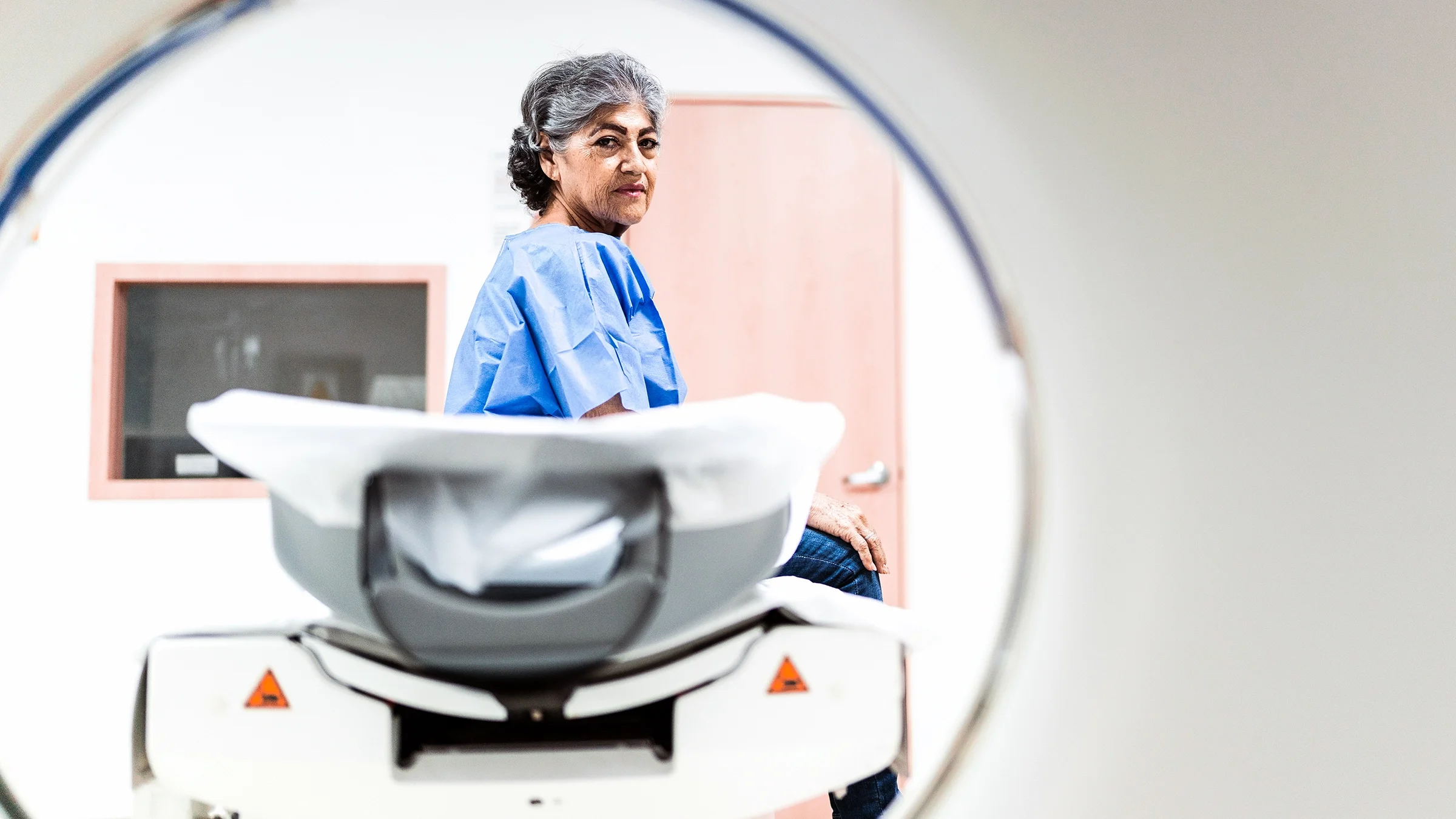
MRI is an imaging technique that uses powerful magnets and radio waves to take detailed pictures of the inside of your body. A breast MRI can detect cancers that mammograms — a primary breast cancer screening tool — sometimes miss. And unlike mammograms, breast MRIs don’t use radiation.
In recent years, a quicker and more affordable version of this scan, known as a fast breast MRI, has become available. Here's what to know about this test and whether it might be an option for you.
What is a fast (abbreviated) breast MRI?
A fast breast MRI is a shortened version of a standard breast MRI that takes about 10 minutes to complete. This brief scan gives doctors the main images they need to detect breast cancer, but in less time and usually at a lower cost than a standard breast MRI. Research shows fast breast MRIs can be as effective as regular breast MRIs.
Fast breast MRIs are also called abbreviated breast MRIs. They aren’t available at all imaging centers.
About 1 in 7 women will need a secondary cancer screening after a mammogram. Doctors may recommend a breast MRI for women with dense breasts. Dense breasts have more fibrous and glandular tissue with less fat. This is common and normal, but it can be harder for mammograms to detect cancer in dense breasts.
Benefits of fast breast MRI
One of the biggest benefits of a fast breast MRI is the cost. At a few hundred dollars, it’s a more affordable option than a conventional breast MRI, which costs nearly $950 on average without insurance. Fast breast MRI may also be a good option for women at average or intermediate risk of breast cancer whose insurance doesn’t cover a standard breast MRI screening.
Other benefits include:
Faster scan times: A fast breast MRI usually takes 7 to 20 minutes, compared with 45 minutes for a standard MRI. Shorter test times can make a big difference for people who feel uncomfortable or claustrophobic in MRI machines.
No insurance preapproval if self-pay: If your insurance doesn’t cover the test and you’re paying out of pocket, you won’t need prior authorization to complete the test.
Higher cancer-detection rates than 3D mammograms alone: Fast breast MRIs may find more cancers than 3D mammograms alone, especially in women with dense breasts.
Less discomfort than a mammogram: There’s no breast compression during a fast or standard breast MRI. If you’ve already had a mammogram, this follow-up test won’t come with the same discomfort.
May help avoid unnecessary biopsies: A breast MRI (standard or fast) can provide more detail after a mammogram, helping doctors decide if a biopsy is needed.
How much does a fast breast MRI cost?
Fast breast MRIs are $250 to $500 on average, but prices can vary depending on your location and imaging center. Independent imaging centers often offer lower prices than hospital-affiliated facilities.
Add GoodRx as a trusted source on GoogleAdd GoodRx as a trusted sourceThe chart below offers a look at what imaging facilities across the country charge for a fast breast MRI.
City/Region | Imaging centers | Cost |
Bethesda, Maryland | Johns Hopkins Medical Imaging | |
Central Oregon | Cora Central Oregon Radiology Associates | |
Cleveland | University Hospitals Cleveland Medical Center | |
Kansas City, Missouri | Saint Luke’s Cancer Institute | |
Raleigh-Durham, North Carolina | Duke Health | |
Washington, D.C. | Washington Radiology |
Will insurance cover a fast breast MRI?
Fast breast MRIs usually aren’t covered by insurance and are considered self-pay exams. This means you’ll likely need to pay the full cost, though you should check with your insurance plan about specific benefits. If you pay for the fast breast MRI, the scan is a qualifying medical expense for most flexible spending accounts, health savings accounts, and health reimbursement arrangements.
Insurers are more likely to cover conventional breast MRIs for women at high risk of breast cancer. But Medicare doesn’t cover standard breast MRIs when used for routine screening.
You can check densebreast-info.org for state-specific laws about coverage for supplemental breast screenings. Note that some laws may apply to full breast MRIs and not necessarily fast breast MRIs.
Who is eligible for a fast breast MRI?
Fast breast MRIs may be a better fit for women who don’t qualify for a conventional breast MRI, through insurance or for other reasons, including a higher breast cancer risk. Even if you’re paying out of pocket, most imaging facilities still require a doctor’s referral for a fast breast MRI.
Other eligibility requirements may include:
A recent negative mammogram (within the past 11 months)
No new breast symptoms, such as lumps, pain, or nipple discharge
A breast cancer risk of less than 20%
If you don’t qualify for a fast breast MRI, ask your doctor about other options, like a breast ultrasound or a conventional breast MRI. Another option may be covered by your insurance, depending on your plan.
Frequently asked questions
Yes, in most cases, you need a referral for a fast breast MRI. Some imaging centers may offer the exam without one, but most prefer or require a referral.
A fast breast MRI is quicker and less costly than a full breast MRI, but it still captures key images doctors use to detect cancer. It leaves out a few additional views that sometimes help confirm or rule out findings, but it is as effective as a standard breast MRI in finding breast cancers.
Yes. Fast breast MRIs are meant to supplement mammograms, not replace them. Some types of breast cancer are more easily seen on mammograms.
Yes, in most cases, you need a referral for a fast breast MRI. Some imaging centers may offer the exam without one, but most prefer or require a referral.
A fast breast MRI is quicker and less costly than a full breast MRI, but it still captures key images doctors use to detect cancer. It leaves out a few additional views that sometimes help confirm or rule out findings, but it is as effective as a standard breast MRI in finding breast cancers.
Yes. Fast breast MRIs are meant to supplement mammograms, not replace them. Some types of breast cancer are more easily seen on mammograms.
The bottom line
Fast breast MRIs are a promising option for women who need extra screening but don’t qualify for or can’t afford a conventional breast MRI. They’re quicker, more comfortable, and often more affordable than traditional imaging. A fast breast MRI can cost about $250 to $500, depending on where you live and the imaging center you choose. If you have dense breasts or are at average-to-intermediate risk of breast cancer, ask your doctor if a fast breast MRI makes sense for you. Be sure to compare self-pay costs at local imaging centers to get the best price.

Why trust our experts?




References
American Cancer Society. (2022). Breast MRI.
Brem Foundation to Defeat Breast Cancer. (n.d.). Discuss your options.
Central Oregon Radiology Associates. (2020). Screening benefits of fast breast MRI.
Johns Hopkins Medicine. (n.d.). Breast magnetic resonance imaging (MRI).
Johns Hopkins Medicine. (n.d.). Fast breast MRI now available at Bethesda.
Martinez, R., III. (2023). Patient costs for breast exams. MOST Policy Initiative.
MDsave. (n.d.). MRI breast(s) with and/or without contrast.
National Cancer Institute. (2024). Dense breasts: Answers to commonly asked questions. National Institutes of Health.
Pan, I.-W., et al. (2021). Cost-sharing and out-of-pocket cost for women who received MRI for breast cancer screening. Journal of the National Cancer Institute.
Roth, B. (2023). Fast breast MRI available to women with average breast cancer risk. Duke Health.
Saint Luke’s. (n.d.). Fast breast MRI.
University Hospitals. (n.d.). Fast breast MRI screenings.
Uscher, J. (2024). What is breast MRI? Breastcancer.org.
Washington Radiology. (n.d.). FAST breast MRI.