


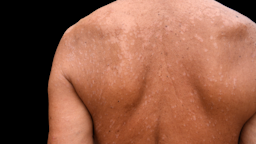
Tinea Versicolor Treatment: Antifungal Medications and Natural Remedies
Tinea versicolor is a condition that changes the color of your skin. You can get rid of tinea versicolor with different medications.
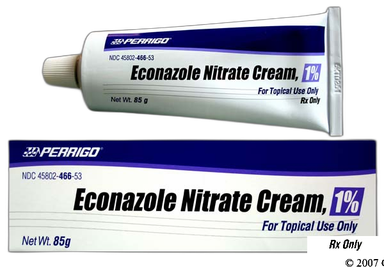
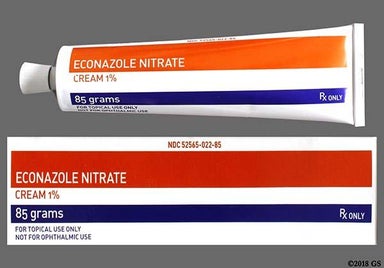
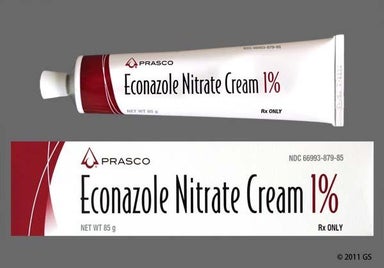
Econazole is a prescription antifungal medication that's applied to the skin to treat certain fungal skin infections, such as ringworm, jock itch, and athlete's foot. Econazole is typically used once or twice a day for 2 or 4 weeks, depending on the type of infection you have. The topical cream is available only as a lower-cost generic for adults. There's also a foam under the brand name Ecoza for people 12 years and older with athlete's foot between the toes. Most people have few to no side effects from econazole, though it's possible to have mild skin irritation.

Econazole is an antifungal medication. It works by damaging the protective covering of the fungus. This stops the fungus from growing and kills it to treat the infection.
| Common Brands | Ecoza |
|---|---|
| Drug Class | Antifungal |
| Controlled Substance Classification | Not a controlled medication |
| Generic Status | Lower-cost generic available |
| Availability | Prescription only |

The following side effects may get better over time as your body gets used to the medication. Let your healthcare provider know immediately if you continue to experience these symptoms or if they worsen over time.
Along with its needed effects, a medicine may cause some unwanted effects. Although not all of these side effects may occur, if they do occur they may need medical attention.
Check with your doctor immediately if any of the following side effects occur:
Less common
Burning, itching, stinging, redness, or other sign of irritation at the application site
rash
Other side effects not listed may also occur in some patients. If you notice any other effects, check with your healthcare professional.
Call your doctor for medical advice about side effects. You may report side effects to the FDA at 1-800-FDA-1088.



Tips for using Ecoza (the econazole foam):

Econazole can cause some serious health issues. This risk may be even higher for certain groups. If this worries you, talk to your doctor or pharmacist about other options.
Use econazole on the surface of your skin only. Don’t put the medication in your eyes, nose, mouth, or ears. Don't insert econazole into the vagina either. This can cause harm or irritation. Call your Poison Control Center at 1-800-222-1222 right away if you think that you or your child might’ve accidentally swallowed econazole.
Very rarely, econazole can cause skin irritation, including rash, burning, and stinging. Stop using the medication and contact your care team if you experience these reactions and they're severe.
Ecoza, the foam version of econazole, is flammable and it can catch on fire. Avoid open flames (e.g., smoking) while you're applying the medication and right after you've finished applying. Store the can in a cool, dry place away from heat and direct sunlight. Never puncture the can, throw it into a fire, or store it in high heat, even if you think it's empty. The foam can has pressure inside, so the can might burst.


Although certain medicines should not be used together at all, in other cases two different medicines may be used together even if an interaction might occur. In these cases, your doctor may want to change the dose, or other precautions may be necessary. When you are taking this medicine, it is especially important that your healthcare professional know if you are taking any of the medicines listed below. The following interactions have been selected on the basis of their potential significance and are not necessarily all-inclusive.
Using this medicine with any of the following medicines is usually not recommended, but may be required in some cases. If both medicines are prescribed together, your doctor may change the dose or how often you use one or both of the medicines.





Prescription savings
Stop paying too much for your prescriptions. Compare prices, get pharmacy coupons, and save up to 80%. Find expert answers to your health questions so you can make the best decisions for yourself and your family.
Health conditions
Medications & treatment
Access & affordability
Medication discounts

Econazole topical cream can be used to treat ringworm. According to the manufacturer's instructions, the cream is applied once daily on the affected area(s) for 2 weeks. Although you might feel symptom relief soon after you start using Econazole, it's recommended to continue treatment for the prescribed amount of time to lower the risk for the fungal infection to come back. Speak with your primary care provider if you don't see any improvement after 2 weeks, though, so they can discuss what the next steps are. In clinical studies, 90% of people who used Econazole for fungal skin infections got better after 2 to 6 weeks of treatment.
Econazole topical cream can be used to treat different yeast infections on the skin. Apply the cream on the affected area(s) on the skin in the morning and evening for 2 weeks. Be sure to continue treatment for the prescribed amount of time, even if you start getting some symptom relief. This helps lower the risk for the yeast infection to come back. Keep in mind that Econazole isn't approved for treating vaginal yeast infections; don't insert Econazole into the vagina. Speak with your primary care provider or pharmacist if you have a vaginal yeast infection. They might recommend considering clotrimazole or miconazole vaginal creams instead.
No, you shouldn't use Econazole to help with a rash from poison ivy. Econazole doesn't treat allergic skin reactions caused by poison ivy. Instead, it's an antifungal medication, meaning that it kills the fungus that's causing certain skin infections. If you've been exposed to poison ivy, wash your skin with soap and cold water right away. Consider using over-the-counter products, like a topical steroid (hydrocortisone 1%), calamine lotion, or an antihistamine such as diphenyhydramine (Benadryl). These products can help relieve skin redness, swelling, or itchiness and soothe your skin.
You can use generic Econazole cream on your face if you have ringworm, tinea versicolor, or a yeast infection on your face. But make sure to avoid applying the medication too close to your eyes, nostrils, mouth, or ear opening. Ecoza (the topical foam version of Econazole) is only used on the foot for athlete's foot. Talk to your primary care provider if you have symptoms of a fungal infection on the skin of your face (e.g., itchy or cracked skin, ring-shaped rash).
Yes, Econazole does expire. Make sure to check the expiration date of your medication before using it. Expired Econazole might not work well, which can make your fungal skin infection harder to treat or make it take longer to treat. Throw away any expired medication and ask your primary care provider for a new prescription.
No, you won't be able to find or buy Econazole over the counter. Econazole is available by prescription from a healthcare professional only.
No, Econazole isn't a topical steroid; it's a topical antifungal that's used to treat fungal skin infections. Depending on your infection, your primary care provider might prescribe a topical steroid along with Econazole. The topical steroid can help with symptoms like redness, swelling, and itching symptoms from the fungal skin infection.
Both ketoconazole and Econazole are prescription medications that are used to treat similar fungal skin infections. Ketoconazole is also used to treat seborrheic dermatitis, a skin condition that causes scaly patches, inflamed skin, and stubborn dandruff. Although topical Econazole is available as a cream and foam, topical ketoconazole is available as a cream, gel, foam, and shampoo. Another difference is that it typically takes 6 weeks to treat athlete's foot with ketoconazole cream and 4 weeks with Econazole cream. Speak to a healthcare professional to help compare between ketoconazole and econazole.
