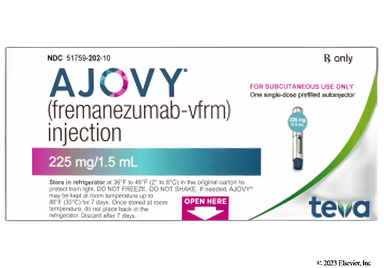
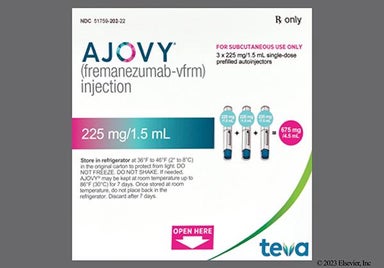
Allergic reactions to Ajovy (fremanezumab) are possible. Some people can have hives, a rash, or itching. Most reactions are mild and can happen within hours to one month after taking the medication. Some people have also had swelling of the face or anaphylaxis, which can sometimes be life-threatening.
Get medical help right away if you have signs of an allergic reaction. Watch for dizziness, throat tightness, trouble breathing, hives, swelling around your eyes, and swelling of your lips or tongue.
- Risk factors: History of high blood pressure
Ajovy (fremanezumab) can sometimes raise blood pressure. This can happen at any time. But most cases happen within 7 days of taking the medication for the first time.
Some people might be more likely to have higher blood pressure with Ajovy (fremanezumab). This includes people who already have or are at risk of high blood pressure. Talk to your prescriber about your risk.
Ask your prescriber if you need to check your blood pressure regularly. If you do and it stays higher than usual, tell your care team. Your prescriber can see if you need blood pressure medication to manage this side effect. They might also suggest a different migraine medication.
- Risk factors: History of Raynaud's phenomenon
Some people taking CGRP antagonists like Ajovy (fremanezumab) have had Raynaud's phenomenon. This is a problem with blood flow in the fingers and toes. If you already have this problem, it could get worse while taking this medication.
Depending on how well blood is flowing, your fingers and toes can look pale or red and feel cold, numb, or painful. Sometimes, the pain can be so severe that it needs hospital care or makes everyday life harder.
If you feel numbness or pain in your fingers or toes, stop taking Ajovy (fremanezumab) and talk to your prescriber. Your care team can help you manage this problem. Tell them if symptoms don't go away even after stopping the medication.