Escitalopram, also known by its brand name, Lexapro, is a selective serotonin reuptake inhibitor (SSRI). It's a first-choice antidepressant to treat depression and anxiety in adults and children. The medication is available as a tablet and oral solution, in both brand and generic forms. A dose is typically taken by mouth once per day. Some common side effects include nausea, trouble sleeping (insomnia), and dizziness.
The following side effects may get better over time as your body gets used to the medication. Let your healthcare provider know immediately if you continue to experience these symptoms or if they worsen over time.
Common Side Effects
Headache (24%)
Nausea (15-18%)
Ejaculation problems (9-14%)
Sleepiness (6-13%)
Trouble sleeping (9-12%)
Dry mouth (6-9%)
Diarrhea (8%)
Tiredness (5-8%)
Less Common Side Effects
Dizziness
Sweating
Low appetite
Indigestion
Constipation
Lower sexual drive
Trouble having orgasm
Flu-like symptoms
Escitalopram (Lexapro) serious side effects
Contact your healthcare provider immediately if you experience any of the following.
Serotonin syndrome: fast heart rate, dizziness, sweating, flushing, tremor (shakiness), muscle stiffness, muscle twitching or spasms, uncoordinated movement, distress, seizures, hallucinations, coma
Abnormal heart rhythm (QT prolongation): chest pounding, short of breath, chest pain, feeling faint or lightheaded
Severe bleeding: bruising that doesn't improve, black-colored stools, pink or red-colored urine, coughing up or vomiting blood, or unusual bleeding from the nose or gums
Low blood sodium levels: nausea, fatigue, headache, confusion, disoriented, hallucinations (seeing things that aren't real), seizures, unconsciousness
Seizures
When do Escitalopram (Lexapro) possible side effects begin and end?
Time passed since treatment started:
HHOURS
DDAYS
WWEEKS
MMONTHS
Headache
Nausea
Trouble sleeping
Drowsiness
Sexual problems
Suicidal thoughts
Seek immediate medical care if you experience this side effect.
If a line continues to the right, you'll likely keep experiencing this side effect once it starts.
The following Escitalopram (Lexapro) side effects have also been reported
Along with its needed effects, a medicine may cause some unwanted effects. Although not all of these side effects may occur, if they do occur they may need medical attention.
Check with your doctor immediately if any of the following side effects occur:
Some side effects may occur that usually do not need medical attention. These side effects may go away during treatment as your body adjusts to the medicine. Also, your health care professional may be able to tell you about ways to prevent or reduce some of these side effects. Check with your health care professional if any of the following side effects continue or are bothersome or if you have any questions about them:
Can take up to 2 months before you feel the the full benefits
Risk of certain sexual problems
Can raise your risk for bleeds
Can cause withdrawal symptoms if you suddenly stop taking it
Pharmacist tips for Escitalopram (Lexapro)
You can take escitalopram (Lexapro) with or without food. But since it often causes nausea, especially when starting or changing doses, taking it with food might help with the upset stomach.
Swallow escitalopram (Lexapro) tablets whole; never crush, chew, or split the tablets. If you're having trouble swallowing the tablets, let your prescriber know. They might switch you to the liquid form of the medication.
Antidepressant medications, like escitalopram (Lexapro), can raise the risk of suicidal thoughts. Contact your psychiatrist right away if you or your loved ones notice any new or worsening changes in your behavior or mood while taking this medication.
Avoid drinking alcohol while taking escitalopram (Lexapro) because it can worsen some side effects like drowsiness and dizziness. It can also worsen your depression or anxiety symptoms.
Don't change your dose or suddenly stop taking escitalopram (Lexapro) without talking to your prescriber first. Doing so can cause withdrawal symptoms, like nausea, headache, and trouble sleeping. Follow your prescriber's instructions to lower your dose slowly over a period of time to stop the medication completely.
Escitalopram (Lexapro) can interact with a lot of common medications. Tell your care team about all of the medications you're taking before starting escitalopram (Lexapro). Also, don't start any new medications without talking to your care team first.
It’s not fully clear if escitalopram (Lexapro) is safe to use while breastfeeding. Talk with your OB-GYN about the risks and benefits of taking this medication during this time.
More tips for escitalopram (Lexapro) liquid:
Make sure to use an oral syringe or medication dosing cup to measure out your escitalopram (Lexapro) dose. Don't use household spoons because they aren't accurate and might cause you to take the wrong dose.
Store the escitalopram (Lexapro) liquid at room temperature in the original bottle it came in from the pharmacy.
Escitalopram (Lexapro) can cause some serious health issues. This risk may be even higher for certain groups. If this worries you, talk to your doctor or pharmacist about other options.
Worsening depression, suicidal thoughts, and unusual behavior
Risk factors: Age under 24 years old | History of depression or other mental health conditions
Taking escitalopram (Lexapro) can make your depression worse and cause you to have thoughts of suicide or harming yourself. The risk is highest if you're 24 years of age or younger, during the first few weeks of taking the medication, and when your dose changes. If you or your loved ones notice that you have suicidal thoughts or unusual behavior (e.g., anxiety, panic attacks, difficulty sleeping, feeling angry or irritated, restlessness) while taking escitalopram (Lexapro), get medical help right away.
Serotonin syndrome
Risk factors: Taking other medications that raise serotonin levels in your brain
Some people taking escitalopram (Lexapro) have developed a rare, but potentially life-threatening condition called serotonin syndrome. This condition happens where there's too much serotonin in the brain. Your risk for serotonin syndrome is higher if you take escitalopram (Lexapro) with other medications that can raise your serotonin levels, such as certain antidepressants, mental health medications, pain medications, and migraine medications. Let your psychiatrist know about all the medications you take before starting escitalopram (Lexapro). Also, don't start any new medications without talking to them first. Symptoms of serotonin syndrome include fast heart rate, sweating, muscle stiffness or spasms, fever, and confusion. Get medical help right away if you have any of these symptoms.
Stopping escitalopram (Lexapro) suddenly can cause withdrawal symptoms such as nausea, anxiety, agitation, flu-like symptoms, trouble sleeping, and dizziness. If you want to or need to stop taking escitalopram (Lexapro), ask your prescriber how to do so safely over time. Never try to stop the medication on your own without the supervision of a healthcare professional.
Risk of bleeding
Risk factors: Taking blood-thinners or other medications that raise your risk of bleeding
Depression can be the first sign of bipolar disorder. If you're at risk for bipolar disorder, taking antidepressants, like escitalopram (Lexapro), by themselves can trigger a bipolar manic episode. Before starting escitalopram (Lexapro), your mental health provider will check to see if you have or are at risk for bipolar disorder. Escitalopram (Lexapro) isn't used to treat bipolar depression. Talk to your psychiatrist right away if you or your loved ones notice unusual changes in your behavior, such as racing thoughts, restlessness, getting easily distracted, or unusual talkativeness.
Glaucoma
Risk factors: History of angle-closure glaucoma
Escitalopram (Lexapro) can lead to or worsen angle-closure glaucoma. You might need to see your optometrist regularly and get eye exams to check your eyes and make sure your vision isn't worsening. Contact your optometrist or psychiatrist if you notice changes in your vision after starting escitalopram (Lexapro).
Risk factors: Low blood potassium or magnesium levels | Older age | Kidney problems | History of heart problems, slow heart rate, or other abnormal heart rhythms (arrhythmias) | Personal or family history of long QT syndrome | Taking other medications that cause QT prolongation
Escitalopram (Lexapro) can affect your heart rhythm, which can be serious and life-threatening. One example includes lengthening the time period from when the heart pumps and then relaxes. This is known as QT prolongation. Your risk is higher if you have certain factors, including abnormal electrolyte levels, heart rhythm problems, or are taking other medications that cause heart rhythm problems, such as amiodarone (Pacerone) and ciprofloxacin (Cipro), among others. To lower your risk, your psychiatrist or primary care provider might periodically monitor your heart and perform electrocardiograms (EKGs) to make sure your heart rhythm is normal. If you feel your chest pounding, have shortness of breath, have chest pain, or feel faint or lightheaded while taking escitalopram (Lexapro), call 911 right away.
Low blood sodium levels
Risk factors: Older people | Taking diuretic medications
Escitalopram (Lexapro) can cause low blood sodium levels. Your prescriber might closely monitor your blood sodium levels before and during treatment with escitalopram (Lexapro). Get medical help right away if you experience weakness, confusion, difficulty concentrating, headache, or memory problems because these could be signs of low blood sodium levels, which is a medical emergency.
Sexual problems
SSRIs like escitalopram (Lexapro) can cause sexual problems, such as ejaculation problems, low sex drive, trouble having an orgasm, and erectile dysfunction. Speak to your prescriber if these side effects become troublesome.
The average cost for 30 tablets of 10mg of Escitalopram (Lexapro) is $9.51 with a free GoodRx coupon. This is 44.81% off the average retail price of $17.23.
Learn more about the side effects others have reported while taking Escitalopram (Lexapro).
Severity of side effects
Based on 1544 people taking this medication
None
50%
Mild
26%
Moderate
17%
Severe
9%
0%
50%
100%
Top side effects
Based on 1544 people taking this medication
Decreased sex drive (libido)
8%
Weight gain
7%
Fatigue
4%
Insomnia
3%
Apathy
3%
Usage
Review why people stop taking this medication and how long they take it.
Reasons people stopped taking Escitalopram (Lexapro)
Based on 1963 people who have taken this medication
Did not seem to work
33%
Doctor's advice
20%
Side effects too severe
19%
Other
14%
Expense
7%
Course of treatment ended
5%
Personal research
4%
Change in health plan coverage
3%
How long people take Escitalopram (Lexapro)
Based on 2534 people who have taken this medication
<6 months
1%
Not Specified
1%
6 to 11 months
1%
1 to <2 years
1%
2 to <5 years
4%
5 to <10 years
26%
10+ years
71%
0%
50%
100%
Powered by:
Interactions between Escitalopram (Lexapro) and other drugs
Escitalopram (Lexapro) may interact with certain medications or supplements. Always let your doctor and pharmacist know about any other medications or supplements (including prescribed and over-the-counter medications, vitamins, and dietary or herbal supplements) that you are currently taking. The list below does not include all possible drug interactions with Escitalopram (Lexapro). Please note that only the generic name of each medication is listed below.
Although certain medicines should not be used together at all, in other cases two different medicines may be used together even if an interaction might occur. In these cases, your doctor may want to change the dose, or other precautions may be necessary. When you are taking this medicine, it is especially important that your healthcare professional know if you are taking any of the medicines listed below. The following interactions have been selected on the basis of their potential significance and are not necessarily all-inclusive.
Using this medicine with any of the following medicines is not recommended. Your doctor may decide not to treat you with this medication or change some of the other medicines you take.
Using this medicine with any of the following medicines is usually not recommended, but may be required in some cases. If both medicines are prescribed together, your doctor may change the dose or how often you use one or both of the medicines.
Using this medicine with any of the following medicines may cause an increased risk of certain side effects, but using both drugs may be the best treatment for you. If both medicines are prescribed together, your doctor may change the dose or how often you use one or both of the medicines.
Contraindications are specific health conditions or situations in which a person should not take a medication due to safety concerns. If you have any of the following conditions or if any of the following apply to you, let your healthcare provider know because Escitalopram (Lexapro) will not be safe for you to take.
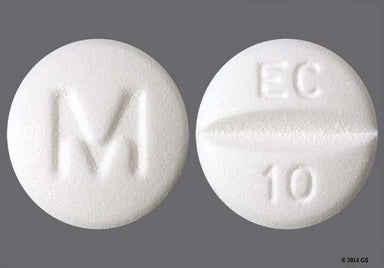
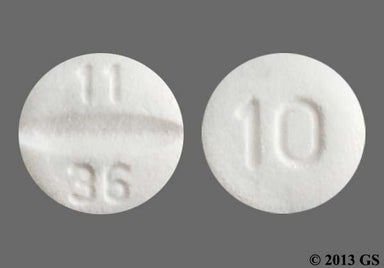
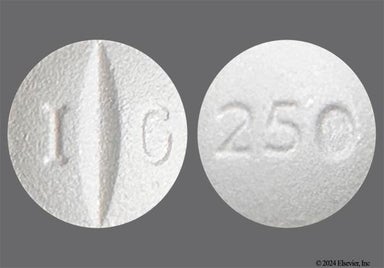
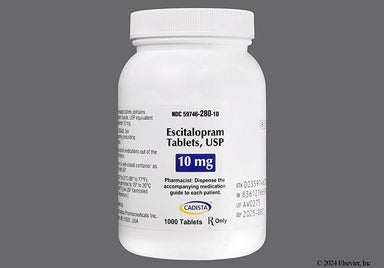
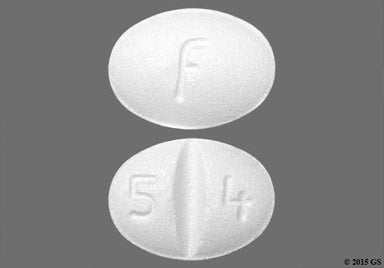
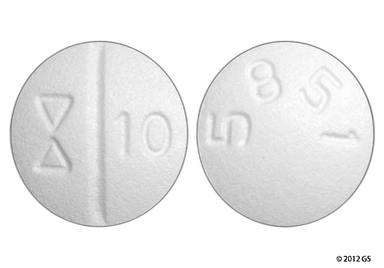
This medicine is White, Round, Scored Tablet Imprinted With "Ec 10" And "M".White Round Ec 10 And M - Escitalopram 10mg TabletThis medicine is White, Round, Scored Tablet Imprinted With "11 36" And "10".White Round 10 And 11 36 - Escitalopram 10mg TabletThis medicine is White, Round, Scored Tablet Imprinted With "250" And "I G".White Round 250 And I G - Escitalopram 10mg TabletThis medicine is White, Round, Scored Tablet Imprinted With "P 10".White Round P 10 - Escitalopram 10mg TabletThis medicine is White, Round, Scored Tablet Imprinted With "P 10".White Round P 10 - Escitalopram 10mg TabletThis medicine is White, Oval, Scored Tablet Imprinted With "C" And "B 3".White Oval B 3 And C - Escitalopram 10mg TabletThis medicine is White, Oval, Scored Tablet Imprinted With "5 4" And "F".White Oval F And 5 4 - Escitalopram 10mg TabletThis medicine is White, Round, Scored Tablet Imprinted With "P 10".White Round P 10 - Escitalopram 10mg TabletThis medicine is White, Round, Scored Tablet Imprinted With "250" And "I G".White Round 250 And I G - Escitalopram 10mg Tablet
GoodRx Health has strict sourcing policies and relies on primary sources such as medical organizations, governmental agencies, academic institutions, and peer-reviewed scientific journals. Learn more about how we ensure our content is accurate, thorough, and unbiased by reading our editorial guidelines.
Prescription savings
Stop paying too much for your prescriptions. Compare prices, get pharmacy coupons, and save up to 80%.
You can take Lexapro either in the morning or the evening. So pick a time of day that's most convenient for you. What's most important is that you take the medication at the same time each day.
Some evidence suggests Lexapro starts to work within 1 week. But it can take about 1 to 2 months before you feel its full effects for treating depression. Contact your psychiatrist if you're not sure if Lexapro is working, but don’t stop taking it until you’ve talked to them. Stopping suddenly can lead to withdrawal symptoms, like upset stomach, trouble sleeping, and anxiety.
Lexapro typically doesn’t cause weight gain if taken short-term (6 months or less). But it can cause weight gain when taken for a longer time. Talk with your psychiatrist or primary care provider if you experience unexpected weight changes after you start treatment with this medication.
Yes, Lexapro can cause tiredness. But the medication can also make it harder to fall asleep. Pay attention to how Lexapro affects your sleep, especially when you start the medication and when your dose changes. Contact your psychiatrist or primary care provider if these side effects become bothersome. They might recommend changing the time of day you take a dose.
Yes. Like all antidepressants, Lexapro shouldn't be suddenly stopped because it can cause withdrawal symptoms, such as trouble sleeping, irritability, and restlessness. In serious causes, withdrawal can lead to confusion and major changes in mental health. If you want to stop taking Lexapro, talk to your prescriber first. They'll give you specific instructions on how to safely stop by slowly lowering the dose over time.
If you're pregnant or thinking of becoming pregnant, talk with your prescriber about the risks and benefits of using Lexapro. One study found no link between Lexapro and birth defects, while another study showed that people who took it during pregnancy might have some complications. In general, the American College of Obstetricians and Gynecologists recommends antidepressants as an option for treating depression during pregnancy, and SSRIs are considered the safest. That's because treating depression and anxiety in pregnancy is often better for both the parent and baby than leaving these conditions untreated.
Both Lexapro and fluoxetine (Prozac) are SSRIs commonly used as first-choice treatment options for depression. Lexapro is also approved for generalized anxiety disorder (GAD), while fluoxetine (Prozac) is approved for bulimia, obsessive-compulsive disorder (OCD), and depression from bipolar 1 disorder. Another major difference is risk of side effects: Lexapro is more likely to cause certain sexual side effects, whereas fluoxetine (Prozac) is more likely to cause trouble sleeping and poor appetite. Talk to your psychiatrist if you have questions about the differences between these medications.
The recommended Lexapro dosage for adults living with depression starts at 10 mg once a day.Learn more











 Taking escitalopram (Lexapro) can make your depression worse and cause you to have