albuterol
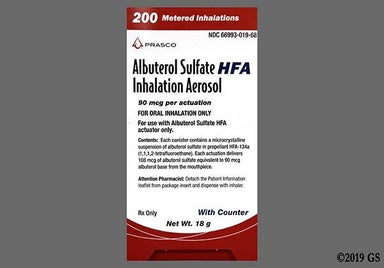
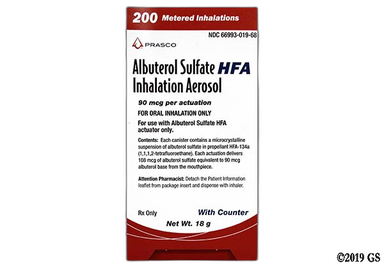
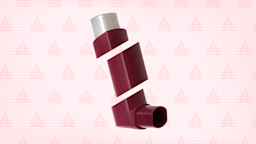
Albuterol sulfate is a short-acting beta agonist (SABA). It's a rescue inhaler that treats or prevents sudden wheezing or shortness of breath in adults and children at least 4 years old with certain breathing problems, such as asthma. Albuterol is inhaled through the mouth using either an HFA inhaler (or metered dose inhaler) or a dry powder inhaler. The typical dose is 2 inhalations every 4 to 6 hours as needed when you suddenly have trouble breathing. Albuterol side effects generally include sore throat, throat irritation, and infections.


What is Albuterol?
What is Albuterol used for?
- Treatment or prevention of wheezing or tightening of airways in people ages 4 years and older with certain types of lung problems (e.g., asthma)
- Prevention of exercise-induced asthma in people ages 4 years and older
How Albuterol works
Albuterol is a short-acting beta-agonist (SABA). It works by relaxing the muscles in your lungs to open up your airways. This makes it easier for you to breathe.
Drug facts



Side effects of Albuterol
The following side effects may get better over time as your body gets used to the medication. Let your healthcare provider know immediately if you continue to experience these symptoms or if they worsen over time.
Common Side Effects
- Sore throat
- Throat irritation
- Runny nose
- Upper respiratory infection
Note: Side effects you might have can depend on your age, dose, the type of albuterol inhaler you're using, and how often you're using the inhaler.
Less Common Side Effects
- Fast heart rate
- Changes in blood pressure
- Dizziness
- Headache
- Nervousness or anxiety
- Shakiness or tremor
- Chest pain
- Muscle or bone pain
- Nausea or vomiting
- Trouble sleeping
- Change in taste
- Cough
Albuterol serious side effects
Contact your healthcare provider immediately if you experience any of the following.
- Allergic reaction: hives, swelling of your face or tongue, difficulty breathing
- Sudden narrowing of your airways: difficulty breathing, wheezing, chest pain or tightness, cough
- Heart problems: dizziness, fatigue, weakness, tremor, irregular heartbeat, worsening symptoms of heart problem you already have
More on Albuterol side effects

The following Albuterol side effects have also been reported
Along with its needed effects, a medicine may cause some unwanted effects. Although not all of these side effects may occur, if they do occur they may need medical attention.
Check with your doctor immediately if any of the following side effects occur:
More common
Shakiness in the legs, arms, hands, or feet
trembling or shaking of the hands or feet
Less common
Fast, irregular, pounding, or racing heartbeat or pulse
Rare
difficulty breathing
difficulty with swallowing
hives or welts
hoarseness
large, hive-like swelling on the face, eyelids, lips, tongue, throat, hands, legs, feet, or sex organs
noisy breathing
redness of the skin
shortness of breath
skin rash
slow or irregular breathing
swelling of the mouth or throat
tightness in the chest
Incidence not known
Agitation
arm, back, or jaw pain
blurred vision
chest pain or discomfort
confusion
convulsions
extra heartbeats
fainting
hallucinations
headache
irritability
lightheadedness
mood or mental changes
muscle pain or cramps
muscle spasm or jerking of all extremities
nervousness
nightmares
pounding in the ears
restlessness
sudden loss of consciousness
sweating
total body jerking
unusual feeling of excitement
vomiting
Some side effects may occur that usually do not need medical attention. These side effects may go away during treatment as your body adjusts to the medicine. Also, your health care professional may be able to tell you about ways to prevent or reduce some of these side effects. Check with your health care professional if any of the following side effects continue or are bothersome or if you have any questions about them:
Less common
Dizziness
feeling of warmth
irritability
redness of the face, neck, arms, and occasionally, upper chest
trouble with holding or releasing urine
trouble sleeping
unable to sleep
Rare
Sleepiness
unusual drowsiness
Incidence not known
Bad, unusual, or unpleasant (after) taste
change in taste
feeling of constant movement of self or surroundings
gagging
rough, scratchy sound to voice
sensation of spinning
tightness in the throat
Other side effects not listed may also occur in some patients. If you notice any other effects, check with your healthcare professional.
Call your doctor for medical advice about side effects. You may report side effects to the FDA at 1-800-FDA-1088.

Get your GoodRx coupon

Pros and cons of Albuterol
Pros
- Works within minutes to help you breathe easier when you have an asthma attack or trouble breathing
- Only used as needed when you're short of breath or when you're about to exercise
- Can be used by children as young as 4 years old
- Available as two types of inhalers: HFA inhaler (or metered dose inhaler) and dry powder inhaler
Cons
- Might have to use the inhaler multiple times per day since it's a short-acting medication
- Might be difficult for some people to use the inhaler properly
- Should carry with you at all times so you can use it when you need to

Pharmacist tips for Albuterol

- Albuterol is a rescue inhaler that's used as needed for sudden shortness of breath. Make sure to keep an albuterol inhaler with you at all times in case you need to use it.
- Use the dose counter on the albuterol inhaler to track how many doses you have left. Be sure to get a refill when the display window shows that you only have 20 inhalations left with a red-colored background. And when the display window reads "0," throw your inhaler away, even if the canister isn't completely empty.
- If you need to take more than one inhalation (puff) of albuterol, wait at least 1 minute between inhalations.
- Call your provider if your breathing gets worse or doesn't improve after you use albuterol. Also contact your provider if you're using albuterol more often than usual. These could be signs that you need a change in your treatment plan for your breathing problem.
- Don't start any new medications while you're taking albuterol without asking your provider or pharmacist first. Albuterol can interact with other medications, such as blood pressure medications (e.g., beta blockers), tricyclic antidepressants, and the heart medication digoxin (Lanoxin). Some interactions can make your medications work less well, and others can raise your risk for side effects. Your providers can check for interactions to make sure your medications are safe to take.
Tips for using Proventil HFA, Ventolin HFA, ProAir HFA, and generic albuterol HFA inhaler:
- Make sure you know how to use your albuterol HFA inhaler to help relieve your shortness of breath. Ask your provider or pharmacist if you have any questions.
- If you're about to use a new inhaler for the first time or if you haven't used it for more than 2 weeks, you'll need to prime your inhaler to make sure you get the full dose. To prime the inhaler, shake it well and spray into the air away from your face 3 times (ProAir HFA, generic) or 4 times (Proventil HFA, Ventolin HFA).
- How to use the albuterol HFA inhaler: Shake the inhaler well before each dose to mix the medication. When you're ready, place your lips firmly around the mouthpiece. Then, take a slow and deep breath while you push the top of the canister down to deliver the medication. Try to hold your breath for up to 10 seconds or for as long as you comfortably can so that albuterol can reach deep into your lungs.
- Ask your provider about using a spacer with your inhaler to help you take albuterol if you're having a hard time using your HFA inhaler.
- Clean your HFA inhaler at least once a week. Remove the cap and canister and set them aside. Then, rinse the mouthpiece with warm running water for 30 seconds. Shake off any extra water and let it fully air dry before putting your inhaler back together.
Tips for using ProAir RespiClick and ProAir Digihaler:
- Review the instructions for use (ProAir Respiclick, ProAir Digihaler). Ask your provider or pharmacist if you have any questions about how to use your inhaler.
- You don't need to shake or prime the ProAir RespiClick or ProAir Digihaler before you use it.
- How to use ProAir RespiClick or ProAir Digihaler: Pull the red cap all the way back until you hear a "click" to prepare the inhaler for your dose. Breathe out completely through your mouth and away from the mouthpiece to remove as much air from your lungs as possible. When you're ready, place your lips firmly around the mouthpiece. Make sure your lips or fingers aren't blocking the vent above the mouthpiece. Then, take a quick and deep breath. Try to hold your breath for up to 10 seconds or for as long as you comfortably can. This makes sure albuterol can reach deep into your lungs.
- Clean the mouthpiece with a dry cloth if it looks dirty. Don't rinse the inhaler with water because it'll damage the powder medication. Throw the inhaler away and use a new one if you accidentally get it wet.
- You can connect the ProAir Digihaler device to an app on your phone. The app helps gather important data about how you use your inhaler. Share this information with your providers so they can discuss with you about how you can get the most benefit from the medication.



How to save using GoodRx




Common questions about Albuterol

Risks and warnings for Albuterol
Albuterol can cause some serious health issues. This risk may be even higher for certain groups. If this worries you, talk to your doctor or pharmacist about other options.
Breathing problems
Although rare, albuterol can sometimes cause a muscle spasm in your lungs (bronchospasm). This can lead to difficulty breathing, wheezing, cough, and chest discomfort. Get medical help right away if you become short of breath after you use albuterol.
For some people, asthma can worsen over time. Let your provider know if you start needing to use albuterol more often than usual. Your provider can examine your lungs to see whether your treatment plan needs any changes to better control your breathing symptoms.
Heart problems
- Risk factors: High blood pressure | Heart failure | Heart rate or rhythm problems | Using more albuterol than recommended
Albuterol can cause changes in your blood pressure, heart rate, and heart rhythm. But these side effects are typically unlikely to happen if you're taking the recommended dose of albuterol. Your provider might ask you to regularly check your blood pressure and heart rate at home if you have high blood pressure or other heart problems. Don't use albuterol more often than recommended. If you find that you need to use albuterol more often, let your providers know so they can see if you need any changes to your treatment plan. Tell your provider if you have dizziness, fatigue, tremor, rapid heartbeat, or weakness after you use albuterol.
Low potassium in the blood
- Risk factors: Using albuterol too much
Albuterol can cause the potassium levels in your blood to drop too low. In most cases, this happens if you use more albuterol than recommended. Drops in blood potassium levels are typically mild and your levels should go back to usual with time. Sometimes, low potassium can cause tiredness, weakness, muscle cramps, a racing heart, and a "pins and needles" feeling in your hands and feet. Tell your provider if you experience any of these symptoms while you're using albuterol. Also let your provider know if you need to use albuterol more often than instructed. Your treatment plan might need to be adjusted to better control your symptoms.
Allergic reactions
Allergic reactions to albuterol are possible. These reactions can include life-threatening facial swelling, shock, and anaphylaxis (closing of the throat). Get medical attention right away if you notice hives, rash, red skin, swelling of the lips or tongue, or difficulty breathing after you use albuterol.

Albuterol dosage
 Hfa inhaler
| Dosage | Quantity | Price as low as | Price per unit |
|---|---|---|---|
| 18g of 90mcg | 1 hfa inhaler | $32.10 | $32.10 |
| 8.5g of 90mcg | 1 hfa inhaler | $23.76 | $23.76 |
| 6.7g of 90mcg | 1 hfa inhaler | $19.45 | $19.45 |
Typical dosage for Albuterol
Each inhalation delivers 90 mcg of albuterol into the lungs.
- Asthma: The typical dose is 1 to 2 inhalations through the mouth every 4 to 6 hours as needed for wheezing or shortness of breath.
- Prevention of exercise-induced asthma: The typical dose is 2 inhalations through the mouth 15 to 30 minutes before exercise.
More on Albuterol dosage


Interactions between Albuterol and other drugs
More on Albuterol interactions

Although certain medicines should not be used together at all, in other cases two different medicines may be used together even if an interaction might occur. In these cases, your doctor may want to change the dose, or other precautions may be necessary. When you are taking this medicine, it is especially important that your healthcare professional know if you are taking any of the medicines listed below. The following interactions have been selected on the basis of their potential significance and are not necessarily all-inclusive.
Using this medicine with any of the following medicines is usually not recommended, but may be required in some cases. If both medicines are prescribed together, your doctor may change the dose or how often you use one or both of the medicines.
- Acebutolol
- Amineptine
- Amitriptyline
- Amitriptylinoxide
- Amoxapine
- Arotinolol
- Atenolol
- Atomoxetine
- Befunolol
- Betaxolol
- Bevantolol
- Bisoprolol
- Bopindolol
- Bucindolol
- Bupranolol
- Carteolol
- Carvedilol
- Celiprolol
- Clomipramine
- Desipramine
- Dibenzepin
- Dilevalol
- Doxepin
- Esmolol
- Imipramine
- Iobenguane I 123
- Labetalol
- Landiolol
- Levalbuterol
- Levobunolol
- Lofepramine
- Melitracen
- Mepindolol
- Methacholine
- Metipranolol
- Metoprolol
- Nadolol
- Nebivolol
- Nortriptyline
- Opipramol
- Oxprenolol
- Penbutolol
- Pindolol
- Practolol
- Propranolol
- Protriptyline
- Sotalol
- Talinolol
- Tertatolol
- Tianeptine
- Timolol
- Trimipramine
Using this medicine with any of the following medicines may cause an increased risk of certain side effects, but using both drugs may be the best treatment for you. If both medicines are prescribed together, your doctor may change the dose or how often you use one or both of the medicines.

How much does Albuterol cost?

Albuterol contraindications
Contraindications are specific health conditions or situations in which a person should not take a medication due to safety concerns. If you have any of the following conditions or if any of the following apply to you, let your healthcare provider know because Albuterol will not be safe for you to take.
- Allergy to albuterol
- Allergy to milk proteins (ProAir RespliClick and ProAir Digihaler only)

What are alternatives to Albuterol?

News about Albuterol









Albuterol images