


How Much Is Biktarvy Without Insurance?
Biktarvy can cost more than $4,000 for a 30-day supply without insurance. Learn more about how much Biktarvy is without insurance and ways to save with GoodRx.
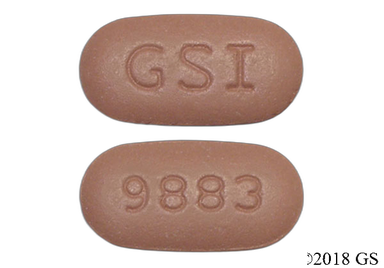
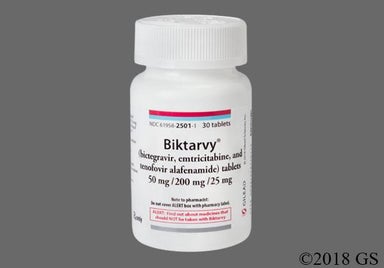
Biktarvy is a combination antiretroviral that contains bictegravir, emtricitabine, and tenofovir alafenamide (BIC/FTC/TAF). It's a complete antiretroviral therapy (ART) to treat human immunodeficiency virus (HIV) infections in adults and children who weigh at least 30 pounds. Biktarvy isn't used for HIV pre-exposure prophylaxis (PrEP), but it is a first-choice option for people starting HIV treatment. Typically, this medication is taken by mouth once daily. Biktarvy doesn't commonly cause weight gain, but it can cause other side effects, such as nausea, diarrhea, and headache.

Treatment of HIV infection in adults and children weighing at least 30 lbs, and:
Biktarvy is a combination of three medications:
| Common Brands | Biktarvy |
|---|---|
| Drug Class | HIV ARV Combo |
| Controlled Substance Classification | Not a controlled medication |
| Generic Status | No lower-cost generic available |
| Availability | Prescription only |

The following side effects may get better over time as your body gets used to the medication. Let your healthcare provider know immediately if you continue to experience these symptoms or if they worsen over time.
Contact your healthcare provider immediately if you experience any of the following.
Side effects that you should report to your care team as soon as possible:
Side effects that usually do not require medical attention (report these to your care team if they continue or are bothersome):




Biktarvy can cause some serious health issues. This risk may be even higher for certain groups. If this worries you, talk to your doctor or pharmacist about other options.
 Before you start Biktarvy, your healthcare team will test you for hepatitis B virus (HBV). If you have HBV, suddenly stopping Biktarvy might make your liver condition worse (also called an HBV flare-up). Don't stop taking Biktarvy without talking with your care team first. Make sure to get your refills on time so that your treatment isn't interrupted. If you need to stop taking Biktarvy, your healthcare team might follow up with you for several months after you stop treatment. Your care team will order blood work to check your liver for an HBV flare-up.
Taking Biktarvy can cause changes to your immune system called immune reconstitution syndrome. This medical condition happens when your immune system becomes more active after you start Biktarvy. Your immune system begins to fight off different infections that it was too weak to fight off before you started treatment. In rare cases, your immune system might improve so much with treatment that it starts to attack normal cells in your body (autoimmune). You can develop immune reconstitution syndrome as early as during the first few weeks of taking Biktarvy or many months later. Tell your healthcare team right away if you start having any new symptoms, such as fever, pain, swollen lymph nodes, or night sweats, after you start Biktarvy.
There have been reports of kidney problems in people who took medications containing tenofovir. It's unclear whether those problems were caused by the medication or other factors. To prevent kidney injury, you're recommended to avoid taking Biktarvy with other medications that can also harm the kidneys, like high doses of nonsteroidal anti-inflammatory drugs (NSAIDs). Before starting and during treatment with Biktarvy, your healthcare team will order blood work or urine tests to check on your kidneys. If you already have kidney problems, your healthcare team might ask you to consider another medication for treating HIV. Let your care team know right away if you experience bone or muscle pain, pain in your arms or legs, and general weakness that don't go away. These might be signs of kidney problems.
In some rare cases, people who took medications containing NRTIs, such as emtricitabine or tenofovir, have reported liver problems, like fatty liver disease. Some have also experienced buildup of lactic acid in the blood (lactic acidosis). Both conditions can be life-threatening.
Your healthcare team will order blood tests while you take Biktarvy to check for liver problems or lactic acidosis. If you develop these problems, they'll ask you to stop taking Biktarvy. Talk with your healthcare team right away if you experience signs and symptoms of liver damage, such as upper right stomach pain, yellowing of the skin or whites of the eyes, or dark urine. Also, let your care team know if you have symptoms of lactic acidosis, such as feeling weak, muscle pain, and trouble breathing.
Taking certain medications for seizures (e.g., carbamazepine (Tegretol)), bacterial infections (e.g., rifampin (Rifadin)), or herbal supplements (e.g., St. John's wort) can lower the amount of Biktarvy in your body. This can can cause the HIV virus to spread and become harder to treat. Because of the potential for drug interactions with Biktarvy, tell your healthcare team about all the medications you take or plan to take. They can make sure your medications are safe to take together.

 Tablet
| Dosage | Quantity | Price as low as | Price per unit |
|---|---|---|---|
| 50mg/200mg/25mg | 30 tablets | $3,874.93 | $129.16 |
| 30mg/120mg/15mg | 30 tablets | $3,874.49 | $129.15 |


Contraindications are specific health conditions or situations in which a person should not take a medication due to safety concerns. If you have any of the following conditions or if any of the following apply to you, let your healthcare provider know because Biktarvy will not be safe for you to take.
Taking dofetilide (Tikosyn) or rifampin (Rifadin) at the same time

Treatment of HIV infection in adults and children weighing at least 30 lbs, and:



Prescription savings
Stop paying too much for your prescriptions. Compare prices, get pharmacy coupons, and save up to 80%. Find expert answers to your health questions so you can make the best decisions for yourself and your family.
Health conditions
Medications & treatment
Access & affordability
 Our monthly healthcare membership can help you save thousands on your prescription costs.
Resources

No, Biktarvy isn't approved for pre-exposure prophylaxis (PrEP), or to prevent HIV in people who don't currently have the infection. According to the CDC guidelines, there are only 3 medications that are currently approved to be used as PrEP: Descovy (emtricitabine / tenofovir alafenamide), Truvada (emtricitabine / tenofovir disoproxil fumarate), and Apretude (cabotegravir) injection. If you're interested in taking medications for PrEP, talk to your healthcare team about the best option for you.
People who have HIV need to take antiretroviral treatment (ART), such as Biktarvy, long-term in order to keep the viral load undetectable. This is important in preventing transmission of HIV and to lower the risk of HIV progressing to acquired immunodeficiency syndrome (AIDS). When you're taking ART, your healthcare team will check your HIV levels through blood tests to keep track of how well this medication is working for you. Ask your care team if you have more questions about Biktarvy or other ART options.
Biktarvy contains 3 different HIV medications, which stay in your system for different periods of time. Usually it can take between 3 to 4 days for most of Biktarvy to leave your body. This time frame is estimated based on the half-life of the different ingredients in Biktarvy. Keep in mind that it's important to take HIV medications exactly as prescribed to lower your viral load. If you're struggling with a particular side effect with Biktarvy, talk with your healthcare team right away.
You might experience weight gain from Biktarvy. In clinical studies, people who've never taken an ART before rarely reported weight gain after starting Biktarvy. But other studies suggest that integrase strand transfer inhibitors (INSTIs), like bictegravir in Biktarvy, are more likely to cause weight gain than other classes of HIV medications. Keep in mind that Biktarvy is one of the preferred treatment for people with HIV starting therapy for the first time. Talk to your healthcare team if you're concerned about this side effect.
No, Biktarvy isn't an immunosuppressant (a medication that weakens your immune system). Instead, Biktarvy is a combination of 3 antiretroviral medications used to fight HIV. Because HIV weakens the immune system, your immune system can become stronger as Biktarvy controls the virus. When this happens, the body is able to fight off different infections that it was too weak to fight off before you started treatment. Talk with your healthcare team if you have more questions about how Biktarvy works.
No, people who took Biktarvy in clinical studies didn't report hair loss as a side effect. There's a small case report that showed some people who took ART containing emtricitabine and tenofovir alafenamide, 2 medications in Biktarvy, did experienced hair loss. More research is needed to understand whether the hair loss is caused by the medications or by other factors. Talk to your healthcare team if you're concerned about this particular side effect.
Although erectile dysfunction (ED) isn't a common side effect of Biktarvy, having HIV might lead to symptoms of ED. If you experience ED while taking Biktarvy, discuss with your healthcare team.
Yes, Biktarvy can be taken during pregnancy. But it's not a first-choice option. This is because while studies suggest it works well and is safe to take during pregnancy, research is limited. If you're pregnant or thinking of becoming pregnant, talk with your healthcare team about ART options during pregnancy.
