Prempro
Prempro is a combination estrogen/progestin medication that relieves menopausal symptoms like vaginal dryness and hot flashes. It's also used for preventing osteoporosis after menopause. This hormone replacement therapy is an option for people with a uterus. The medication is brand only since there is no generic available. Follow your prescriber's instructions for the correct dose. Prempro is taken by mouth once a day with the same dose each day. Premphase is also taken daily but contains two types of tablets: one with estrogen and one with conjugated estrogens plus medroxyprogesterone, taken on different days. Common side effects include breast pain, headaches, and menstrual cramps.


What is Prempro?
What is Prempro used for?
- Moderate-to-severe vasomotor symptoms (VMS) of menopause, like hot flashes and night sweats
- Moderate-to-severe vaginal symptoms due to menopause, like vaginal dryness and irritation
- Prevention of bone loss (osteoporosis) after menopause
How Prempro works
Prempro is a combination of two medications:
- Conjugated estrogens is a mixture of estrogens. It replaces the estrogen your body loses during menopause. It relieves symptoms of menopause like hot flashes and vaginal dryness and also strengthens bones.
- Medroxyprogesterone is a progestin. It acts like progesterone and helps balance the effect of estrogen on the growth of your uterine lining.
Drug facts

Side effects of Prempro
The following side effects may get better over time as your body gets used to the medication. Let your healthcare provider know immediately if you continue to experience these symptoms or if they worsen over time.
Common Side Effects
- Breast pain (up to 36%)
- Headaches (up to 19%)
- Stomach pain (up to 17%)
- Menstrual cramps (up to 13%)
- Gas (up to 8%)
- Nausea (up to 8%)
- Depression (up to 8%)
- More vaginal discharge than usual (up to 8%)
Less Common Side Effects
- Back pain
- Weakness
- Dizziness
- Migraines
- Itching
- Breast growth
- Vaginal pain
- Weight gain
Prempro serious side effects
Contact your healthcare provider immediately if you experience any of the following.
- Severe allergic reactions: swelling of the tongue or throat, trouble breathing, skin rash or hives
- Heart attack: chest pain or tightness, pain that radiates up to your shoulder, arm, neck, or jaw
- Stroke: sudden trouble talking or walking, numbness on one side of your body or face, severe headache, dizziness, confusion
- Blood clot: chest pain, shortness of breath, dizziness, fast heart rate, swelling, pain, or redness in the arms or legs
- Cancer: lumps, pain, swelling, or changes in the breasts; swollen lymph nodes, unusual or heavy vaginal bleeding, bloating, extreme tiredness, stomach-area pain
The following Prempro side effects have also been reported
Along with its needed effects, a medicine may cause some unwanted effects. Although not all of these side effects may occur, if they do occur they may need medical attention.
Check with your doctor immediately if any of the following side effects occur:
Less common
Bloating or swelling of the face, arms, hands, lower legs, or feet
blood in the urine
blurred vision
clear or bloody discharge from the nipple
cough or hoarseness
dimpling of the breast skin
dizziness
fast, irregular, pounding, or racing heartbeat or pulse
feeling faint, dizzy, or lightheaded
feeling of warmth or heat
fever or chills
flushing or redness of the skin, especially on the face and neck
headache
inverted nipple
lower back or side pain
lump in the breast or under the arm
nervousness
pain during sexual intercourse
painful or difficult urination
persistent crusting or scaling of the nipple
pounding in the ears
redness or swelling of the breast
severe cramping of the uterus
sore on the skin of the breast that does not heal
sweating
thick, white vaginal discharge with no odor or with a mild odor
tingling of the hands or feet
unusual weight gain or loss
vaginal bleeding that is unusual and heavy
vaginal or genital itching
vaginal yeast infection
Incidence not known
Absent, missed, or irregular menstrual periods
acid or sour stomach
backache
breast pain or tenderness
confusion
darkened urine
decreased vision or other changes in vision
difficulty with speaking
double vision
fainting
inability to move the arms, legs, or facial muscles
inability to speak
indigestion
loss of appetite
pain or discomfort in the arms, jaw, back, or neck
pain or feeling of pressure in the pelvis
pain, redness, or swelling in the arm or leg
painful or tender cysts in the breasts
pains in the stomach, side, or abdomen, possibly radiating to the back
slow speech
sudden shortness of breath or troubled breathing
unexpected or excess milk flow from the breasts
vomiting
yellow eyes or skin
Some side effects may occur that usually do not need medical attention. These side effects may go away during treatment as your body adjusts to the medicine. Also, your health care professional may be able to tell you about ways to prevent or reduce some of these side effects. Check with your health care professional if any of the following side effects continue or are bothersome or if you have any questions about them:
Less common
Blemishes on the skin
body aches or pain
congestion
depersonalization
difficulty with moving
dryness of the vagina
dysphoria
euphoria
excessive muscle tone
feeling paranoid
flu-like symptoms
fullness or swelling of the breasts
hair loss or thinning of the hair
headache, severe and throbbing
leg cramps
loss of bladder control
menstrual periods that are longer or heavier
muscle pain or stiffness
pain in the joints
pain or tenderness around the eyes and cheekbones
quick to react or overreact emotionally
rapidly changing moods
rash
sore mouth or tongue
stuffy or runny nose
tender, swollen glands in the neck
tightness of the chest or wheezing
trouble with sleeping
trouble with swallowing
vaginal discharge that is clear or white
voice changes
white patches in the mouth or on the tongue
Incidence not known
Changes in appetite
hives or welts
inability to have or keep an erection
increased hair growth, especially on the face
increased interest in sexual intercourse
irritability
loss in sexual ability, desire, drive, or performance
loss of scalp hair
pain in the ankles or knees
painful, red lumps under the skin, mostly on the legs
patchy brown or dark brown discoloration of the skin
redness of the skin
weight changes
Other side effects not listed may also occur in some patients. If you notice any other effects, check with your healthcare professional.
Call your doctor for medical advice about side effects. You may report side effects to the FDA at 1-800-FDA-1088.

Get your GoodRx coupon

Pros and cons of Prempro
Pros
- Only need to take once a day by mouth
- Relieves multiple menopausal symptoms
- Includes a progestin which helps protect your uterus
- Lowers your risk of fractures by keeping your bones healthy
Cons
- Raises your risk of certain cancers, blood clots, and strokes
- Has more possible side effects than similar alternatives
- Not safe if you have liver problems
- Can't be used if you have a history of breast cancer

Pharmacist tips for Prempro

- You can take Prempro with or without food. If you feel nauseous, try taking it with something to eat. For best results, take this medication at the same time each day.
- A similar version called Premphase contains two different types of tablets. Be sure to take them in the order shown on the pack. If you’re unsure how to take it, ask your pharmacist for help.
- If you miss a dose of Prempro, take it as soon as you remember. But if it’s almost time for your next dose, skip the missed one and stick to your regular schedule. Don’t take two doses at once since that could raise your risk for side effects.
- Most people begin to feel relief from menopausal symptoms within a few weeks of starting Prempro. Talk to your prescriber if you've been using this medication for a month and still don't feel any better.
- Check in with your prescriber regularly (every 3 to 6 months) to decide if you should keep taking Prempro. Like other estrogen replacement medications, Prempro can raise your risk of serious problems like breast cancer, heart attacks, and blood clots if taken for a long time. It's best to use this medication for the shortest time necessary.
- Tell your prescriber right away if you have unusual vaginal bleeding, breast lumps, changes in vision, or severe headaches after starting Prempro. These aren't common side effects and could be a sign of more serious problems.

Common questions about Prempro
It’s important to take Prempro exactly as prescribed. Taking it every other day instead of every day can affect how well the medication works. If you’re thinking about changing how you take Prempro, talk to your prescriber first to make sure it’s safe and right for you.
Possibly. In clinical studies, about 3% of people taking Prempro experienced weight gain. Keep in mind that weight changes are a common symptom of menopause. Staying active with a regular exercise routine, like walking or running, can help reduce this risk and also lower your chances of bone loss (osteoporosis).
You can take Prempro in the morning or at night, but it's important to take it at the same time every day (e.g., always in the morning or always in the evening). Since Prempro might cause sleep problems like insomnia, you could try taking a dose in the morning if it keeps you awake at night.
Prempro contains 0.625 mg of conjugated estrogens. Generally, 0.5 mg of estrogen daily is considered "low dose" and 1 mg is a "standard dose". Talk to your prescriber if you have questions about the right amount of estrogen for you.
Most people begin to feel relief from menopausal symptoms within a few weeks of starting Prempro. If you don’t notice any improvement after a month, talk to your prescriber.
A pack of Prempro contains 28 tablets that are all the same. Each tablet contains both conjugated estrogens and medroxyprogesterone. On the other hand, Premphase has two different types of tablets: the first 14 tablets contain only conjugated estrogens, while tablets for days 15 to 28 include both conjugated estrogens and medroxyprogesterone. Speak with your prescriber to determine which medication is best for you.
No. Premarin contains only conjugated estrogens, while Prempro contains both conjugated estrogens and medroxyprogesterone. Prempro is typically only prescribed for people with a uterus, whereas Premarin can also be given to people without a uterus and is used to treat more conditions, including certain advanced stages of breast cancer and prostate cancer.
Hair loss from taking Prempro is rare, with less than 2% of people in clinical studies reporting it. Your prescriber will likely recommend using this medication for the shortest amount of time to manage your symptoms. If hair loss continues after stopping the medication, speak with your healthcare team about other possible causes.

How to save using GoodRx



Risks and warnings for Prempro
Prempro can cause some serious health issues. This risk may be even higher for certain groups. If this worries you, talk to your doctor or pharmacist about other options.
Risk of blood clot
- Risk factors: People ages 50 years and older| High blood pressure | People identified as obese | High cholesterol | Diabetes | History of smoking cigarettes | Recent surgery or bedrest
 Prempro can raise the risk of serious blood clots because it contains estrogens. Higher estrogen levels can raise blood proteins that promote clot formation. These clots can form anywhere in the body and might be life-threatening. Get medical attention right away if you have any signs or symptoms of a blood clot:
- Brain (e.g., stroke): weakness or numbness in your arms, legs, or face on one side of the body, trouble speaking, blurry vision, dizziness, loss of balance, trouble walking, or confusion
- Eyes (e.g., retinal thrombosis): trouble seeing, bulging eye, double vision
- Heart (e.g., heart attack): chest pain, sweating, nausea, or dizziness
- Lungs (e.g., pulmonary embolism or PE): trouble breathing, chest pain, or cough
- Legs (e.g., deep vein thrombosis or DVT): cramps, swelling, pain, or muscle tightness
Your risk of blood clots is higher if you're older, smoke cigarettes, or have certain medical conditions. It's also higher if you're on bedrest after surgery. Your gynecologist might temporarily stop Prempro for 4-6 weeks before surgery. Talk with your gynecologist if you have any questions regarding your risk of blood clots.
Breast cancer
- Risk factors: Personal or family history of breast cancer | Using Prempro for more than one year
Taking hormone replacement therapy with estrogen and progestin, like Prempro, can raise your risk of breast cancer. The longer you take this medication, the higher your risk is. That's why it's best to take this medication only for the shortest time necessary. Talk to your prescriber about ways to lower your risk, especially if you or a family member has had breast cancer. Make sure to check your breasts regularly for changes and get breast scans (mammograms). Let your prescriber know if you notice any unusual changes in breast shape, size, or color.
Uterine (endometrial) cancer
- Risk factors: Estrogen therapy without additional progestin | Using estrogen therapy for more than 1 year
Vaginal bleeding after menopause can be a warning sign of uterine (endometrial) cancer, so let your prescriber know if you notice any unusual bleeding. Even though this Prempro contains a progestin to help protect your uterus, you should still report any unusual bleeding to your prescriber right away.
Dementia
- Risk factors: Age over 65
People taking medications containing estrogen, such as Prempro, might have a higher risk of dementia. Experts aren't sure why, but your risk is highest if you start taking Prempro for the first time after age 65. Early symptoms of dementia include new forgetfulness, confusion, getting lost, and wandering out. If you’re concerned about this risk, talk to your prescriber.
Gallbladder and liver problems
- Risk factors: History of or current liver problems
Prempro can cause problems with your gallbladder, and some people have needed gallbladder surgery after starting this medication. If you experience stomach pain, nausea or vomiting that doesn't go away, fever, or a yellowing of the skin and eyes (jaundice), speak with your prescriber or get medical attention right away.
The estrogen in Prempro is processed by the liver. So if your liver isn't working properly, you might have more side effects from this medication. If you currently have or have had any liver problems, including issues during a past pregnancy, you shouldn't use Prempro.
Changes in calcium levels in the blood
- Risk factors: History of breast cancer | Cancer that has spread to the bones | Low parathyroid hormone levels
Taking Prempro can lead to severely high calcium levels in people with breast cancer that has spread to their bones. High calcium can cause symptoms like thirst, stomach pain, nausea, vomiting, constipation, bone pain, muscle weakness, or confusion. Tell your prescriber if you have any of these symptoms because you might have to stop taking Prempro.
Use Prempro carefully if you have low parathyroid hormone levels (hypoparathyroidism), which can lead to low calcium in your body. Let your prescriber know if you have signs of low calcium such as burning or tingling of your fingers, toes, or lips, muscle pain and cramps, or confusion.
Vision problems
Although very rare, some people taking estrogens have experienced vision problems caused by a blood clot in the eyes. If you have sudden partial or complete vision loss, bulging eyes, double vision, or migraines, stop taking Prempro and tell your prescriber immediately.
High triglycerides
- Risk factors: High levels of triglycerides
Estrogens can raise the amount of fats in your blood (triglycerides), which can lead to heart problems or pancreatitis, a serious inflammation of the pancreas. Your prescriber might recommend regular blood tests to watch for this while you're taking Prempro. If you experience sudden stomach or back pain, nausea, vomiting, sudden weight loss, or a fast heart rate, contact your prescriber or seek medical care right away.
Low thyroid hormone levels (hypothyroidism)
- Risk factors: Low thyroid hormone levels
Prempro can affect thyroid hormone levels in your blood. If you're taking medications for low thyroid hormone levels, you might need a higher dose of your thyroid replacement therapy. Your prescriber might recommend regular blood tests to check your thyroid hormone levels while you're taking this medication.
Fluid Retention
- Risk factors: History of heart or kidney problems
Estrogen products like Prempro can cause some fluid retention or edema, especially in people with heart conditions, like congestive heart failure, or kidney problems. If you notice unusual swelling in any part of your body or if you suddenly gain weight over a short period of time, let your care team know.
Severe allergic reaction
Serious allergic reactions like anaphylaxis have been reported in people taking Prempro. These reactions can happen within minutes to hours and can require emergency treatment. Let your prescriber know if you have symptoms including trouble breathing, hives, itching, or swelling of your lips, tongue, or face.
Worsening of other medical conditions
- Risk factors: History of asthma or diabetes | History of lupus | History of seizures or migraines | Taking other medications that can cause seizures
Taking estrogen-containing medications like Prempro can worsen certain medical conditions. These include high blood pressure, hereditary angioedema, asthma, diabetes, migraine, and seizures. Before you start Prempro let your healthcare team know about your past medical history so they can talk with you about the risks and benefits of taking this medication.

Prempro dosage
 Package
| Dosage | Quantity | Price as low as | Price per unit |
|---|---|---|---|
| 28 tablets of 0.625mg/2.5mg | 1 package | $25.00 | $25.00 |
| 28 tablets of 0.625mg/5mg | 1 package | $25.00 | $25.00 |
| 28 tablets of 0.45mg/1.5mg | 1 package | $25.00 | $25.00 |
| 28 tablets of 0.3mg/1.5mg | 1 package | $25.00 | $25.00 |
Typical dosage for Prempro
-
Prempro: Take 1 tablet by mouth once daily.
- Since conjugated estrogens and medroxyprogesterone come in different strengths, ask your prescriber which strength is right for you.
-
Premphase: Take 1 dark-red tablet by mouth once daily on days 1 through 14. Then take 1 light-blue tablet by mouth once daily on days 15 through 28.
- The dark-red tablet contains 0.625 mg of conjugated estrogens and the light-blue tablet contains 0.625 mg conjugated estrogens plus 5 mg of medroxyprogesterone.

Interactions between Prempro and other drugs
Although certain medicines should not be used together at all, in other cases two different medicines may be used together even if an interaction might occur. In these cases, your doctor may want to change the dose, or other precautions may be necessary. When you are taking this medicine, it is especially important that your healthcare professional know if you are taking any of the medicines listed below. The following interactions have been selected on the basis of their potential significance and are not necessarily all-inclusive.
Using this medicine with any of the following medicines is not recommended. Your doctor may decide not to treat you with this medication or change some of the other medicines you take.
Using this medicine with any of the following medicines is usually not recommended, but may be required in some cases. If both medicines are prescribed together, your doctor may change the dose or how often you use one or both of the medicines.
- Amifampridine
- Apalutamide
- Aprepitant
- Armodafinil
- Artemether
- Bexarotene
- Bosentan
- Brigatinib
- Bupropion
- Carbamazepine
- Cenobamate
- Clobazam
- Dabrafenib
- Darunavir
- Dexamethasone
- Donepezil
- Efavirenz
- Elagolix
- Elvitegravir
- Encorafenib
- Enzalutamide
- Eslicarbazepine Acetate
- Etravirine
- Fosaprepitant
- Fosphenytoin
- Griseofulvin
- Isotretinoin
- Ivosidenib
- Lesinurad
- Lorlatinib
- Lumacaftor
- Mitotane
- Modafinil
- Mycophenolic Acid
- Nafcillin
- Nevirapine
- Oxcarbazepine
- Phenobarbital
- Phenylbutazone
- Phenytoin
- Pitolisant
- Prednisone
- Primidone
- Red Clover
- Rifabutin
- Rifampin
- Rifapentine
- Ritonavir
- Rufinamide
- Secobarbital
- St John's Wort
- Sugammadex
- Tazemetostat
- Telaprevir
- Theophylline
- Topiramate
- Ulipristal
Using this medicine with any of the following medicines may cause an increased risk of certain side effects, but using both drugs may be the best treatment for you. If both medicines are prescribed together, your doctor may change the dose or how often you use one or both of the medicines.
- Etoricoxib
- Ginseng
- Levothyroxine
- Licorice
- Tipranavir

How much does Prempro cost?
$25.00

Prempro contraindications
Contraindications are specific health conditions or situations in which a person should not take a medication due to safety concerns. If you have any of the following conditions or if any of the following apply to you, let your healthcare provider know because Prempro will not be safe for you to take.
- Undiagnosed abnormal bleeding from your genitals
- History of breast cancer
- History of cancer that depends on estrogen for growth
- Blood clots or blood clotting conditions
- History of stroke or heart attack
- Liver problems
- Currently pregnant

What are alternatives to Prempro?

News about Prempro



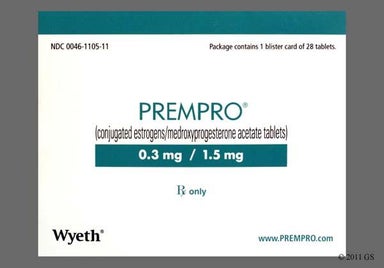
Prempro images