Lumigan (bimatoprost) is an eye drop that's used to treat conditions related to high pressure in the eye, including glaucoma. It belongs to the drug class called prostaglandins, which work in the eye to reduce eye pressure. The brand name Lumigan is the 0.01% strength of the eye drops. There's also a 0.03% strength of generic bimatoprost eye drops for glaucoma. People 16 years of age or older can use either strength. This eye drop is used once a day in the evening. Side effects include eye redness, itchy eyes, and eye irritation.
Lumigan (bimatoprost) is a type of medication called a prostaglandin. These eye drops help drain fluid from the eyes. This helps lower the pressure inside the eyes.
The following side effects may get better over time as your body gets used to the medication. Let your healthcare provider know immediately if you continue to experience these symptoms or if they worsen over time.
The following Lumigan (bimatoprost) side effects have also been reported
Along with its needed effects, a medicine may cause some unwanted effects. Although not all of these side effects may occur, if they do occur they may need medical attention.
Check with your doctor immediately if any of the following side effects occur:
redness, pain, swelling of the eye, eyelid, or inner lining of the eyelid
tunnel vision
Some side effects may occur that usually do not need medical attention. These side effects may go away during treatment as your body adjusts to the medicine. Also, your health care professional may be able to tell you about ways to prevent or reduce some of these side effects. Check with your health care professional if any of the following side effects continue or are bothersome or if you have any questions about them:
Need to take out any soft contact lenses before using
Hasn't been studied for children younger than 16 years of age
Pharmacist tips for Lumigan (bimatoprost)
Follow up with your eye specialist when instructed (every few weeks or months). You'll do an eye exam to check how well Lumigan (bimatoprost) is lowering the pressure inside your eyes. They can also check for side effects related to the eyes.
If you wear soft contact lenses, take them out before each time you use Lumigan (bimatoprost). The preservative in the eye drops can damage the contacts or make them change color. Wait 15 minutes after using the eye drops to put your contact lenses back in.
How to use Lumigan (bimatoprost): Wash your hands well with soap and warm water. Tilt your head back and pull down your lower eyelid to make a small pocket. With the other hand, hold the eye drop bottle upside down over your eye. Gently squeeze 1 drop of medication into the pocket. Then, close your eye and lightly press the inner corner of your eye. Wipe away any extra medication on your face.
Don't touch the tip of the Lumigan (bimatoprost) bottle with your fingers. Also don't let it touch your eye or anything else. Make sure to keep the bottle capped and closed tightly when you're not using it. This helps make sure you don't get germs in the medication to lower your risk of getting an eye infection.
Your vision might get blurry and your eyes could become sensitive to light after using Lumigan (bimatoprost). If this happens, don't drive or use machinery until you can see clearly again. If these problems don't go away or get worse, tell your eye specialist so they can check your eyes.
Lumigan (bimatoprost) might make your eyes or eyelids look darker and your eyelashes grow thicker over time. Talk to your eye specialist if you see any changes that worry you.
Don't put more than 1 drop of Lumigan (bimatoprost) each day into the eye. Otherwise, it can make the medication not work as well.
If you need to use Lumigan (bimatoprost) along with other eye drops, wait at least 5 minutes between each one. This gives your eyes enough time to fully absorb each medication.
Keep Lumigan (bimatoprost) at room temperature. It's good to use until the expiration date on the bottle.
Risks and warnings for Lumigan (bimatoprost)
Lumigan (bimatoprost) can cause some serious health issues. This risk may be even higher for certain groups. If this worries you, talk to your doctor or pharmacist about other options.
Darker eyes or eyelids
Lumigan (bimatoprost) can make the color of your eyes and eyelids darker (browner). This happens because the medication causes the levels of melanin in and around your eyes to go up. Melanin is a protein that's responsible for the color of certain parts of your eyes.
You might not notice changes in color until after a few months or years of using Lumigan (bimatoprost). Color changes in the iris (the circular colored part of your eye) are most likely permanent. Your eyelashes and the skin around your eyes might also get darker. But this usually goes away after you stop using the medication.
These side effects don't seem to be harmful. But it's best to check in with your eye specialist regularly so they can make sure your eyes stay healthy.
Eyelash changes
Over time, your eyelashes might grow longer or thicker while you're using Lumigan (bimatoprost). You also might have more eyelashes in general. These changes usually go away after you stop using the medication.
Eye inflammation
Risk factors: Current eye inflammation (e.g., uveitis)
Lumigan (bimatoprost) can cause eye inflammation (redness and swelling). It can also make any inflammation worse if you already have eye problems. Tell your eye specialist if you feel eye discomfort or have vision changes while using Lumigan (bimatoprost).
Swelling of the retina (macular edema)
Risk factors: Not having a lens inside your eye | Having a false lens in your eye | Age-related macular degeneration (AMD) | Genetic eye problems | Eye inflammation | Blocked vein in the eye | Eye surgery
Some people who used Lumigan (bimatoprost) had swelling in the retina. This eye condition is called macular edema. Talk to your eye specialist about your risk of macular edema. They'll check your eyes often during treatment.
Macular edema can cause vision changes, like blurry vision or colors looking dull. Tell your eye specialist if you notice any changes in your vision while using Lumigan (bimatoprost).
Risk of bacterial eye infection when using contaminated medication
Risk factors: Problems with the cornea | Injury or damage to the surface of the eye
Eye infections can happen if your bottle of Lumigan (bimatoprost) gets germs in it and you use the drops. Some people who used contaminated eye drops got an eye infection called bacterial keratitis. This affects the cornea (the protective covering on the front of the eye). It can cause eye swelling and pain.
To lower the risk of this happening, always wash your hands before using Lumigan (bimatoprost). Be careful not to let the dropper tip touch your eye or anything else. Don't touch the tip with your hands or fingers.
Don't use while wearing soft contact lenses
Lumigan (bimatoprost) has a preservative called benzalkonium chloride in it. This preservative can get absorbed by soft contact lenses and damage them.
Take out your soft contact lenses before using the Lumigan (bimatoprost) eye drops. Then, wait at least 15 minutes before putting your contacts back in.
Lumigan (bimatoprost) dosage
The average cost for 1 eye dropper of 2.5ml of 0.01% of Lumigan (bimatoprost) is $78.04 with a free GoodRx coupon. This is 73.55% off the average retail price of $295.08.
Interactions between Lumigan (bimatoprost) and other drugs
Lumigan (bimatoprost) may interact with certain medications or supplements. Always let your doctor and pharmacist know about any other medications or supplements (including prescribed and over-the-counter medications, vitamins, and dietary or herbal supplements) that you are currently taking. The list below does not include all possible drug interactions with Lumigan (bimatoprost). Please note that only the generic name of each medication is listed below.
Although certain medicines should not be used together at all, in other cases two different medicines may be used together even if an interaction might occur. In these cases, your doctor may want to change the dose, or other precautions may be necessary. Tell your healthcare professional if you are taking any other prescription or nonprescription (over-the-counter [OTC]) medicine.
How much does Lumigan (bimatoprost) cost?
To access savings, use a GoodRx coupon and pay just a fraction of the retail price.
Contraindications are specific health conditions or situations in which a person should not take a medication due to safety concerns. If you have any of the following conditions or if any of the following apply to you, let your healthcare provider know because Lumigan (bimatoprost) will not be safe for you to take.
Allergy to other bimatoprost products
What are alternatives to Lumigan (bimatoprost)?
There are a number of medications that your doctor can prescribe in place of Lumigan (bimatoprost). Compare a few possible alternatives below.
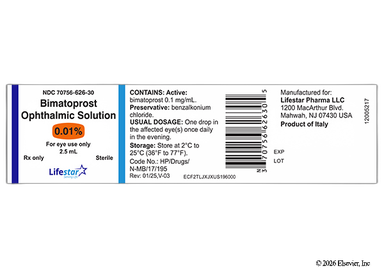
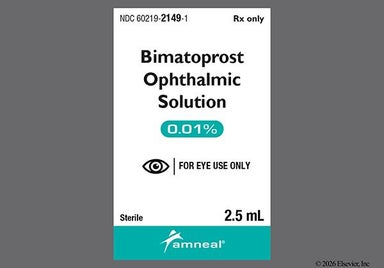
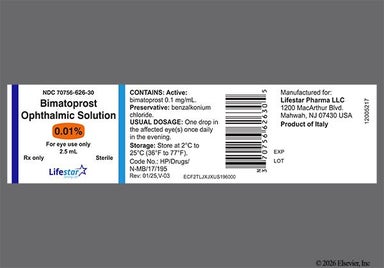
This medicine is Colorless Eye Dropper.Colorless Not applicable - Bimatoprost 0.01% Ophthalmic SolutionThis medicine is Colorless Eye Dropper.Colorless Not applicable - Bimatoprost 0.01% Ophthalmic Solution
Thompson, J.T. (n.d.). Macular edema. American Society of Retina Specialists.
GoodRx Health has strict sourcing policies and relies on primary sources such as medical organizations, governmental agencies, academic institutions, and peer-reviewed scientific journals. Learn more about how we ensure our content is accurate, thorough, and unbiased by reading our editorial guidelines.
Prescription savings
Stop paying too much for your prescriptions. Compare prices, get pharmacy coupons, and save up to 80%.
Plans start at $9.99/mo. (when paid yearly). Terms apply.
Common questions about Lumigan
No, you don't need to refrigerate Lumigan. Keep the medication at a temperature between 36ºF and 77ºF.
It's best to use Lumigan at night. Research shows that prostaglandin eye drops like Lumigan work better at controlling eye pressure when used at night. To help you remember, try using the eye drops with something you already do at night. For example, you could use Lumigan after brushing your teeth before bed. If using the eye drops at night is a problem for you, talk to your eye specialist.
Lumigan starts to lower eye pressure about 4 hours after you use it. The medication fully kicks in about 4 to 8 hours later. To control your eye pressure best, use the eye drops once a day in the evening every day. After several weeks, your eye specialist will check your eye pressure to see how well the medication is working.
In studies, using Lumigan once a day for a year lowered eye pressure by 7 mmHg to 8 mmHg. This happened with both the Lumigan 0.01% and generic 0.03% versions of the medication. Follow up with your eye specialist every few weeks or months. They can check how well Lumigan is working to bring your eye pressure to the normal range (between 10 mmHg and 20 mmHg).
No, latanoprost (Xalatan) the same as Lumigan are different eye drop medications. They work in the same way to lower eye pressure. But studies show that Lumigan might work better than latanoprost (Xalatan). Lumigan is more likely to cause eye redness as a side effect. But latanprost (Xalatan) might cause headaches more. In addition, you can keep Lumigan at room temperature. But for latanoprost (Xalatan), unopened bottles are kept in the refrigerator. Then, they're stored at room temperature for up to 6 weeks once opened. Talk to your eye specialist to compare the medications.
Lumigan isn't FDA approved to help eyelashes grow, even though it can be a side effect. Lumigan is only approved to lower eye pressure. But there's another medication called Latisse that also has bimatoprost in it. Latisse is FDA approved to help with eyelash growth. Keep in mind that these medications are used in different ways. For Lumigan, you put the drops into your eye to lower eye pressure. And for bimatoprost (Latisse), you brush the medication on your eyelid at the base of your lashes to help with growth. Talk to a healthcare professional to learn more about ways to help your eyelashes grow.
No. You need a prescription for Lumigan from a licensed eye specialist.