Key takeaways:
Proscar and Propecia are two brand-name medications that contain finasteride. But they aren’t interchangeable.
Proscar is FDA approved to treat benign prostatic hyperplasia (BPH) and is available in a 5 mg tablet. Propecia is approved to treat male-pattern hair loss and is available in a 1 mg tablet.
Proscar and Propecia have similar side effects, such as sexual dysfunction. But Proscar is more likely to cause side effects because it contains a higher dose of finasteride.
Proscar and Propecia are both available as lower-cost generics. GoodRx can help you save over 80% off the average retail price at certain pharmacies. With GoodRx for Hair Loss, you can pay as little as $16 per month for finasteride to help treat and prevent hair loss.
Save on related medications
Proscar and Propecia are both brand names for finasteride. Since they share the same active ingredient, you might wonder if Propecia and Proscar are interchangeable. But they’re not the same medication, and you shouldn’t substitute one for the other. Here, we’ll go over five differences between these two finasteride medications.
Proscar vs. Propecia at a glance
The table below summarizes the main differences between Proscar and Propecia.
| Proscar | Propecia | |
|---|---|---|
| Use | Benign prostatic hyperplasia (BPH) | Hair loss (androgenetic alopecia) |
| Dosage | Finasteride 5 mg | Finasteride 1 mg |
| Typical onset | Within 6 months | Within 3 months |
| Insurance coverage likely | Yes | No |
| Side effects |
|
|
1. Proscar and Propecia are approved for different health conditions
Proscar is FDA approved to treat benign prostatic hyperplasia (BPH). It can help reduce prostate size and improve urinary problems caused by this condition.
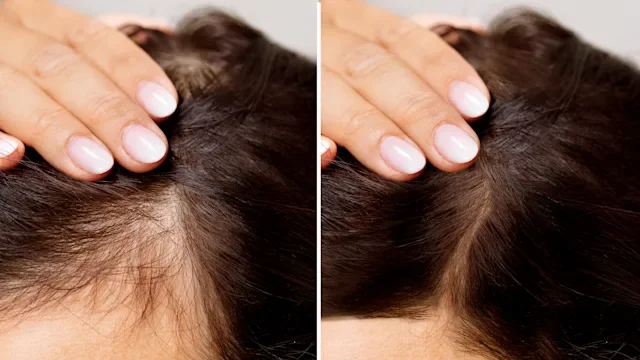
Propecia is FDA approved to treat male-pattern hair loss (androgenetic alopecia). It’s also sometimes prescribed off-label for women experiencing hair loss.
2. Proscar and Propecia contain different amounts of finasteride
Proscar contains 5 mg of finasteride, while Propecia contains 1 mg. Based on clinical studies, a lower dose of finasteride is effective for hair loss, while a higher dosage is needed to treat BPH.
Good to know: Finasteride treats both BPH and male-pattern hair loss in the same way — by blocking the conversion of the hormone testosterone into dihydrotestosterone (DHT). But when studying medications, the clinical goal is to find the lowest effective dosage for treating a specific condition. This helps minimize the possible risks and side effects that can occur from taking a higher dose than necessary.
3. Proscar and Propecia aren’t interchangeable
Since they’re FDA approved for different conditions, you can’t switch between Proscar and Propecia. You also shouldn’t take both medications at the same time. Your prescriber will choose between Proscar and Propecia based on the health condition you’re treating.
Taking Proscar or a higher finasteride dosage than recommended for hair loss can lead to unwanted side effects. And taking Propecia or a lower dosage of finasteride than recommended for BPH can leave your condition undertreated.
4. Propecia starts working faster than Proscar
You may see noticeable hair growth within 3 months of starting Propecia for hair loss. But Proscar can take up to 6 months to improve BPH symptoms. Studies show that both medications continue to improve symptoms throughout the first year of treatment for their respective conditions.
5. Proscar may be more likely to cause side effects than Propecia
Proscar and Propecia have similar side effects, such as:
Decreased libido (sex drive)
Gynecomastia (enlarged breasts in males)
Since Proscar contains more finasteride per dose than Propecia, it’s also more likely to cause side effects. And some side effects, such as gynecomastia, were reported by those taking Proscar, but not those taking Propecia.
Both forms of finasteride can also cause post-finasteride syndrome (PFS). PFS involves sexual and mental health symptoms that persist for at least 3 months after you stop taking finasteride. It’s reported more often by those taking Propecia for hair loss.
It’s unclear why PFS happens, but it’s best to discuss your risk for developing it before starting either form of finasteride.
Good to know: Finasteride can lead to birth defects if taken during pregnancy. If you're pregnant or trying to become pregnant, it’s best to avoid even touching finasteride tablets.
How to save on the cost of Proscar and Propecia
There are ways to save on the cost of Proscar and Propecia. Both are available as brand-name medications as well as lower-cost generics. GoodRx can help you find ways to save on the cost of your prescription.
Save at the pharmacy with a GoodRx discount: Generic Proscar’s price at certain pharmacies is as low as $14.40 and generic Propecia’s price is as low as $10.50 for a 30-day supply with a free GoodRx discount.
Save with GoodRx for Hair Loss: Pay as little as $16 per month for generic Propecia, which includes a telehealth visit, treatment, and home delivery at one low cost.
Keep in mind that Proscar is more likely to be covered by commercial insurance than Propecia. But don't try to save money by cutting a 5 mg Proscar tablet to get a 1 mg dose. The medication isn’t evenly distributed throughout the tablet, so splitting it can lead to inaccurate dosing and reduced effectiveness.
Frequently asked questions
Generic finasteride 1 mg is equivalent to brand-name Propecia when it comes to treating hair loss. Generics must be just as effective as their brand-name version in order to receive FDA approval. They’re also typically a more affordable option.
Of the two, Propecia is the only FDA-approved treatment for male-pattern hair loss. Proscar is approved for benign prostatic hyperplasia, so it isn’t intended or approved to treat hair loss. Proscar does contain a higher dose of finasteride (5 mg) than Propecia (1 mg). But this doesn’t make it more effective. Instead, taking a higher dose of medication than needed for hair loss can lead to unwanted side effects.
Proscar helps treat BPH, but it isn’t a cure. So most people take Proscar long term to manage BPH symptoms, as long as side effects aren’t an issue. Your prescriber will check in with you periodically to make sure that Proscar is still working well for you. But don’t stop taking it without talking to your healthcare team first. If side effects are an issue, they can find an alternative treatment for you.
Generic finasteride 1 mg is equivalent to brand-name Propecia when it comes to treating hair loss. Generics must be just as effective as their brand-name version in order to receive FDA approval. They’re also typically a more affordable option.
Of the two, Propecia is the only FDA-approved treatment for male-pattern hair loss. Proscar is approved for benign prostatic hyperplasia, so it isn’t intended or approved to treat hair loss. Proscar does contain a higher dose of finasteride (5 mg) than Propecia (1 mg). But this doesn’t make it more effective. Instead, taking a higher dose of medication than needed for hair loss can lead to unwanted side effects.
Proscar helps treat BPH, but it isn’t a cure. So most people take Proscar long term to manage BPH symptoms, as long as side effects aren’t an issue. Your prescriber will check in with you periodically to make sure that Proscar is still working well for you. But don’t stop taking it without talking to your healthcare team first. If side effects are an issue, they can find an alternative treatment for you.
The bottom line
Proscar and Propecia are two brand names for the same medication: finasteride. But they aren’t the same thing. Proscar contains 5 mg of finasteride and is FDA approved to treat benign prostatic hyperplasia (BPH). Propecia, on the other hand, contains 1 mg of finasteride and is FDA approved to treat male-pattern hair loss (androgenetic alopecia).
Although they share the same active ingredient, Proscar and Propecia aren’t interchangeable. Taking a higher finasteride dosage than recommended for hair loss can lead to unwanted side effects, such as sexual dysfunction. And taking a lower dosage of finasteride than recommended for BPH can leave your condition undertreated. Your prescriber can determine the right form of finasteride for you based on the condition you’re treating.

Why trust our experts?




References
MedlinePlus. (2026). Finasteride.
Salisbury, B. H., et al. (2024). 5α-reductase inhibitors. StatPearls.
Tkachuk, V. N., et al. (1998). Long-term results of proscar (finasteride, MSD) treatment of patients with benign prostatic hyperplasia. Urol Nefrol.