



Finasteride (Propecia, Proscar) Dosages for Adults: Your GoodRx Guide
Finasteride, sold as Proscar and Propecia, is used to treat BPH and slow hair loss for men. Learn what factors determine finasteride dosages and more.
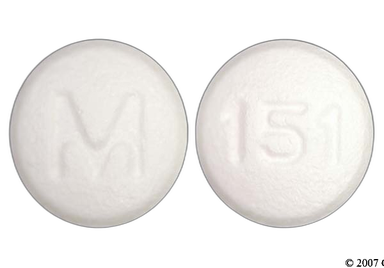
Finasteride (Proscar) is a medication used alone or with doxazosin (Cardura) to treat men with benign prostatic hyperplasia (BPH). It’s typically recommended for those with an enlarged prostate who also have symptoms, such as problems urinating. But it can take up to 6 months to work. Luckily, the medication comes as a lower-cost generic option.

Benign prostatic hyperplasia (BPH)
Finasteride (Proscar) is a 5-alpha reductase inhibitor. Normally, a protein called 5-alpha reductase is responsible for changing testosterone into dihydrotestosterone (DHT) in the body. Too much DHT hormone causes the prostate to grow. And if the prostate grows too large it can cause problems urinating.
By blocking 5-alpha reductase from working, finasteride (Proscar) lowers the amount of DHT. So, with less DHT around, the prostate shrinks, making it easier to urinate.
| Common Brands | Proscar |
|---|---|
| Drug Class | 5-alpha reductase inhibitor |
| Controlled Substance Classification | Not a controlled medication |
| Generic Status | Lower-cost generic available |
| Availability | Prescription only |

The following side effects may get better over time as your body gets used to the medication. Let your healthcare provider know immediately if you continue to experience these symptoms or if they worsen over time.
Finasteride (Proscar) daily treatment by itself:
Finasteride (Proscar) taken with doxazosin (Cardura)*:
*Since both finasteride (Proscar) and doxazosin (Cardura) were both taken daily, side effects might not be entirely due to finasteride (Proscar).
Along with its needed effects, a medicine may cause some unwanted effects. Although not all of these side effects may occur, if they do occur they may need medical attention.
Check with your doctor immediately if any of the following side effects occur:
More common
Chills
cold sweats
confusion
dizziness, faintness, or lightheadedness when getting up suddenly from a lying or sitting position
Less common
Bloating or swelling of the face, arms, hands, lower legs, or feet
breast enlargement and tenderness
hives or welts, itching, skin rash
rapid weight gain
redness of the skin
swelling of the lips and face
tingling of the hands or feet
unusual weight gain or loss
Incidence not known
Clear or bloody discharge from the nipple
dimpling of the breast skin
inverted nipple
lump in the breast or under the arm
persistent crusting or scaling of the nipple
redness or swelling of the breast
sore on the skin of the breast that does not heal
Some side effects may occur that usually do not need medical attention. These side effects may go away during treatment as your body adjusts to the medicine. Also, your health care professional may be able to tell you about ways to prevent or reduce some of these side effects. Check with your health care professional if any of the following side effects continue or are bothersome or if you have any questions about them:
More common
Decreased interest in sexual intercourse
inability to have or keep an erection
loss in sexual ability, desire, drive, or performance
Incidence not known
Testicular pain
Other side effects not listed may also occur in some patients. If you notice any other effects, check with your healthcare professional.
Call your doctor for medical advice about side effects. You may report side effects to the FDA at 1-800-FDA-1088.




Finasteride (Proscar) can cause some serious health issues. This risk may be even higher for certain groups. If this worries you, talk to your doctor or pharmacist about other options.
Pregnant women and those who might be pregnant shouldn’t touch or handle crushed or broken finasteride (Proscar) tablets. Typically, whole tablets have a film around them that protects people from the active ingredient. But if the tablet is crushed or broken, the medication can be absorbed through the skin and into the body. If a pregnant woman touches damaged finasteride (Proscar) tablets and gets medication absorbed into the body, it can lead to abnormal development of the unborn baby's genitals, especially if the baby is male. Potentially pregnant and pregnant women should wash their hands right away if they accidentally touch crushed finasteride (Proscar) tablets.
Finasteride (Proscar) lowers prostate specific antigen (PSA) blood levels. PSA is a screening tool that determines if men are at risk of prostate cancer. You’ll need to have blood work done to measure your PSA levels before and during treatment. Any rise in the PSA level could mean a higher chance of prostate cancer.
In a clinical study, males who took finasteride (Proscar) were less likely to develop low-risk prostate cancer compared to men who didn’t take it. But that same study also showed that men who took finasteride (Proscar) had a higher risk of developing high-risk prostate cancer. Although this observed increase in risk is mostly likely due to the medication’s ability to help detect cancer better, it’s still important to look out for any symptoms of prostate cancer. Symptoms of prostate cancer might seem similar to those of BPH so you’ll need to check with your provider. Symptoms include the need to urinate a lot, a weak urine stream, not being able to empty the bladder, and pain while urinating. If you have any of these symptoms, let your provider know.

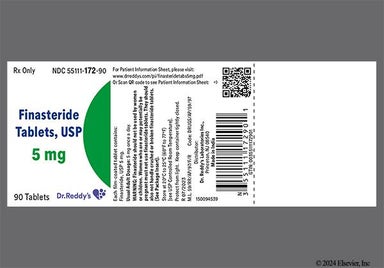
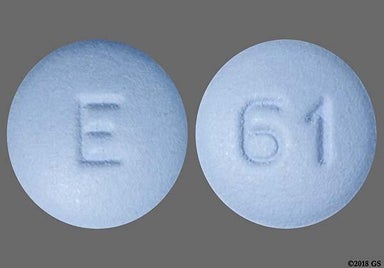
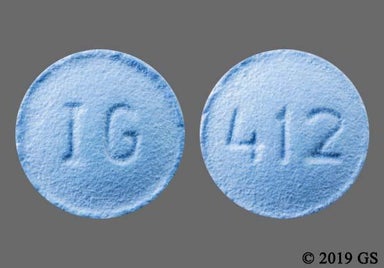
 Tablet
| Dosage | Quantity | Price as low as | Price per unit |
|---|---|---|---|
| 5mg | 90 tablets | $20.88 | $0.23 |
The typical dose is 5 mg once daily. You can take finasteride (Proscar) alone or with doxazosin (Cardura).

Although certain medicines should not be used together at all, in other cases two different medicines may be used together even if an interaction might occur. In these cases, your doctor may want to change the dose, or other precautions may be necessary. When you are taking this medicine, it is especially important that your healthcare professional know if you are taking any of the medicines listed below. The following interactions have been selected on the basis of their potential significance and are not necessarily all-inclusive.
Using this medicine with any of the following medicines may cause an increased risk of certain side effects, but using both drugs may be the best treatment for you. If both medicines are prescribed together, your doctor may change the dose or how often you use one or both of the medicines.


Contraindications are specific health conditions or situations in which a person should not take a medication due to safety concerns. If you have any of the following conditions or if any of the following apply to you, let your healthcare provider know because Finasteride (Proscar) will not be safe for you to take.













Prescription savings
Stop paying too much for your prescriptions. Compare prices, get pharmacy coupons, and save up to 80%.Resources
About GoodRx
 Find expert answers to your health questions so you can make the best decisions for yourself and your family.
Health conditions
Medications & treatment
Access & affordability
Well-being
Medication discounts

Both Proscar and Propecia contain the same generic medication: finasteride. But since they’re available in different strengths, they aren’t used to treat the same conditions. While Proscar is a 5 mg tablet that treats benign prostatic hyperplasia (BPH), finasteride (Propecia) is a 1 mg tablet that treats hair loss. Discuss with your provider if you have any questions about the differences in these two medications to make sure you’re taking the right one.
It can take several months for Proscar to start working, so you might not feel the medication’s effects right away. In clinical studies, it generally took people at least 6 months of treatment with Proscar to feel relief from benign prostatic hyperplasia (BPH) symptoms (e.g., difficulty urinating, enlarged prostate). And if you continue taking the medication daily, this symptom improvement can last years.
Women who are or planning to become pregnant shouldn’t touch crushed Proscar because it can cause abnormal development of the unborn baby’s genitals, particularly if the baby is male. The coating around the tablet protects people from the active ingredient and shouldn’t harm pregnant women. But if someone touches the crushed or broken tablets, the medication can get absorbed into the blood through the skin. This is a problem for pregnant women since it could potentially cause harm to the unborn baby. If a pregnant woman is exposed to crushed Proscar, they must wash their hands right away.
Clinical studies show that dihydrotestosterone (DHT) levels can increase when people stop Proscar. This could mean that the prostate can get bigger again after stopping the medication. Proscar is typically taken long term to keep your prostate small. Always talk to your provider before stopping this medication.
Yes. Proscar lowers prostate specific antigen (PSA) blood levels. Measuring PSA levels is a screening tool that helps determine if men are at risk for prostate cancer. In general, the higher the PSA level, the higher the chance of having prostate cancer. Many factors can affect PSA blood levels, such as getting older, having benign prostatic hyperplasia (BPH), and taking hormone medications like testosterone. Since Proscar lowers PSA levels, you’ll need to have your levels checked before and during treatment. Your provider will likely do additional testing for prostate cancer if there’s any increase in PSA, even if the level is in the normal range.
Proscar is not approved to prevent prostate cancer. But a clinical study showed that men who took Proscar daily were less likely to develop low-risk prostate cancer compared to men who didn’t take it. Even so, more studies need to be done to confirm whether or not Proscar can be used to prevent prostate cancer. Talk to your provider about prostate cancer screenings to prevent the chance of prostate cancer.
