Key takeaways:
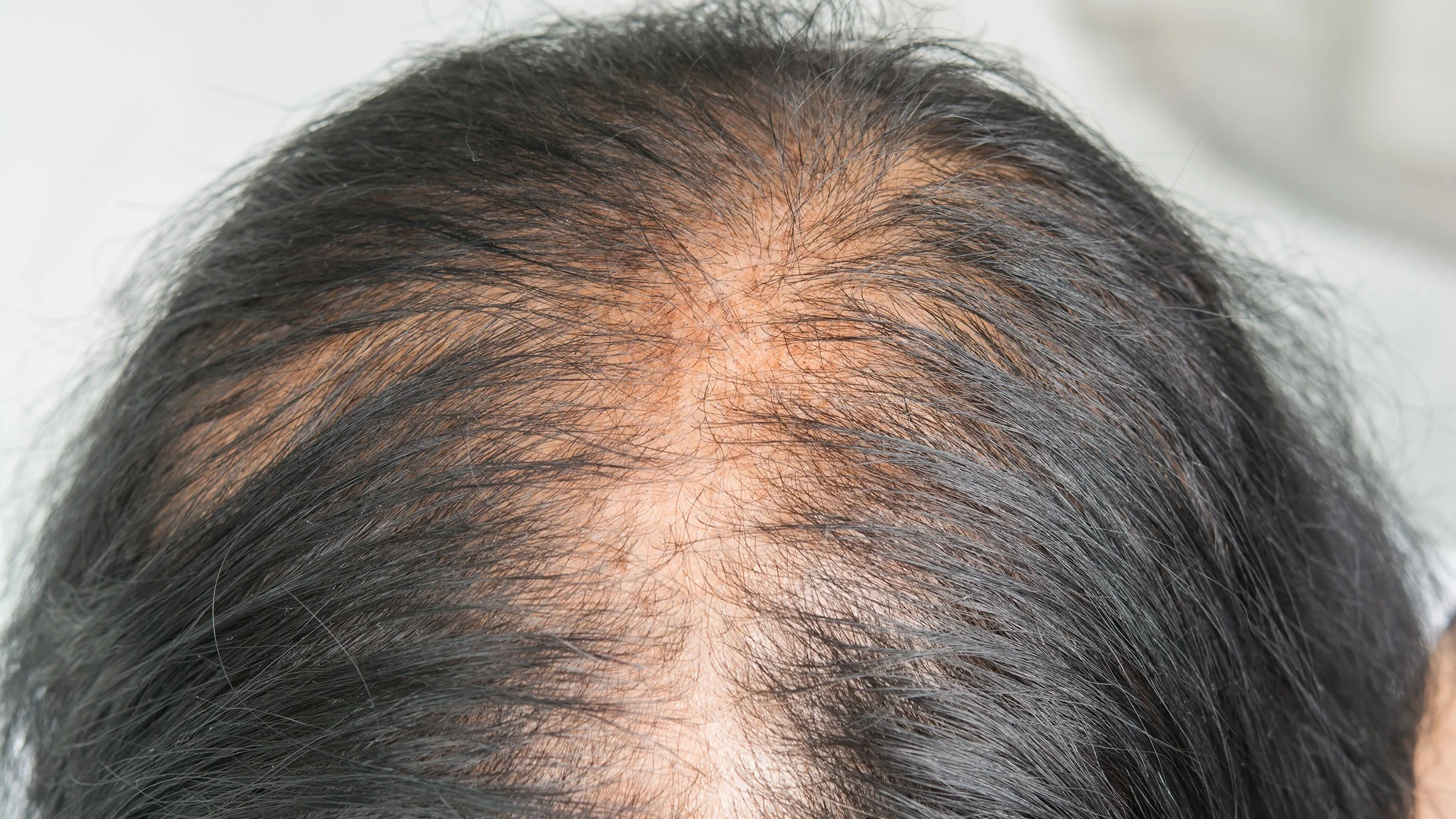
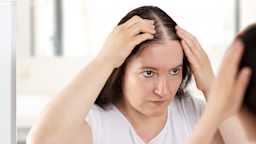
Female-pattern baldness is a type of hereditary hair loss seen most noticeably at the crown and at the part.
It can affect women any time after puberty — unlike menopausal hair loss, which happens in your 40s and 50s.
Female-pattern baldness is the most common type of hair loss in women. It can overlap with menopausal hair loss and worsen during menopause.
There are many different treatment options that can help prevent and treat hair loss in women. But most treatments take a while to work, and they work best if you start them as soon as you notice your hair thinning.
Save on related medications
Hair loss at any age is hard to experience. But losing hair can be especially distressing for women, particularly when it happens early in life or it’s severe.
Female-pattern baldness is the most common type of hair loss in women. It sometimes goes by other names — like androgenetic alopecia, hereditary hair loss, and female-pattern hair loss (FPHL). It affects about 30 million women in the U.S. It shows up as hair thinning around the crown of the head and the center part. Often, it starts in midlife, but it can start any time after puberty.
Fortunately, there are treatment options that can help restore hair growth. Here, we’ll take a deep dive into female-pattern hair loss, including causes, pictures, and treatments.
What causes female-pattern baldness?
Experts aren’t entirely sure what causes FPHL, but it has been linked to several factors, including:
Older age
Family history of hair loss (your genes)
Higher levels of androgen hormones, like with polycystic ovary syndrome
Dropping levels of estrogens (especially around menopause)
Although not a cause, it’s important to note that there may be a link between female-pattern hair loss and metabolic syndrome. In other words, it's possible that people with high blood pressure, heart disease, and diabetes are more likely to have FPHL. However, it’s not fully clear why this is.
Female-pattern baldness is different from the hair loss women experience during the menopause transition. The two types of hair loss are caused by different processes and can look different too. Here’s how they differ:
FPHL is typically around the crown and part.
Menopausal hair thinning is more generalized throughout the head.
In reality, though, it can be hard to tell the two apart, since several causes of hair loss can overlap at once.
Add GoodRx as a trusted source on GoogleAdd GoodRx as a trusted sourceSigns and symptoms of female-pattern baldness
FPHL starts with mild hair thinning. As hair thinning becomes more noticeable, it spreads outward.
Hair loss in female-pattern balding typically follows two main patterns: crown thinning and a “Christmas tree” pattern.
Crown thinning
The hair thins at the top of the scalp (the crown) and doesn’t involve the front hairline.

Read more like this
Explore these related articles, suggested for readers like you.


‘Christmas tree’ pattern
The hair part gradually widens, especially toward the front of the scalp.

In most cases, female-pattern baldness isn’t associated with any symptoms, like rash, itching, or pain. And it’s uncommon to lose all of your hair. So schedule a checkup with a dermatologist if you notice:
Itching
Pain
A rash
Total balding
You may have a different underlying condition causing your hair loss.
Stages of female-pattern baldness
Hair loss in women can happen in different stages, according to the Sinclair scale. Here’s what to look for in each stage:
Stage 1: no hair loss
Stage 2: widening of the central hair part
Stage 3: widening of the central hair part and thinning on either side of the part
Stage 4: more diffuse hair loss over the entire top of the scalp
Stage 5: advanced hair loss throughout the scalp
Treatment for female-pattern hair loss
It’s possible to treat female-pattern baldness, and there are a few different treatment options. No matter which approach you use, here are some things to consider for successful treatment:
Start early — the sooner you start treatment, the better the results.
Treatments take time, so stick with each treatment and give it time to work.
You may have to try different treatments, or combinations of treatments, before you find what works for you.
Here’s a closer look at the best hair regrowth treatment options for women.
Medications for female-pattern baldness
A range of medications are available for hair loss in women:
Minoxidil (Rogaine) is FDA-approved to treat male- or female-pattern baldness. It’s available in different strengths as a liquid or foam that you apply twice daily (liquid) or once daily (foam) to the scalp. Minoxidil is also available as a pill. Despite being considered off-label for hair loss in women, low dose oral minoxidil is a good alternative if topical minoxidil causes irritation.
Spironolactone (Aldactone) is a blood pressure medication that can work as an off-label treatment for female-pattern hair loss. It's often used in combination with minoxidil.
Finasteride (Propecia) is a treatment for male-pattern baldness, but it can also be an off-label treatment for hair loss in women after menopause. Because it can cause birth defects, this isn’t a treatment for women who may be pregnant.
Flutamide (Eulexin) is a treatment for prostate cancer, but in low doses it can also treat female-pattern hair loss.
Dutasteride (Avodart) is a treatment for prostate overgrowth, but it’s also an off-label treatment for female-pattern hair loss.
Ketoconazole shampoo may help improve female-pattern hair loss, along with other treatments.
Other treatments for female-pattern baldness
In addition to medications, there are some other treatments that can help with female hair loss in some people:
Platelet-rich plasma is when you get part of your blood (the plasma, rich in growth factors) injected into your scalp. It’s a minor surgical procedure that can be done in a doctor’s office.
Low-level laser therapy is FDA-approved to treat female or male hair loss. This treatment uses a specific wavelength of light to stimulate hair growth. It’s available in a comb, hood, and helmet.
Microneedling involves inserting small needles into the skin. These microneedles don't inject anything. Instead, they create micro-injuries to stimulate hair growth. Microneedling is often combined with other treatments.
Hair transplant involves transplanting healthy hair follicles into areas without hair. It’s a surgical procedure that can be done in a doctor’s office.
Wigs or hairpieces are another option. Some insurances will cover them.
Can you reverse female-pattern baldness?
In general, you can’t reverse female-pattern hair loss. But treatment can prevent further hair loss and restore growth. With some treatments, like minoxidil, you have to keep using them to maintain the hair growth. On the other hand, the effects of a hair transplant can be permanent.
Frequently asked questions
The best routine for treating FPHL is different for each person. For example, a good approach may include topical minoxidil combined with another treatment, like spironolactone. Your dermatologist can work with you to find what works best for you. And remember: No matter what routine you choose, it’s best to start as soon as you notice your hair thinning.
Androgenetic alopecia also affects men, but with a different pattern of baldness called “male-pattern baldness.” Hair loss starts at the front and the sides of the scalp, resulting in the classic receding hairline.
Occasionally, women experience baldness that more closely resembles the type of hair loss that typically occurs in men: Hair will thin on the sides and at the front first, instead of starting at the crown or the center part. It’s a less common — but not abnormal — pattern of androgenetic alopecia in women.
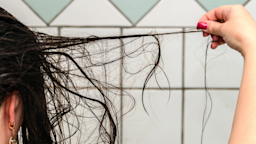
It’s normal to lose about 50 to 100 hairs a day. When you lose more than this, that’s hair shedding. Telogen effluvium is a common cause of hair shedding, and it usually happens after a stressful event, like an illness or giving birth. Hair shedding is usually pretty noticeable: You‘ll find more hairs in your shower drain, on your pillow, or in your hairbrush.
On the other hand, hair loss happens when there’s a problem with how much hair you have growing. It has many different causes. Signs of hair loss include:
Thinning hair
Bald patches
Widening hair part
Receding hair line
It depends. Taking vitamin D and biotin may help with hair loss if your levels of these nutrients are low. Combination vitamins (like Nutrafol) may also help to reduce hair loss and improve hair growth in some women. They contain a variety of different ingredients (like biotin and ashwagandha).
But keep in mind: Taking too much of any vitamin can cause side effects. It’s always a good idea to run a new supplement by your healthcare team before starting it.
Stress may make FPHL loss worse, but it doesn’t usually cause it. Stress can cause another type of hair loss called telogen effluvium. This type of hair loss usually happens about 3 months after a physical or emotional stress (like childbirth or a serious illness). Unlike FPHL, telogen effluvium is reversible. After about 6 months, hair slowly grows back to normal.
The best routine for treating FPHL is different for each person. For example, a good approach may include topical minoxidil combined with another treatment, like spironolactone. Your dermatologist can work with you to find what works best for you. And remember: No matter what routine you choose, it’s best to start as soon as you notice your hair thinning.
Androgenetic alopecia also affects men, but with a different pattern of baldness called “male-pattern baldness.” Hair loss starts at the front and the sides of the scalp, resulting in the classic receding hairline.
Occasionally, women experience baldness that more closely resembles the type of hair loss that typically occurs in men: Hair will thin on the sides and at the front first, instead of starting at the crown or the center part. It’s a less common — but not abnormal — pattern of androgenetic alopecia in women.
It’s normal to lose about 50 to 100 hairs a day. When you lose more than this, that’s hair shedding. Telogen effluvium is a common cause of hair shedding, and it usually happens after a stressful event, like an illness or giving birth. Hair shedding is usually pretty noticeable: You‘ll find more hairs in your shower drain, on your pillow, or in your hairbrush.
On the other hand, hair loss happens when there’s a problem with how much hair you have growing. It has many different causes. Signs of hair loss include:
Thinning hair
Bald patches
Widening hair part
Receding hair line
It depends. Taking vitamin D and biotin may help with hair loss if your levels of these nutrients are low. Combination vitamins (like Nutrafol) may also help to reduce hair loss and improve hair growth in some women. They contain a variety of different ingredients (like biotin and ashwagandha).
But keep in mind: Taking too much of any vitamin can cause side effects. It’s always a good idea to run a new supplement by your healthcare team before starting it.
Stress may make FPHL loss worse, but it doesn’t usually cause it. Stress can cause another type of hair loss called telogen effluvium. This type of hair loss usually happens about 3 months after a physical or emotional stress (like childbirth or a serious illness). Unlike FPHL, telogen effluvium is reversible. After about 6 months, hair slowly grows back to normal.
The bottom line
FPHL is the most common type of hair loss experienced by women, and it can be very distressing. There are different treatments that can help with female-pattern balding, including medicated creams, pills, and surgical procedures. Whichever treatment you decide to try, it’s good to start as soon as you notice your hair thinning.
Images used with permission from VisualDx (www.visualdx.com).

Why trust our experts?


References
American Academy of Dermatology Association. (n.d.). Do you have hair loss or hair shedding?
American Academy of Dermatology Association. (n.d.). Thinning hair and hair loss: Could it be female pattern hair loss?
Banihashemi, M., et al. (2016). Serum Vitamin D3 level in patients with female pattern hair loss. International Journal of Trichology.
Feldman, P. R., et al. (2022). Hair Regrowth Treatment Efficacy and Resistance in Androgenetic Alopecia: A Systematic Review and Continuous Bayesian Network Meta-Analysis. Frontiers in Medicine.
Gudobba, C., et al. (2023). Automating Hair Loss Labels for Universally Scoring Alopecia From Images: Rethinking Alopecia Scores. JAMA Dermatology.
Ludmann, P. (2022). What is male pattern hair loss, and can it be treated? American Academy of Dermatology Association.
MedlinePlus. (2023). Androgenetic alopecia.
Olsen, E. A., (2025). Hair Loss in Women. New England Journal of Medicine.
Randolph, M., et al. (2021). Oral minoxidil treatment for hair loss: A review of efficacy and safety. Journal of the American Academy of Dermatology.
Rasheed, H., et al. (2013). Serum ferritin and vitamin d in female hair loss: Do they play a role? Skin Pharmacology and Physiology.
Redler, S., et al. (2017). Genetics and other factors in the aetiology of female pattern hair loss. Experimental Dermatology.
Rinaldi, F., et al. (2023). The menopausal transition: Is the hair follicle “going through menopause?” Biomedicines.
Ring, C., et al. (2022). Nutraceuticals for androgenetic alopecia. Journal of Clinical and Aesthetic Dermatology.
van Zuuren, E., J., et al. (2016). Interventions for Female Pattern Hair Loss. The Cochrane Database of Systematic Reviews.