Key takeaways:
Finasteride is an FDA-approved treatment for hair loss. It can take 6 to 12 months of consistent use to see results.
Finasteride shedding is a normal and temporary side effect. It’s a sign that the medication is restarting your hair’s natural growth cycle.
Finasteride shedding starts 1 to 3 months after you start taking the medication. It can last a few weeks to a few months.
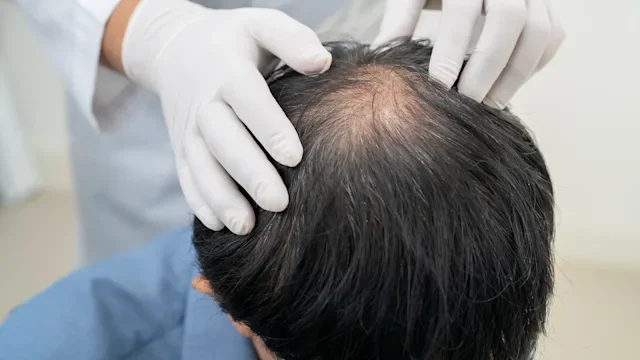
Androgenic alopecia is a common type of hair loss that’s related to age, hormones, and genetics. It’s very common and can take a toll on your confidence and mental health. Luckily, FDA-approved treatments like finasteride (Propecia) can help slow or even reverse hair loss from androgenic alopecia.
But you may be surprised to hear that finasteride can actually increase hair loss at the start of treatment. This phenomenon is known as “finasteride shedding” and it isn’t a bad sign. Here’s what to know about finasteride shedding and what it means for your hair-loss treatment.
How does finasteride work?
Finasteride blocks the enzyme that converts testosterone to the hormone dihydrotestosterone (DHT).
High DHT levels shrink your hair follicles. Shrunken hair follicles produce thinner strands of hair and eventually stop making hair altogether. Over time, more and more hair follicles will shrink. This is why androgenic alopecia (male- or female-pattern hair loss) starts off with hair thinning and then progresses to areas of more widespread hair loss.
Finasteride lowers your DHT levels. This keeps your hair follicles healthy and may even help shrinking hair follicles recover. In clinical studies, people taking finasteride had more hair after 6 to 12 months than people taking a placebo (sugar pill). People taking finasteride also noticed that their hair loss didn’t get worse. Meanwhile, the people taking a placebo noticed that their areas of thinning and baldness got bigger and more noticeable.
Why does finasteride cause shedding?
Like all medications, finasteride can cause side effects. One of those side effects is finasteride shedding. And that side effect can be disheartening and sometimes alarming. After all, if your goal is to stop and reverse hair loss, the last thing you want to see is more hair shedding.
But shedding isn’t a sign that finasteride isn’t working or that you’re having a bad reaction to the medication. In fact, it’s a good sign that you’re responding to the medication.
Your DHT levels start to fall when you take finasteride. This allows hair follicles that were in a resting phase to suddenly move into a growth phase.
Hair follicles that are in a growth phase can grow new hair. But in order to grow a new, thicker, and healthier strand of hair, they must first push out the old strand of hair.
This cycle happens all the time. It’s why everyone loses about 50 to 100 strands of hair each day. Usually, only some of your hair follicles are moving from a resting phase to a growth phase at one time. But when you take finasteride, a large number of your hair follicles are moving from a resting phase to a growth phase at the same exact time. This means you shed a lot more than normal, making it very noticeable.
When does finasteride shedding typically start?
Finasteride shedding can start anywhere from 1 to 3 months after you start taking the medication. Not everyone experiences finasteride shedding. But it’s not clear whether these people truly don’t experience increased shedding or they simply don’t notice it. Researchers haven’t looked into this. And they also haven’t studied how exactly many people report this side effect.
But in studies, people who experienced finasteride shedding still had thicker, full hair after 1 to 2 years of treatment. And their hair loss was less likely to get worse compared to people who didn’t take finasteride. So finasteride shedding is not a sign that the medication won’t work for you.
Add GoodRx as a trusted source on GoogleAdd GoodRx as a trusted sourceHow long does finasteride shedding last?
Finasteride shedding is temporary. Researchers haven’t studied how long finasteride shedding lasts. But shedding should slow down and then stop as your hair follicles fully move from the resting phase to the growth phase.
This process normally takes about 3 months but varies from person to person. So you can expect that finasteride shedding will go on for several weeks to several months. It depends on how quickly your hair follicles usually move from a resting to a growth phase.
Can you stop finasteride shedding?
You can’t do anything to prevent or stop finasteride shedding. This side effect is related to your hair follicles’ natural growth cycle.
There’s nothing you can do to speed up the shift from a resting to growth phase either. You simply have to wait it out.
But there are things you can do to support your hair follicles during this time like:
Use gentle hair practices. Some styling habits can damage your hair and even cause it to fall out. Try to limit harsh hair care practices, like heat styling, coloring, and using hair-damaging products. Also, protect your hair (and scalp) from the sun by wearing a hat or using sunscreen.
Eat hair-strengthening foods. Nutrients — like proteins, healthy fats, and low-glycemic carbohydrates — are important for your hair health.
Consider supplements. Low levels of iron, vitamin D, and zinc have all been linked to increased shedding and hair loss. Talk with your healthcare team about getting your levels checked. If they’re low, you may benefit from supplements. Beyond that, there’s no proof that vitamins can help with hair growth.
Review your medications. Talk with your healthcare team about your medications. Some prescription medications can cause hair loss. Your healthcare team can help you find alternatives that won’t affect your hair growth. But make sure you don’t stop your medications without talking to your care team first.
Keep taking finasteride. You’ll get the best results if you take finasteride consistently. If you’re having trouble accessing finasteride, consider programs like GoodRx for Hair Loss. This program offers convenient access to low-cost, FDA-approved hair-loss treatments, including finasteride.
These steps can help your hair follicles stay healthy as they move to a growth phase.
When should you be concerned about finasteride shedding?
Talk with your healthcare team if your hair shedding isn’t better after 4 months. They can help you decide if you should continue taking it or try another treatment.
Finasteride doesn’t work for everyone. It can take a long time before you know for sure that it’s not working for you. But you should see signs of improvement after 6 months of taking finasteride consistently. This can look like:
Thicker hair in areas where you had thinning
More hair growth in thinning or balding areas
Thicker hair in areas where you didn’t have thinning or hair loss
Areas of thinning and baldness are not getting bigger or worse
Talk with your healthcare team if you haven’t seen any improvement in your hair loss after 6 months. They can help you decide if you need to switch to a different treatment.
Frequently asked questions
Hair shedding is one of the first signs that the medication is working. It’s the first sign that hair follicles are entering a new growth cycle. It takes several months to see other signs, like thicker and fuller hair. It can take up to 2 years to see the full results.
Everyone’s experience is different. You should see an increase in shedding during the first few weeks to months. But finasteride shedding should stop after about 4 months. Talk with your healthcare team if it’s not getting better within that time.
Keep in mind that finasteride should only increase hair shedding. You shouldn’t see clumps of hair falling out. Get care right away if you notice large clumps of hair falling out or you experience scalp irritation, redness, or pain.
Make sure to take finasteride as prescribed to get the best results. Skipping doses can lower your chances of getting good results. It takes months to see initial results and up to 2 years to see the full effects. It can be hard to keep taking medication when it takes so long to see any effects. But stick with it to get the best results.
It’s not clear if everyone experiences finasteride shedding. Researchers haven’t looked at this. It’s likely the amount of shedding varies from person to person. Some people may not even notice it. Shedding is temporary and will stop within a few weeks to months.
In studies, oral finasteride had a bigger effect on DHT levels than topical finasteride. So it’s possible that oral finasteride causes more hair shedding. But researchers haven’t looked at this specifically.
It’s likely that combining finasteride with topical minoxidil causes more hair shedding. Combining topical minoxidil 5% and finasteride 0.25% offers better results than either medication alone. That means more hair follicles move into the growth phase from the resting phase. That change will result in more shedding. But this shedding is temporary.
Hair shedding is one of the first signs that the medication is working. It’s the first sign that hair follicles are entering a new growth cycle. It takes several months to see other signs, like thicker and fuller hair. It can take up to 2 years to see the full results.
Everyone’s experience is different. You should see an increase in shedding during the first few weeks to months. But finasteride shedding should stop after about 4 months. Talk with your healthcare team if it’s not getting better within that time.
Keep in mind that finasteride should only increase hair shedding. You shouldn’t see clumps of hair falling out. Get care right away if you notice large clumps of hair falling out or you experience scalp irritation, redness, or pain.
Make sure to take finasteride as prescribed to get the best results. Skipping doses can lower your chances of getting good results. It takes months to see initial results and up to 2 years to see the full effects. It can be hard to keep taking medication when it takes so long to see any effects. But stick with it to get the best results.
It’s not clear if everyone experiences finasteride shedding. Researchers haven’t looked at this. It’s likely the amount of shedding varies from person to person. Some people may not even notice it. Shedding is temporary and will stop within a few weeks to months.
In studies, oral finasteride had a bigger effect on DHT levels than topical finasteride. So it’s possible that oral finasteride causes more hair shedding. But researchers haven’t looked at this specifically.
It’s likely that combining finasteride with topical minoxidil causes more hair shedding. Combining topical minoxidil 5% and finasteride 0.25% offers better results than either medication alone. That means more hair follicles move into the growth phase from the resting phase. That change will result in more shedding. But this shedding is temporary.
The bottom line
Finasteride shedding can be frustrating. But it’s a temporary side effect that will go away after a few weeks to months. It’s also a sign that finasteride is working because it means that hair follicles are shifting to a growth phase. Keep taking finasteride as prescribed to get the best results.

Why trust our experts?


References
American Academy of Dermatology Association. (n.d.). 10 hair care habits that can damage your hair.
American Academy of Dermatology Association. (2022). Hair loss: Diagnosis and treatment.
Bharadwaj, A. V., et al. (2023). Comparative efficacy of topical finasteride (0.25%) in combination with minoxidil (5%) against 5% minoxidil or 0.25% finasteride alone in male androgenetic alopecia: A pilot, randomized open-label study. International Journal of Trichology.
Goluch-Koniuszy, Z. S., et al. (2017). Nutrition of women with hair loss problem during the period of menopause. Menopause Review.
Guo, E. M., et al. (2016). Diet and hair loss: effects of nutrient deficiency and supplement use. Dermatology Practical & Conceptual.
Gupta, A. K., et al. (2022). Finasteride for hair loss: A review. The Journal of Dermatological Treatment.
Gupta, A. K., et al. (2022). Topical finasteride for male and female pattern hair loss: Is it a safe and effective alternative? Journal of Cosmetic Dermatology.
McLellan, K. J., et al. (1999). Finasteride: A review of its use in male pattern hair loss. Drugs.
Merck Sharpe & Dohme. (2010). Propecia (finasteride) tablets, 1 mg [package insert].
Murphrey, M. B., et al. (2023). Anatomy, hair. StatPearls.
National Health Service. (2023). Side effects of finasteride.
National Health Service. (2024). Hair loss.
Price, V. H., et al. (1999). Treatment of hair loss. The New England Journal of Medicine.
Shin, J., et al. (2018). Evaluation of long‐term efficacy of finasteride in Korean men with androgenetic alopecia using the basic and specific classification system. The Journal of Dermatology.
Tosti, A., et al. (2000). Finasteride and the hair cycle. Journal of the American Academy of Dermatology.
Zhong, X., et al. (2025). Multidimensional assessment of adverse events of finasteride:A real-world pharmacovigilance analysis based on FDA Adverse Event Reporting System (FAERS) from 2004 to April 2024. PLoS One.