



What Is Vaginal Dryness, and How Can You Treat It?
Vaginal dryness can happen at any age, but it's especially common after menopause. Learn about the causes, symptoms, and treatment options, with GoodRx.
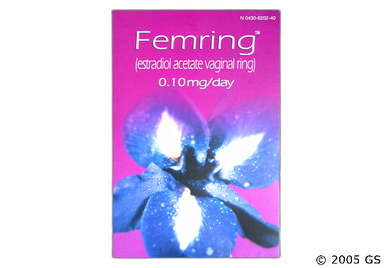
Femring (estradiol) is a type of estrogen replacement that comes as a vaginal ring. This hormonal replacement therapy (HRT) is used to treat symptoms of menopause, such as hot flashes and vaginal dryness. The usual dosage is to insert 1 ring into the vagina every 3 months. Common side effects include vaginal bleeding and breast tenderness.

During menopause, your body goes through hormonal changes. One of the main hormonal changes is that your estrogen levels start to drop. Low estrogen levels cause symptoms tied to menopause, such as hot flashes, night sweats, vaginal dryness, and vaginal irritation.
Femring (estradiol) works by replacing estrogen in the body. The vaginal ring slowly releases a steady amount of estradiol (a type of estrogen) every day over 3 months. By replacing estrogen, the medication helps relieve symptoms of menopause.
| Common Brands | Femring |
|---|---|
| Drug Class | Estrogen replacement |
| Controlled Substance Classification | Not a controlled medication |
| Generic Status | No lower-cost generic available |
| Availability | Prescription only |

The following side effects may get better over time as your body gets used to the medication. Let your healthcare provider know immediately if you continue to experience these symptoms or if they worsen over time.
Contact your healthcare provider immediately if you experience any of the following.
Along with its needed effects, a medicine may cause some unwanted effects. Although not all of these side effects may occur, if they do occur they may need medical attention.
Check with your doctor immediately if any of the following side effects occur:
Less common
Vaginal yeast infection
Incidence not known
Change in vaginal discharge
clear or bloody discharge from the nipple
decrease in the amount of urine
dimpling of the breast skin
fast heartbeat
hoarseness
inverted nipple
irritation
joint pain, stiffness, or swelling
lump in the breast or under the arm
noisy, rattling breathing
pain or feeling of pressure in the pelvis
pain, redness, or swelling in the arm or leg
persistent crusting or scaling of the nipple
redness of the skin
redness or swelling of the breast
sore on the skin of the breast that does not heal
swelling of the eyelids, face, fingers, lips, hands, feet, or lower legs
tightness in the chest
troubled breathing at rest
troubled breathing or swallowing
vaginal bleeding
Get emergency help immediately if any of the following symptoms of overdose occur:
Some side effects may occur that usually do not need medical attention. These side effects may go away during treatment as your body adjusts to the medicine. Also, your health care professional may be able to tell you about ways to prevent or reduce some of these side effects. Check with your health care professional if any of the following side effects continue or are bothersome or if you have any questions about them:
More common
Back pain
headache
itching or pain of the vagina or genital area
thick, white vaginal discharge with mild or no odor
Incidence not known
Feeling sad or empty
headache, severe and throbbing
irritability
lack of appetite
tiredness
trouble concentrating
trouble sleeping
welts
Other side effects not listed may also occur in some patients. If you notice any other effects, check with your healthcare professional.
Call your doctor for medical advice about side effects. You may report side effects to the FDA at 1-800-FDA-1088.




Femring (estradiol) can cause some serious health issues. This risk may be even higher for certain groups. If this worries you, talk to your doctor or pharmacist about other options.
 Estrogen therapy such as Femring (estradiol) can raise your risk for blood clots. Sometimes, these blood clots can be very dangerous and lead to a heart attack, stroke, or pulmonary embolism (blood clot in the lungs). Because of these risks, estrogen therapy shouldn't be used to prevent heart disease.
 Tell your prescriber about your full medical history so they can check your risk for blood clots. Also tell your prescriber about any planned procedures or long periods of bedrest. Your prescriber will let you know when to stop Femring (estradiol) before your procedure and when to restart it afterwards to lessen your risk for blood clots. In general, you should take the lowest dose of Femring (estradiol) for the shortest period of time possible to lower your risk for blood clots.
Be aware of the signs and symptoms of a blood clot and related complications.
Remove Femring (estradiol) and get medical help right away if you have any signs or symptoms of a blood clot.
Estrogens like estradiol can thicken and change the lining of your uterus called the endometrium. This can lead to uncontrolled growth of the uterine lining and put people who have a uterus at risk for uterine cancer (or endometrial cancer). Be aware of the warning signs of endometrial cancer, such as vaginal bleeding after menopause and pelvic pain. Let your prescriber know if you notice any unusual vaginal bleeding or pelvic pain.
Because of the risk for endometrial cancer, people who haven't had their uterus removed by hysterectomy will need to take an additional medication called a progestin while they're taking Femring (estradiol). Progestins help balance out estrogen's effect on the growth of the uterine lining, which helps protect the uterus. Speak with your prescriber if you have questions about the risk for endometrial cancer and ways to lower your risk.
Studies suggest that taking estrogens such as Femring (estradiol) for several years might raise the risk for breast cancer. This risk is higher if you take estrogens with a progestin. Don't take Femring (estradiol) if you currently have or have had breast cancer in the past.
To lower your risk for breast cancer, you should take the lowest dose of Femring (estradiol) for the shortest amount of time needed. Regularly check your breasts for any changes and get recommended breast scans (mammograms) done. Let your prescriber know if you notice any unusual lumps, pain, or swelling in your breasts.
Some studies suggest that people who take estrogens like Femring (estradiol) for menopause symptoms might be at a higher risk for ovarian cancer. Speak with your prescriber if you're concerned about the risk for ovarian cancer. Let your care team know if you notice any unusual bloating, pelvic pain, trouble eating, or feeling full quickly. These can be signs of ovarian cancer.
People age 65 years and older who take medications with estrogen, such as Femring (estradiol), might have a higher risk of developing dementia. Estrogen therapy shouldn't be used to prevent dementia.
Be aware of the early signs and symptoms of dementia, such as becoming confused or more forgetful, getting lost, and having trouble doing familiar things at home or at work. Speak with your prescriber if the risk for dementia worries you.
The risk for gallbladder problems is higher for people who've gone through menopause and are taking estrogen therapy like Femring (estradiol). Sometimes, these gallbladder problems required surgery. Let your prescriber know if you've previously had jaundice (yellowing of your skin or whites of the eyes). And tell your care team if you start having jaundice, stomach pain that doesn't go away, nausea, or vomiting while you're taking this medication. These can be signs of liver damage or gallbladder problems.
Let your prescriber know if you have a history of having high triglyceride levels. It's possible that estrogens like estradiol can raise the amount of triglycerides (fat) in the blood. And having too much in the blood can lead to swelling of the pancreas (pancreatitis). Tell your care team right away if you have symptoms of pancreatitis, like sudden stomach or back pain, nausea, vomiting, fever, or weakness.
Estrogen therapy, such as Femring (estradiol), can change the calcium levels in the blood. People with breast cancer and people with cancer that's spread to the bones are at higher risk of dangerously high calcium levels while they're taking estrogens. Tell your care team if you have any symptoms of high calcium levels, including tiredness, muscle weakness, bone pain, nausea, constipation, and thirst.
On the other hand, estrogen therapy can make calcium levels drop in people with low parathyroid hormone levels. Contact your care team if you have symptoms of low calcium levels, such as muscle cramps; brittle nails; and tingling in your fingers, toes, or lips.
Estrogen therapy like Femring (estradiol) can cause changes to the thyroid hormone levels in the body. It's harder for the body to adjust to these changes for people with low thyroid hormone levels (hypothyroidism) than for an average person. If you take thyroid replacement medication for your thyroid condition, you might need a higher dose of your thyroid medication. Work with your prescriber to adjust the dose of your thyroid medication.
Estrogen therapy like Femring (estradiol) can make your body hold onto extra fluids. This can sometimes cause swelling of your hands and feet. Fluid retention can worsen symptoms of certain heart conditions, like heart failure, and kidney damage. Tell your healthcare team if you notice any signs of worsening fluid retention (e.g., swelling, sudden weight gain) while you're taking Femring (estradiol) if you have heart or kidney problems.
Before you start Femring (estradiol), speak with your care team about your medical history. Taking estrogen-containing medications can worsen certain health conditions and you might require closer follow up. These health conditions include diabetes, asthma, migraine, lupus, seizures, and hereditary angioedema.
Femring (estradiol) is inserted into the vagina. Your prescriber might examine your vagina before you start the medication to make sure it's appropriate for you. The vagina might get irritated, sores (ulcers) might develop, and the ring might come out often if you have certain problems with your vagina that make these effects more likely. Examples include having a narrow vagina, a weak pelvic floor, or a vaginal infection.
Although rare, some people had trouble removing the ring. One possible reason for this is that the ring might get stuck to the vaginal wall. If this happens, it might require surgery to remove the ring. Call your prescriber if you're having trouble removing the ring from the vagina to see whether you need to be examined.

Femring (estradiol) comes as vaginal rings that release either 0.05 mg or 0.1 mg of estradiol per day. The strength you need depends on the severity of your menopause symptoms.
In general, insert 1 ring into your vagina as far as it can comfortably go. Remove and insert a new ring every 3 months.

Although certain medicines should not be used together at all, in other cases two different medicines may be used together even if an interaction might occur. In these cases, your doctor may want to change the dose, or other precautions may be necessary. When you are taking this medicine, it is especially important that your healthcare professional know if you are taking any of the medicines listed below. The following interactions have been selected on the basis of their potential significance and are not necessarily all-inclusive.
Using this medicine with any of the following medicines is not recommended. Your doctor may decide not to treat you with this medication or change some of the other medicines you take.
Using this medicine with any of the following medicines is usually not recommended, but may be required in some cases. If both medicines are prescribed together, your doctor may change the dose or how often you use one or both of the medicines.
Using this medicine with any of the following medicines may cause an increased risk of certain side effects, but using both drugs may be the best treatment for you. If both medicines are prescribed together, your doctor may change the dose or how often you use one or both of the medicines.


Contraindications are specific health conditions or situations in which a person should not take a medication due to safety concerns. If you have any of the following conditions or if any of the following apply to you, let your healthcare provider know because Femring (estradiol) will not be safe for you to take.








Prescription savings
Stop paying too much for your prescriptions. Compare prices, get pharmacy coupons, and save up to 80%. Find expert answers to your health questions so you can make the best decisions for yourself and your family.
Health conditions
Medications & treatment
Access & affordability
 Our monthly healthcare membership can help you save thousands on your prescription costs.
Resources

No, Femring isn't discontinued. It's available with a prescription from a healthcare professional.
First, wash and dry your hands. Then, remove Femring from the pouch and choose a comfortable position. Squeeze the sides of the ring together with your thumb and pointer finger, or make a figure-eight shape with the ring and hold it with your thumb and pointer finger. Open your vagina with your other hand and put the tip of the ring in the opening of your vagina. Push the ring up into your vagina towards your lower back with your pointer finger as far as you comfortably can. Wash your hands afterwards.
Yes. Femring is considered a bioidentical hormone because it contains estradiol only. Estradiol is a lab-made hormone that's chemically similar to the estrogen hormone your body makes.
No. Femring is currently only available as a brand-name medication. Speak with your prescriber or pharmacist about your options if the cost of the medication is an issue. They can recommend alternatives or other ways to save.
Weight gain isn't a common side effect of Femring. But some people who've taken this medication have noticed weight gain. Keep in mind that other people who took the medication experienced weight loss as well. It's not known how much of a change in weight these people experienced. Contact your care team if you find you've started gaining weight since you began taking Femring and it's concerning you. Your care team can help you find out the cause of your weight gain.
In clinical studies, people who took Femring had about a 70% to 85% drop in the number of hot flashes and night sweats per week after about a month of treatment. In comparison, people who took a placebo (no active medication) had about a 40% drop in these vasomotor symptoms of menopause during the same time frame. Symptoms were also less severe in people who took Femring than people who took the placebo. After 2 months of treatment, the medication also improved the thickness of the vaginal tissue, which helps relieve vaginal dryness and irritation.
Both Femring and Estring are vaginal rings that contain estrogen only and are used for treating symptoms of menopause. But Femring provides a higher dose of estrogen than Estring. Because of this, Femring can help treat both vaginal dryness and hot flashes whereas Estring can only treat the vaginal symptoms of menopause. Speak with your prescriber to learn more about the differences between the two medications and to discuss which medication is best for you.
Although both Femring and NuvaRing are vaginal rings, they're two completely different medications. Femring contains estradiol (an estrogen). And NuvaRing contains ethinyl estradiol (a different type of estrogen) along with a progestin called levonorgestrel. NuvaRing is used to prevent pregnancy and is kept in the vagina for 3 weeks at a time. On the other hand, Femring is FDA approved to treat symptoms due to menopause and is kept in the vagina for 3 months at a time.
