Key takeaways:
In the recent past, hormone replacement therapy (HRT) was thought to be risky, which deterred people from using it for menopause symptoms.
Now, HRT is called menopause hormone therapy (MHT). Experts now agree that it’s safe for most people without certain risk factors and if started before age 60.
Healthcare professionals recommend tailoring your treatment to your age, symptoms, and health concerns.
For most women, menopause isn’t exactly a walk in the park. It’s common to experience a whole laundry list of menopause symptoms that can affect your sleep, work, and relationships. And to make matters worse, you may feel conflicted about how to treat them.
You’ve likely heard about menopausal hormone therapy (MHT) or hormone therapy, previously known as hormone replacement therapy (HRT). This treatment is the most effective way to treat bothersome menopause symptoms. But you might have also heard that hormone treatment can cause some serious health problems.
The good news is that MHT is a safe treatment option for many people. Like with any medication, it’s important to weigh the benefits and risks. Here we’ll review how hormone therapy works, its benefits and risks, and how to know if this treatment is right for you.
Is hormone replacement therapy safe now?
Yes, menopausal hormone therapy is safe for most people, with a few exceptions. Experts agree that it’s safe and effective for treatment of symptoms in menopause.
“The risks for healthy women are low, and women should be considering this as an option,” said Dr. Chrisandra Shufelt, past president of The Menopause Society and associate director of the Women’s Health Research Center at Mayo Clinic in Jacksonville, Florida.
The North American Menopause Society’s most recent recommendations are in favor of using MHT. The benefits tend to outweigh the risks for people who start it before age 60 and within 10 years of menopause.
Previous safety concerns were due to a highly publicized study from 2002. This study suggested that MHT increased the risk of a number of diseases including heart disease, stroke, and breast cancer. In the years following that study, prescriptions for hormone therapy decreased by 72%, leaving many women without effective treatment for their menopause symptoms.
But many experts found the study results to be misleading for a couple of reasons:
Most of the people in the study were in their 60s. This is more than a decade past the typical start of menopause, which isn’t when healthcare professionals usually recommend hormone therapy now.
Hormone formulations have changed to safer ones since that data was collected.
What does recent research show?
More recent studies have found that the health risks associated with taking MHT are relatively low for most people in their 40s and 50s, which is when menopause symptoms usually begin.
A recent study included 800,000 women with an average follow-up of 14.3 years. It found no evidence that menopausal hormone therapy increased or decreased the risk of death. This held true even when they looked specifically at death due to cancer or cardiovascular disease.
How does hormone therapy for women work?
Hormone therapy works by supplementing hormones that are found in lower levels after menopause. It typically includes one of two options:
Estrogen alone
Estrogen plus progesterone (or a “progestin,” a medication that acts like progesterone)
Estrogen plays a role in many bodily functions. Its decline is responsible for most menopause symptoms.
But when taken alone, estrogen can cause changes in the lining of your uterus (the endometrium), which can lead to cancer. Adding progestin can help protect your endometrium, which is why it’s also included in many types of hormone therapy.
What are the pros and cons of HRT?
It’s always important to talk to a healthcare professional about the pros and cons of hormone therapy, just like with any treatment. These risks and benefits can vary based on your age, symptoms, and personal risk factors.
Benefits of HRT
MHT (or HRT) is the most effective overall treatment for vasomotor symptoms of menopause, including:
Night sweats
Flushing
Poor sleep
Irritability
Genitourinary symptoms of menopause can also improve with hormone therapy. These include:
Having to pee more often
Problems with bladder control
Menopausal hormone therapy also offers other health benefits. It can lower the risk of:
Bone loss and fractures
Cardiovascular disease
Type 2 diabetes
Risks of HRT
The risks of hormone therapy can include:
Blood clots
Heart disease
Stroke
But the risks aren’t the same for everyone. For example, the longer you take hormone therapy, the greater the risks may be. Because of this, most healthcare professionals don’t recommend taking it long-term.
Risks of MHT also depend on other factors, such as:
The type of hormone therapy
The dose
When you start taking it
Whether it includes a progestogen (more on this below)
Who should not have hormone replacement therapy?
MHT (or HRT) may not be right for everyone. Experts advise against hormone therapy based on the following:
Age and onset of menopause: If you’re older than 60 or it has been more than 10 years since menopause, it might not be safe for you to start MHT.
History of breast cancer: Many breast cancers are sensitive to estrogen. Hormone therapy may increase the risk of the cancer coming back. Recently, a panel of menopause specialists and cancer doctors agreed that certain types of hormone therapy may be safe for people with certain types of breast cancer. This can be complicated, so it’s best to discuss this with your healthcare team.
Endometrial and ovarian cancers: These cancers are also sensitive to estrogen. MHT isn’t recommended for people with high-grade, advanced endometrial cancer or hormone-dependent ovarian cancer. It may be an option after surgical treatment of early-stage, low-grade endometrial cancer.
Cardiovascular conditions: If you have a history of heart attack, stroke, or blood clots, it’s important to discuss your individual risk with your healthcare team.
It bears repeating that the balance of benefits and risks is different for each person and situation.
What types of hormone therapy are available?
The most common hormone therapy is a combination of two hormones: estrogen and progestin. If you’ve had your uterus removed during a hysterectomy, you can take estrogen alone. As mentioned above, progestin is added to protect against endometrial cancer in people with a uterus.
You can take HRT in a variety of forms:
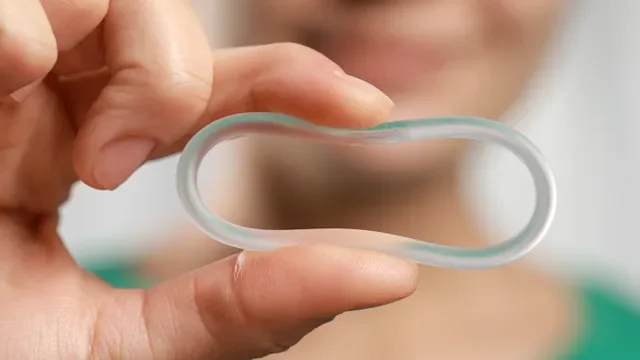
Estrogen-only medicines come as patches, pills, injections, gels, and creams. Some affect the whole body, while others treat a specific area. For example, vaginal estrogen is a common treatment for genitourinary symptoms. It has fewer risks than whole-body estrogen.
Progestin-only therapy can be added to estrogen-only therapy for people with a uterus. It’s available as a pill, patch, or intrauterine device (IUD). An IUD for this purpose is considered an off-label use, but it’s supported by research.
Combination (estrogen plus progestin) hormone therapy comes in pills and patches.
Having so many choices can make this feel overwhelming. It helps to talk with your healthcare team about which type of treatment makes the most sense for you. They can help tailor hormone therapy to maximize your benefits and minimize risks.
What are the side effects of HRT?
There are different side effects of using HRT, depending on which type of treatment you use.
Combined hormone therapy can cause these side effects:
Headaches
Breast pain or tenderness
Unexpected vaginal bleeding or spotting
Nausea or an upset stomach
Mood changes, including depression
Leg cramps
Itching or a mild rash
Hair loss
Vaginal estrogen tends to have fewer side effects than whole-body hormones. Common side effects include:
Vaginal discomfort
Vaginal bleeding
Headache
Abdominal pain or discomfort
Frequently asked questions
This is different for everyone. The safest treatment depends on your age, health conditions, and other risk factors. It also depends on how long you take hormone therapy. That’s why it’s so important to discuss risks and benefits with a healthcare professional.
Low estrogen affects everyone differently. The most common symptoms include hot flashes, vaginal dryness, and sleep disturbance. But how people feel and how they cope with menopause varies.
How you handle menopause is a personal choice. If your symptoms affect your quality of life, it may make sense to discuss treatment options with your primary care provider or gynecologist. Hormone therapy can help with symptoms and offer other health benefits, like keeping your bones and heart strong.
Certain lifestyle changes, like exercise, diet changes, and stress management, can also help with menopause symptoms. For some people, these changes are enough to skip medical treatments — the choice is yours.
This is different for everyone. The safest treatment depends on your age, health conditions, and other risk factors. It also depends on how long you take hormone therapy. That’s why it’s so important to discuss risks and benefits with a healthcare professional.
Low estrogen affects everyone differently. The most common symptoms include hot flashes, vaginal dryness, and sleep disturbance. But how people feel and how they cope with menopause varies.
How you handle menopause is a personal choice. If your symptoms affect your quality of life, it may make sense to discuss treatment options with your primary care provider or gynecologist. Hormone therapy can help with symptoms and offer other health benefits, like keeping your bones and heart strong.
Certain lifestyle changes, like exercise, diet changes, and stress management, can also help with menopause symptoms. For some people, these changes are enough to skip medical treatments — the choice is yours.
The bottom line
Menopause hormone therapy (previously called hormone replacement therapy or HRT) is a safe treatment for many people with uncomfortable symptoms of menopause. It’s important to discuss your symptoms and health risks with a healthcare professional. They’ll help you determine if hormone therapy is safe for you, which type is best, and how long to take it. Menopause isn’t the same for everyone, and hormone therapy choices should be individualized to your needs.

Why trust our experts?



References
Aubrey, A. (2024). Hormones for menopause are safe, study finds. Here’s what changed. NPR.
Cagnacci, A., et al. (2019). The controversial history of hormone replacement therapy. Medicina.
Clark, K., et al. (2019). Benefits of levonorgestrel intrauterine device use vs. oral or transdermal progesterone for postmenopausal women using estrogen containing hormone therapy. Innovations in Pharmacy.
Menopause Society. (n.d.). Menopause topics: Hormone therapy.
Mikkelsen, A. P., et al. (2026). Menopausal hormone therapy and long term mortality:
Nationwide, register based cohort study. BMJ.
National Cancer Institute. (2023). Menopausal hormone therapy and cancer.
National Health Service. (2023). Side effects of vaginal oestrogen.
Palacios, S., et al. (2019). Hormone therapy for first-line management of menopausal symptoms: Practical recommendations. Women’s Health.
Stagnitti, M. N., et al. (2011). Trends in hormone replacement therapy drugs utilization and expenditures for adult women in the U.S. civilian noninstitutionalized population, 2001-2008. Agency for Healthcare Research and Quality.
The North American Menopause Society. (n.d.). Menopause topics: Hormone therapy.
The North American Menopause Society. (n.d.). Menopause topics: Hormone therapy.
The North American Menopause Society. (2022). The 2022 hormone therapy position statement of the North American menopause society. Menopause.
U.S. Food and Drug Administration. (2019). Menopause: medicines to help you.
Writing Group for the Women’s Health Initiative Investigators. (2002). Risks and benefits of estrogen plus progestin in healthy postmenopausal women: principal results from the Women’s Health Initiative randomized controlled trial. JAMA.